Artwork
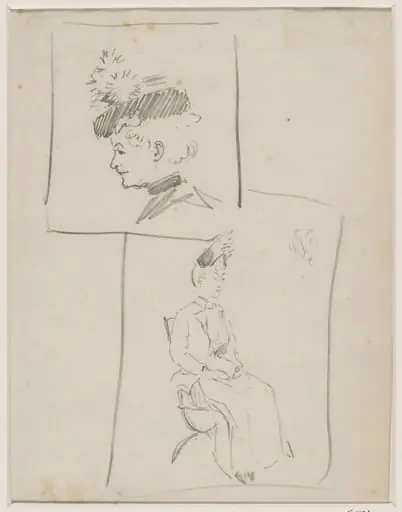
Two Head Studies and a Crouching Nude Woman; Two Women's Heads and a Head of Child [recto]
![Two Head Studies and a Crouching Nude Woman; Two Women's Heads and a Head of Child [recto], by Paul Gauguin, ink, 1886](https://artifactworldgallery.com/img/paul-gauguin--two-head-studies-and-a-crouching-nude-woman-two-women-s-head--fe3fee334eaa34d1-w1024.webp)
Two Head Studies and a Crouching Nude Woman; Two Women's Heads and a Head of Child [recto] is an ink drawing by the Impressionist artist Paul Gauguin. It dates from 1886 and is held in the collection of the National Gallery of Art.
About this work
Overview
This 1886 drawing by Paul Gauguin, executed in pen and brown ink on wove paper, is a sheet from his sketchbook containing multiple figure studies.
This 1886 drawing by Paul Gauguin, executed in pen and brown ink on wove paper, is a sheet from his sketchbook containing multiple figure studies. It combines three distinct head studies and a crouching nude on the recto, with two additional female heads and a child’s portrait on the verso. The work exemplifies Gauguin’s habit of compiling observational sketches, reflecting his sustained interest in the human form during a period of formal experimentation.
Subject & Meaning
The figures depicted—two adult heads, a crouching woman, and two further female profiles with a child’s head—are rendered without narrative context, suggesting a focus on formal inquiry rather than storytelling. The variety of ages and postures implies an exploration of human physiognomy and gesture, possibly informed by Gauguin’s interest in primal or archetypal expressions, though no symbolic intent is explicitly stated.
Technique & Style
Gauguin employed loose, rapid pen strokes and cross-hatching to model volume and shadow, particularly in the textured hair of the older man and the brim of the woman’s hat. The lines are uneven and gestural, conveying immediacy rather than polish. The absence of outlines and the reliance on tonal buildup through intersecting strokes reflect his departure from academic draftsmanship toward a more intuitive, expressive method.
History & Provenance
The drawing is part of a larger group of sketchbook pages Gauguin produced between 1885 and 1887, during his time in Brittany and before his first trip to Tahiti. Its survival as a single sheet suggests it was preserved early, likely within his personal archive. No documented ownership prior to its institutional acquisition is recorded, but its condition indicates careful handling over time.
Context
Created during Gauguin’s transition from Impressionism toward Symbolism, this sheet aligns with his broader rejection of optical realism. In the mid-1880s, he increasingly favored simplified forms and emotional resonance over naturalistic detail. These sketches, made in private, served as preparatory material for later paintings and reflect his engagement with non-Western aesthetics and the expressive potential of line.
Legacy
Though not a finished work, this drawing contributes to understanding Gauguin’s artistic process and his shift toward abstraction in figure representation. Its informal nature reveals the raw, iterative quality of his practice, influencing later modernists who valued sketchbook studies as vital expressions of creative thought. It remains a key document in tracing his evolution beyond Impressionist conventions.
Artist & collection
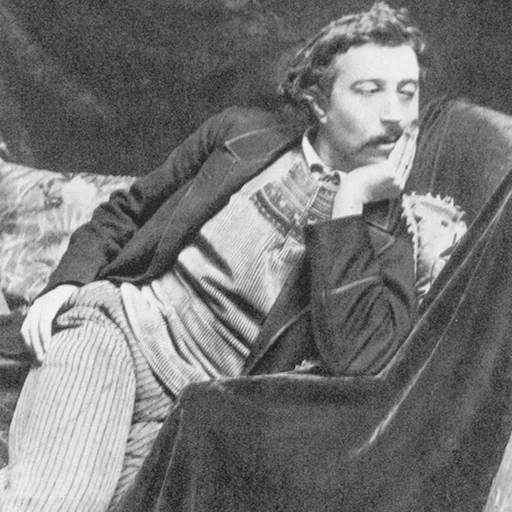
Artist
Eugène Henri Paul Gauguin (; French: ; 7 June 1848 – 8 May 1903) was a French painter, sculptor, printmaker, ceramist, and writer, whose work has been primarily associated with the Post-Impressionist and Symbolist movements.

![Trees; Sketch of Breton Boy [verso], by Paul Gauguin](https://artifactworldgallery.com/img/paul-gauguin--trees-sketch-of-breton-boy-verso--ffac7faa10ac7e52-w320.webp) Trees; Sketch of Breton Boy [verso]
Trees; Sketch of Breton Boy [verso]![Two Heads; Studies of Sheep [recto], by Paul Gauguin](https://artifactworldgallery.com/img/paul-gauguin--two-heads-studies-of-sheep-recto--d045b25e15a504f5-w320.webp) Two Heads; Studies of Sheep [recto]
Two Heads; Studies of Sheep [recto]![Five Studies of Heads; A Boy in Profile with Studies of Hands and Feet [verso], by Paul Gauguin](https://artifactworldgallery.com/img/paul-gauguin--five-studies-of-heads-a-boy-in-profile-with-studies-of-hands--71c9c87fde7c63ab-w320.webp) Five Studies of Heads; A Boy in Profile with Studies of Hands and Feet [verso]
Five Studies of Heads; A Boy in Profile with Studies of Hands and Feet [verso]![A Grazing Cow; Head of a Woman with Her Hand on Her Cheek, and Head of a Man with His Hand on His Ear [verso], by Paul Gauguin](https://artifactworldgallery.com/img/paul-gauguin--a-grazing-cow-head-of-a-woman-with-her-hand-on-her-cheek-and--634600a51135ea0b-w320.webp) A Grazing Cow; Head of a Woman with Her Hand on Her Cheek, and Head of a Man with His Hand on His Ear [verso]
A Grazing Cow; Head of a Woman with Her Hand on Her Cheek, and Head of a Man with His Hand on His Ear [verso]![Eye and Part of Face; A Breton Woman and Two Men [recto], by Paul Gauguin](https://artifactworldgallery.com/img/paul-gauguin--eye-and-part-of-face-a-breton-woman-and-two-men-recto--81c9125f35b9b9e6-w320.webp) Eye and Part of Face; A Breton Woman and Two Men [recto]
Eye and Part of Face; A Breton Woman and Two Men [recto] Two Studies of a Woman Dressing
![Three Studies of Men's Heads, One with Spectacles; Dogs, Children, and Two Bearded Men in Profile [verso], by Paul Gauguin](https://artifactworldgallery.com/img/paul-gauguin--three-studies-of-men-s-heads-one-with-spectacles-dogs-childr--5397d62ca5c9a48b-w320.webp) Three Studies of Men's Heads, One with Spectacles; Dogs, Children, and Two Bearded Men in Profile [verso]
Three Studies of Men's Heads, One with Spectacles; Dogs, Children, and Two Bearded Men in Profile [verso] Studies of Figures
 Mother and Child (recto); Profile Bust of a Man (verso)
 Untitled