Artwork
Pigs
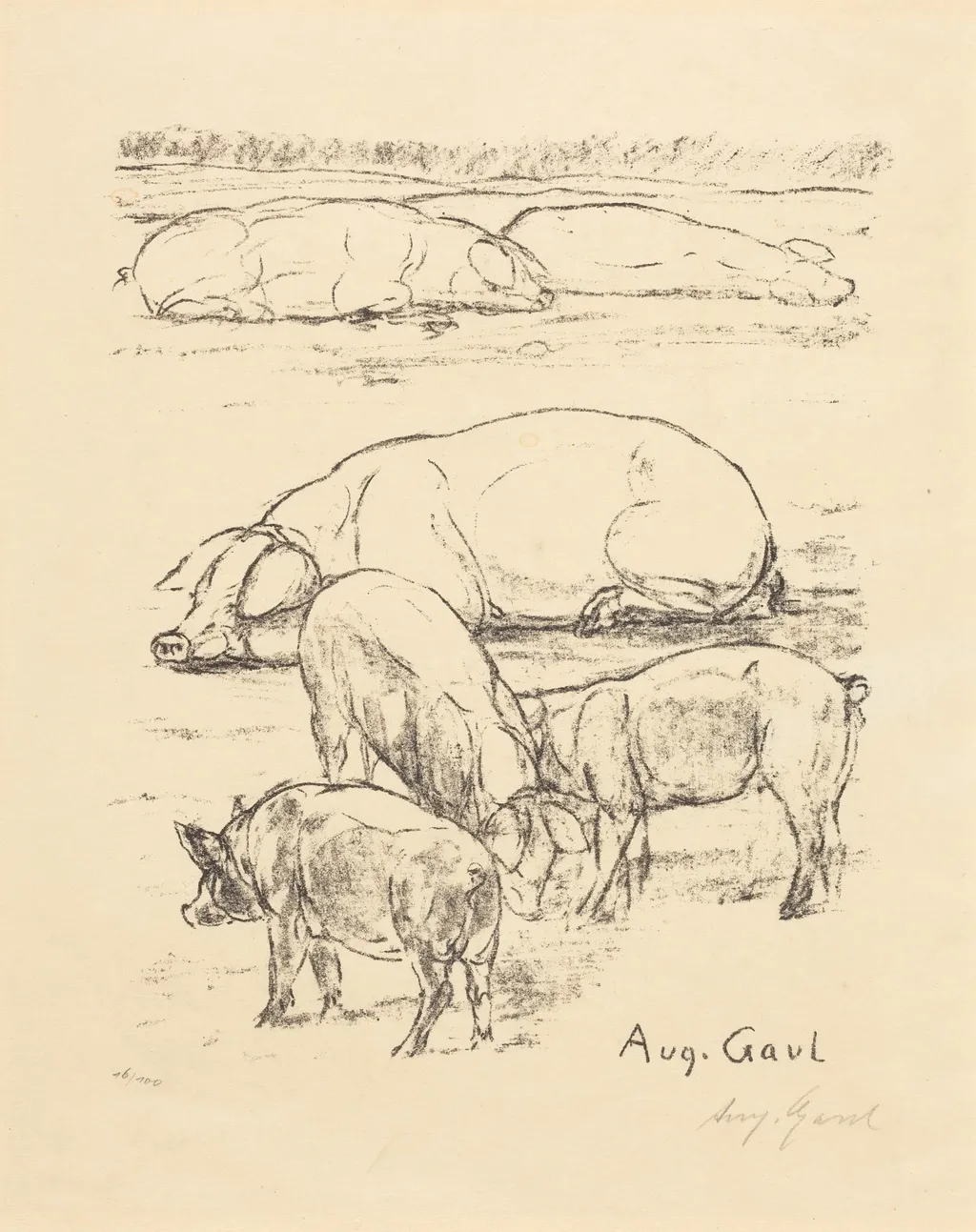
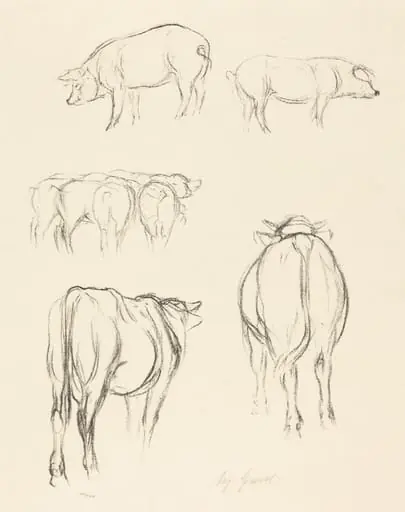
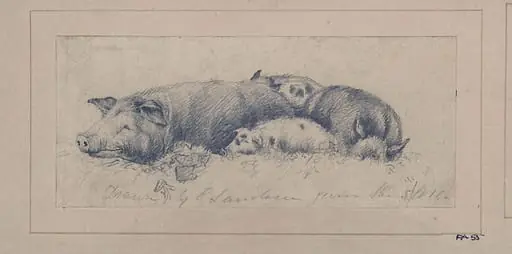
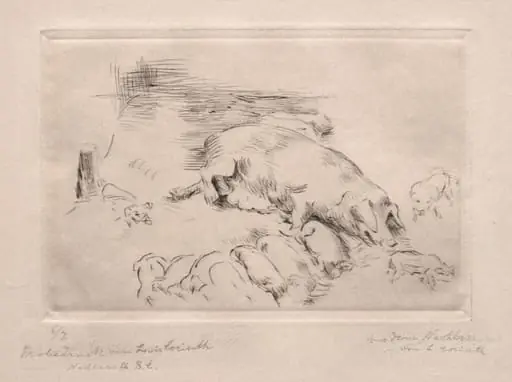
Pigs is an ink print by the Impressionist artist August Gaul. It dates from 1895 and is held in the collection of the Rosenwald Collection.
About this work
Overview
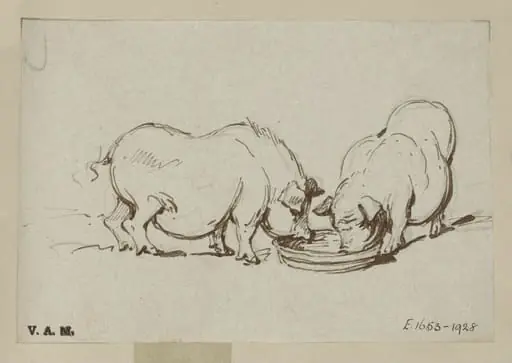
Pigs is a 1895 lithograph by August Gaul, a German sculptor and expressionist artist. The print depicts three plump pigs rooting in the dirt, showcasing Gaul's affinity for animal subjects.
Subject & Meaning
The subject of pigs reflects Gaul's rural upbringing on a farm. The image may symbolize a connection to his past, while its expressionist undertones could imply a primal or instinctual theme.
Technique & Style
Gaul's use of simple shapes and strong lines characterizes the lithograph. The expressive handling of ink is notable, particularly in the way it captures light on the pigs' backs.
History & Provenance
Created in 1895, Pigs predates Gaul's involvement with the Berlin Secession, which he would co-found later. The work's early provenance is not detailed here, but it is now part of a collection that also includes another Gaul lithograph at the National Gallery of Art, Washington.
Context
Pigs situates Gaul within the early 20th-century German art scene, where he was a prominent figure. His expressionist themes in this work align with the movement's emphasis on subjective experience and distortion of form.
Legacy
As part of Gaul's oeuvre, Pigs contributes to his reputation as a leading artist in early 20th-century Germany, known for both sculptures and prints of animals.
Artist & collection
Artist
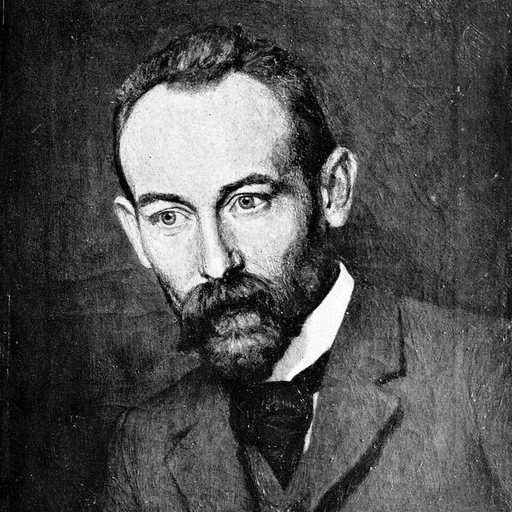
August Gaul (German: ; October 22, 1869 – October 18, 1922) was a German sculptor and expressionism artist, born in Großauheim (now part of Hanau).