Artwork
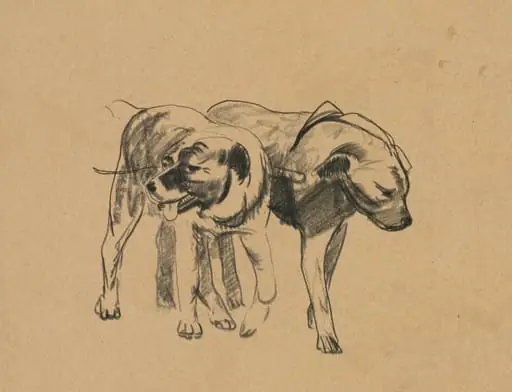
Study of Dogs
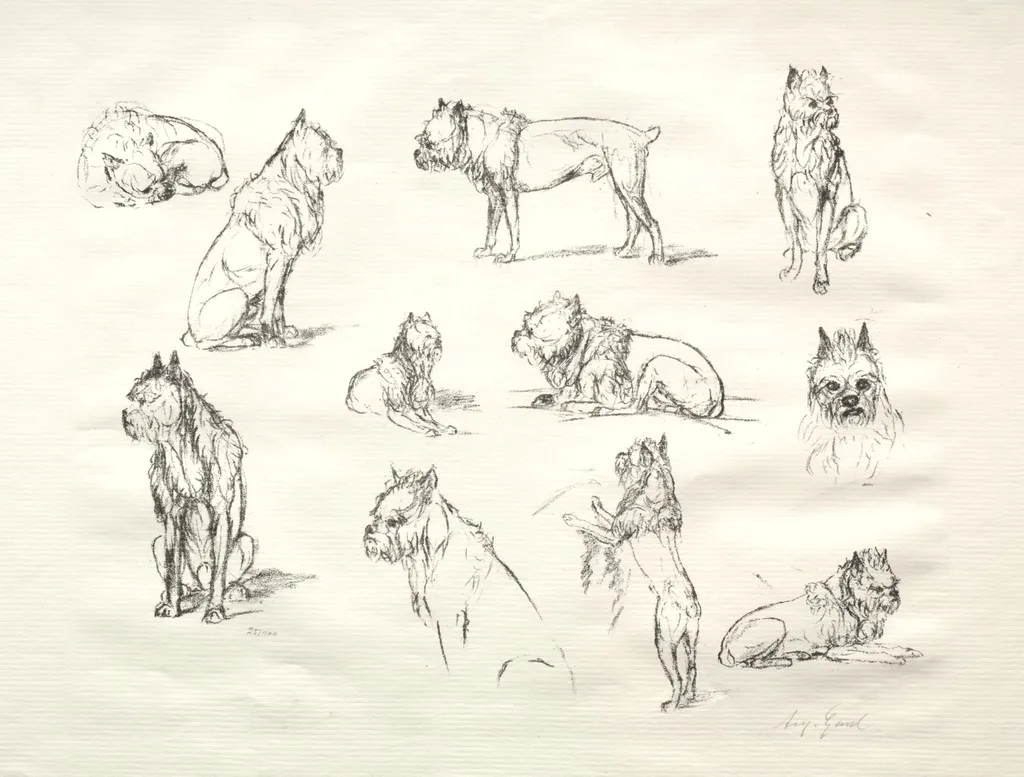
Study of Dogs is a print by the Impressionist artist August Gaul. It dates from 1905 and is held in the collection of the Cleveland Museum of Art.
About this work
Overview
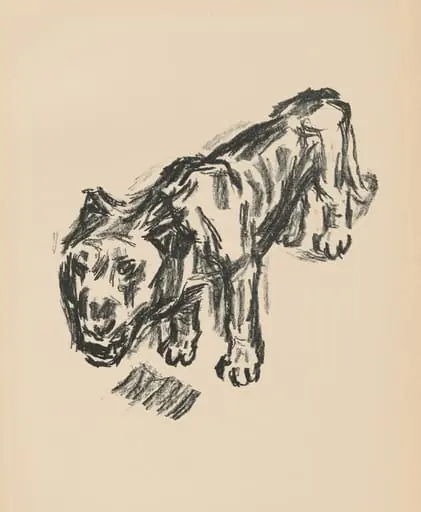
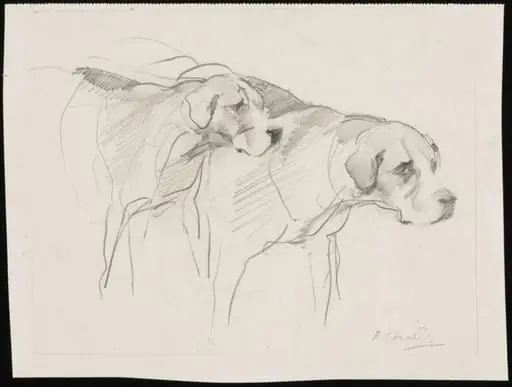
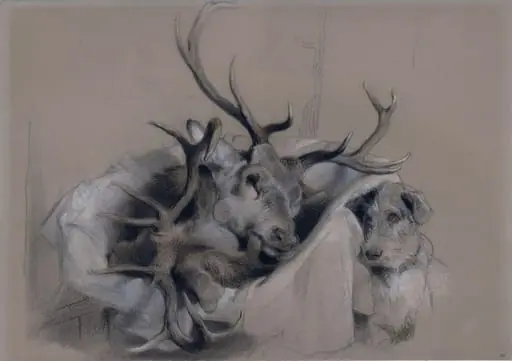
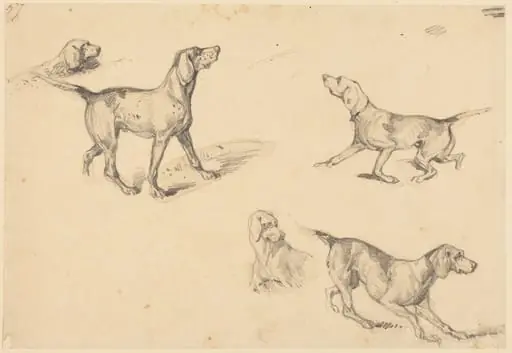
Executed in pencil and charcoal, it captures dogs and a horse in loose, rapid strokes, alongside smaller creatures like a rabbit and a cat.
Created in 1905 by German sculptor August Gaul, this sheet of sketches is a working study of animals observed in motion and repose. Executed in pencil and charcoal, it captures dogs and a horse in loose, rapid strokes, alongside smaller creatures like a rabbit and a cat. Unlike polished finished works, these drawings function as visual notes, prioritizing gesture and posture over detail. The page bears a dated stamp, confirming its origin in Gaul’s active period before World War I.
Subject & Meaning
The drawings center on domestic and rural animals, rendered without idealization. Gaul’s focus on their natural postures—sitting, lying, standing—suggests an interest in authentic behavior rather than symbolic meaning. The inclusion of a horse and small pets expands the study beyond dogs, hinting at a broader curiosity about animal life. These sketches reflect a quiet, observational approach, treating animals as subjects worthy of direct attention in their everyday states.
Technique & Style
Gaul employed swift, unrefined lines using pencil and charcoal to convey movement and weight. Forms are simplified, contours blurred or interrupted, emphasizing energy over precision. The absence of shading or fine detail reinforces the immediacy of the sketches. This method aligns with his sculptural practice, where gesture and mass were prioritized over ornamentation. The page’s spontaneity reveals an artist working directly from life, recording observations as they occurred.
History & Provenance
The work resides in the Cleveland Museum of Art, acquired as part of a collection tied to Gaul’s broader artistic output. Though not exhibited widely during his lifetime, such studies were integral to his process. Gaul, a founding member of the Berlin Secession, maintained close ties with influential dealers like the Cassirers, who supported modern German art. The sketch’s survival suggests it was preserved by collectors or institutions attentive to his preparatory work.
Context
In early 20th-century Berlin, artists like Gaul turned to everyday subjects as a counter to academic traditions. His animal studies aligned with broader trends in Realism and Expressionism, where authenticity and emotional presence replaced idealized forms. Gaul’s engagement with animal life mirrored a wider cultural interest in nature and movement, influenced by scientific observation and the rise of photography as a tool for capturing transient moments.
Legacy
Though Gaul is better known for his bronze sculptures of animals, these sketches reveal the foundation of his visual language. They demonstrate how direct observation informed his three-dimensional work, bridging drawing and sculpture. Today, such studies are valued not as finished pieces but as evidence of an artist’s process—offering insight into the quiet, persistent attention that underlies much modern art.
Artist & collection
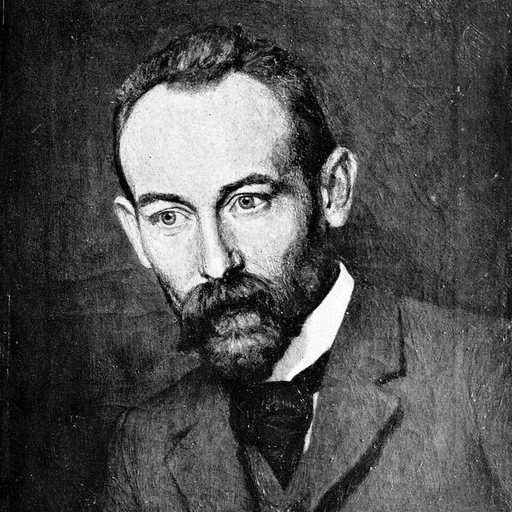
Artist
August Gaul (German: ; October 22, 1869 – October 18, 1922) was a German sculptor and expressionism artist, born in Großauheim (now part of Hanau).