Artwork
English Beggar
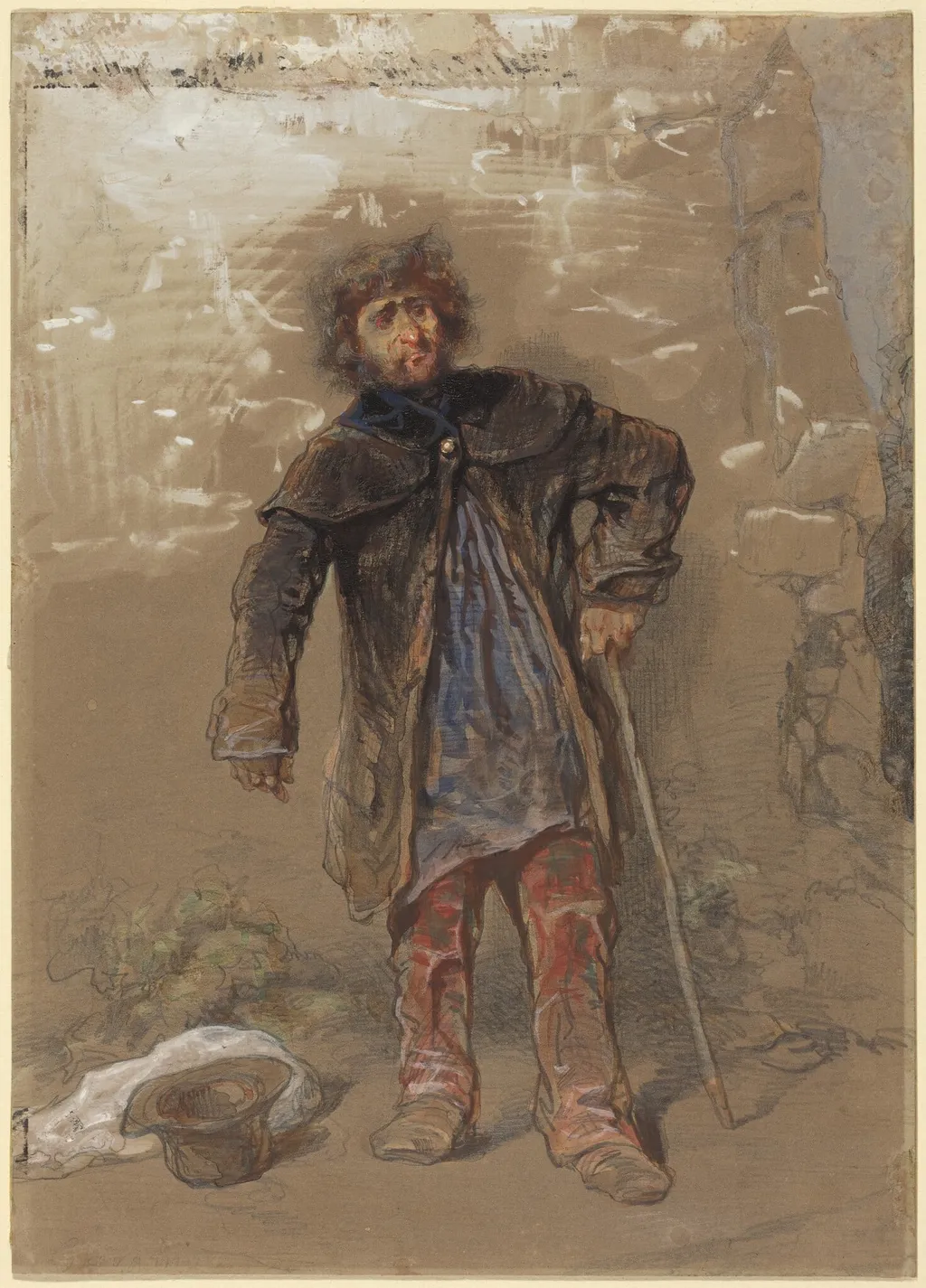
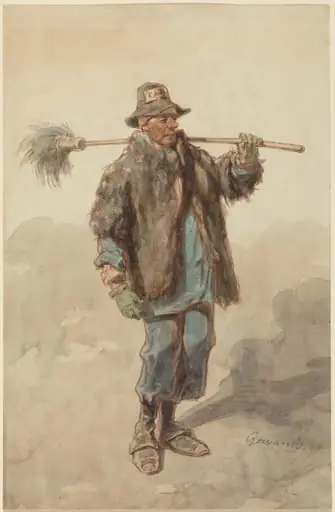
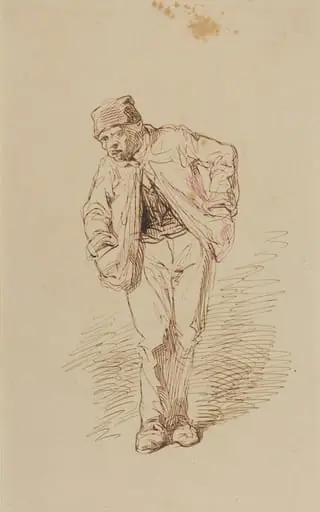
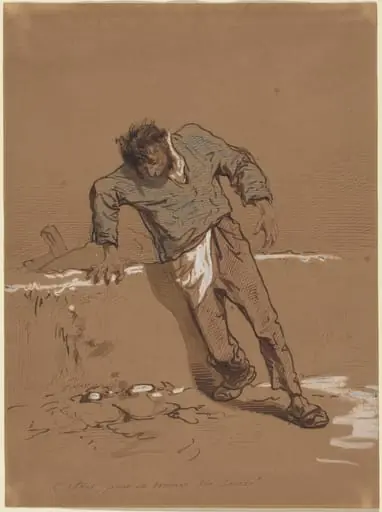
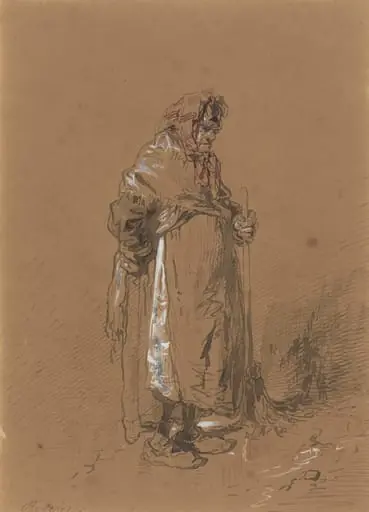
English Beggar is a graphite drawing by the Romanticist artist Paul Gavarni. It dates from 1835 and is held in the collection of the National Gallery of Art.
About this work
Overview
Created in 1835 by the French artist Gavarni, this drawing combines graphite, watercolor, and white highlights to capture a solitary figure in urban destitution. Though executed with precision, the work avoids sentimentality, presenting its subject with quiet objectivity. The medium’s limitations—subtle washes and sparse tonal contrasts—enhance the sense of fragility and exposure.
Subject & Meaning
The cane in his left hand suggests dependence, while his averted gaze and stillness imply resignation rather than supplication.
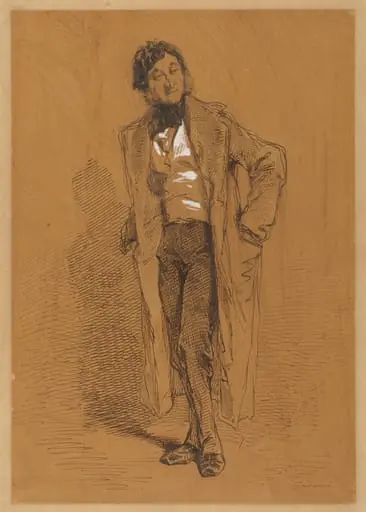
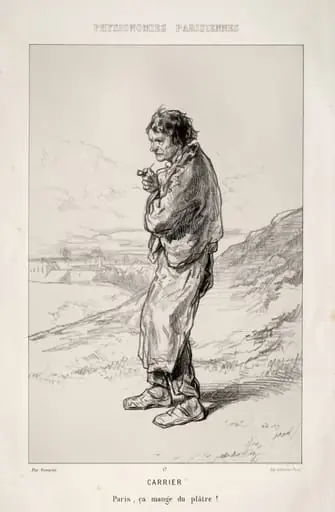
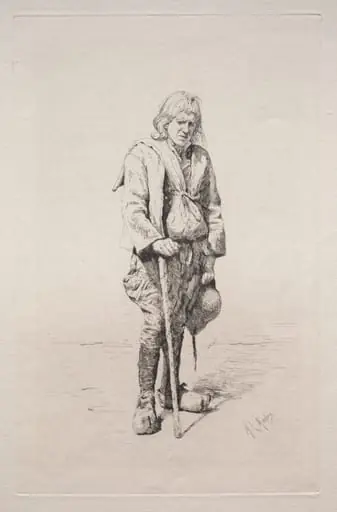
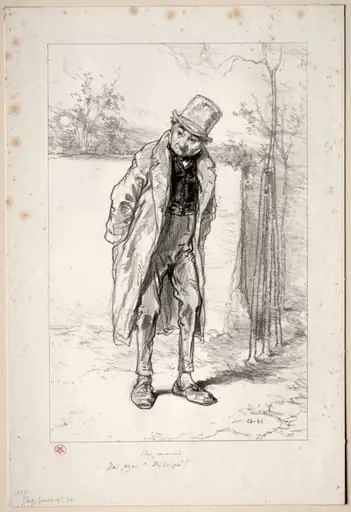
The figure is a man in worn clothing, standing before a plain stone wall, his posture rigid yet weary. His tattered coat, red trousers, and pale, unshaven face convey material hardship. The cane in his left hand suggests dependence, while his averted gaze and stillness imply resignation rather than supplication. The image resists moralizing, instead offering a silent testament to marginalization in 19th-century society.
Technique & Style
Gavarni employed fine graphite lines to define form and texture, layered with translucent watercolor washes to suggest shadow and fabric weight. White pigment was sparingly applied to highlight edges and create the illusion of light catching worn cloth or skin. The restrained palette and deliberate roughness in brushwork mirror the subject’s condition, avoiding idealization while maintaining structural clarity.
History & Provenance
The drawing was produced during Gavarni’s early career, before his rise as a celebrated illustrator for French periodicals. It likely originated as a study for broader social commentary, though no record confirms its initial ownership or exhibition history. Its survival as a standalone work reflects its value as a personal observation rather than a commissioned piece.
Context
In 1830s France, urban poverty was increasingly visible amid industrialization and political instability. Artists like Gavarni turned from historical or romantic themes to document everyday life among the poor. This drawing aligns with a growing interest in social realism, though it remains understated compared to later, more overtly political works of the period.
Legacy
Though not widely exhibited during Gavarni’s lifetime, this drawing exemplifies his capacity to convey human dignity through restraint. It influenced later illustrators who sought to depict the marginalized without melodrama. Its quiet intensity continues to resonate as a record of individual hardship within broader societal neglect.
Artist & collection

Artist
Paul Gavarni was the pen name of Sulpice Guillaume Chevalier (13 January 1804 – 24 November 1866), a French illustrator, born in Paris.