Artwork
The Masked Ball
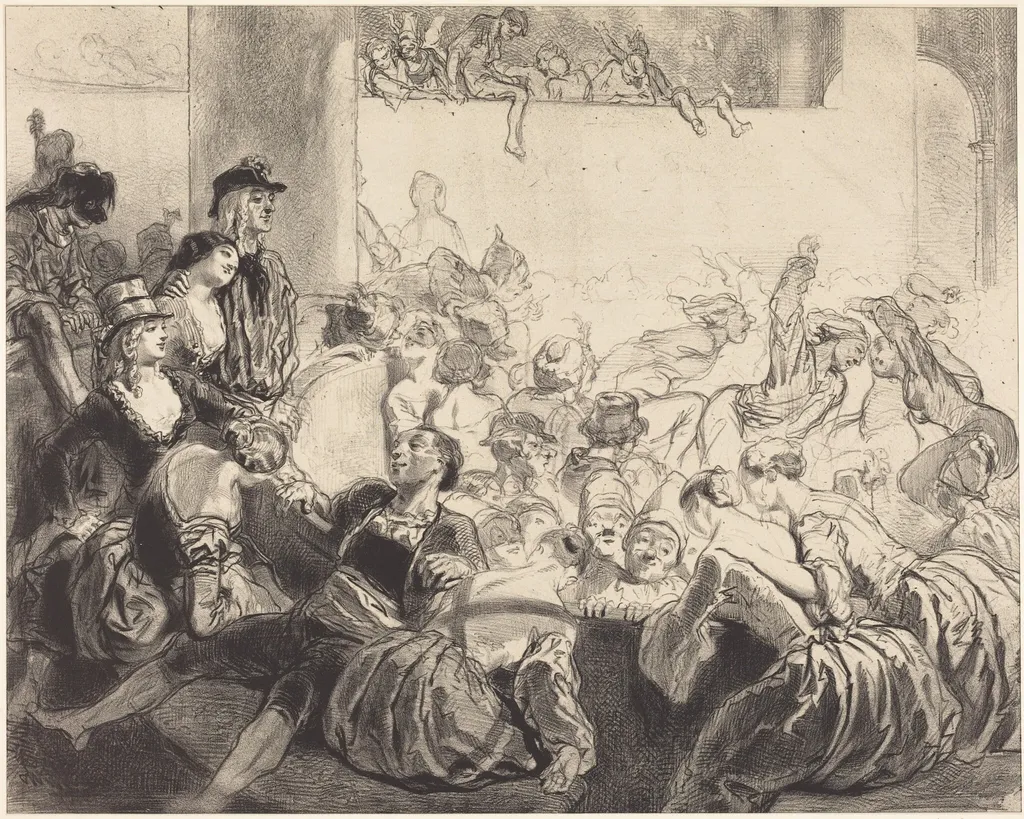
The Masked Ball is an ink print by the Romanticist artist Paul Gavarni. It dates from 1835 and is held in the collection of the National Gallery of Art.
About this work
Overview
Paul Gavarni’s lithograph *The Masked Ball* (1835) presents a bustling ballroom scene in which masked participants mingle beneath gas‑lit illumination. The composition foregrounds a mixture of elegantly dressed women and formally attired men, their concealed faces suggesting both festivity and anonymity.
Subject & Meaning
The image records a typical Parisian masked soirée of the early nineteenth century, highlighting contemporary dress, etiquette, and the social ritual of concealment. By portraying a crowd engaged in conversation and dance, Gavarni offers a glimpse into the performative aspects of public leisure and the subtle tension between visibility and disguise.
Technique & Style
Executed in lithography, the work demonstrates Gavarni’s skill in rendering fine line work and tonal variation within a single stone matrix. The artist’s characteristic caricatural observation appears in the exaggerated postures and stylized attire, while the overall layout balances detailed crowd rendering with broader atmospheric shading.
History & Provenance
Created under Gavarni’s pseudonym—Sulpice Guillaume Chevalier’s chosen artistic name—the print was part of a series of illustrations that documented Parisian life. It circulated among the burgeoning market for affordable prints, contributing to the visual record of the city’s social scenes during the July Monarchy.
Artist & collection

Artist
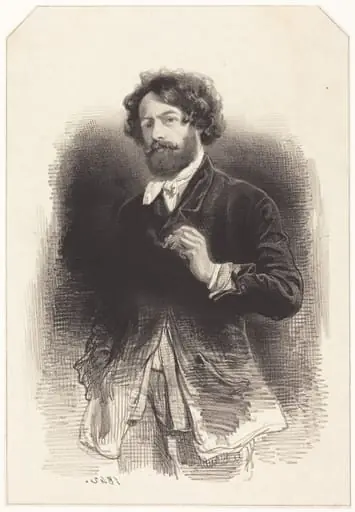
Paul Gavarni was the pen name of Sulpice Guillaume Chevalier (13 January 1804 – 24 November 1866), a French illustrator, born in Paris.

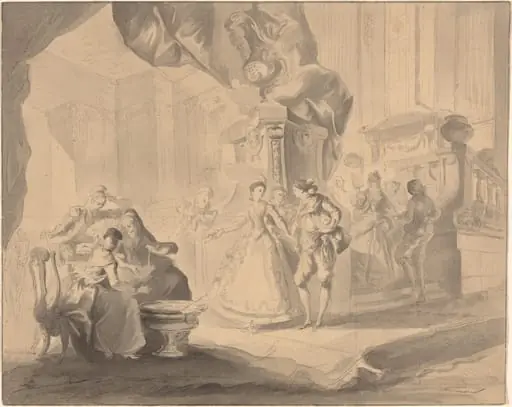 Dance in a Palace
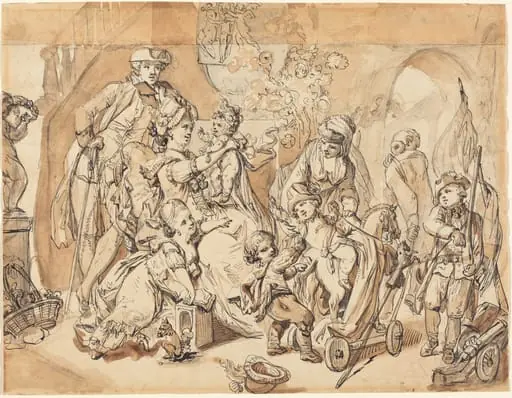 The Happy Family with Children Playing
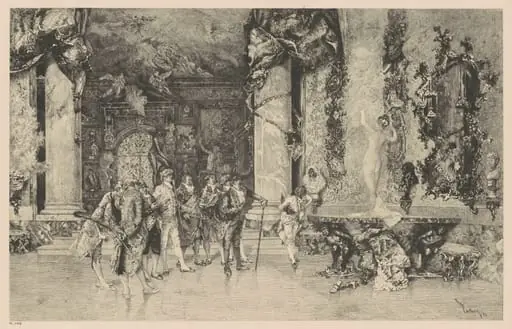 The Choice of a Model
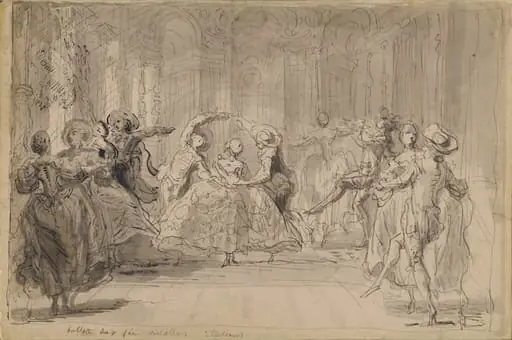 Ballet from "The Rival Fairies"
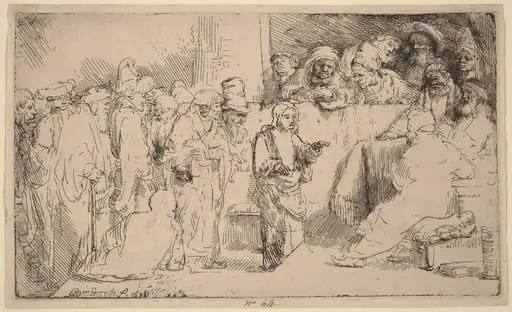 Christ Disputing with the Doctors: a Sketch
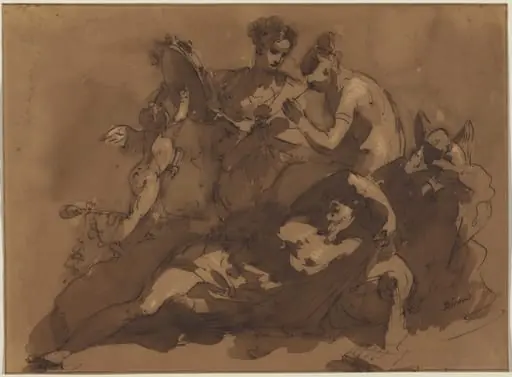 A Mythological Scene with Sea Gods
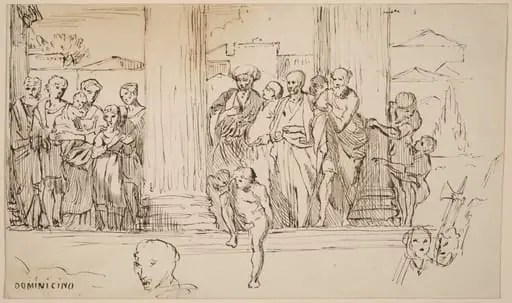 Study after Domenichino
 Troops Resting
 Rats
Rats Christ Disputing with the Doctors: a Sketch
 Italian Comedians Taking Their Bows
 The Murder of Archbishop Sharpe