Artwork
"Une de ces mines pudibones"
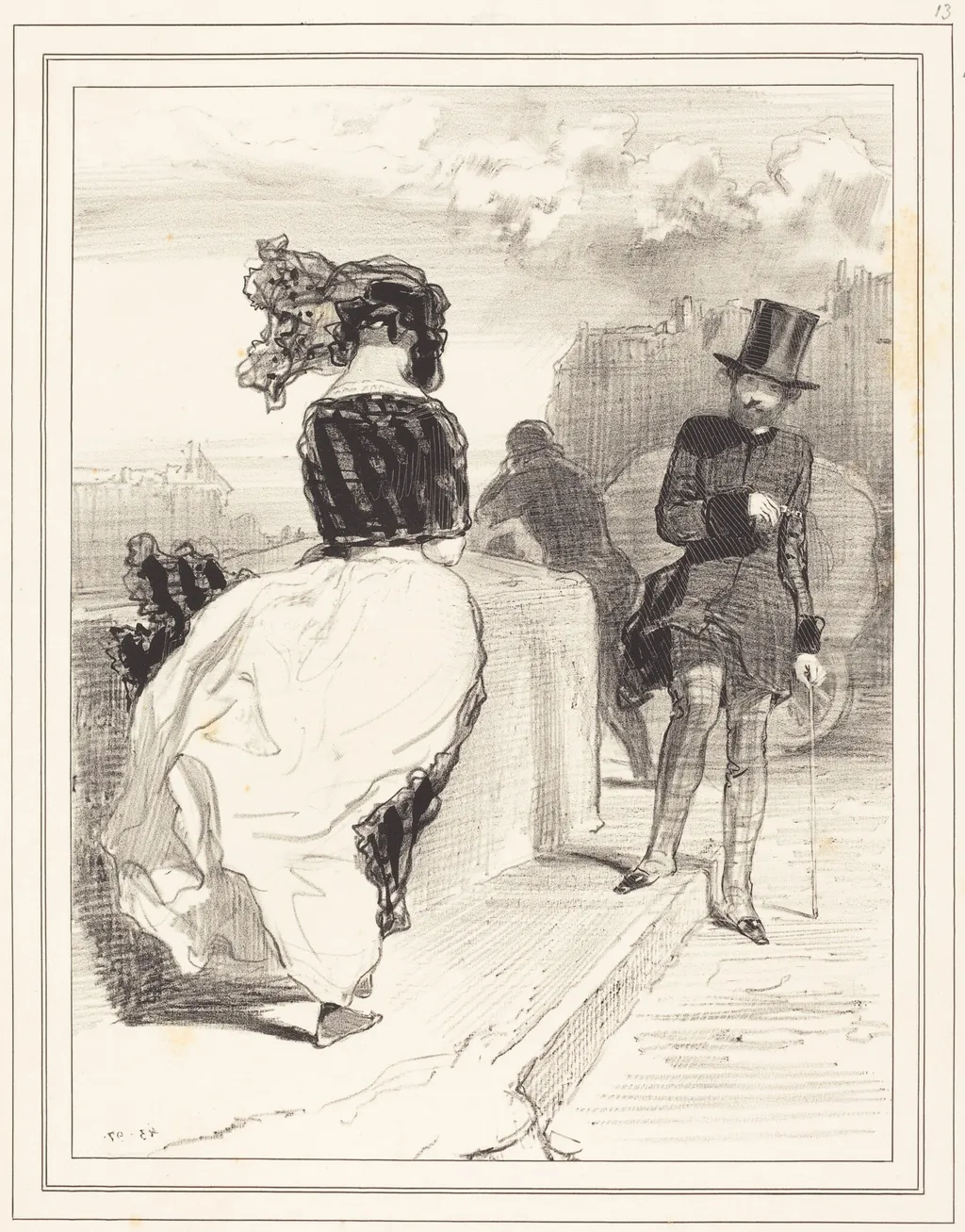
"Une de ces mines pudibones" is an ink print by the Romanticist artist Paul Gavarni. It dates from 1843 and is held in the collection of the National Gallery of Art.
About this work
Overview
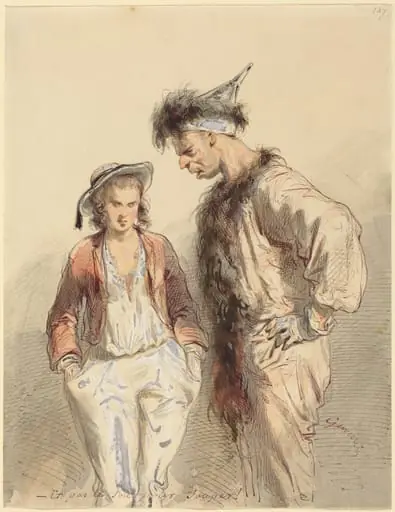
Une de ces mines pudibones is a lithograph on wove paper created by French illustrator Paul Gavarni around 1843. The work depicts a scene of everyday urban life, characteristic of Gavarni's focus on capturing contemporary social types and behaviors.
Subject & Meaning
The lithograph shows two figures on a city street: a woman seated on a bench with her back turned, wearing an old-fashioned hat and dress, and a nearby man standing with his top hat and coat, intently checking his pocket watch. The scene conveys a moment of everyday life, with the subjects' postures and actions implying a narrative of waiting or anticipation.
Technique & Style
Gavarni employed quick, sketchy lines to capture movement and mood, hallmarks of his visually witty and observant style. The lithographic technique allowed for expressive rendering of textures, such as the woman's feather or lace hat and the man's tightly buttoned coat.
History & Provenance
Created circa 1843, this work is part of Gavarni's contributions to mid-19th-century French publications that satirically and realistically depicted contemporary urban life and social types. Specific provenance details are not provided.
Context
This lithograph reflects the societal observations prevalent in French illustration during the mid-19th century, where artists like Gavarni used satire and genre scenes to comment on everyday life and the people in it.
Artist & collection

Artist
Paul Gavarni was the pen name of Sulpice Guillaume Chevalier (13 January 1804 – 24 November 1866), a French illustrator, born in Paris.

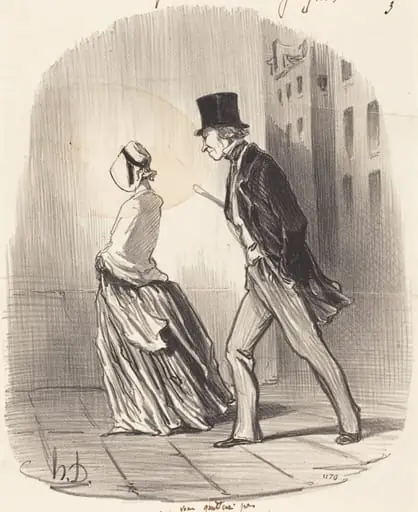 Non, madame, je ne vous quitterai pas...
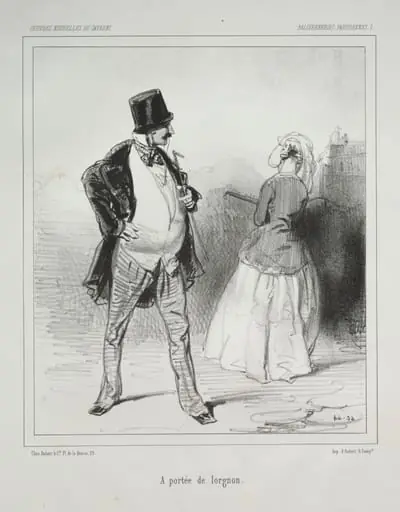 A portée de lorgnon
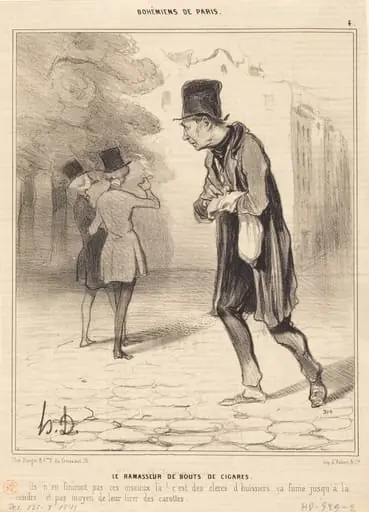 Le Ramasseur de bouts de cigares
 Untitled
 Weary and Dissatisfied with Everything
 Saperlotte!... que je voudrais... que ma femme ait fini...
 Le bar des Folies-Bergère (The Bar at the Folies-Bergère)
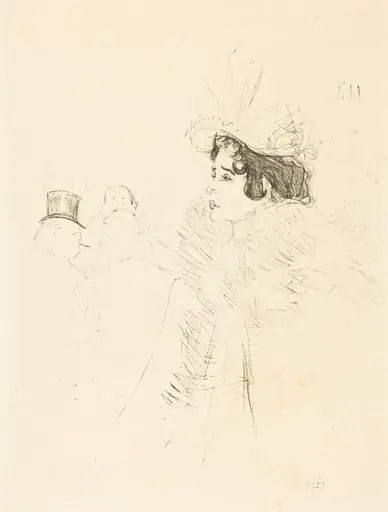 Miss May Belfort in the Irish and American Bar, rue Royale (Miss Belfort Belfort au Irish and American Bar, Rue Royale)
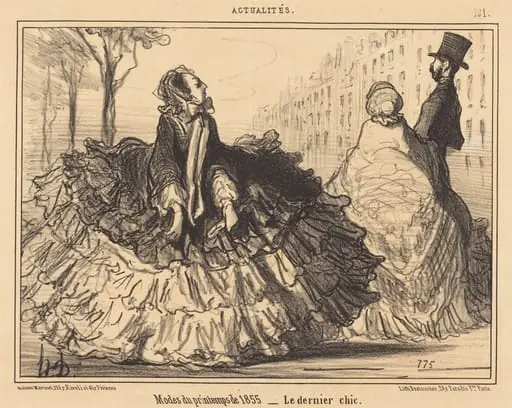 Modes du printemps de 1855
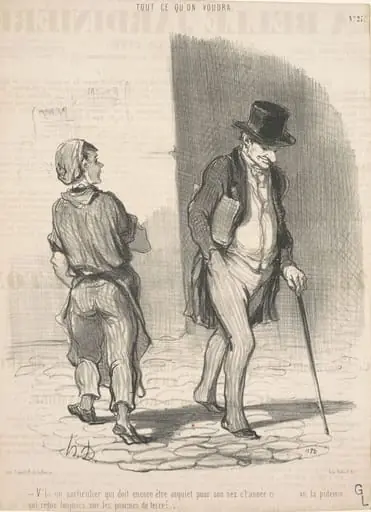 V'la un particulier qui doit ...être inquiet ...
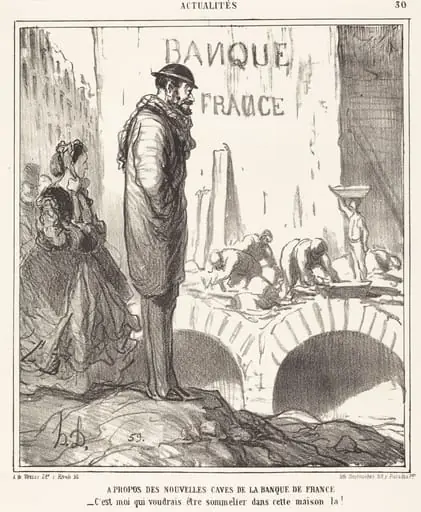 A propos des... caves de la Banque de France
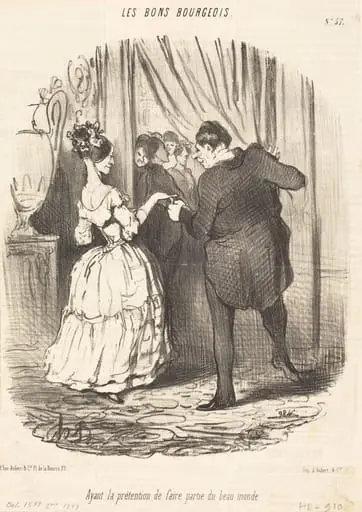 Ayant la prétention de faire partie du beau monde