Artwork
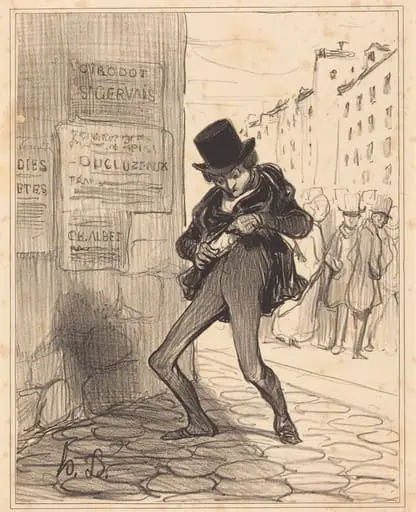
Le Ramasseur de bouts de cigares
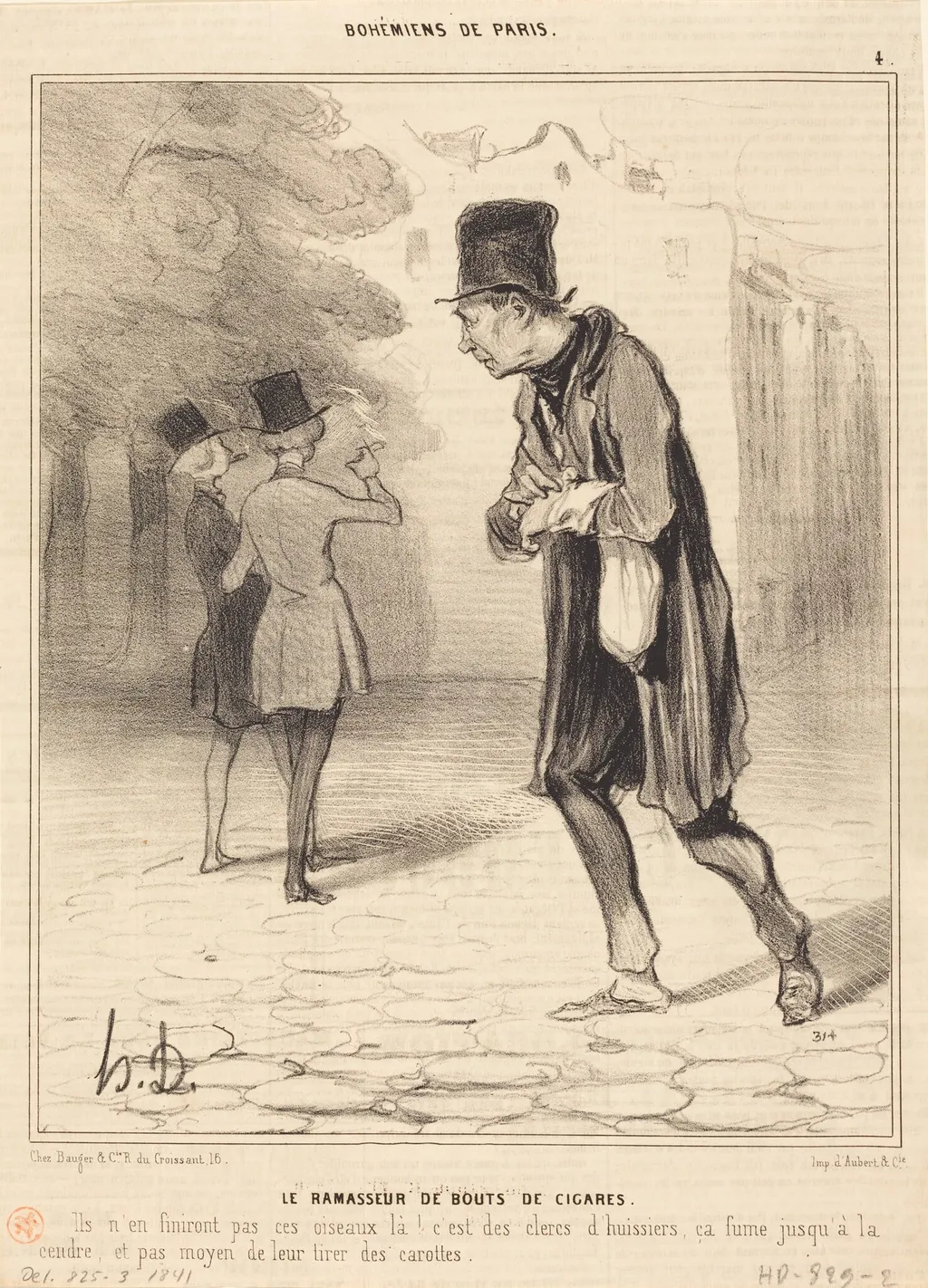
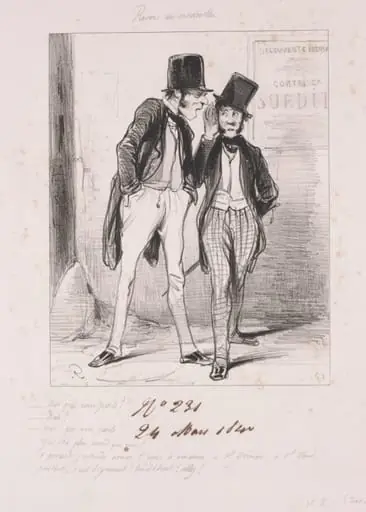
Le Ramasseur de bouts de cigares is an ink print by the Romanticist artist Honoré Daumier. It dates from 1841 and is held in the collection of the National Gallery of Art.
About this work
This image shows a man walking on the street, wearing a long coat and top hat, with a bag slung over his shoulder.
This image shows a man walking on the street, wearing a long coat and top hat, with a bag slung over his shoulder. He is looking down at two young boys standing on the sidewalk, who are also wearing hats. The boys are facing each other, and one of them appears to be holding something in his hand.
The scene is set against a backdrop of trees and buildings, with a cobblestone street running through the center. The atmosphere is one of everyday life, with the man and boys going about their daily business.
The image is a lithograph on newsprint, created by Honoré Daumier in 1841. It is an example of Romanticism, a movement that emphasized emotion and individualism. If you're interested in learning more about this style, you might want to explore the movement of Romanticism.
Overview
Created in 1841, this lithograph by Honoré Daumier portrays a street scene in Paris where a man in a long coat and top hat, carrying a bag, bends to collect discarded cigar ends. Two young boys stand nearby, also hat‑clad, engaged in a quiet exchange. The composition captures a fleeting moment of urban life on a cobbled thoroughfare framed by trees and low buildings.
Subject & Meaning
The work focuses on a low‑status worker whose task is to gather the remnants of others’ leisure—cigar stubs—highlighting the dependence of the working poor on the waste of wealthier citizens. By juxtaposing the adult collector with the idle children, Daumier underscores the pervasive class divide and the everyday survival strategies of Paris’s lower classes during a period of social tension.
Technique & Style
Executed as a lithograph on newsprint, the image relies on bold, fluid lines and stark contrasts typical of Daumier’s printmaking. The relatively rough paper surface adds a sense of immediacy, while the limited tonal range conveys the muted atmosphere of a bustling yet unglamorous street, aligning with the realist tendencies that coexisted with Romantic sensibilities in his work.
History & Provenance
Daumier produced this piece for the satirical journals *La Caricature* and *Le Charivari*, publications that regularly featured his social commentary. The lithograph emerged amid the political unrest of the July Monarchy, a time when Daumier’s prints served as visual critiques of authority and inequality. It later entered public collections as part of the broader corpus of his socially engaged prints.
Context
The early 1840s in France were marked by rapid urbanization and growing visibility of the working class. Daumier’s focus on ordinary laborers reflects a broader artistic shift toward depicting contemporary life, moving away from historical or mythological subjects. His choice of a street vendor as the central figure aligns with the era’s interest in documenting the lived experiences of everyday Parisians.
Artist & collection

Artist
Honoré-Victorin Daumier was a French painter, sculptor, and printmaker, whose many works offer commentary on the social and political life in France, from the Revolution of 1830 to the fall of the Second French Empire in 1870.









 The Collector of Cigar Stubs
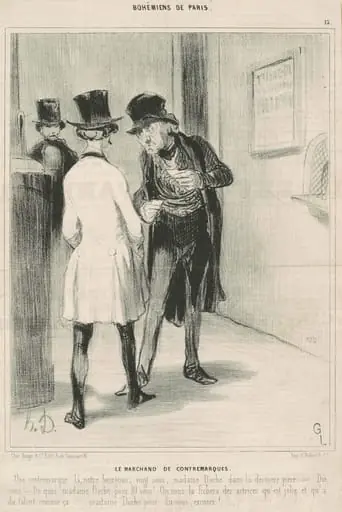 Le marchand de contremarques
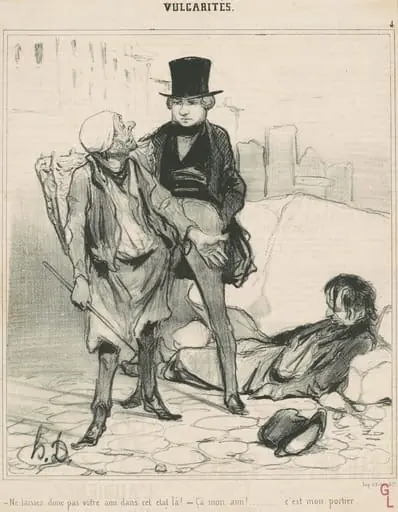 Ne laissez donc pas votre ami dans cet état la!
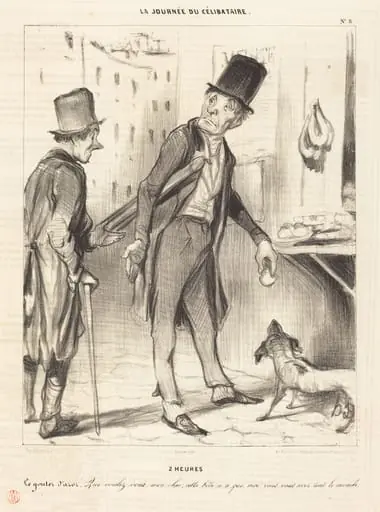 2 heures - Le gouter d'Azor
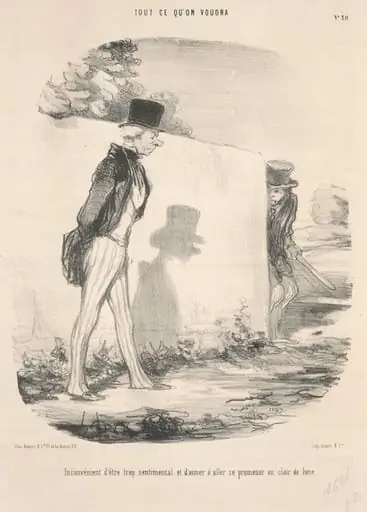 Inconvènient d'être trop sentimental ...
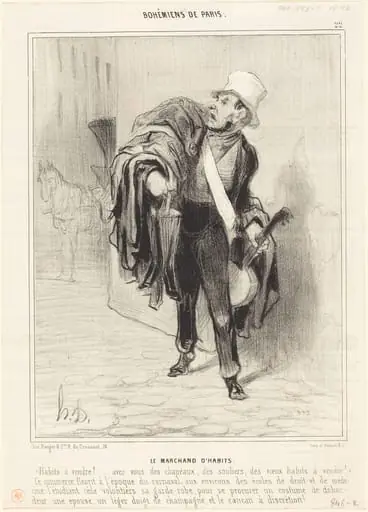 Le Marchand d'habits
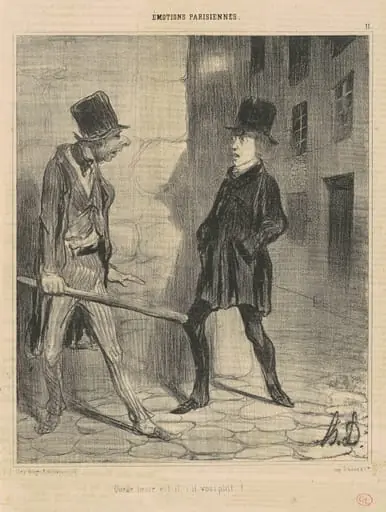
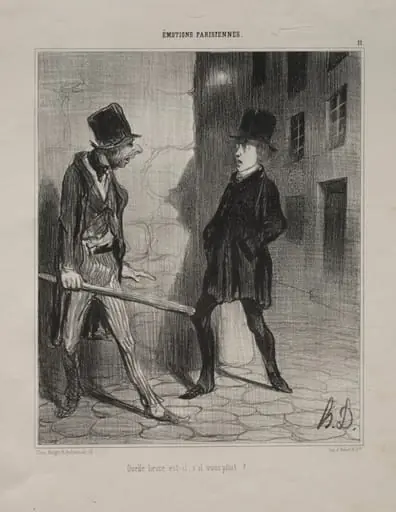 What Time is it, Please?
 Volé!... Rue vide-gousset...
 Quelle heure est'il, s'il vous plait?...
 Ah! Gringalet d'Paris... tu viendras faire danser...
 V'la un particulier qui doit ...être inquiet ...
 Revers des médailles: Moi qui vous parle