Artwork
Untitled
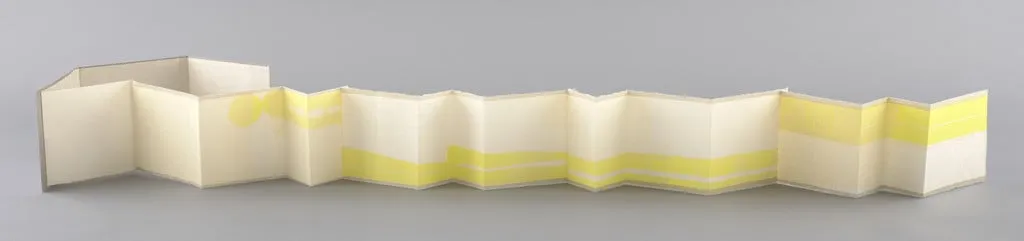
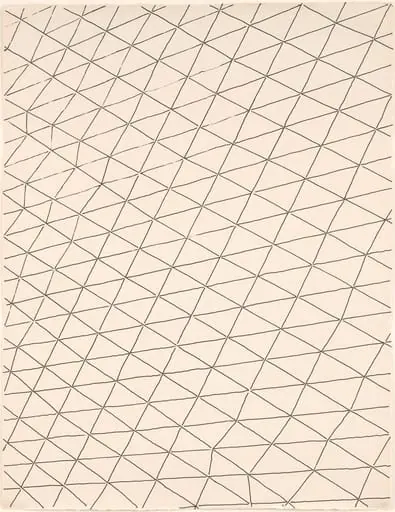
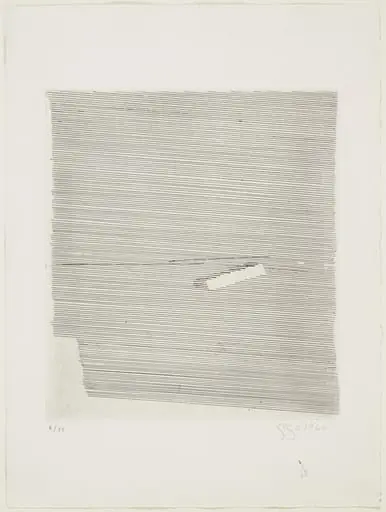
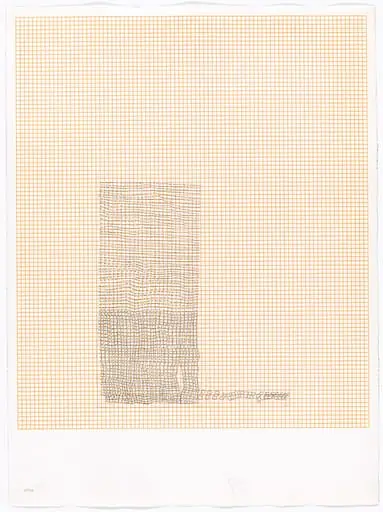
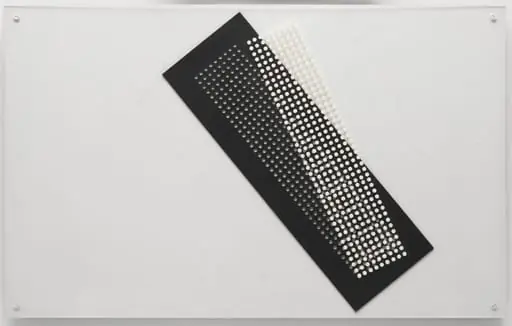
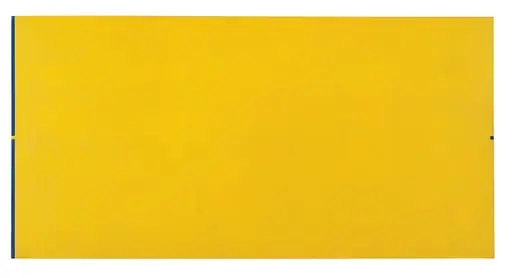
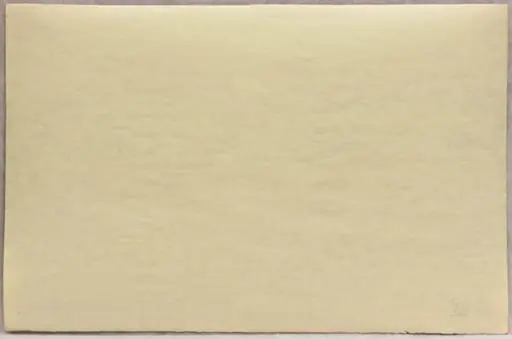
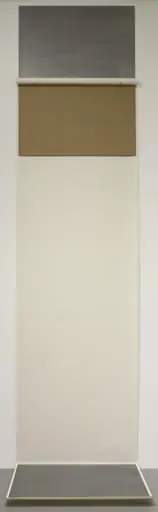
Untitled is an ink print by Gego. It dates from 1966 and is held in the collection of the Museum of Modern Art.
About this work
Overview
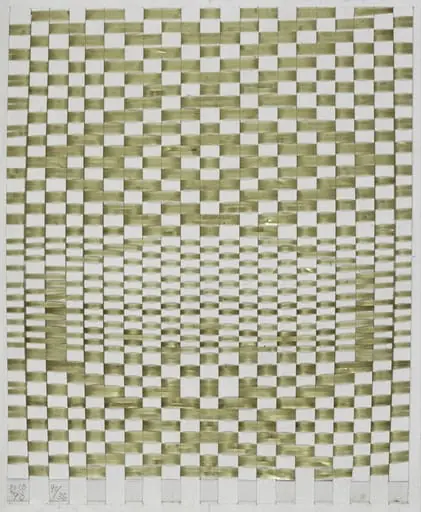
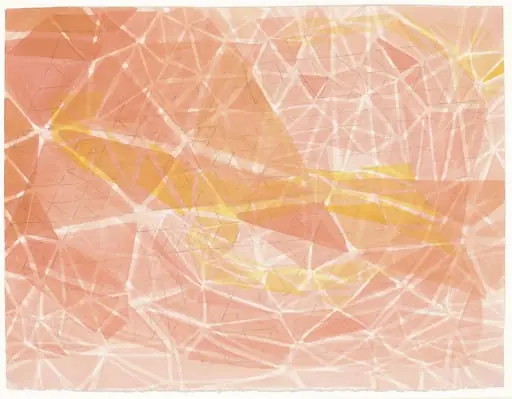
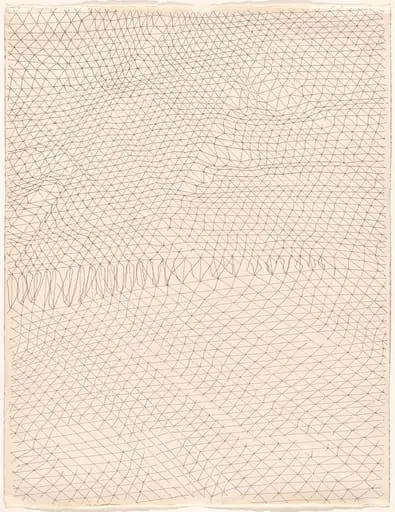
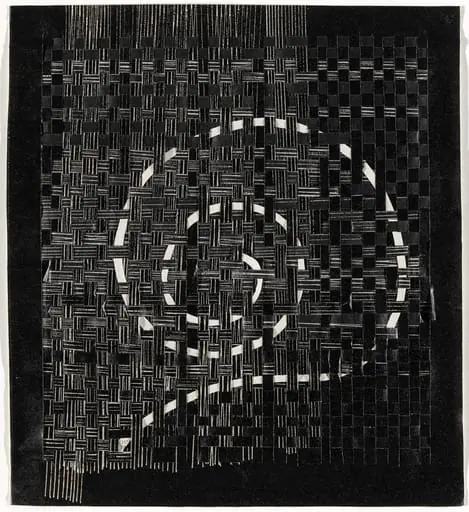
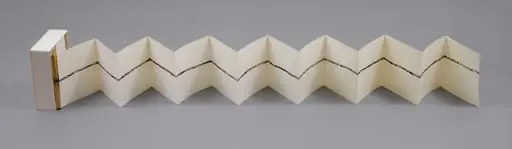
Created in 1966, this lithograph by Gego consists of four hinged paper panels, forming a continuous, foldable surface.
Created in 1966, this lithograph by Gego consists of four hinged paper panels, forming a continuous, foldable surface. The work belongs to her broader investigation of line and space, translated from her sculptural practice into print. Its modular structure invites physical interaction, blurring the boundary between static image and movable object. The medium emphasizes materiality, with the paper’s texture and irregular edges contributing to its tactile presence.
Subject & Meaning
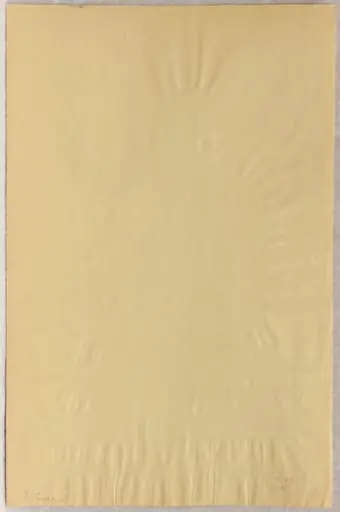
The piece avoids figurative representation, instead focusing on the interplay of subtle yellow lines and faint circular forms across a pale ground. These elements suggest movement, rhythm, and latent structure without defining a fixed subject. Gego’s approach reflects her interest in how lines can define space without enclosing it, echoing her sculptural notion of 'drawings without paper.' The work invites contemplation of impermanence and spatial possibility.
Technique & Style
Lithography allowed Gego to achieve soft, layered tones and delicate linework, with ink applied unevenly to suggest hand-made variation. The hinged construction transforms the print into a three-dimensional object, challenging traditional flatness. Edges are deliberately torn or folded, introducing irregularity into an otherwise restrained palette. The technique prioritizes process over precision, aligning with her rejection of rigid geometry in favor of organic, evolving forms.
History & Provenance
Gego produced this work during a period of intense experimentation with printmaking in Caracas, following her transition from architecture to art. While specific ownership history is not widely documented, the piece aligns with her 1960s output, when she increasingly explored seriality and modularity. It was likely made in her studio with direct involvement in printing and assembly, reflecting her hands-on approach to all stages of creation.
Context
Emerging in postwar Latin America, Gego’s work responded to international modernist trends while resisting their formal rigidity. Her use of hinged panels and linear abstraction paralleled movements like Kinetic Art and Constructivism but emphasized fragility and imperfection. In Venezuela, where she settled after fleeing Nazi Germany, her art became part of a broader cultural shift toward experimental, non-monumental forms that questioned traditional artistic hierarchies.
Legacy
This lithograph exemplifies Gego’s influence on later generations who expanded printmaking into sculptural and participatory realms. Her integration of movement, materiality, and impermanence into printed works paved the way for artists exploring the physicality of paper and the potential of non-static forms. Though less known than her large-scale installations, this piece remains a quiet but significant bridge between her drawing practice and three-dimensional work.
Artist & collection
Artist
Gertrud Louise Goldschmidt (1 August 1912 – 17 September 1994), known as Gego, was a modern German-Venezuelan visual artist.