Artwork
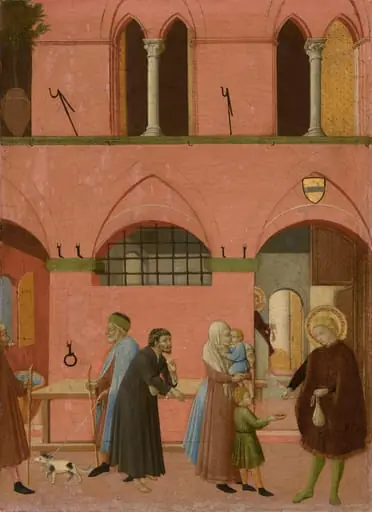
The Crippled and Sick Cured at the Tomb of Saint Nicholas
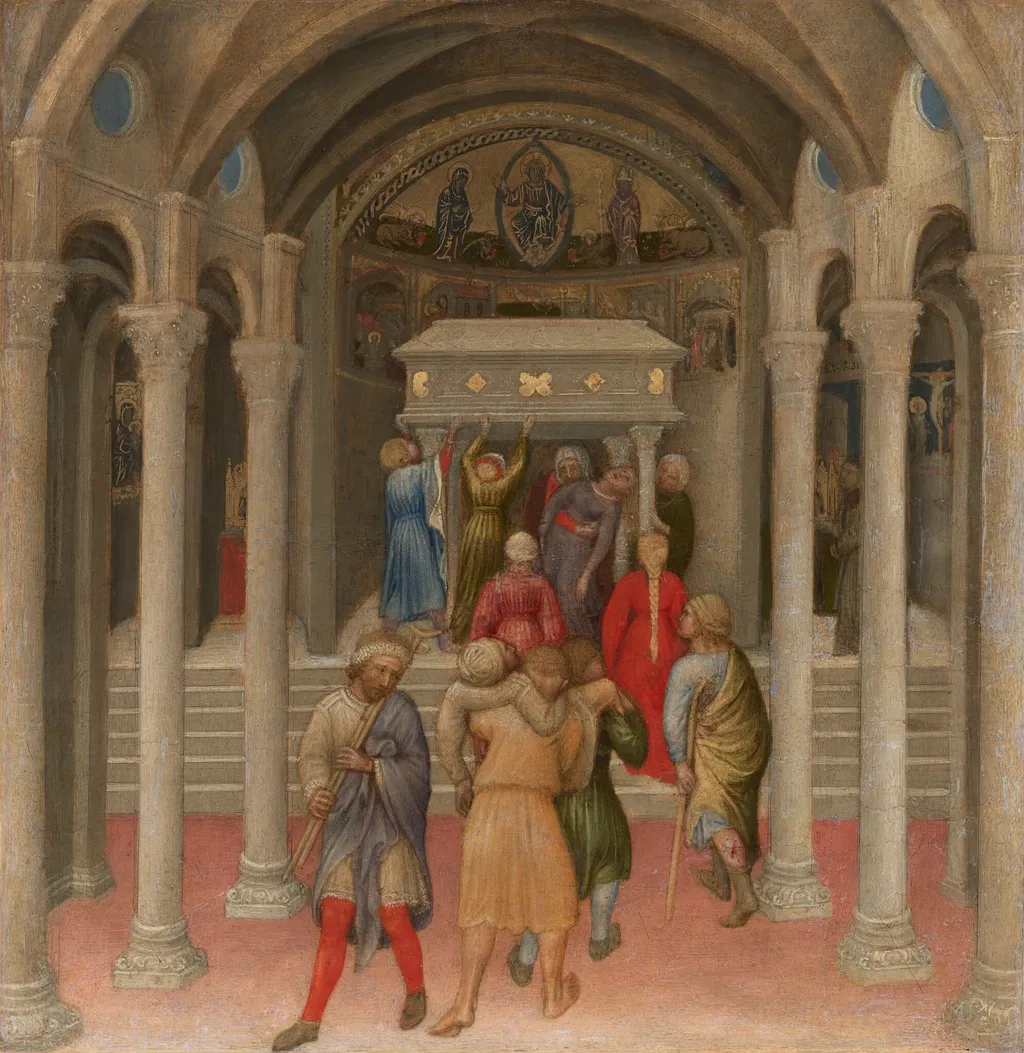
The Crippled and Sick Cured at the Tomb of Saint Nicholas is an oil painting by the Early Renaissance artist Gentile da Fabriano. It dates from 1425 and is held in the collection of the National Gallery of Art.
About this work
Overview
Gentile da Fabriano's painting, "The Crippled and Sick Cured at the Tomb of Saint Nicholas," was completed in 1425. This religious work, executed in tempera on panel, illustrates a scene of divine intervention and healing. It captures a moment of spiritual significance, characteristic of early 15th-century Italian art, focusing on the miraculous power attributed to Saint Nicholas.
Subject & Meaning
A central focus is a richly adorned tomb, draped with cloth and featuring golden embellishments, around which several figures gather.
The painting portrays a bustling scene within an elaborate architectural setting, characterized by tall arches and red floors. A central focus is a richly adorned tomb, draped with cloth and featuring golden embellishments, around which several figures gather. Among them, individuals in vibrant red, blue, and green robes observe as others transport a man on a stretcher, signifying the miraculous cures occurring at the saint's resting place. The composition conveys both activity and reverence.
Technique & Style
Executed in tempera on panel, the artwork demonstrates the luminous quality and precise detail achievable with this medium. Gentile da Fabriano employed a palette of vivid colors, evident in the bright red, blue, and green robes of the figures. The architectural elements, such as the grand stone room, tall arches, and decorated columns, are rendered with meticulous attention, reflecting the artist's characteristic approach to creating richly textured and visually engaging narratives.
Own this work as a print
Artist & collection

Artist
Gentile da Fabriano was a traveler who followed the money. Around 1420 he landed in Florence chasing richer patrons than his Umbrian hometown could offer. He liked gold leaf more than gold coins—his paintings shimmer…