Artwork
Adoration of the Magi
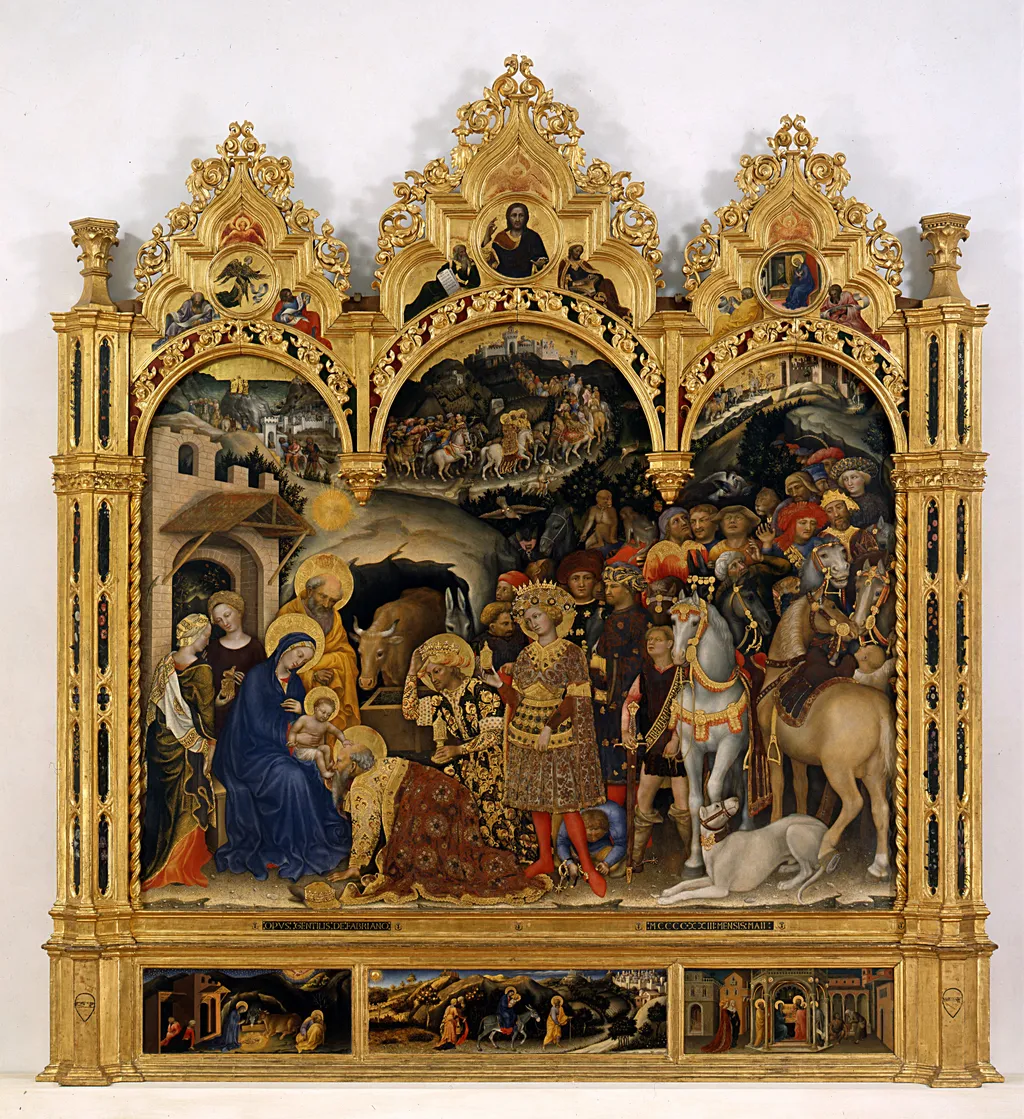
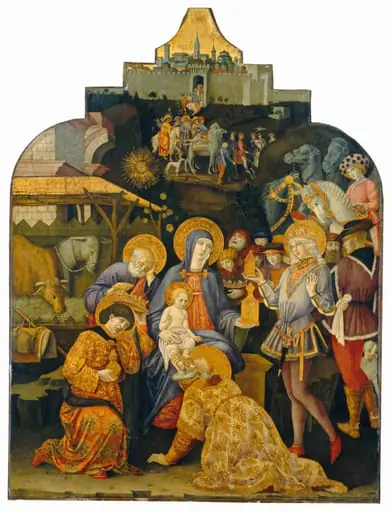
Adoration of the Magi is a tempera painting by the Early Renaissance artist Gentile da Fabriano. It dates from 1423 and is held in the collection of the Uffizi Gallery.
About this work
Overview
The work exemplifies the ornate visual language of the International Gothic, combining vivid coloration with intricate gold detailing.
Gentile da Fabriano’s tempera panel, titled *Adoration of the Magi*, occupies a prominent place in the Uffizi’s collection. The composition depicts a bustling gathering around the infant Christ, surrounded by richly dressed figures, exotic animals and an elaborate architectural frame. The work exemplifies the ornate visual language of the International Gothic, combining vivid coloration with intricate gold detailing.
Subject & Meaning
The scene illustrates the biblical episode in which the three wise men present gifts to the newborn Messiah. Central to the narrative is a woman in blue cradling the child, while the magi, mounted on horses and adorned in sumptuous garments, kneel in reverence. The inclusion of exotic fauna and luxurious attire underscores the universal reach of the Christian message and the wealth of the patrons.
Technique & Style
Executed in egg tempera, the painting achieves luminous hues through layered pigments and extensive use of gold leaf. Gentile employs subtle gradations of light to suggest depth, a progressive approach for the early 15th century. The intricate ornamental arches framing the scene, together with pseudo‑Kufic script, reflect a synthesis of Gothic decorative motifs and an emerging interest in three‑dimensional space.
History & Provenance
Commissioned by the Florentine banker Palla Strozzi, the altarpiece was intended for a private chapel. Its lavish materials—gold leaf, enamel‑like jewels, and costly pigments—signaled the patron’s status. After remaining in the Strozzi collection, the panel entered the Uffizi Gallery in the 18th century, where it has been conserved and displayed as a key example of Gentile’s oeuvre.
Context
The work incorporates contemporary European conceptions of the East, evident in the magi’s opulent costumes and the inclusion of pseudo‑Arabic lettering. Such exotic references catered to the fascination with distant lands prevalent among Italian elites. The painting’s sophisticated handling of space and ornament influenced subsequent Gothic artists and foreshadowed the early Renaissance’s shift toward naturalism.
Artist & collection

Artist
Gentile da Fabriano was a traveler who followed the money. Around 1420 he landed in Florence chasing richer patrons than his Umbrian hometown could offer. He liked gold leaf more than gold coins—his paintings shimmer…