Artwork
Untitled
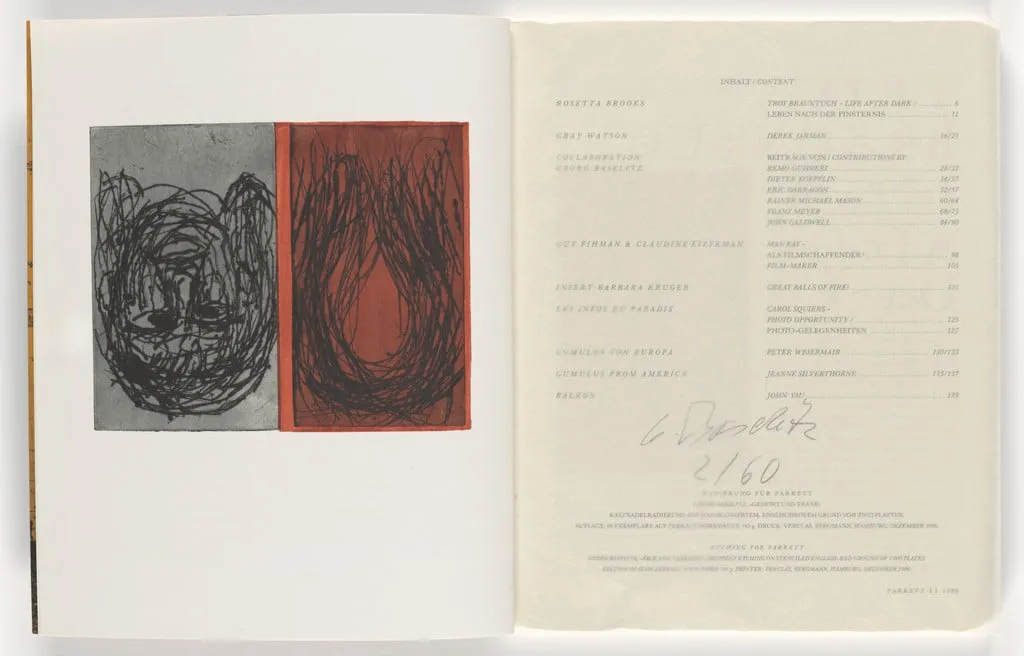
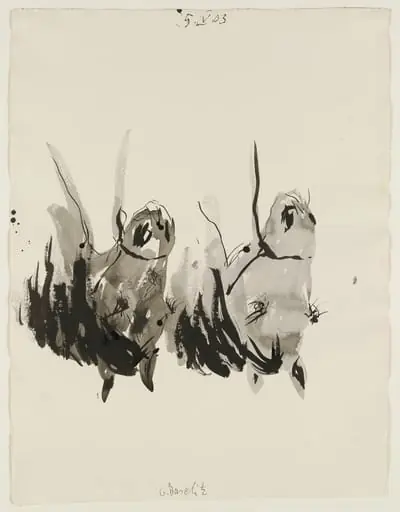
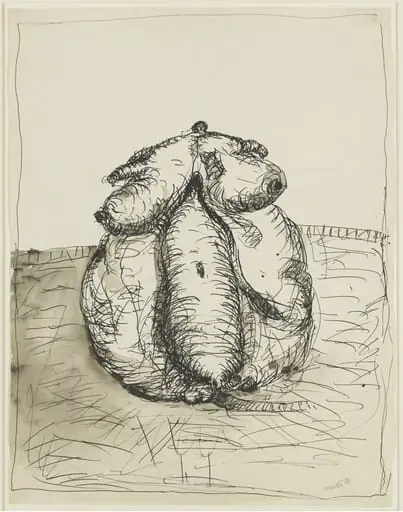
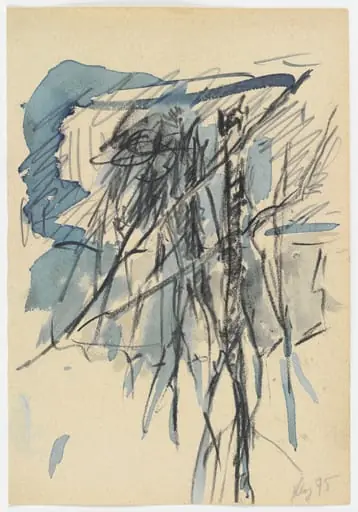
Untitled is an ink print by Georg Baselitz. It dates from 1986 and is held in the collection of the Museum of Modern Art.
About this work
Overview
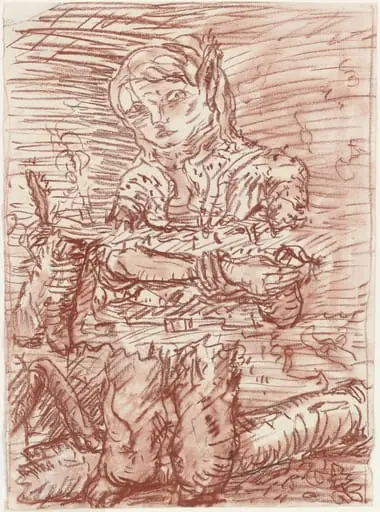
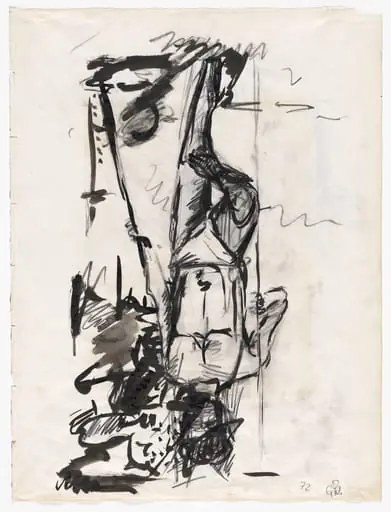
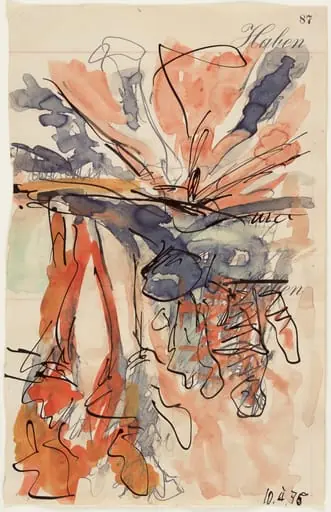
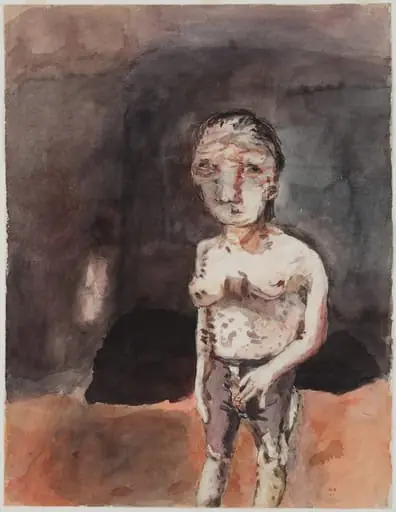
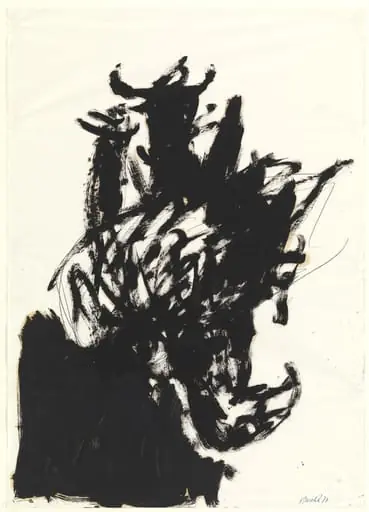
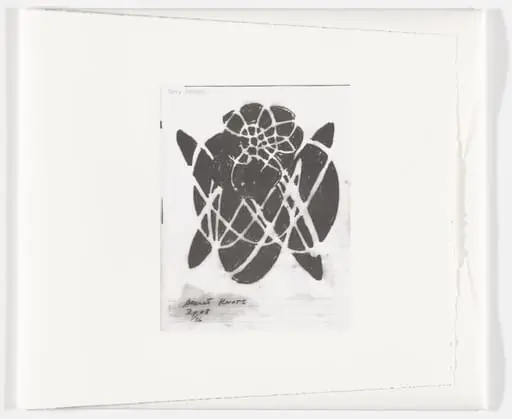
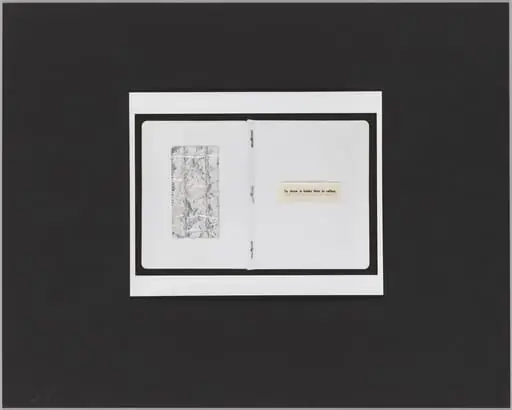
Created in 1986, this work by Georg Baselitz consists of two drypoints bound within a journal format.
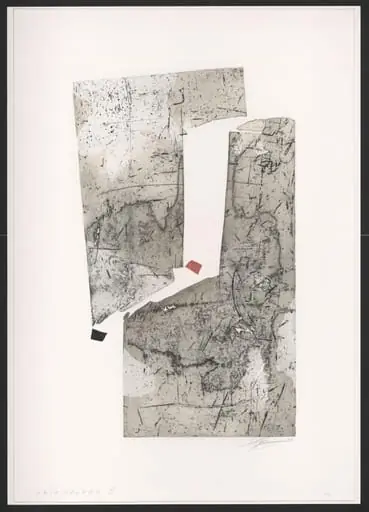
Created in 1986, this work by Georg Baselitz consists of two drypoints bound within a journal format. One plate features a dense, abstract drawing in black ink; the other presents a typed bilingual list alongside a stenciled red shape that echoes the drawing’s form. The red element, known as an English red ground, functions as a printed background rather than a mere color fill, integrating technique and composition into a single printed surface.
Subject & Meaning
The drawing depicts no recognizable figure or scene, instead offering a web of intersecting lines that suggest movement or fragmentation. The accompanying text, written in both German and English, introduces linguistic duality, while the red stencil—matching the drawing’s silhouette—acts as a visual echo. Together, they imply a relationship between image and language, absence and presence, without offering a fixed narrative.
Technique & Style
Baselitz employed drypoint for its direct, scratchy line quality, emphasizing tactile immediacy. The red shape was applied using a stencil technique known as English red ground, a method where pigment is printed as a flat background layer before the drawing is overlaid. This creates a layered effect: the drawing emerges from, rather than sits atop, the red field, blurring the boundary between ground and figure.
History & Provenance
The work entered The Museum of Modern Art’s collection as part of its broader engagement with postwar German printmaking. Its journal format reflects Baselitz’s interest in the book as an intimate, sequential medium. Though not widely exhibited, it has been studied for its experimental integration of text, color, and print processes within a single bound object.
Context
Made during a period when Baselitz was increasingly exploring fragmentation and inversion in his imagery, this piece aligns with his broader rejection of traditional representation. The use of bilingual text and printmaking techniques rooted in historical practices reflects a dialogue between personal expression and cultural memory, situating the work within late 20th-century European conceptual printmaking.
Legacy
This work contributes to the redefinition of the printed page as a site of layered meaning, influencing later artists who combine text, color, and print media in book forms. Its quiet complexity—without overt symbolism or dramatic gesture—offers a model for how material process can carry conceptual weight, expanding the possibilities of print beyond the single-image paradigm.
Artist & collection

Artist
Georg Baselitz was a German-Austrian painter, sculptor and graphic artist. In the 1960s he became well known for his figurative, expressive paintings. In 1969 he began painting his subjects upside down in an effort to…