Artwork
Still Life
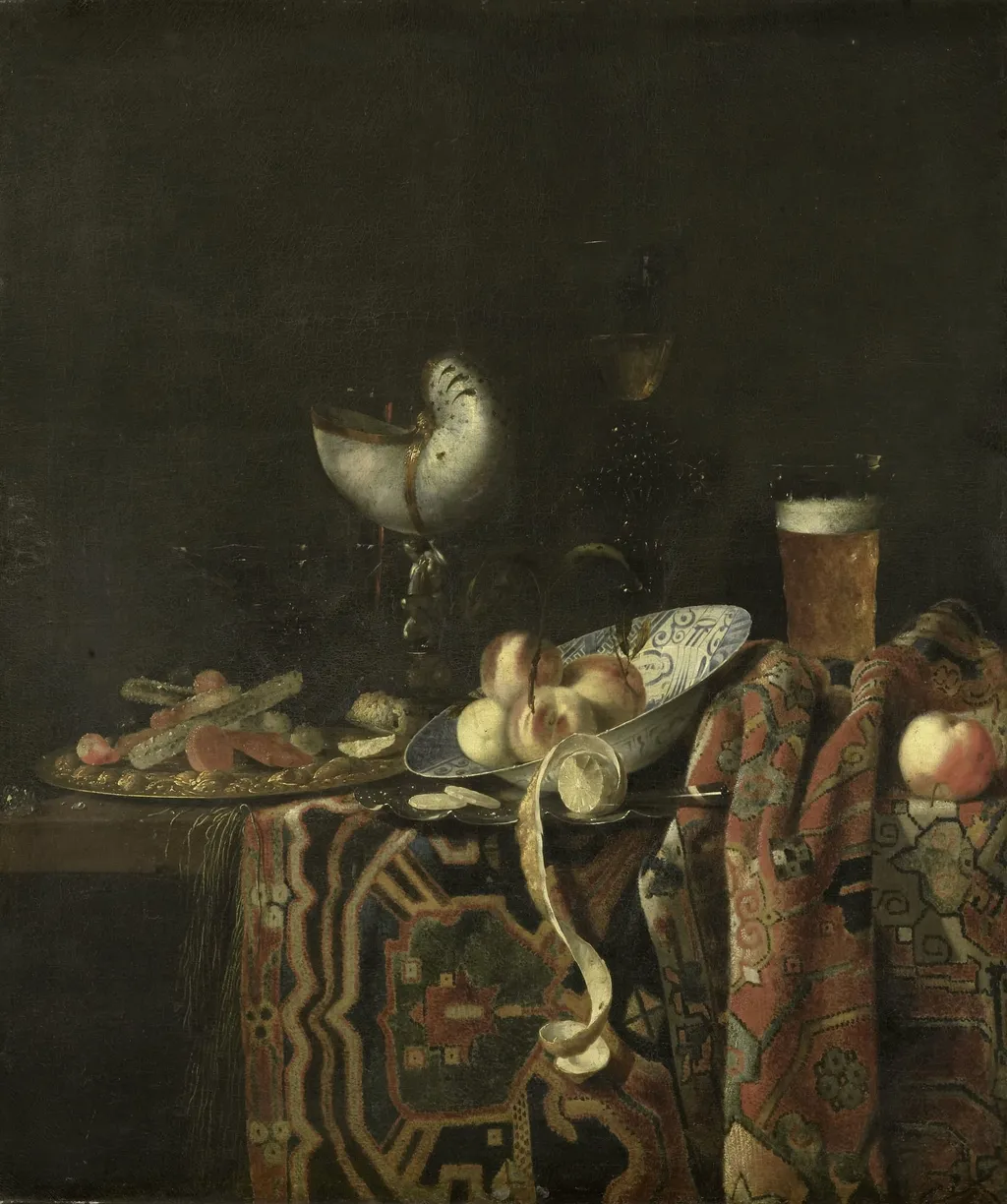
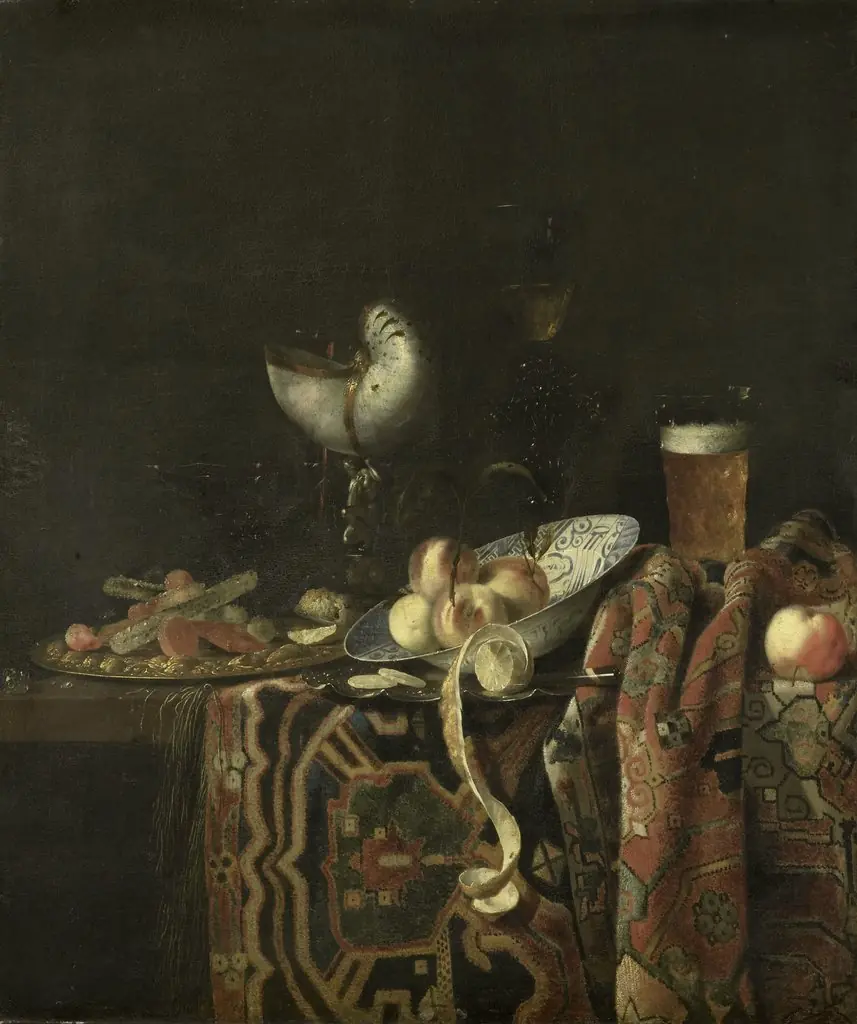
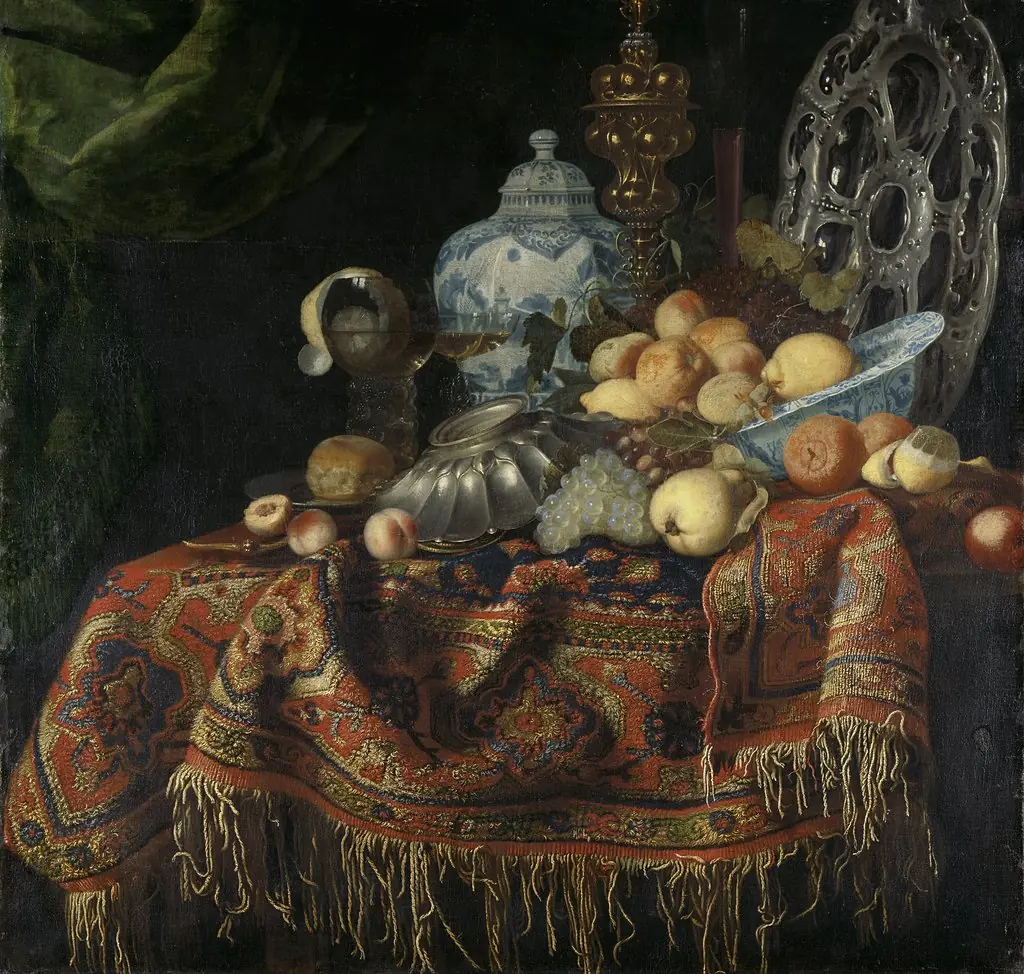
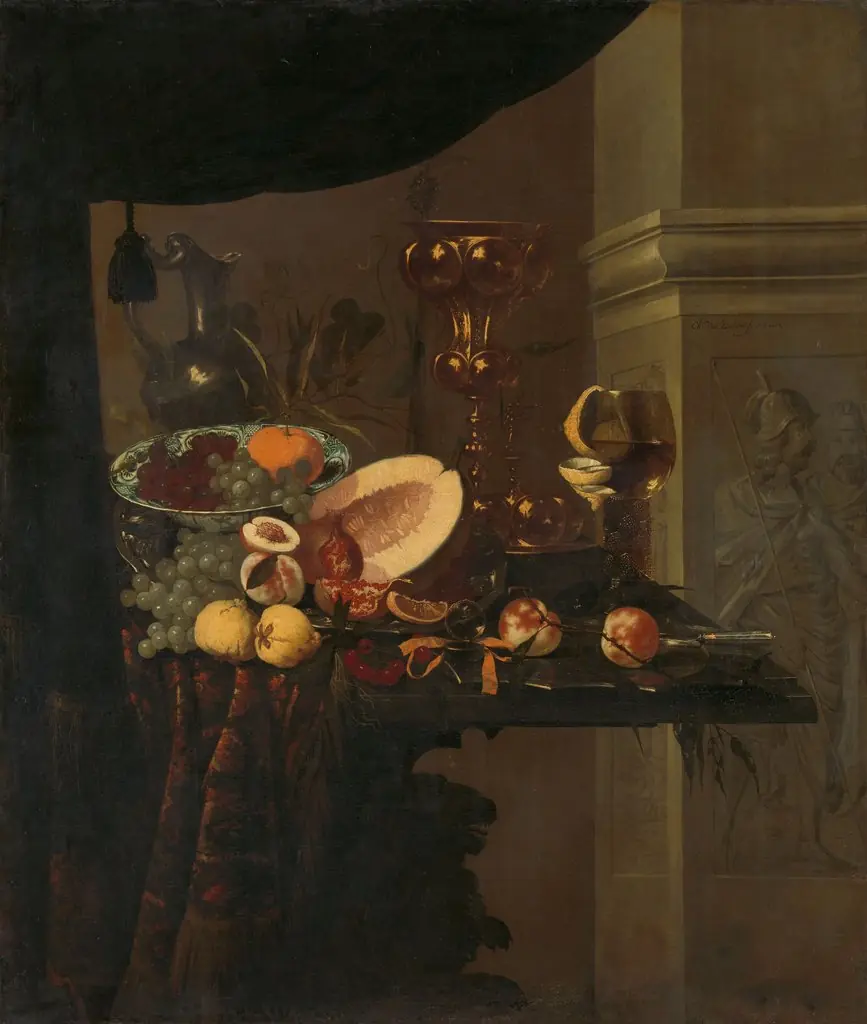
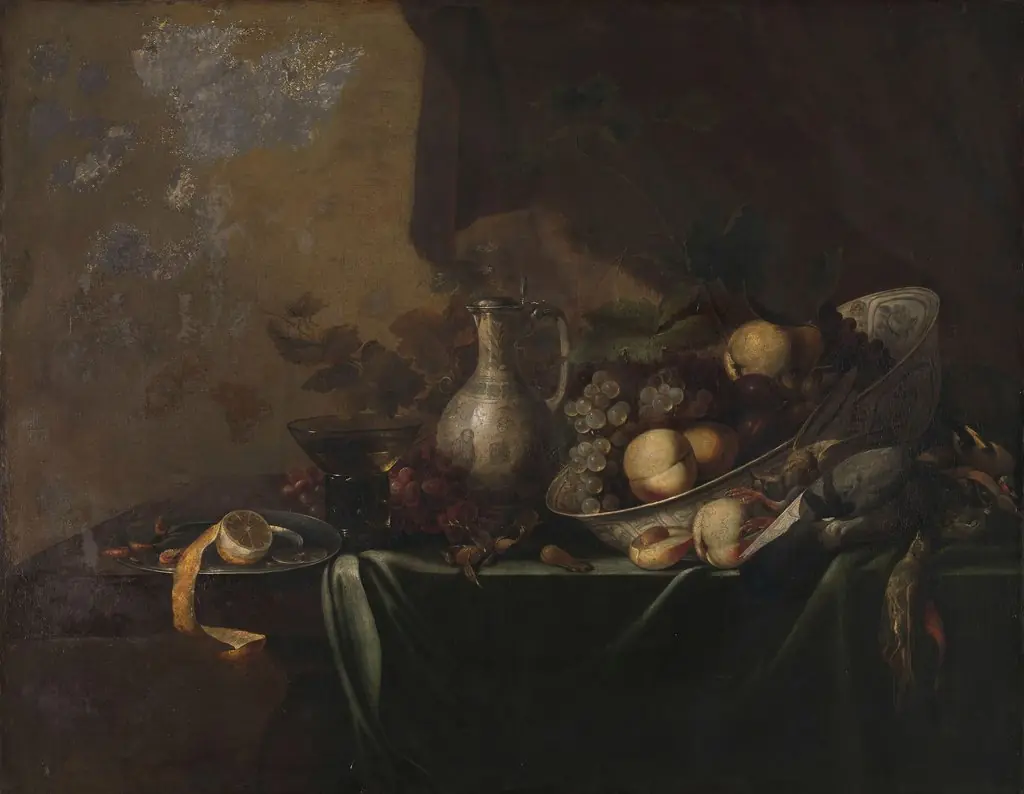
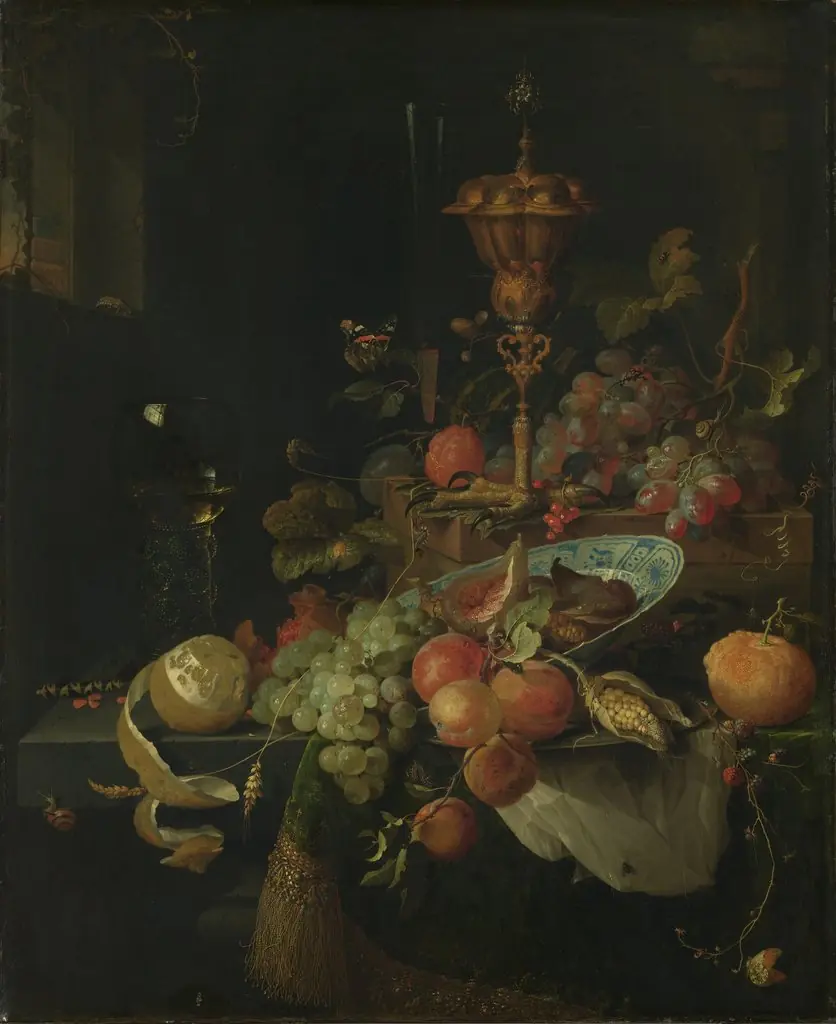
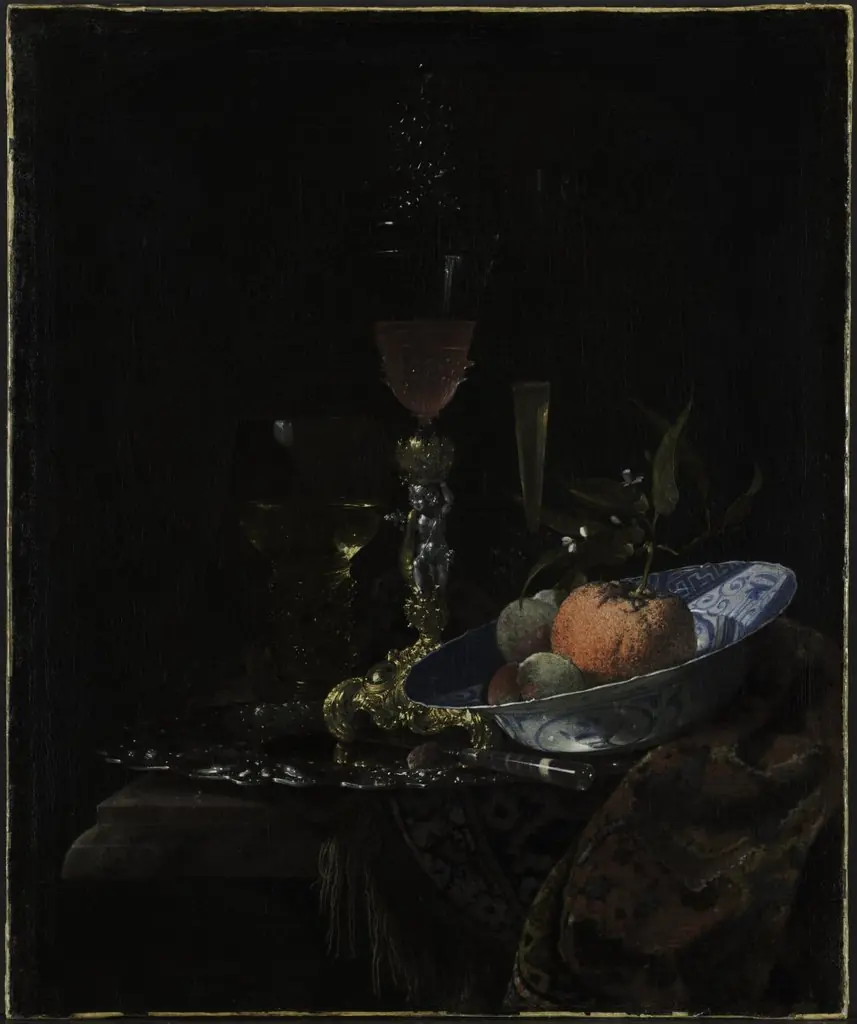
Still Life is an unspecified painting by the Dutch Golden Age artist Georg Hainz. It dates from 1683 and is held in the collection of the Rijksmuseum. The painting presents a domestic tableau set upon a table draped with a richly patterned Persian rug.
About this work
Overview
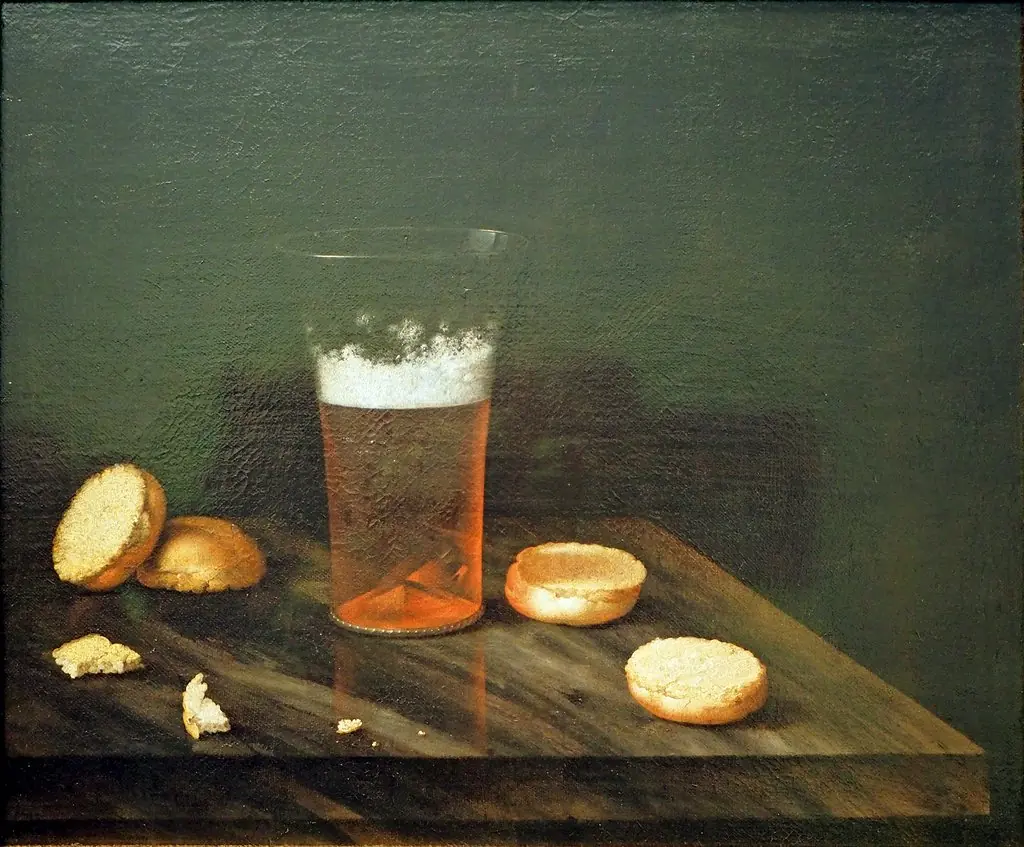
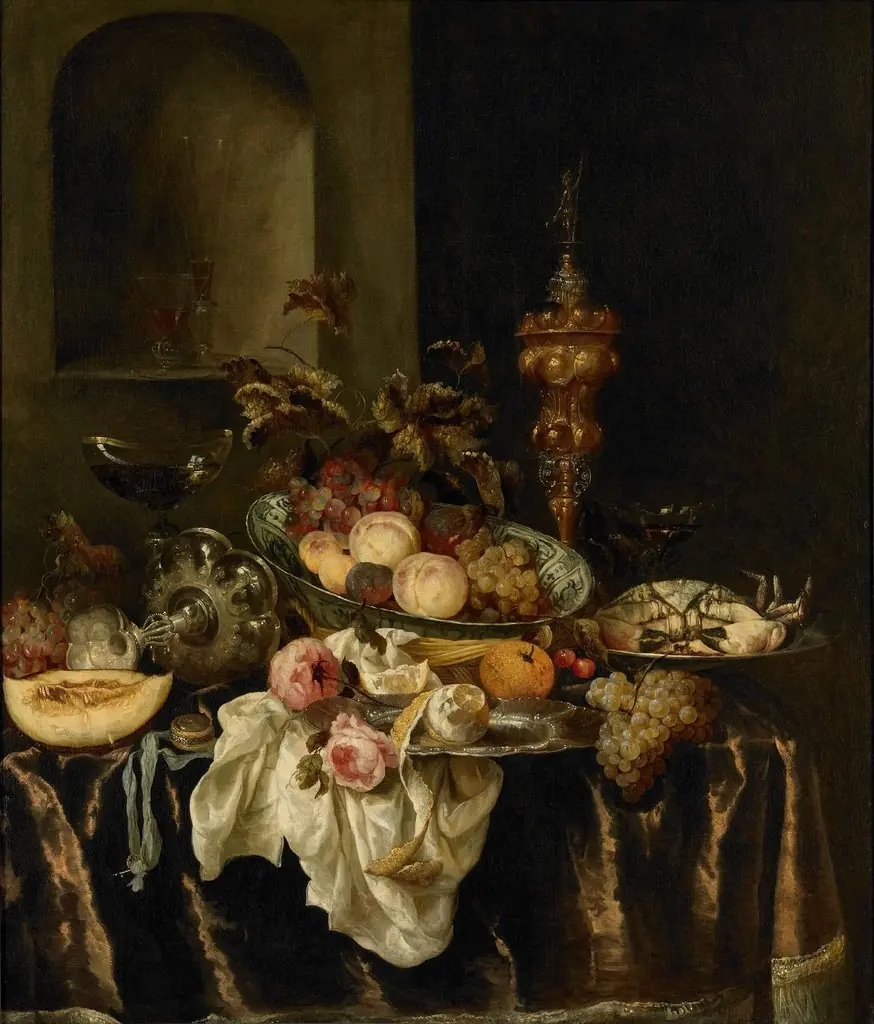
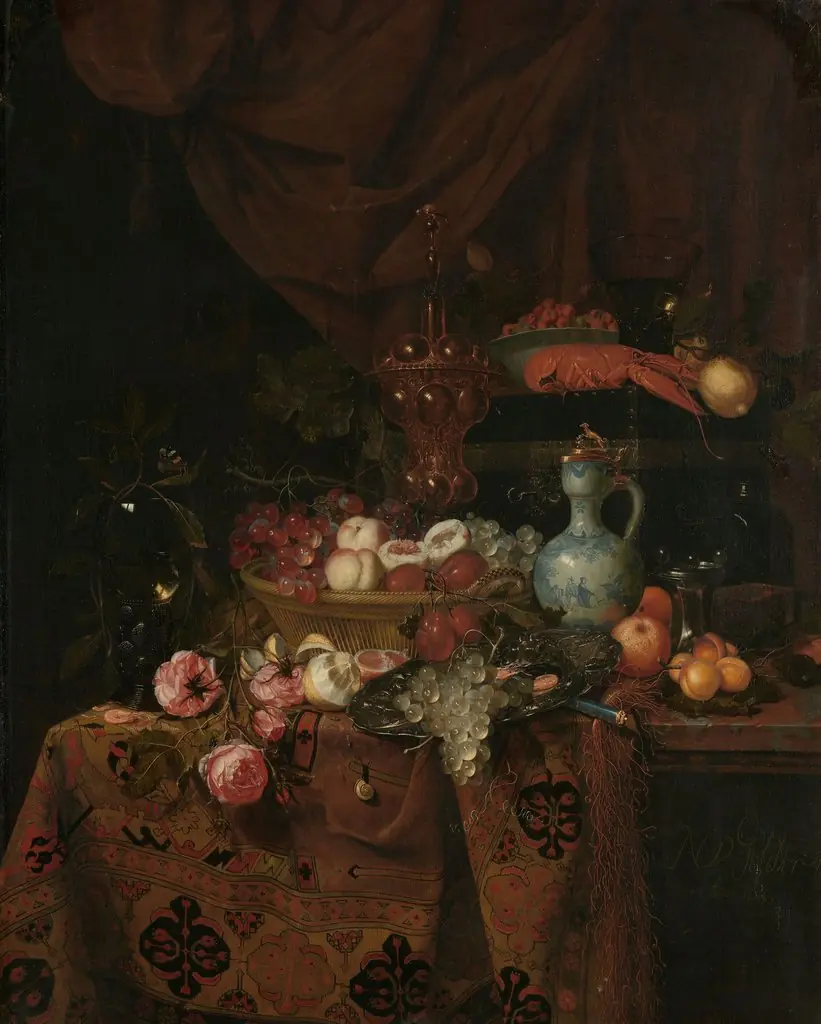
The painting presents a domestic tableau set upon a table draped with a richly patterned Persian rug. Central to the composition are a gilded silver platter bearing assorted confections, a Chinese bowl holding ripe peaches, a peeled lemon with its rind curling outward, and an assortment of glass vessels, including a beer glass and a nautilus‑shaped cup.
Subject & Meaning
The arrangement juxtaposes objects from diverse cultural origins—Persian textiles, Chinese ceramics, and European glassware—to evoke a sense of global trade and the everyday abundance of the period. The careful placement of perishable items such as fruit and lemon suggests a fleeting moment, inviting contemplation of transience within material wealth.
Technique & Style
Rendered with meticulous attention to surface texture, the work captures the reflective quality of metal, the translucence of glass, and the tactile peel of the lemon. Light falls across the scene, highlighting the sheen of the beer glass and the subtle gradations of color on the sweets, while the brushwork remains precise, emphasizing realism over decorative flourish.
History & Provenance
The artist’s identity remains unknown, and the painting’s early ownership records are absent. It entered the public collection through acquisition by a Dutch national museum in the early twentieth century, where it has been displayed among other modest, genre‑type works that document quotidian life.
Own this work as a print
Artist & collection