Artwork
Tyrants of the Old Testament: Sennacherib
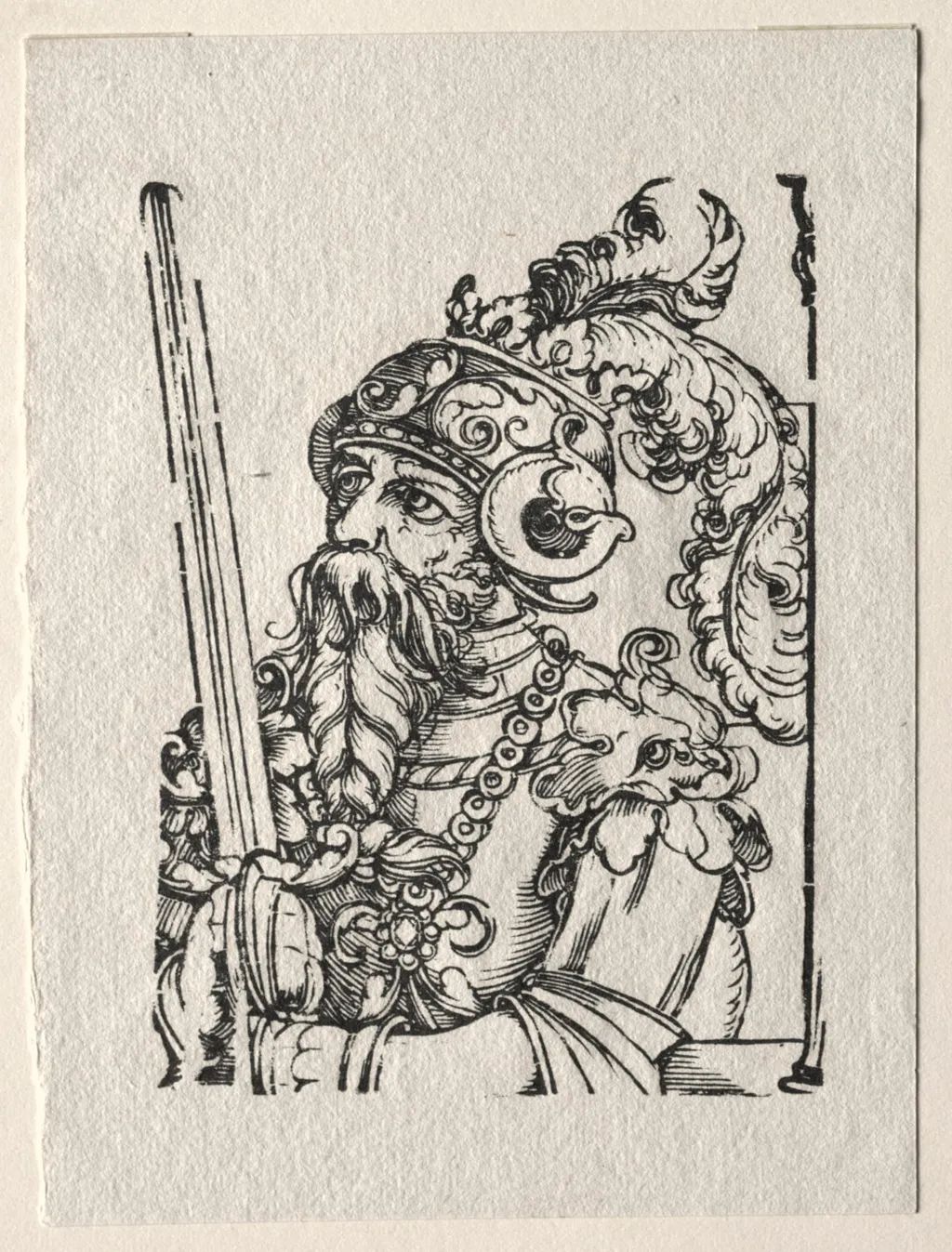
Tyrants of the Old Testament: Sennacherib is a print by Georg Pencz. It dates from 1535 and is held in the collection of the Cleveland Museum of Art.
About this work
Overview
Georg Pencz, a German artist active in the early 16th century, produced the engraving 'Tyrants of the Old Testament: Sennacherib' circa 1535.
Georg Pencz, a German artist active in the early 16th century, produced the engraving 'Tyrants of the Old Testament: Sennacherib' circa 1535. Trained in Nuremberg under Albrecht Dürer’s circle, Pencz developed a refined graphic style influenced by both Northern traditions and Italian Renaissance aesthetics. This work is part of a series portraying biblical rulers, reflecting his interest in moral and historical narratives through printmaking.
Subject & Meaning
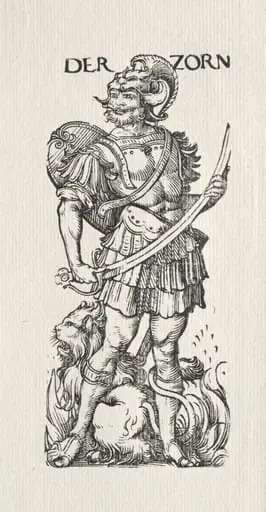
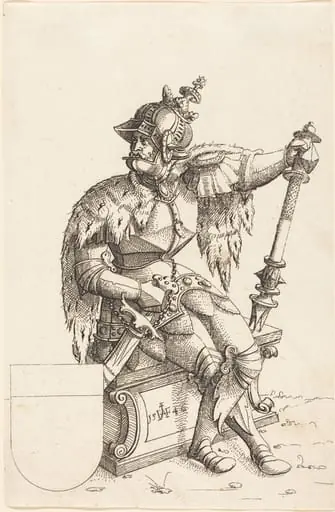
The figure depicts Sennacherib, the Assyrian king known in the Old Testament for his siege of Jerusalem and eventual divine retribution. Pencz presents him not as a mere conqueror but as a symbol of hubris, rendered with regal yet menacing attributes: a feathered helmet, ornate chain, and drawn sword. The image aligns with Protestant reformist themes that framed tyrannical rulers as warnings against pride and idolatry.
Technique & Style
Executed in fine-line engraving, the work demonstrates Pencz’s mastery of cross-hatching and delicate tonal gradation. The armor, beard, and feather are rendered with precise, controlled strokes, revealing his training in Dürer’s meticulous method. The composition is tightly focused, emphasizing the figure’s imposing presence without background distraction, suggesting its function as a standalone study or plate in a printed series.
History & Provenance
Created during Pencz’s mature period, the engraving emerged from his active printmaking practice in Nuremberg, a center of Northern Renaissance print culture. While no early ownership records are documented, its inclusion in known series of Old Testament tyrants links it to broader religious print cycles circulating in Protestant regions. The work survives in museum and institutional collections as part of his engraved oeuvre.
Context
In the 1530s, religious upheaval in Germany spurred renewed interest in biblical narratives as moral exemplars. Pencz’s series of tyrants responded to this climate, using historical figures to convey theological lessons. His exposure to Venetian art during travels introduced a more fluid handling of form, yet his compositions retained Northern attention to detail, bridging regional styles within Reformation-era printmaking.
Legacy
Pencz’s engravings, including this depiction of Sennacherib, contributed to the dissemination of biblical iconography in early modern Europe. Though less celebrated than Dürer, his technical precision and thematic consistency influenced later printmakers. The work remains a representative example of how religious subjects were visually codified in print during the Reformation, serving both devotional and didactic purposes.
Artist & collection
Artist
Georg Pencz (c. 1500 – 11 October 1550) was a German engraver, painter and printmaker. Pencz was probably born in Westheim near Bad Windsheim/Franconia. He travelled to Nuremberg in 1523 and joined Albrecht Dürer’s…