Artwork
Emperor Maximilian I
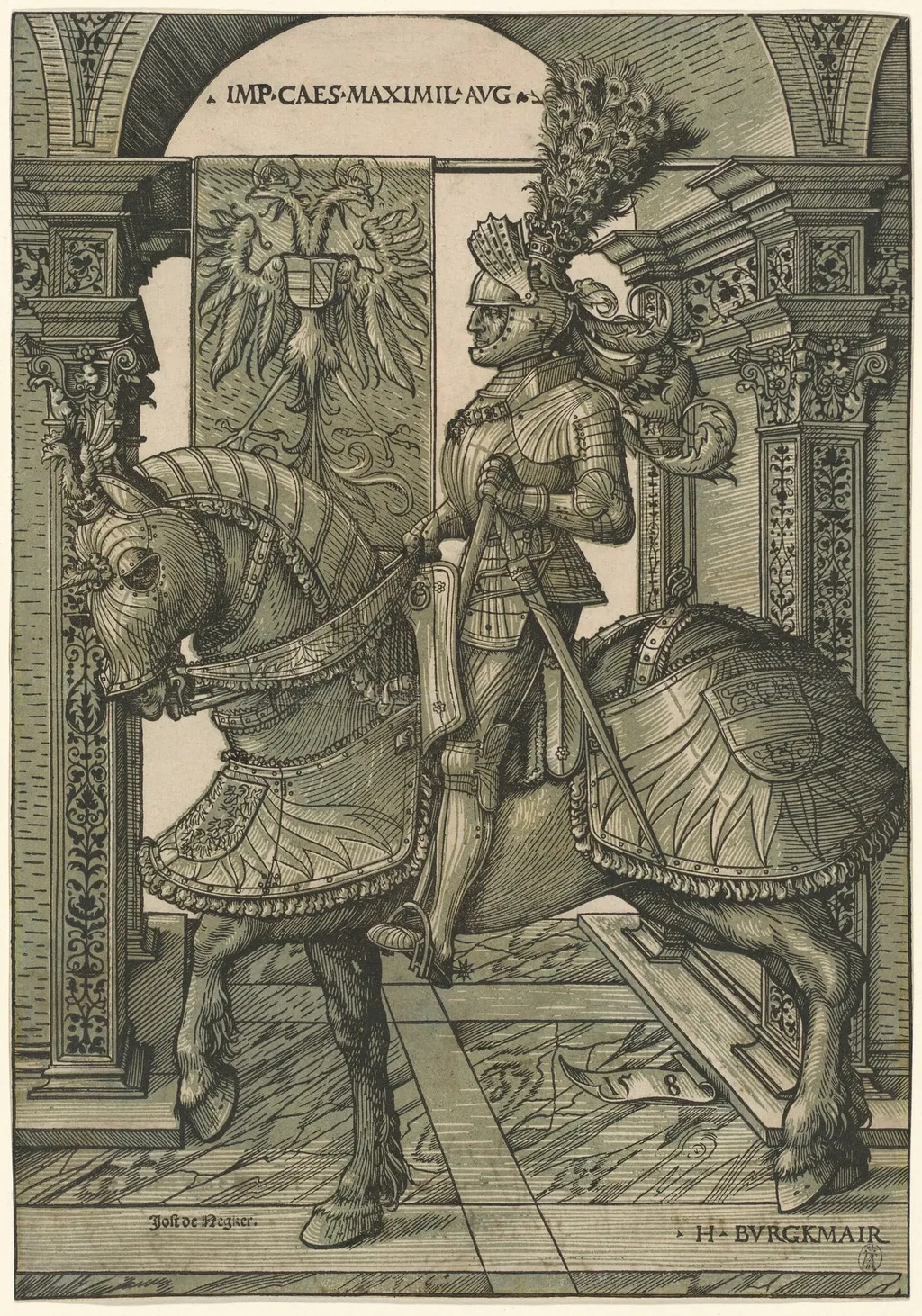
Emperor Maximilian I is an ink print by the Renaissance artist Hans Burgkmair the Elder. It dates from 1513 and is held in the collection of the National Gallery of Art.
About this work
Overview
Emperor Maximilian I is a chiaroscuro woodcut created by Hans Burgkmair I in 1513, utilizing two blocks to achieve a striking green and black color scheme.
Subject & Meaning
The print depicts two armored figures in a grand, arched room. The standing figure, likely Emperor Maximilian I, holds a sword and a cross-emblazoned shield, while the other, possibly a vassal or knight, kneels in reverence. The scene conveys themes of power, loyalty, and possibly religious allegiance through the cross and Latin inscriptions.
Technique & Style
Burgkmair employed a innovative two-block woodcut technique to produce deep shadows and contrasting light areas, lending the armored figures a near-three-dimensional appearance. Intricate details on helmets, clothing, and background carvings showcase the artist's mastery of the medium.
History & Provenance
Created in 1513, specific provenance details are not provided, though the work's existence suggests it was part of the broader artistic and political communications of Emperor Maximilian I's reign.
Context
This work reflects the Renaissance's intersection of art and political power, with the chiaroscuro technique being a hallmark of early 16th-century printmaking innovation in Europe.
Legacy
As an early example of chiaroscuro woodcut, Emperor Maximilian I influences the development of subsequent printmaking techniques and the depiction of political figures in Renaissance art.
Artist & collection
Artist
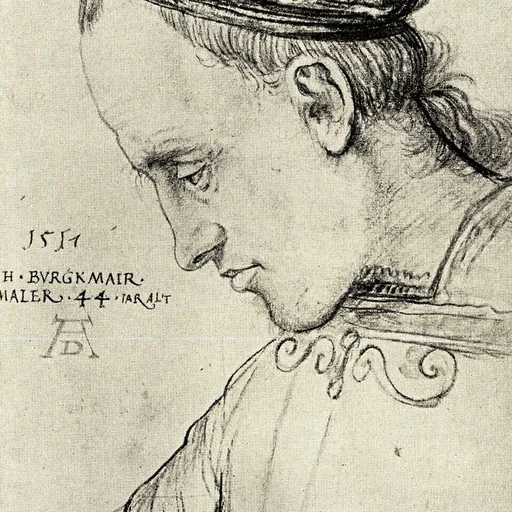
Hans Burgkmair the Elder (1473–1531) was a German artist, born in Augsburg.

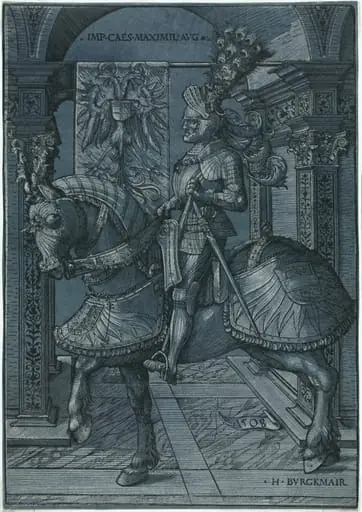 Equestrian Portrait of the Emperor Maximilian
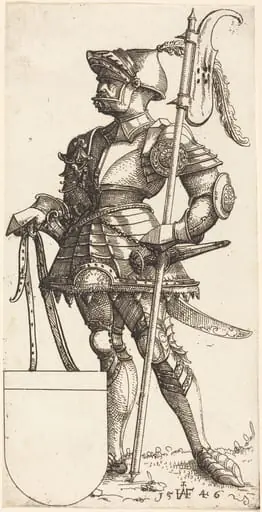 Christian II of Denmark
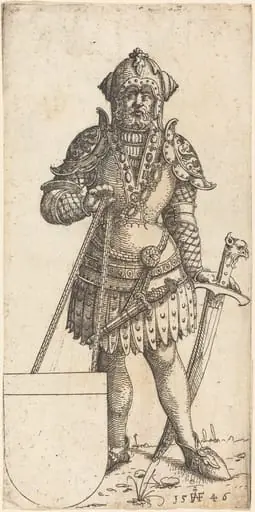 Ludwig II, King of Hungary
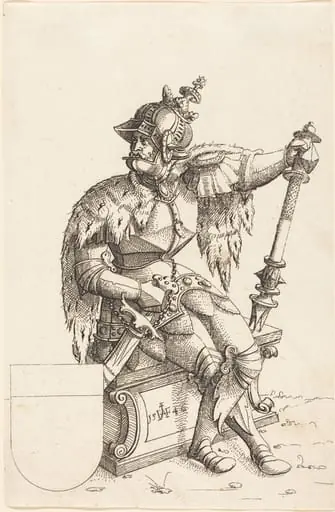 Emperor Charles V
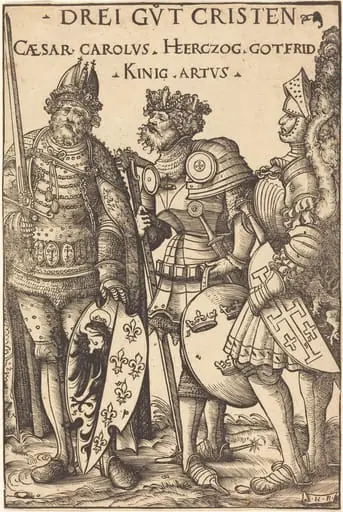 Charlemagne, Arthur and Godfrey
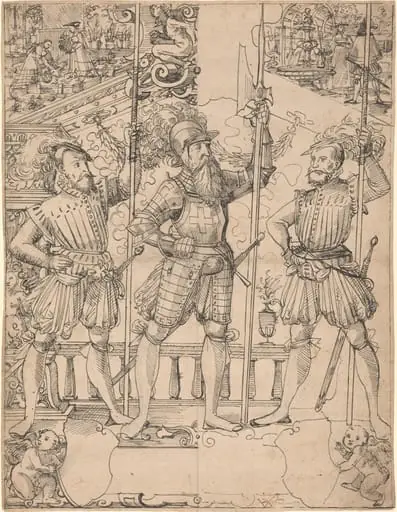 Halberdier and Two Pikemen
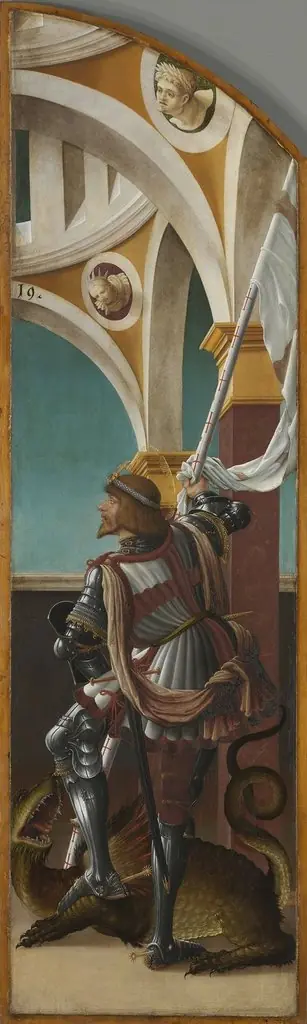
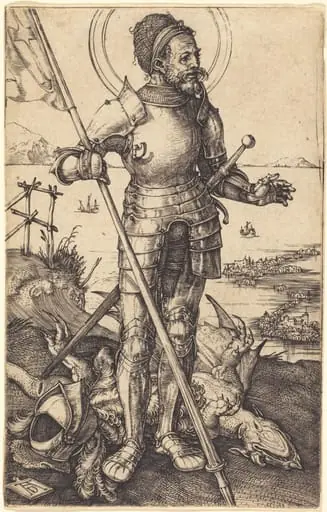 Saint George Standing
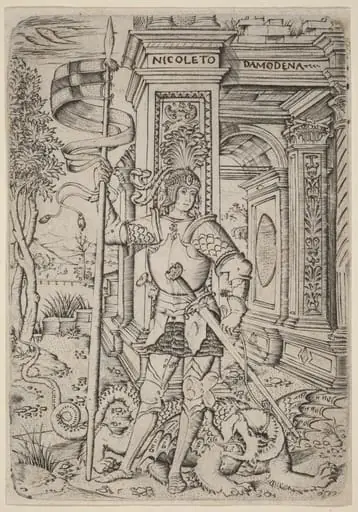 Saint George
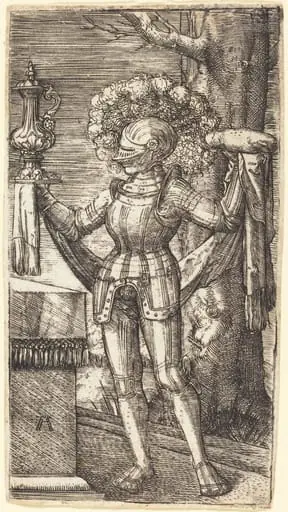 Knight in Armour with Bread and Wine
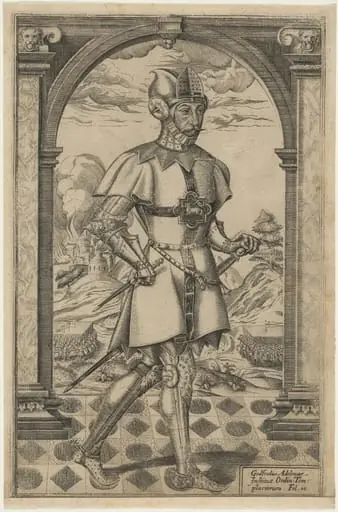 Godfrey Adelmar, Founder of the Knights Templar
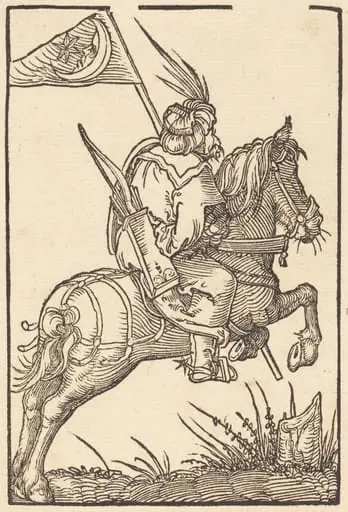 A Turkish Horseman
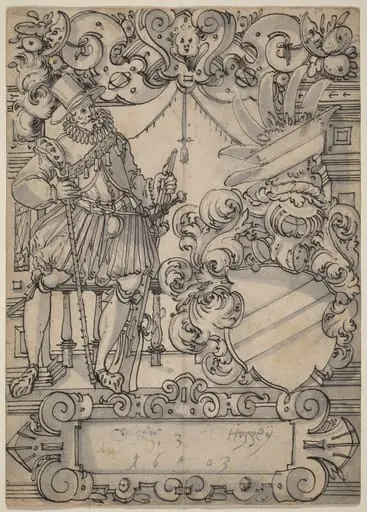 A Donor with a Coat of Arms (Schildbegleiter und Wappenschild mit Schrägbalken)