Artwork
Untitled
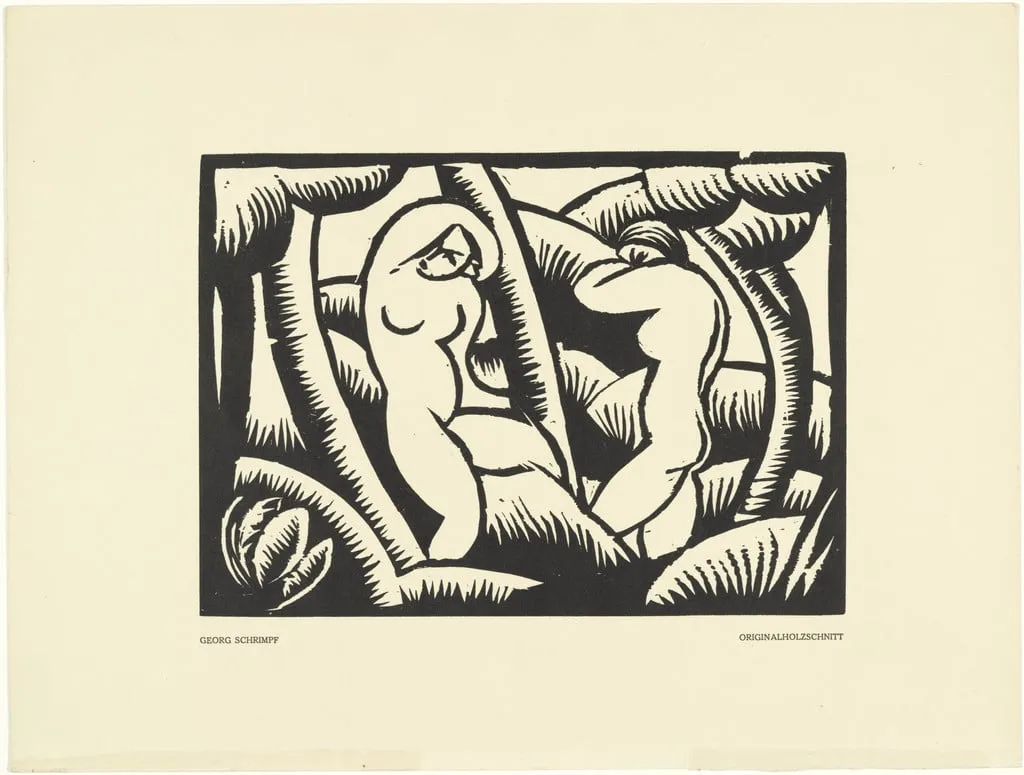
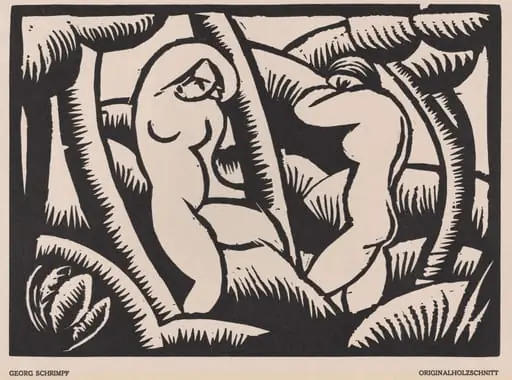
Untitled is an ink print by Georg Schrimpf. It dates from 1918 and is held in the collection of the Museum of Modern Art.
About this work
Overview
Executed in black and white, the print employs stark contrasts and simplified forms to depict a quiet, intimate scene.
Created in 1918, this woodcut by Georg Schrimpf belongs to the early phase of Neue Sachlichkeit, a German artistic movement that turned away from emotional abstraction toward measured realism. Executed in black and white, the print employs stark contrasts and simplified forms to depict a quiet, intimate scene. Schrimpf’s approach avoids dramatic expression, favoring clarity and compositional restraint.
Subject & Meaning
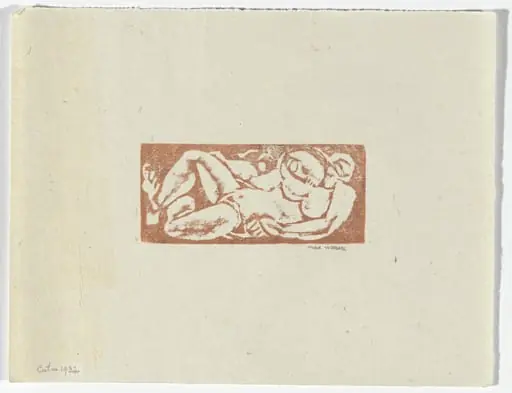
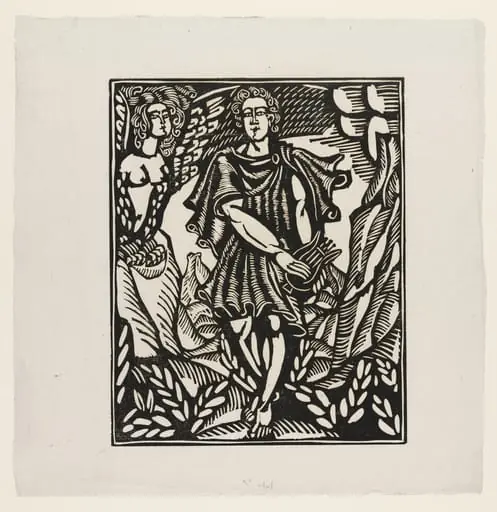
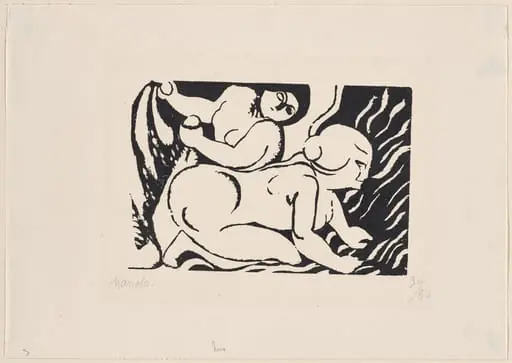
Two nude figures are positioned within a dense, stylized jungle. The woman faces the man, who is seen from behind, his head turned toward her in a gesture of quiet attention. The setting suggests a private, almost mythic moment, stripped of narrative detail. The absence of context invites contemplation rather than interpretation, aligning with the movement’s preference for objective observation over symbolic storytelling.
Technique & Style
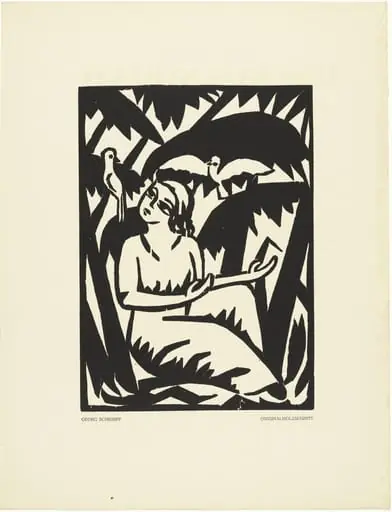
Schrimpf used bold, carved black lines to define forms, creating sharp contrasts against the uninked paper. The foliage and figures are rendered with rhythmic, repetitive patterns that emphasize texture over naturalism. The woodcut’s graphic intensity stems from its reduction of detail—each element is simplified into essential shapes, reflecting a deliberate move away from Expressionist fluidity toward structural clarity.
History & Provenance
Produced shortly after World War I, the work emerged during a period of cultural reevaluation in Germany. Schrimpf, alongside Dix and Grosz, helped define Neue Sachlichkeit’s visual language. While the exact provenance of this specific print is not widely documented, it aligns with his early output from the period, often circulated in artist-led publications or small exhibitions focused on postwar realism.
Context
In the aftermath of war and social upheaval, many German artists rejected the emotional intensity of Expressionism in favor of a cooler, more detached mode of representation. Schrimpf’s woodcut reflects this shift, using the natural world not as a backdrop for psychological drama but as a neutral field for human presence. The jungle setting, while exoticized, is rendered without romanticism.
Legacy
This print exemplifies Schrimpf’s contribution to Neue Sachlichkeit’s formal vocabulary—its emphasis on clarity, economy of line, and restrained figuration. Though less widely known than his contemporaries, his work influenced later generations interested in the intersection of printmaking and observational realism. The woodcut remains a quiet testament to a moment when art sought to re-engage with the visible world without embellishment.
Artist & collection
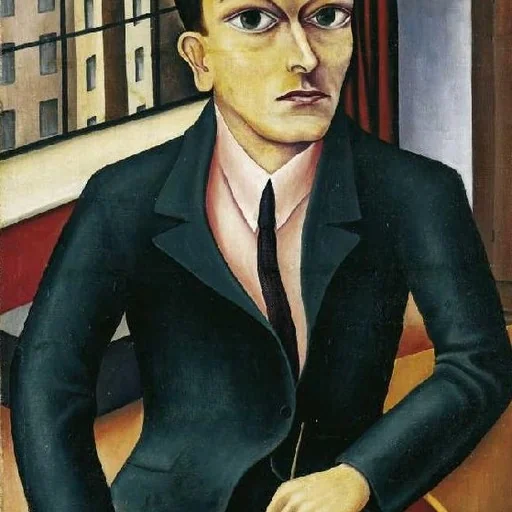
Artist
Georg Schrimpf (13 February 1889 – 19 April 1938) was a German painter and graphic artist.

![Child Portrait (Peter in Sicily) (Knabenbildnis [Peter in Sizilien]), by Georg Schrimpf](https://artifactworldgallery.com/img/georg-schrimpf--child-portrait-peter-in-sicily-knabenbildnis-peter-in-sizili--69ab378ddf389e3e-w320.webp)