Artwork
Untitled
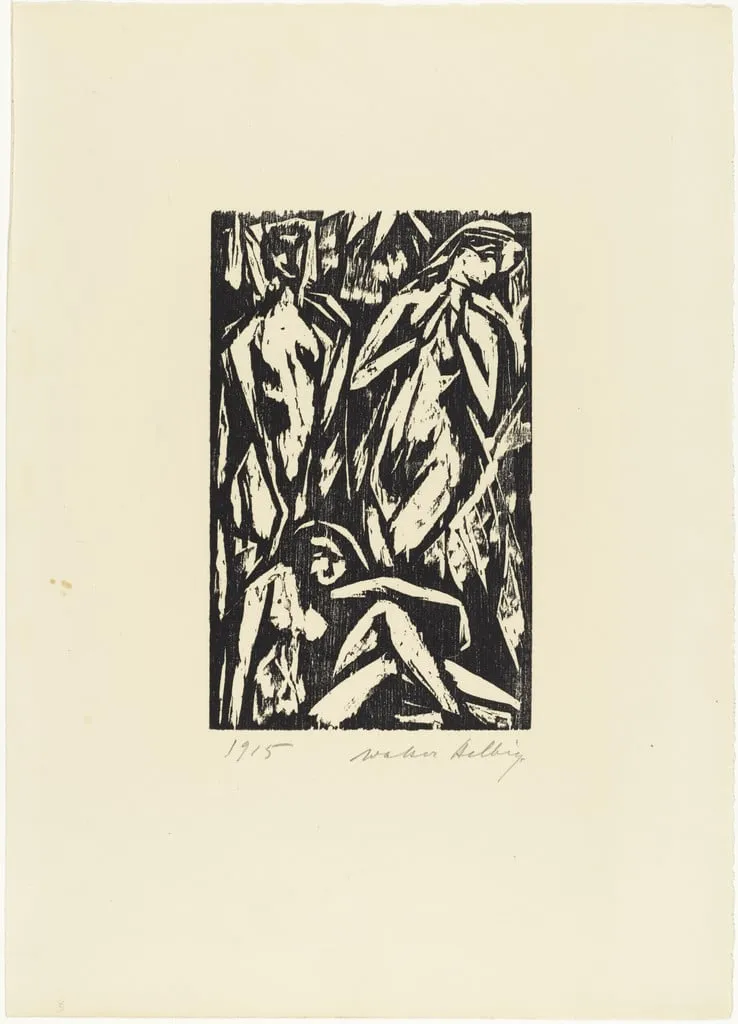
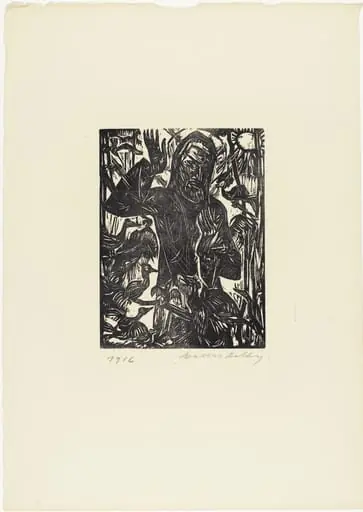
Untitled is an ink print by Walter Helbig. It dates from 1915 and is held in the collection of the Museum of Modern Art.
About this work
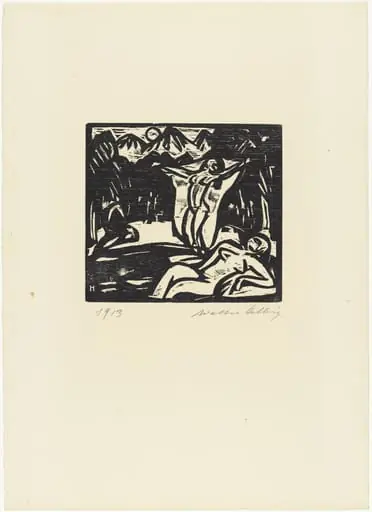
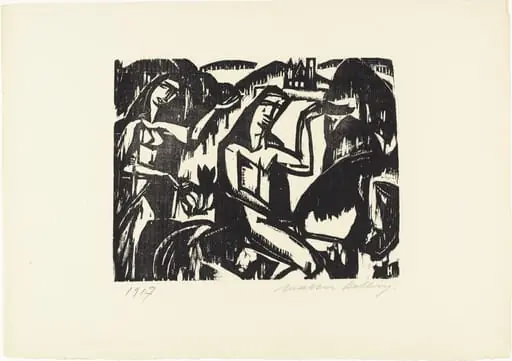
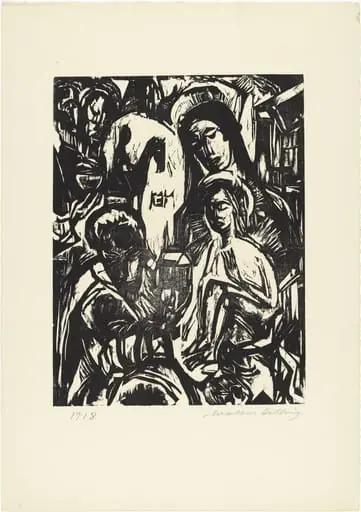
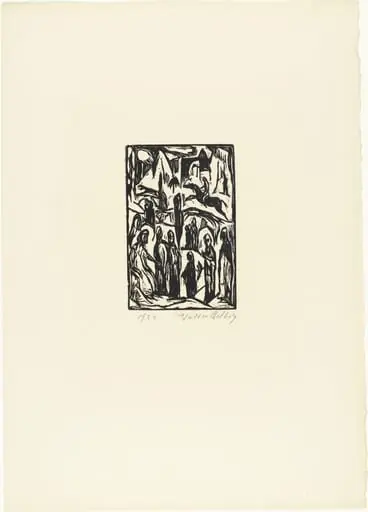
The whole scene is in black and white, with no shading except for a few light areas on the figures’ skin.
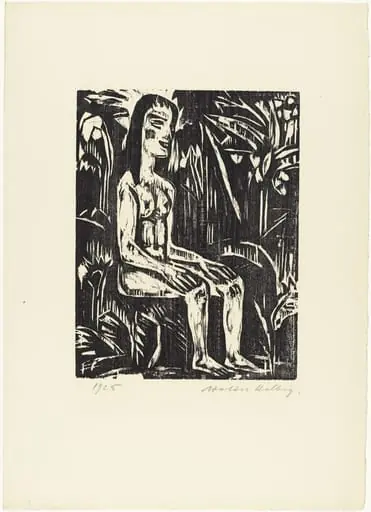
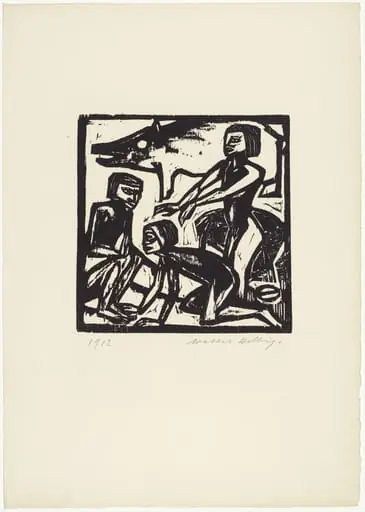
This print shows two tall, black figures standing close together. Their bodies are simple shapes—straight lines for arms, rounded curves for hips. The background looks like rough, dark trees or branches, almost like a shadowy forest. The whole scene is in black and white, with no shading except for a few light areas on the figures’ skin.
The artist signed it in 1915, but it wasn’t published until 1926. The print is part of a set of woodcuts, which means it was carved into wood and then printed.
Try looking up woodcut to see how this technique works.
Overview
Untitled is one of sixteen woodcuts in a portfolio created by Walter Helbig in 1915. The work is a black-and-white print made by carving an image into a wooden block, then inking and pressing it onto paper. Though completed in 1915, the portfolio was not published until 1926. The print is held in the collection of The Museum of Modern Art, where it is presented as part of a cohesive group of prints sharing a unified aesthetic and thematic tone.
Subject & Meaning
Two elongated, stylized figures stand in close proximity, their forms reduced to minimal contours—straight lines for limbs, rounded shapes for torsos. The figures appear isolated within a dense, abstracted backdrop of dark, branching forms that suggest a forest or shadowy enclosure. The lack of facial detail and the uniform blackness of their bodies evoke anonymity, possibly reflecting themes of solitude, unity, or the human presence within an overwhelming natural or psychological environment.
Technique & Style
Helbig employed the woodcut technique, carving directly into the woodblock to create bold, high-contrast forms. The image relies on sharp lines and negative space rather than shading, with only subtle white areas suggesting light on the figures’ skin. The rough texture of the background implies hand-carved irregularity, emphasizing the tactile nature of the medium. The style is reductive, favoring geometric simplification over naturalism, aligning with early 20th-century expressive print traditions.
History & Provenance
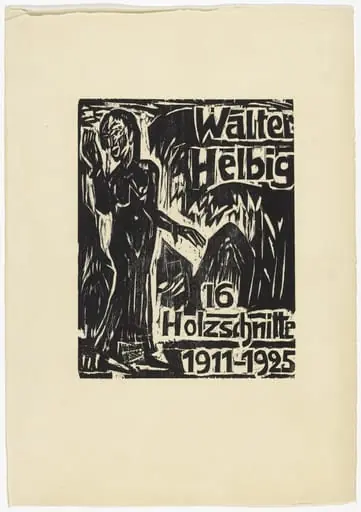
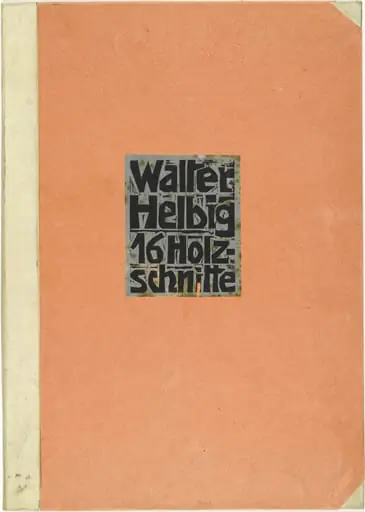
The woodcut was carved in 1915 but remained unpublished until the full portfolio was released in 1926. The delay suggests possible personal, financial, or artistic reconsideration by the artist. The portfolio includes a title page, table of contents, cover, and colophon, indicating a deliberate, book-like structure. The work entered The Museum of Modern Art’s collection as part of its broader interest in modernist printmaking, though specific acquisition details are not widely documented.
Context
Created during the First World War, the print reflects a broader European trend toward expressive, non-naturalistic imagery in printmaking. Artists were turning away from realism toward abstraction and emotional intensity, often using woodcut for its raw, direct qualities. Helbig’s work aligns with contemporaries in Germany and Austria who explored psychological depth through simplified forms and stark contrasts, though he remained outside the most prominent avant-garde circles.
Legacy
Though not widely exhibited or studied, Untitled contributes to the understanding of early 20th-century German-language printmaking beyond the better-known Expressionist groups. Its inclusion in MoMA’s collection affirms its significance as an example of quiet, introspective woodcut work from a period rich with experimental printmaking. The portfolio’s delayed publication underscores the private, often overlooked nature of many artists’ print projects during this era.
Artist & collection