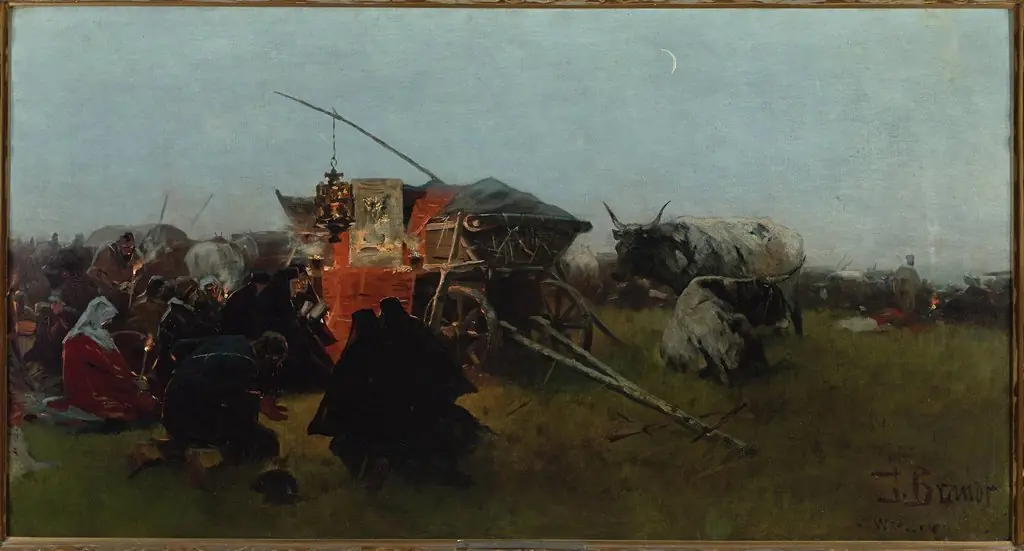
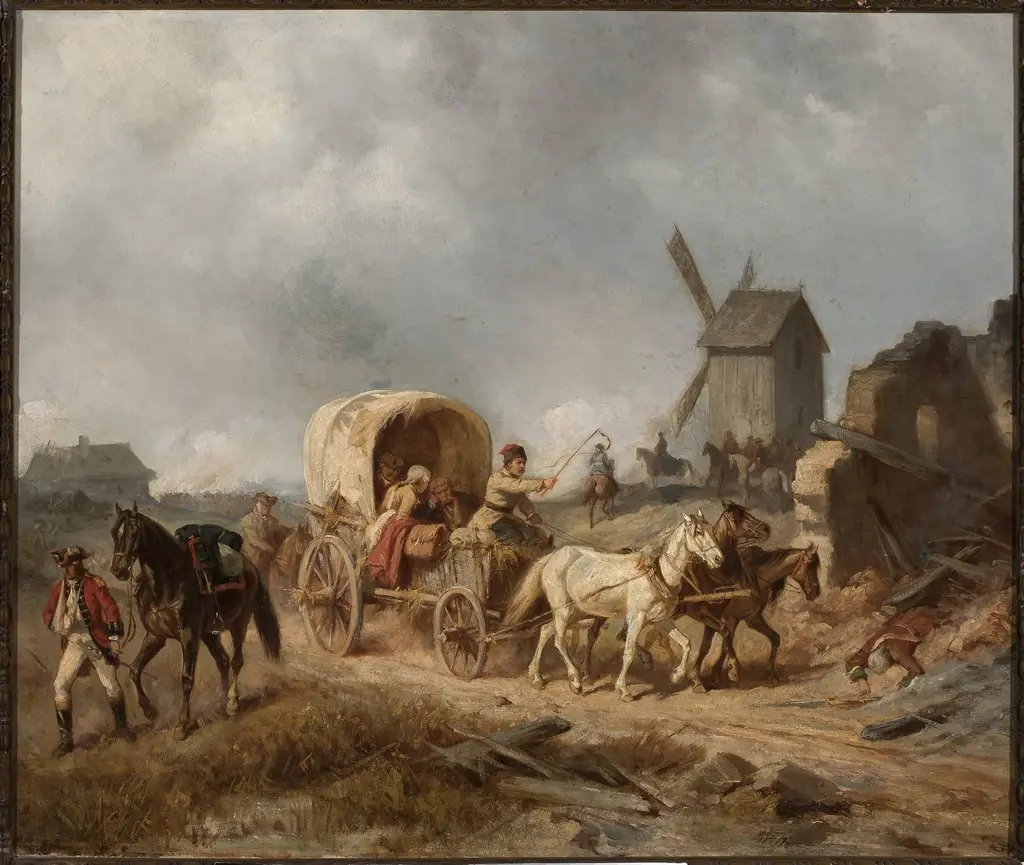
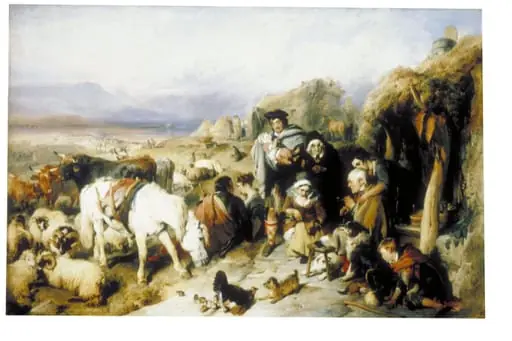
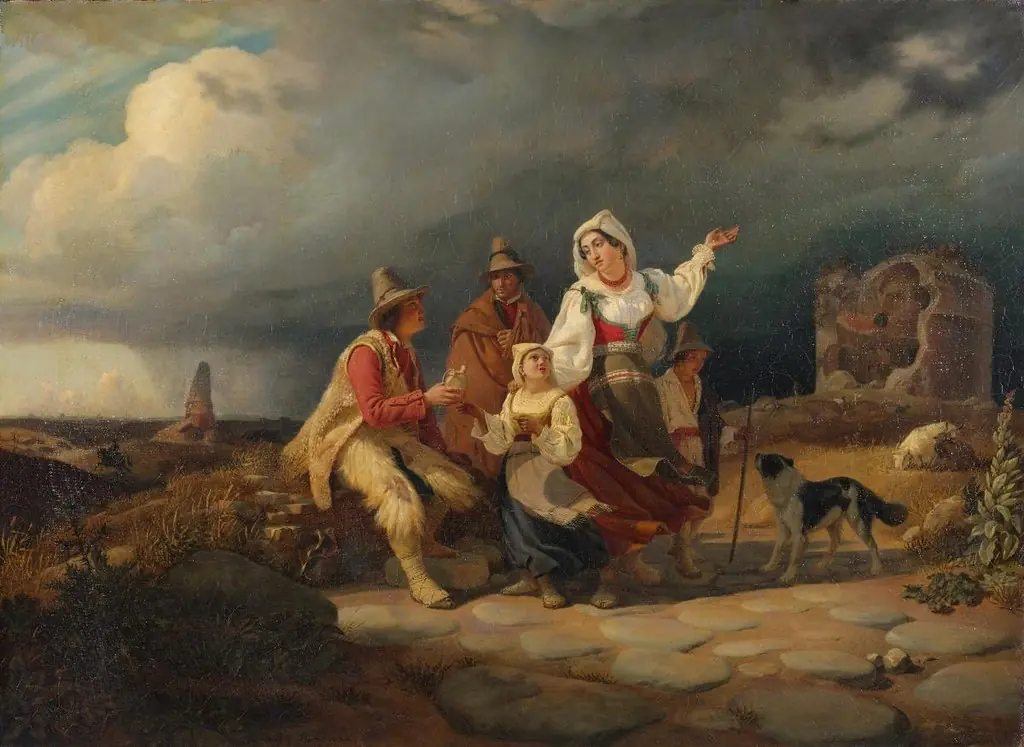
Artwork
Travelling Dog Cart
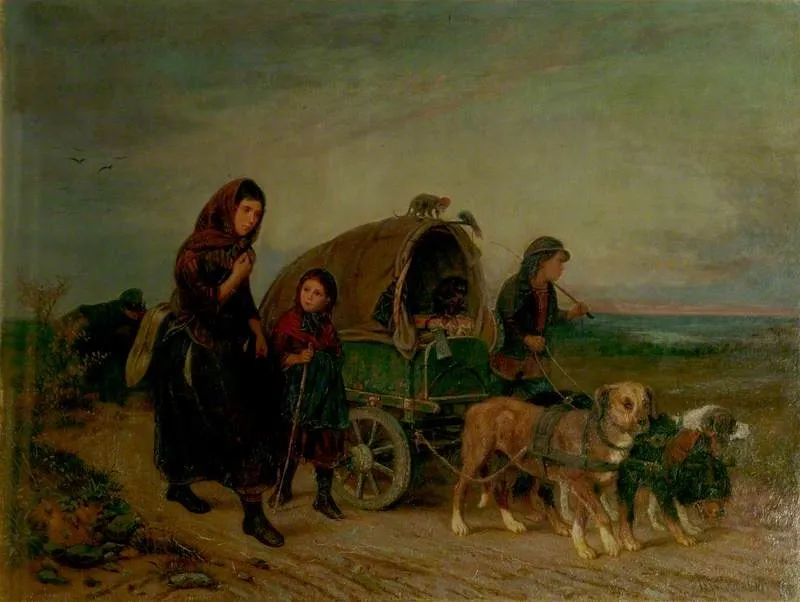
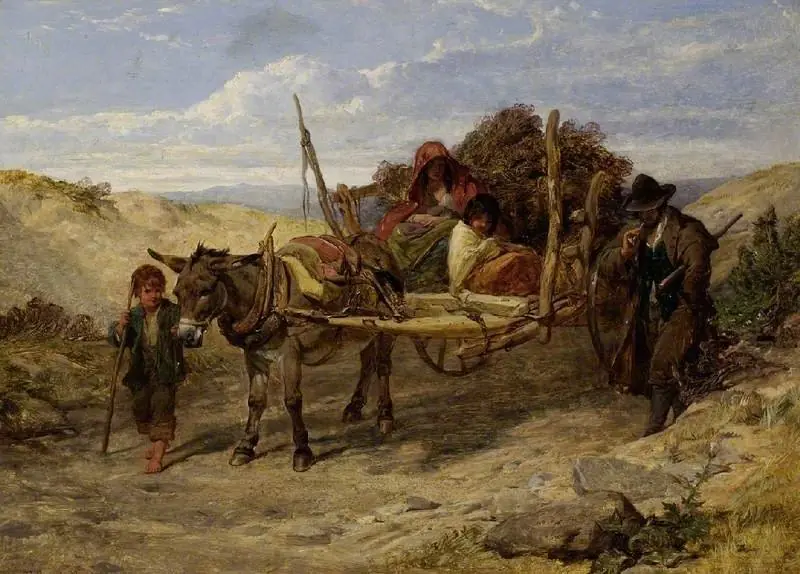
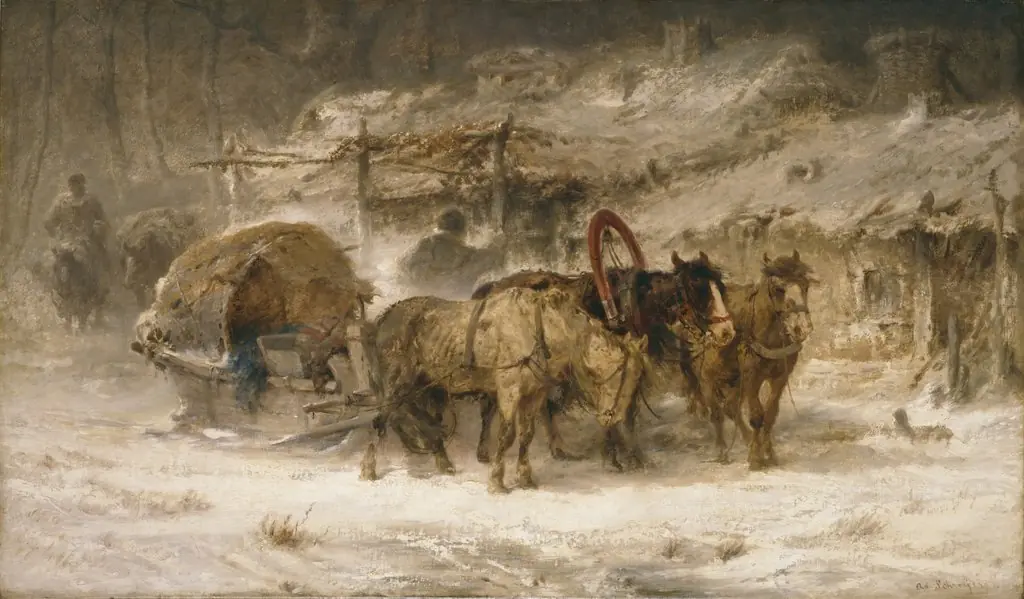
Travelling Dog Cart is an oil painting by the Realist artist Georg Schwer. It dates from 1860 and is held in the collection of the Victoria and Albert Museum.
About this work
Overview
The scene captures a modest family in transit, accompanied by dogs pulling a simple cart across an expansive countryside.
Painted in 1860 by Georg Schwer, Travelling Dog Cart is an oil-on-canvas work depicting a rural journey. It is part of the Victoria and Albert Museum’s collection and exemplifies 19th-century genre painting. The scene captures a modest family in transit, accompanied by dogs pulling a simple cart across an expansive countryside. The composition emphasizes quiet movement and daily life rather than dramatic narrative.
Subject & Meaning
The painting portrays a family—woman, child, and man—traveling in a dog-drawn cart, dressed in regional attire. The presence of multiple dogs suggests a practical, working relationship between humans and animals in rural life. The absence of urban elements and the isolation within the landscape imply self-reliance and the rhythm of ordinary travel, reflecting a quiet dignity in everyday existence.
Technique & Style
Schwer employs subtle chiaroscuro to model forms and suggest depth, particularly in the folds of clothing and the musculature of the dogs. Warm tones in the earth and attire contrast with cooler atmospheric hues in the distance, enhancing spatial recession. Detailed brushwork renders the harnesses, fur, and wooden cart with precision, grounding the scene in observable reality without idealization.
History & Provenance
The painting entered the Victoria and Albert Museum’s collection in the late 19th century, likely through acquisition or donation. Its provenance prior to that is not widely documented. Schwer, a lesser-known German artist, focused on rural subjects, and this work remains one of the few surviving examples of his output, offering insight into regional life during the mid-1800s.
Context
In mid-19th-century Europe, genre scenes like this one gained popularity as industrialization reshaped society. Artists turned to rural life as a subject of authenticity and continuity. Schwer’s depiction aligns with broader trends in Northern European painting that valued quiet observation over grandeur, capturing moments of ordinary travel before mechanized transport became dominant.
Legacy
Travelling Dog Cart endures as a modest but thoughtful record of pre-industrial mobility. While Schwer did not achieve widespread fame, this painting contributes to the understanding of regional European life and the role of animals in domestic economy. It remains a quiet testament to the dignity of unremarkable journeys, preserved in a major public collection for study and reflection.
Artist & collection
Artist
A quiet scene from 19th-century village life appears in Georg Schwer’s oil paintings.