Artwork
Waiting for the Verdict
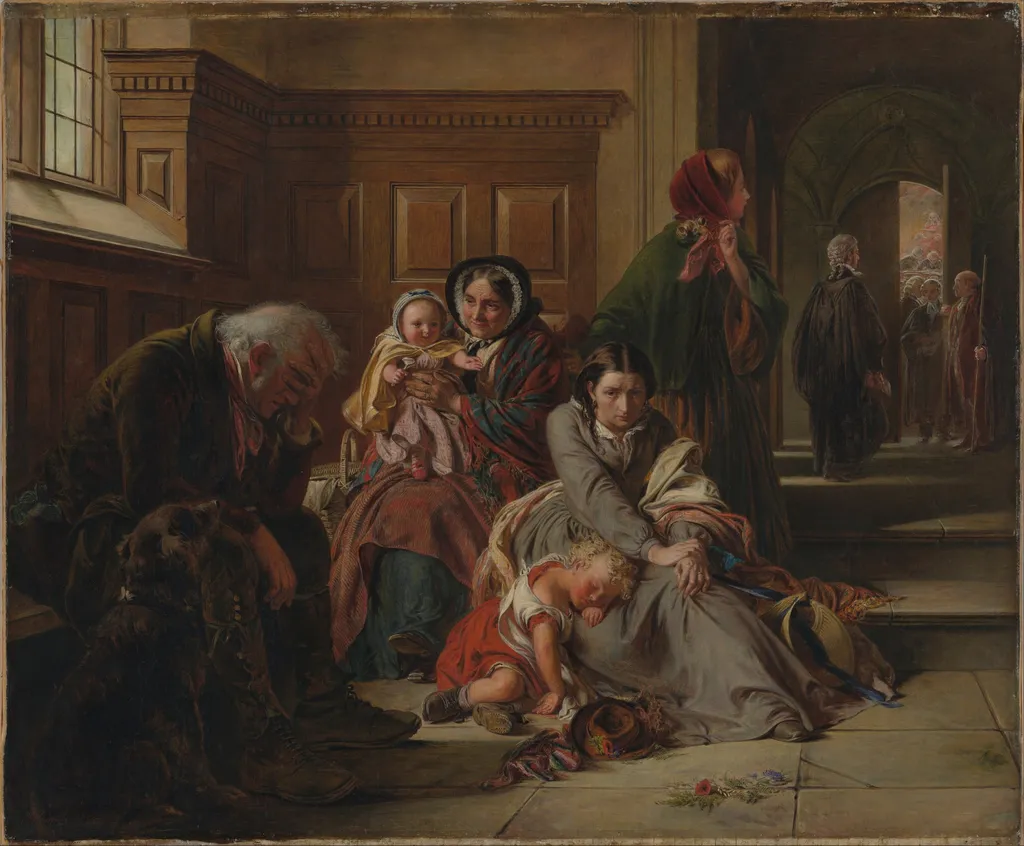
Waiting for the Verdict is an oil painting by the Realist artist Abraham Solomon. It dates from 1859 and is held in the collection of the J. Paul Getty Museum.
About this work
Overview
Abraham Solomon’s 1859 oil painting *Waiting for the Verdict* captures a quiet, tense moment in a courtroom antechamber.
Abraham Solomon’s 1859 oil painting *Waiting for the Verdict* captures a quiet, tense moment in a courtroom antechamber. The scene unfolds in subdued tones, with figures gathered in anticipation of a legal outcome. Solomon, a British painter of Jewish heritage, turned his attention to everyday emotional experiences, avoiding grand narratives in favor of intimate, socially grounded observations. The work reflects his interest in the psychological weight of ordinary life.
Subject & Meaning
The painting portrays a group of individuals—men, women, and a child—awaiting the outcome of a trial. Their postures convey anxiety: one woman kneels with her face buried, another clutches a baby, and others sit in silence. The composition suggests collective dread, emphasizing the vulnerability of those caught in the legal system. The obscured doorway hints at an unseen judgment, reinforcing the uncertainty and helplessness of the moment.
Technique & Style
Solomon employs a muted palette of browns, grays, and dull ochres to enhance the somber mood. Light falls unevenly, pooling on faces and hands while leaving corners in shadow, heightening the sense of isolation. Brushwork is restrained, favoring clarity over flourish, and figures are rendered with careful attention to gesture and clothing texture. The composition directs attention inward, isolating the group from the indistinct crowd beyond the doorway.
History & Provenance
Painted in 1859, the work was exhibited during a period when British art increasingly engaged with social realism. Solomon, part of a family of artists, was known for genre scenes drawn from contemporary urban life. The painting remained in private collections after its exhibition and was later acquired by a public institution, where it continues to be studied for its depiction of 19th-century legal and social dynamics.
Context
In mid-19th-century Britain, public interest in court proceedings grew alongside expanding legal reforms. Solomon’s painting reflects this cultural moment, portraying the emotional toll of justice on ordinary citizens. Unlike historical or mythological subjects favored by academies, his focus on anonymous, working-class figures aligned with emerging Realist tendencies in British art, emphasizing empathy over spectacle.
Legacy
Though less widely known than some of his contemporaries, Solomon’s *Waiting for the Verdict* stands as a quiet testament to the human dimension of legal systems. Its restrained emotion and attention to social detail influenced later genre painters who sought to depict moral and psychological depth in everyday scenes. The work remains a significant example of British Realism’s engagement with private suffering in public contexts.
Own this work as a print
Artist & collection
Artist
Abraham Solomon (London 7 May 1823 – 19 December 1862 Biarritz) was a British painter.

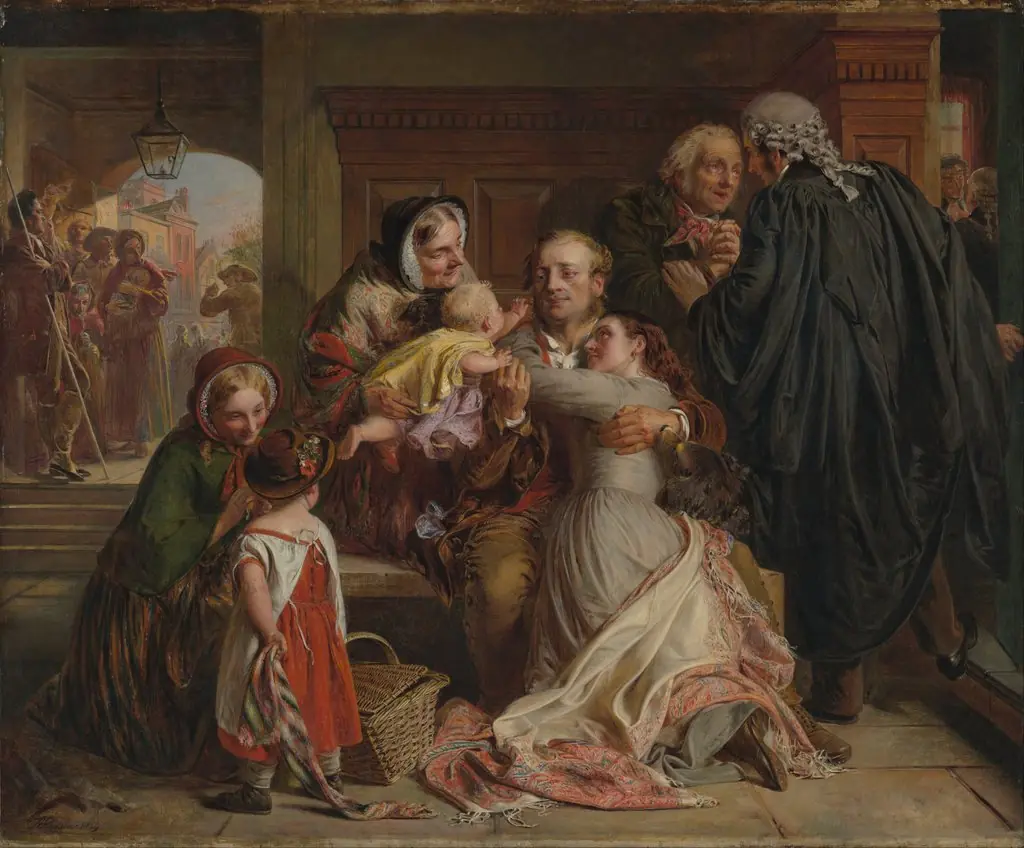 Not Guilty
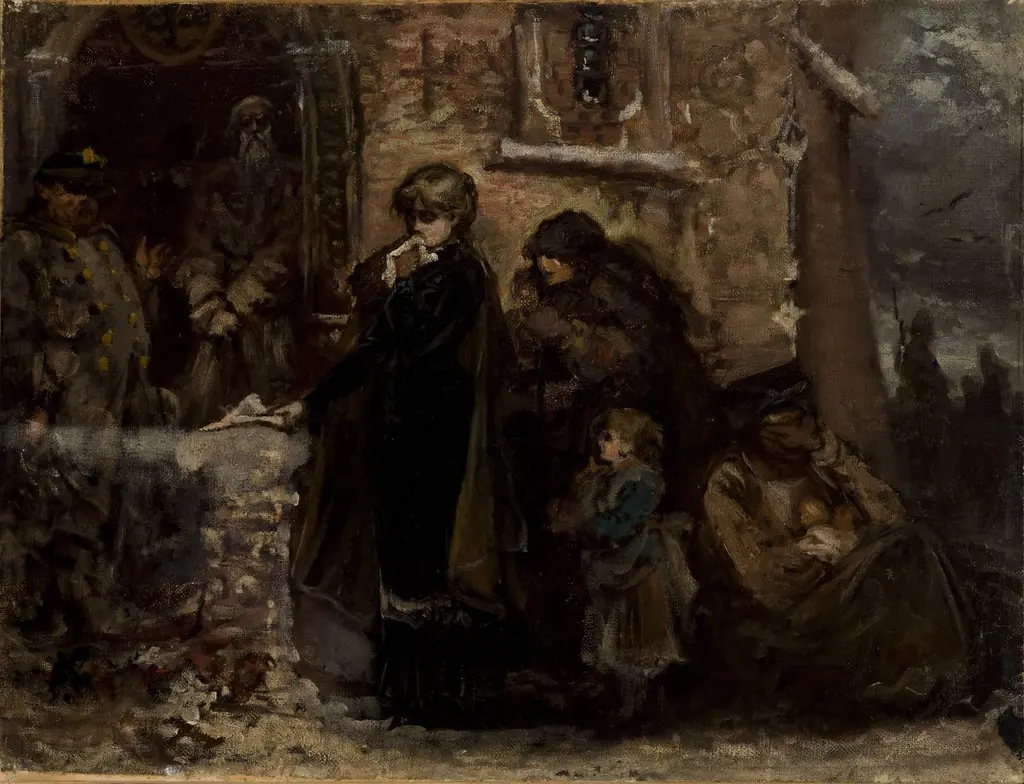 In Front of a Church
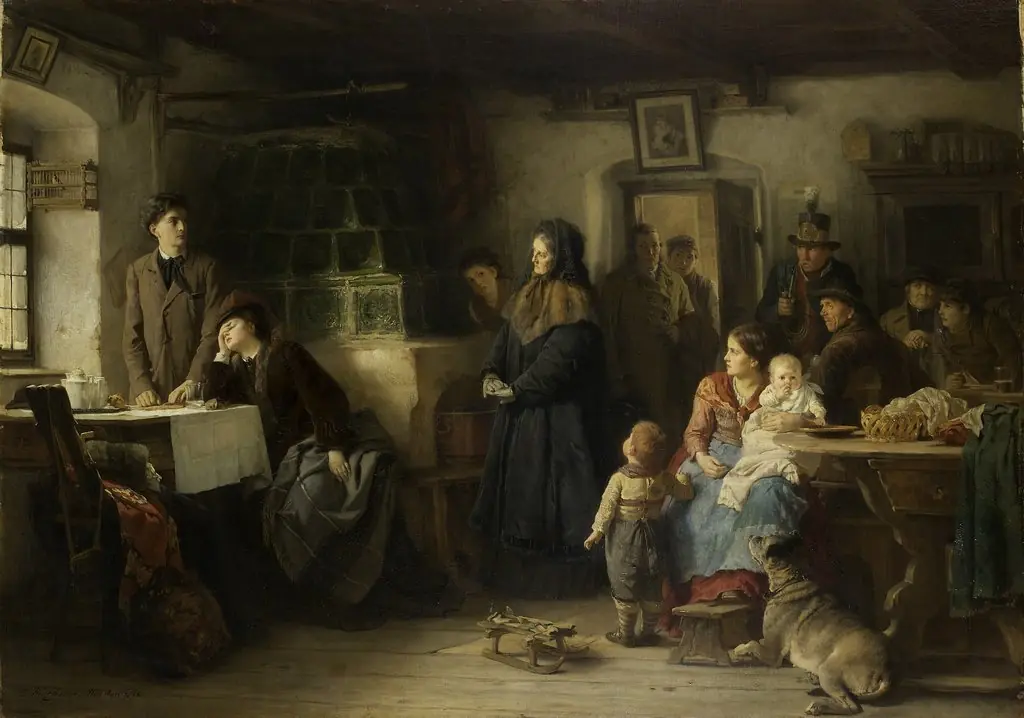 Die ereilten Flüchtlinge
 Study for "Come Rest in this Bosom my own Stricken Dear"
 Juhlakulkue Roomassa
 Study for "Come Rest in this Bosom my own Stricken Dear"
 In front of the church
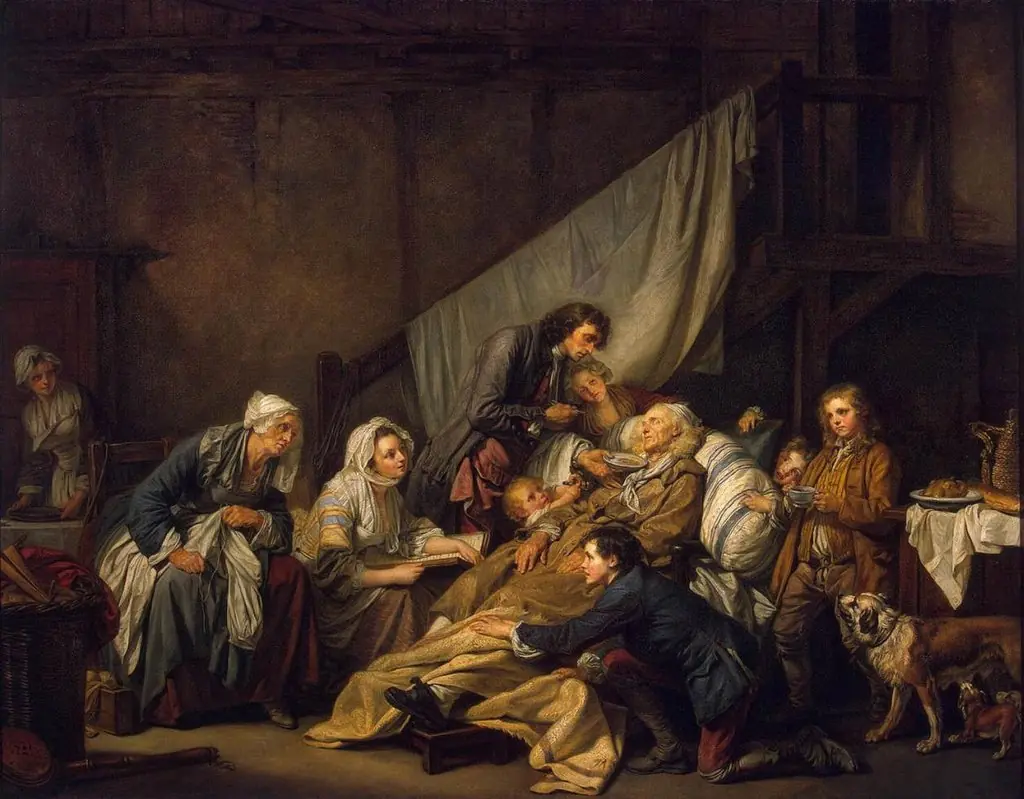 Filial Piety (The Paralytic)
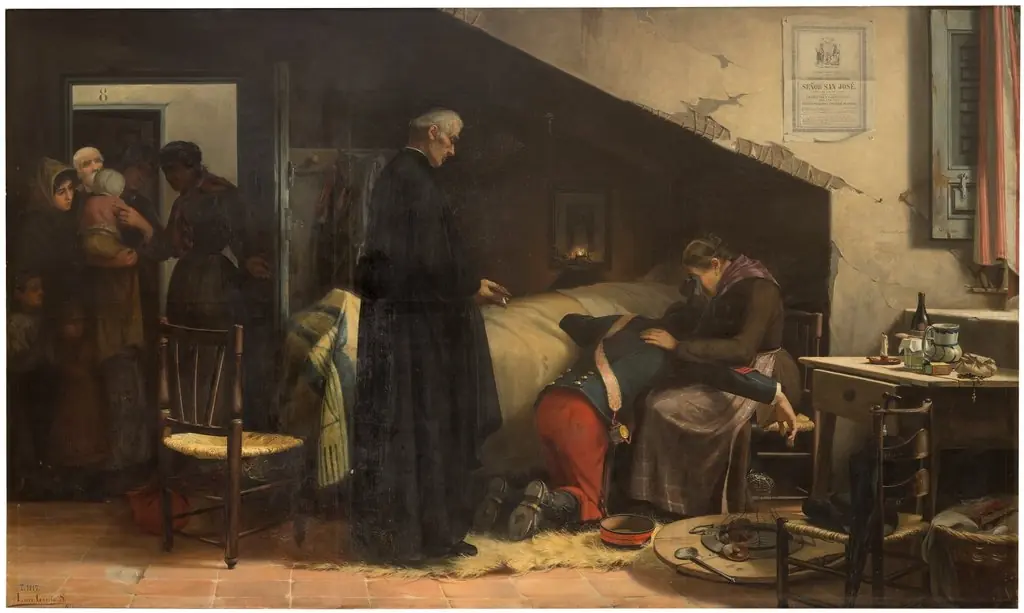 ¡Siempre incompleta la dicha!
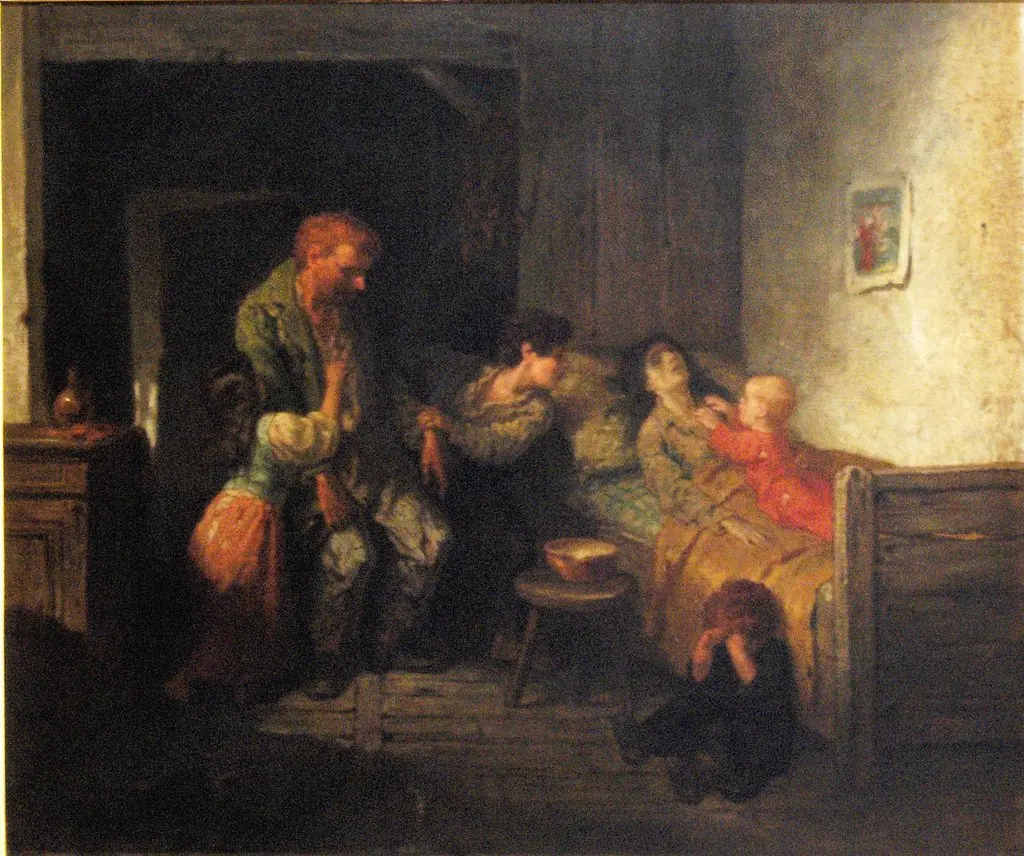 The drunkard
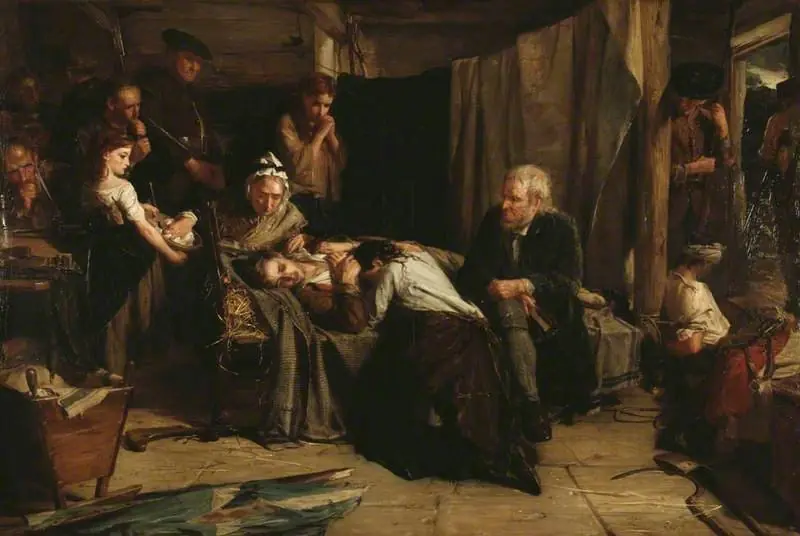 After the Battle
 The Baptism Procession