Artwork
The Drover's Departure: A Scene in the Grampians
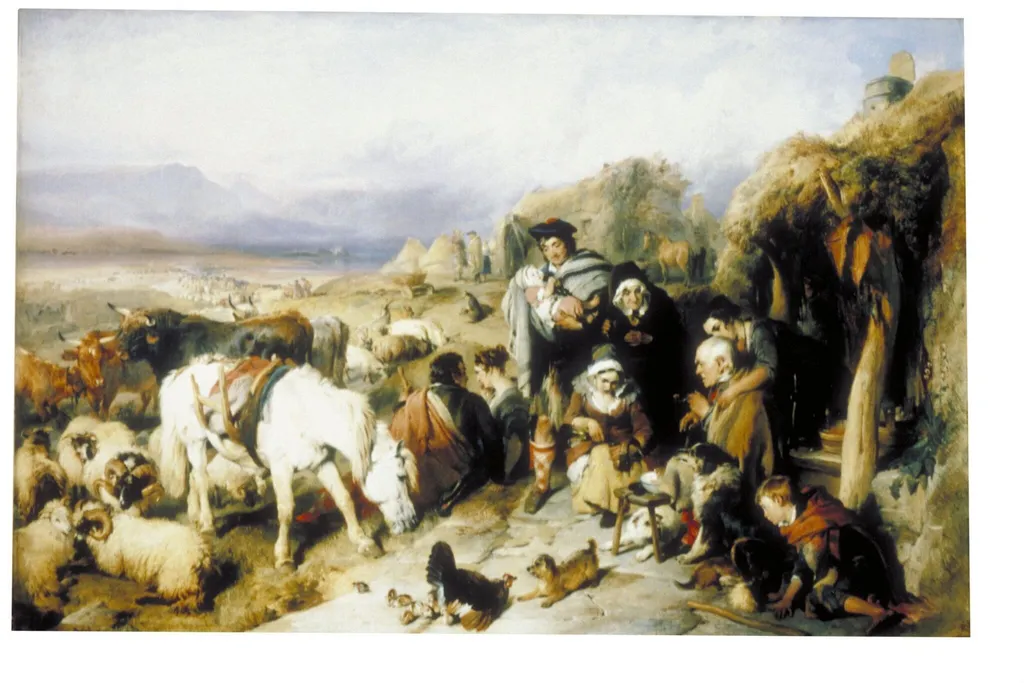
The Drover's Departure: A Scene in the Grampians is an oil painting by the British Romanticist artist Edwin Landseer. It dates from 1835 and is held in the collection of the Victoria and Albert Museum.
About this work
Overview
The Drover's Departure: A Scene in the Grampians is an oil painting portraying a pivotal moment in the daily life of a Highland drover as he begins his journey from the Scottish Grampian Mountains to transport livestock to English markets.
Subject & Meaning
The painting captures the drover's departure, emphasizing a traditional occupation and a specific cultural moment, evoking themes of livelihood, travel, and the connection between Scotland and England through trade.
Technique & Style
The artist employs chiaroscuro, a technique utilizing strong contrasts between light and dark to create depth and volume, adding emotional and spatial depth to the mountainous landscape and the drover's scene.
History & Provenance
Noted by a French critic in 1855 for its depiction of 'national manners', the painting was likened to a literary page from Sir Walter Scott, highlighting its narrative and cultural significance at the time.
Context
Set against the backdrop of the Grampian Mountains, the scene blends the natural Scottish landscape with the economic realities of livestock trading between Scotland and England in the 19th century.
Legacy
While specific lasting impacts on art movements are not detailed, the painting remains a documented example of 19th-century depictions of Scottish life and occupations, with its mention in contemporary criticism underscoring its observed cultural relevance.
Artist & collection

Artist
Sir Edwin Henry Landseer was an English painter and sculptor, well known for his paintings of animals – particularly horses, dogs, and stags. His best-known work is the lion sculptures at the base of Nelson's Column in Trafalgar Square.