Artwork
Representation in Schönbrunn by the Archduchesses of Austria of the entertainment Il Parnasso confuso, January 24, 1765
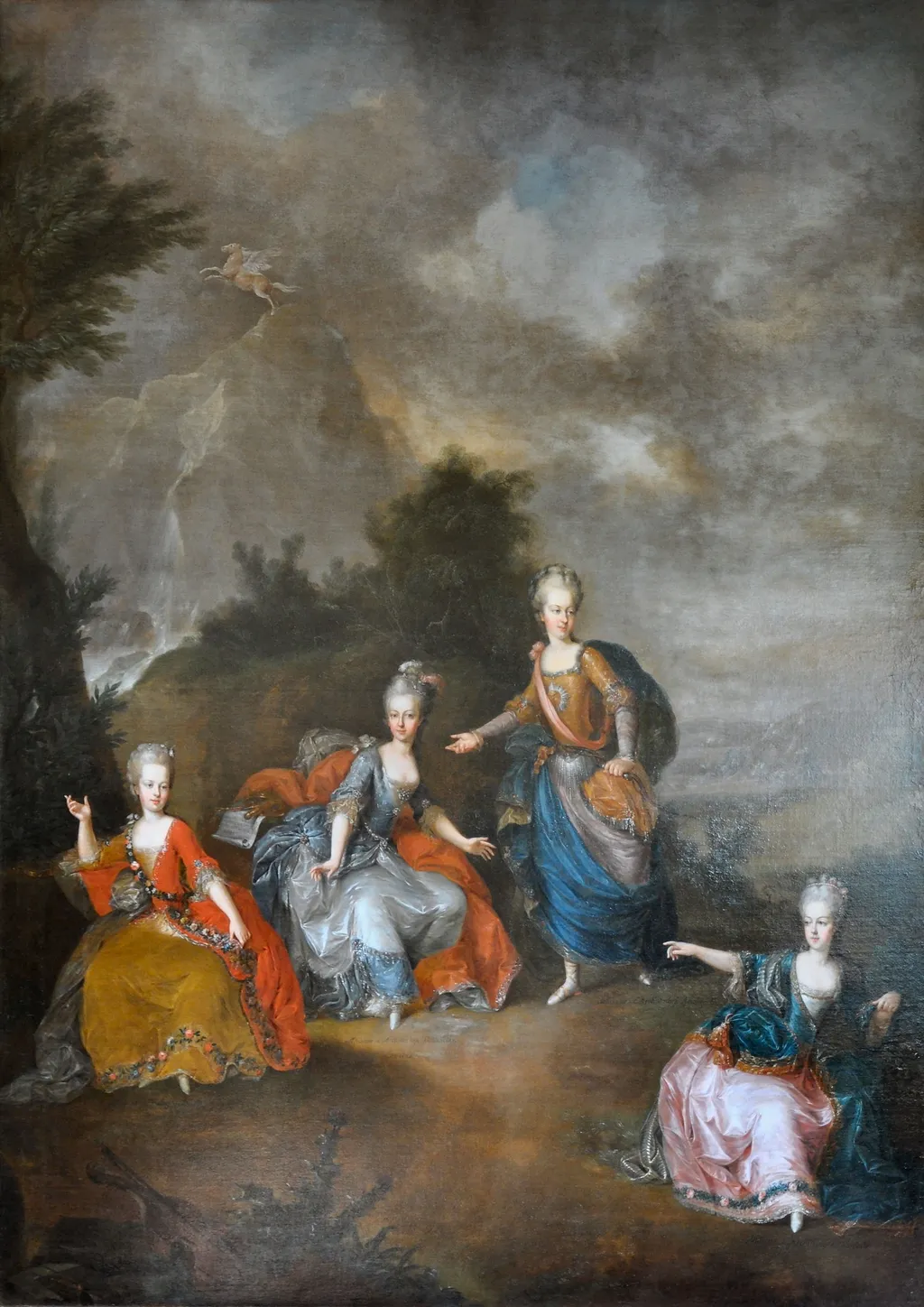
Representation in Schönbrunn by the Archduchesses of Austria of the entertainment Il Parnasso confuso, January 24, 1765 is an oil painting by the Rococo painting artist Georg Weikert. It dates from 1790 and is held in the collection of the Palace of Versailles.
About this work
Overview
The composition combines elements of theatrical staging with mythological reference, and the painting now belongs to the collection of the Palace of Versailles.
Georg Weikert’s oil on canvas, completed in 1790, records a courtly performance held at the Schönbrunn Palace on 24 January 1765. The work portrays four aristocratic women in elaborate eighteenth‑century attire, arranged outdoors before a turbulent sky where a faint silhouette of Pegasus can be seen. The composition combines elements of theatrical staging with mythological reference, and the painting now belongs to the collection of the Palace of Versailles.
Subject & Meaning
The four figures appear to reenact a scene from the entertainment titled Il Parnasso confuso, a courtly opera or masque. One woman holds a scroll, suggesting the presentation of a libretto or decree, while another fans herself, and a third kneels, evoking reverence. The distant Pegasus alludes to the poetic inspiration of the performance, linking the event to classical mythology and the elevated status of the archduchesses who commissioned it.
Technique & Style
Weikert employs a luminous palette of yellows, blues, and golds, rendering the sumptuous fabrics with fine brushwork that captures the sheen of silk and the texture of ruffles. The sky is rendered in muted grays, creating a dramatic contrast that foregrounds the figures. The faint, almost ethereal rendering of Pegasus demonstrates a delicate handling of atmospheric perspective, typical of late‑Baroque court portraiture.
History & Provenance
The painting was produced shortly after the 1765 performance, likely at the request of the Archduchesses of Austria who participated in the event. It entered the French royal collection in the early nineteenth century and was transferred to the Palace of Versailles, where it remains on display as part of the museum’s holdings of courtly theatrical art.
Context
Il Parnasso confuso was part of a series of elaborate entertainments staged at the Habsburg court, reflecting the Enlightenment’s fascination with classical themes and the use of music, dance, and costume to display political prestige. The inclusion of Pegasus aligns the performance with the tradition of invoking the muses, while the presence of a crown underscores the sovereign context of the occasion.
Own this work as a print
Artist & collection

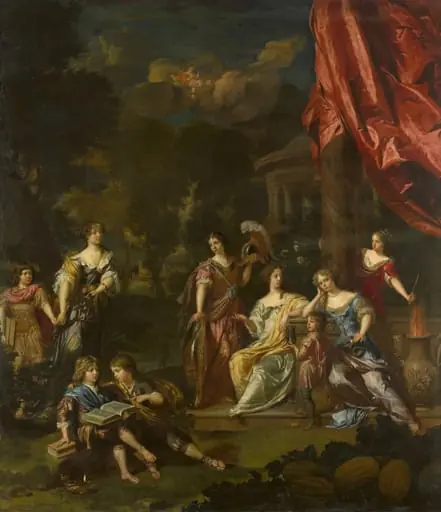 Allegorizing Group Portrait of the Children of Diederic Pietersz van Leyden van Leeuwen, Burgomaster of Leiden, and Alida Paets
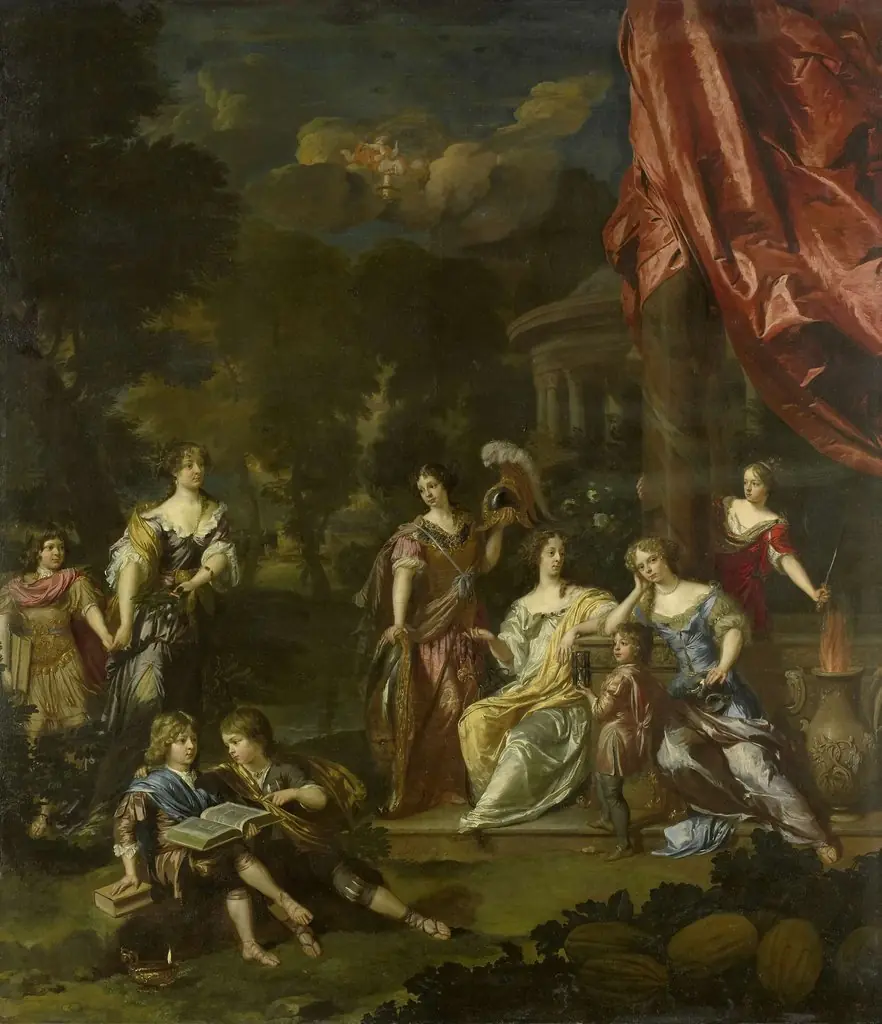 Group portrait with allegorical overtones of the children of Diederic Pietersz van Leyden van Leeuwen (1628-1682), burgomaster of Leiden, and Alida Paets (1625-1673)
 Untitled
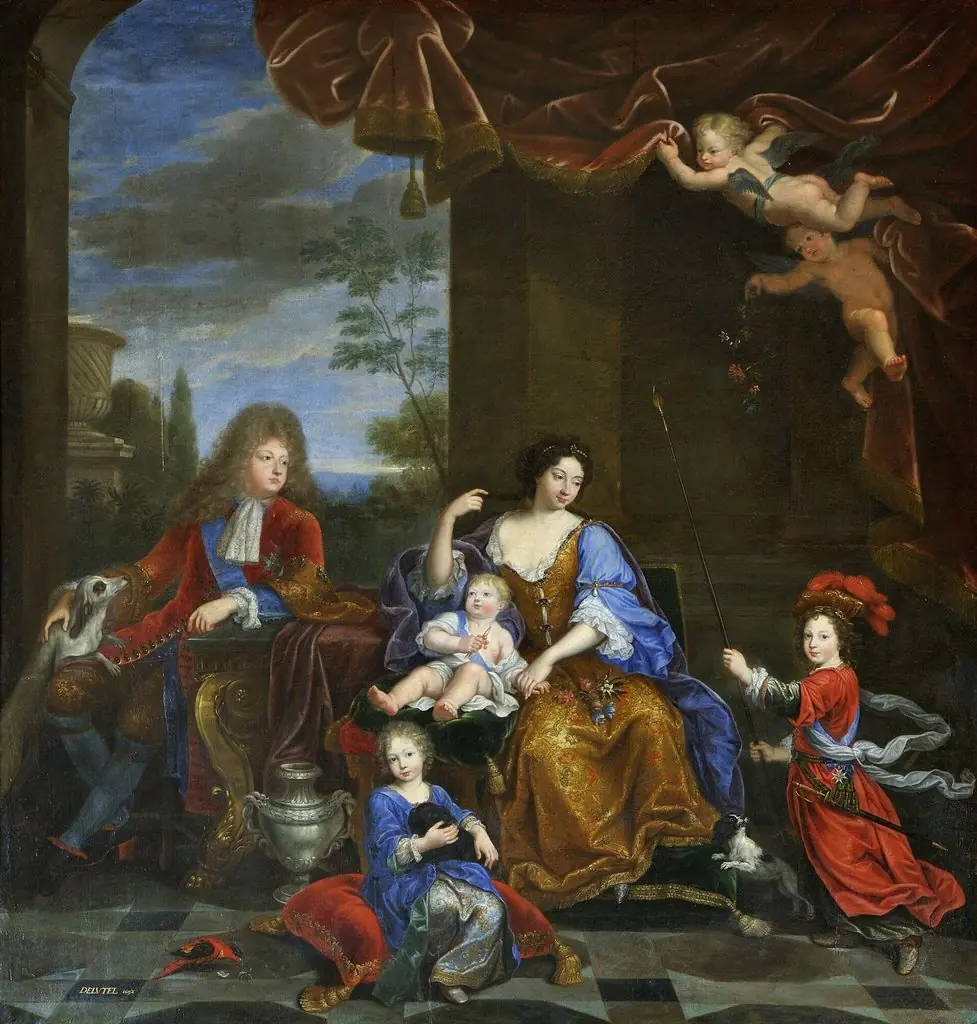 The family of the Grand Dauphin
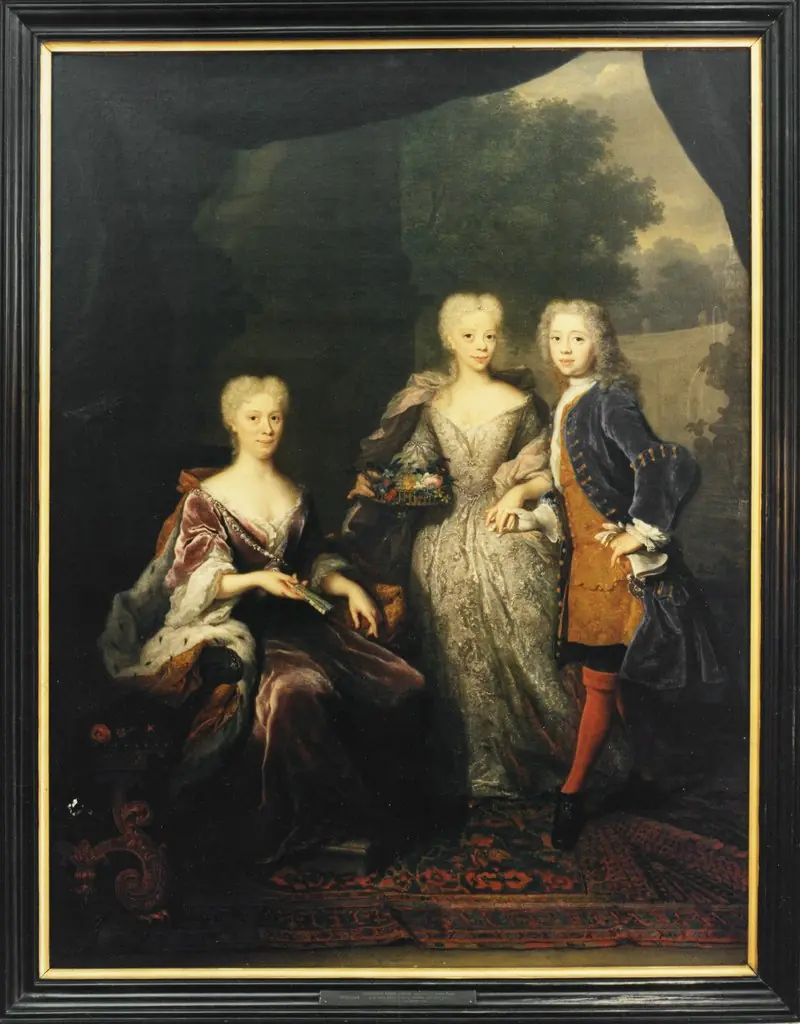 Marie Louise , 1688-1765, Princess of Hesse-Kassel, married to John William Friso of Nassau-Dietz and of Orange, with her children Anne Charlotte Amelie and Willem Karel Hendrik Friso
 Fête champêtre
 Gathering in a Park
 Divertissement
 Lady at Her Toilette