Artwork
Mushrooms
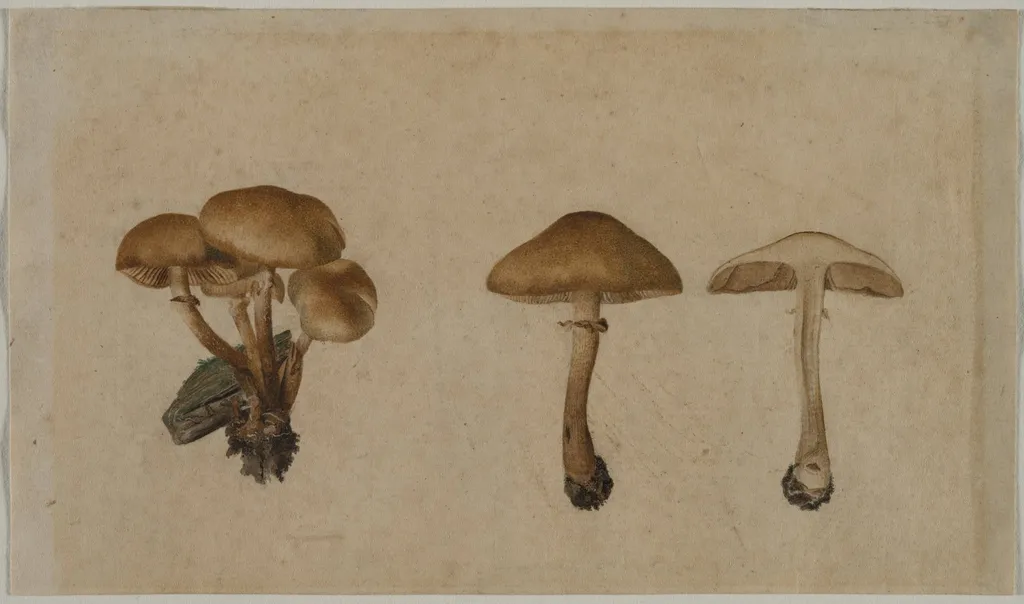
Mushrooms is a drawing by the Romanticist artist Georg Wilhelm Baurenfeind. It dates from 1751 and is held in the collection of the Cleveland Museum of Art.
About this work
Overview
The work belongs to a tradition of naturalist illustration that valued close observation, reflecting the scientific interests of the 18th century.
Created in 1751 by Georg Wilhelm Baurenfeind, this ink drawing depicts three mushrooms with quiet precision. Rendered on a light, unadorned surface, the composition emphasizes botanical accuracy over decorative flourish. The work belongs to a tradition of naturalist illustration that valued close observation, reflecting the scientific interests of the 18th century. It is currently held in the collection of The Cleveland Museum of Art.
Subject & Meaning
The drawing presents three fungi in varying stages and orientations: a clustered group with delicate caps, a single mushroom with a broad, rounded cap, and another viewed from below to reveal its gills. No symbolic or narrative context is implied; the focus remains strictly on form and structure. This approach aligns with the era’s growing emphasis on empirical study of the natural world, treating fungi as objects of scientific inquiry rather than allegory.
Technique & Style
Baurenfeind employed soft, delicate lines and subtle tonal gradations to capture the organic textures of mushroom caps and stems. Shading is restrained, avoiding dramatic contrast, which lends the forms a quiet, almost ethereal presence. The artist paid particular attention to minute details—how stems anchor into soil, the uneven surface of caps, and the delicate placement of nearby debris—demonstrating a methodical, observational approach typical of natural history illustration.
History & Provenance
The drawing was completed in 1751 during a period when detailed botanical and mycological studies were gaining traction among European naturalists. It entered the collection of The Cleveland Museum of Art through documented acquisition, though its earlier provenance prior to the 20th century remains unrecorded in public sources. Its preservation reflects its value as a specimen of scientific art from the Enlightenment era.
Context
In the mid-18th century, scientific illustration flourished as part of broader efforts to classify and document nature. Artists like Baurenfeind often worked alongside botanists or natural philosophers, producing images for manuscripts or collections. This drawing fits within that tradition—its lack of ornamentation and focus on anatomical detail mark it as a tool for study rather than display, aligning with the empirical ethos of the time.
Legacy
Though not widely known outside specialized circles, the drawing exemplifies the quiet rigor of pre-modern naturalist art. It contributes to a visual archive of fungi that informed early mycology and continues to serve as a reference for the intersection of art and science. Its endurance in a major museum collection underscores its role as a historical document of observational practice.
Artist & collection
Artist
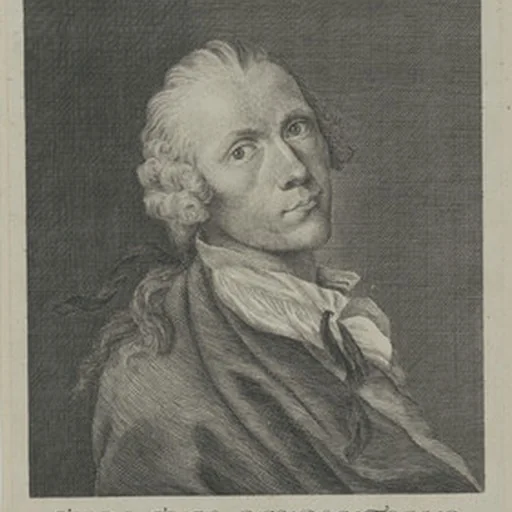
Georg Wilhelm Baurenfeind (1728–1763) was a German artist, born in Nuremberg.

 Untitled
 Study of mushrooms
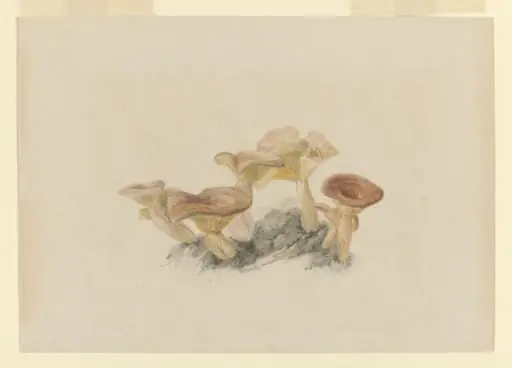 Untitled
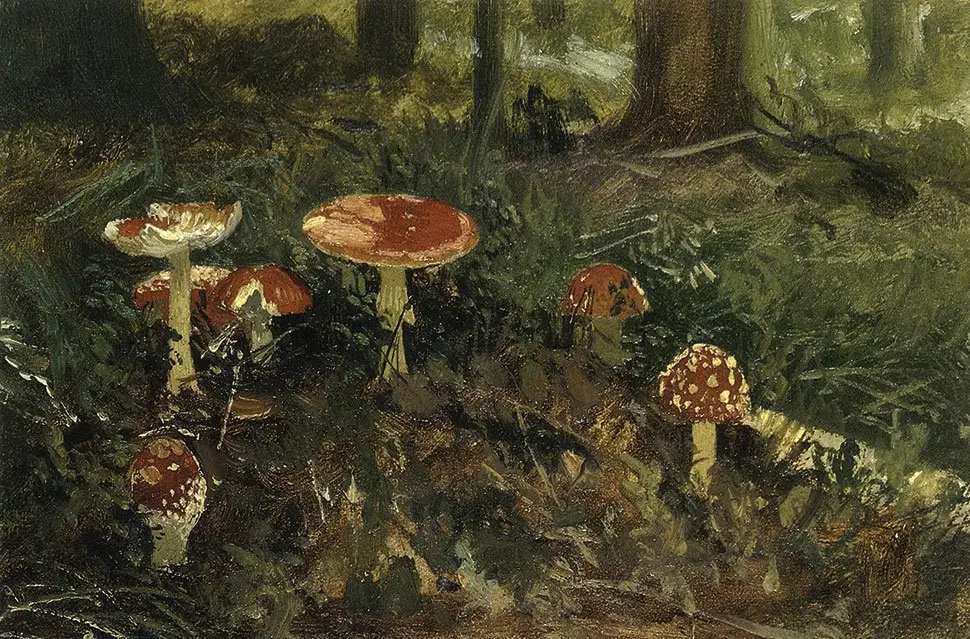 Fly-agarics. Study
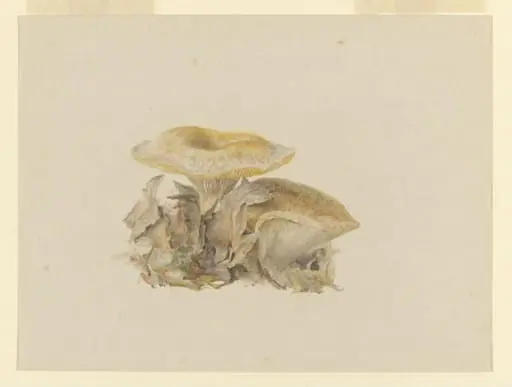 Untitled
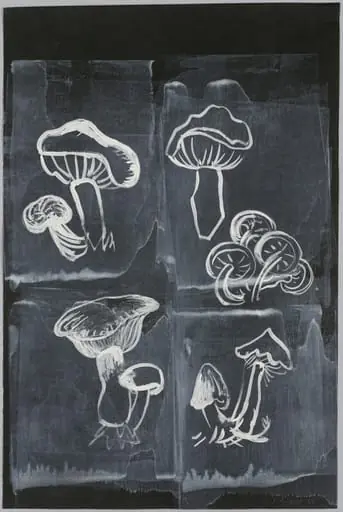 Untitled
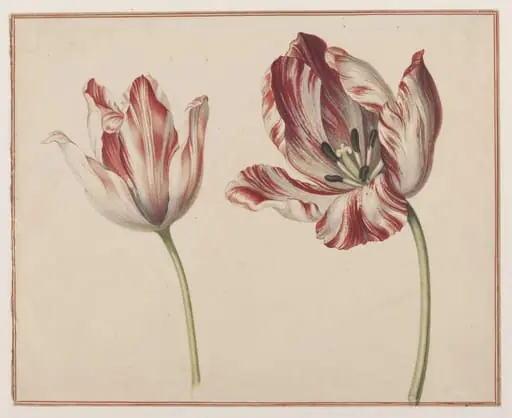 Two Tulips
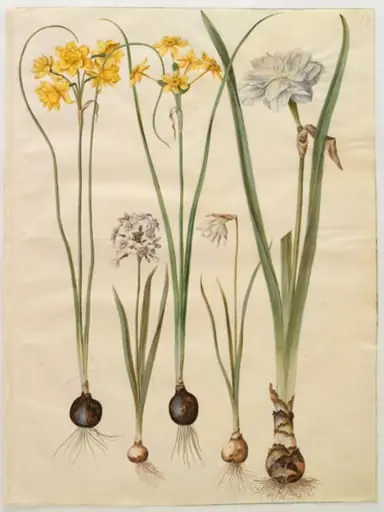 Narcissus jonquilla (siv-narcis); Narcissus tazetta (tazet); Narcissus pseudonarcissus moschatus (moskus-narcis); Narcissus poeticus (pinselilje)
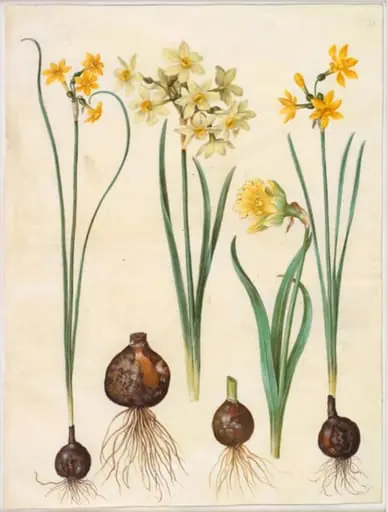 Narcissus jonquilla (siv-narcis); Narcissus tazetta aureus (guld-tazet); Narcissus pseudonarcissus bicolor (tofarvet påskelilje)
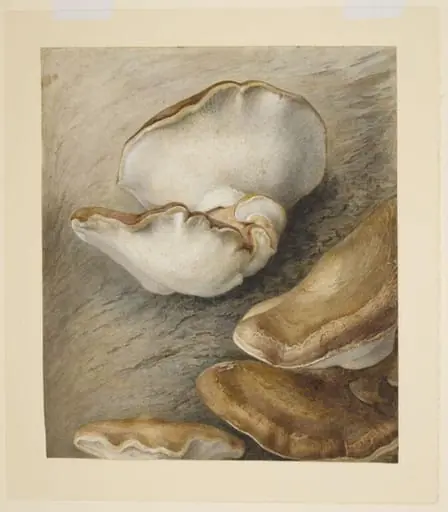 Birch tree fungus (Piptoporus betulinus) on a tree trunk
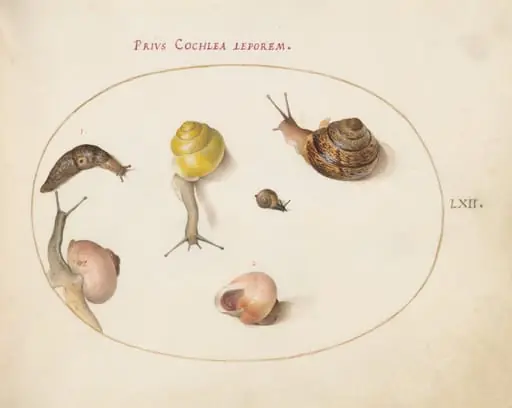 Plate 62: A Slug with Snails
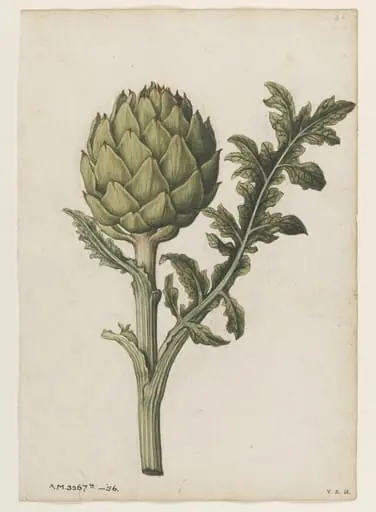 Globe artichoke