Artwork
Two Tulips
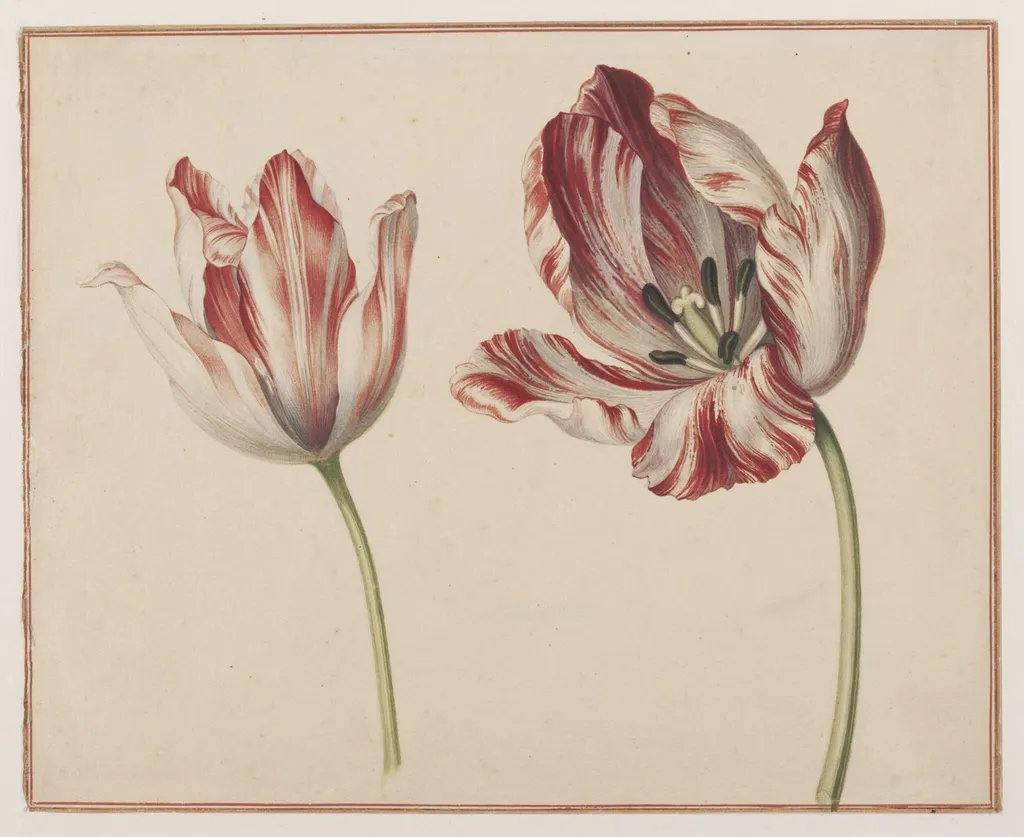
Two Tulips is a watercolor work on paper by the Rococo painting artist Unknown. It dates from 1770 and is held in the collection of the Victoria and Albert Museum. This watercolour study depicts two striped tulips in a glass tumbler, rendered with delicate washes of pink and white.
About this work
Overview
Created by a Dutch artist in the 17th century, it belongs to a tradition of floral studies assembled over time rather than painted en plein air.
This watercolour study depicts two striped tulips in a glass tumbler, rendered with delicate washes of pink and white. Created by a Dutch artist in the 17th century, it belongs to a tradition of floral studies assembled over time rather than painted en plein air. The work reflects a systematic approach to collecting visual references, allowing artists to construct idealized bouquets from flowers blooming in different seasons.
Subject & Meaning
The tulips, prized for their striped petals, were symbols of rarity and refinement in Dutch society. Though botanically precise, the composition prioritizes aesthetic harmony over scientific documentation. Their placement in a simple glass vessel elevates them as objects of quiet admiration, aligning with contemporary tastes for cultivated beauty rather than naturalistic arrangement.
Technique & Style
The artist employed soft, layered watercolour washes to suggest the translucence of petals and the sheen of glass. Subtle gradations of pink and white create a misty, ethereal effect, while the single curved stem anchors the composition without overwhelming it. The technique reveals careful, incremental application—evidence of a study built over weeks or months rather than a single session.
History & Provenance
The work is part of a broader practice among Dutch flower painters who maintained personal collections of botanical sketches. These studies were reused across multiple compositions, sometimes appearing in finished oil paintings. While the specific provenance of this piece is unrecorded, its style and subject align with known works from the period, particularly those associated with artists active in the Netherlands during the tulip mania era.
Context
In the 17th century, tulips—especially variegated varieties—commanded extraordinary value and fascination. Their cultivation became a cultural phenomenon, influencing art, commerce, and social status. Artists responded not by documenting wild specimens, but by assembling idealized bouquets from their own visual archives, blending seasonal blooms into harmonious, timeless arrangements.
Legacy
This study exemplifies how artistic practice intersected with botanical curiosity and decorative desire. The tradition of compiling floral references influenced later still-life painting and contributed to the development of systematic botanical illustration. Though not intended as science, such works preserved visual records of cultivars now lost, offering insight into horticultural trends of the time.
Artist & collection

 Domestic Scene
 Giacomo and Cardinal Marco, investing Andrea, Abbot of San Zeno, with his Benefice
 The Nymph of Fontainebleau
 Portrait of a Woman
 Madonna and Child with Saints in the Enclosed Garden
 Venus and Minerva
 Family Group of Four on Sofa
 Wall painting from Room H of the Villa of P. Fannius Synistor at Boscoreale
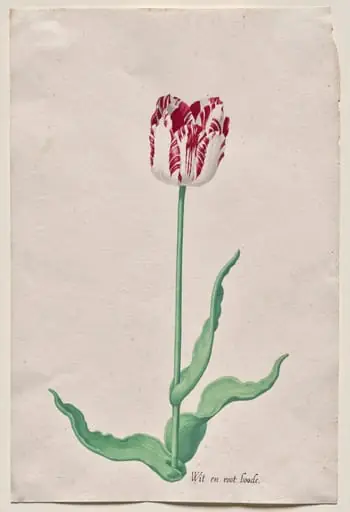 Study of a Tulip (Wit en root boode)
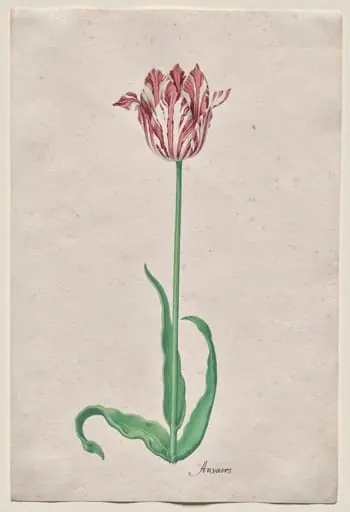 Study of a Tulip (Anvaers)
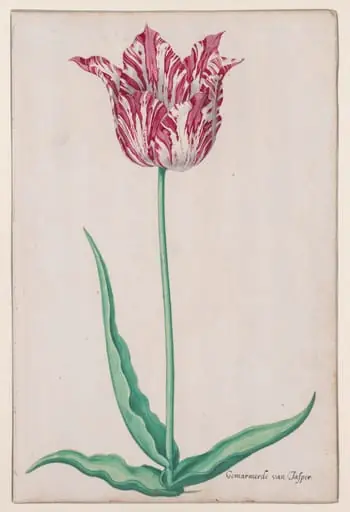 Study of a Tulip (Gemarmerde van Jasper)
 Study of a Tulip ('t roosje)
 Tulips
 Study of a Tulip (Ammirael Winckel)
 Tulips
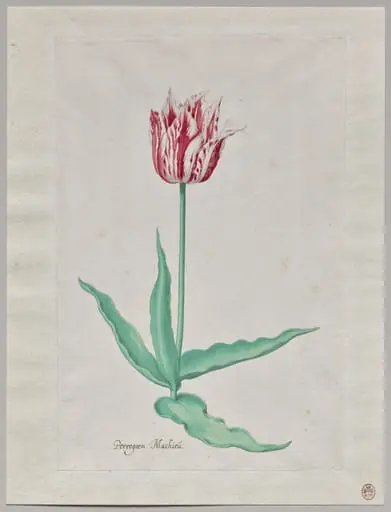 Study of a Tulip (Perregoen Machieu)
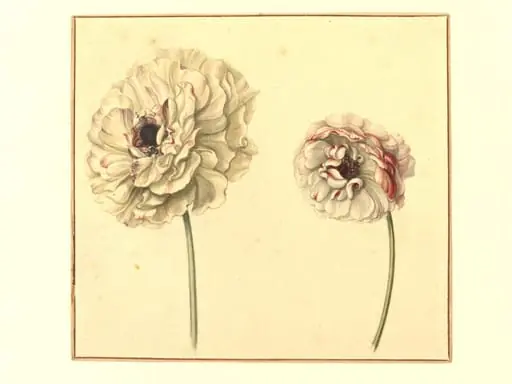 Two Persian Buttercups (<i>Ranunculus asiaticus</i>)
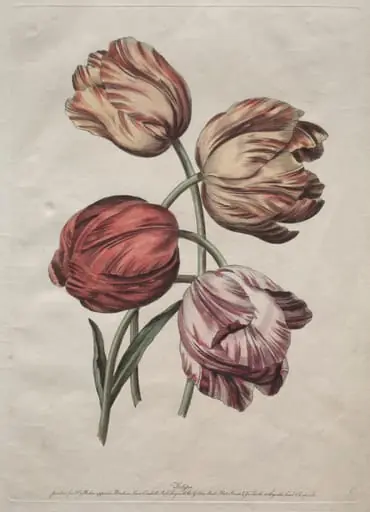 Eight Beautiful Groups of Natural Flowers in Outlines by de la Cour: Tulips