Artwork
Amour
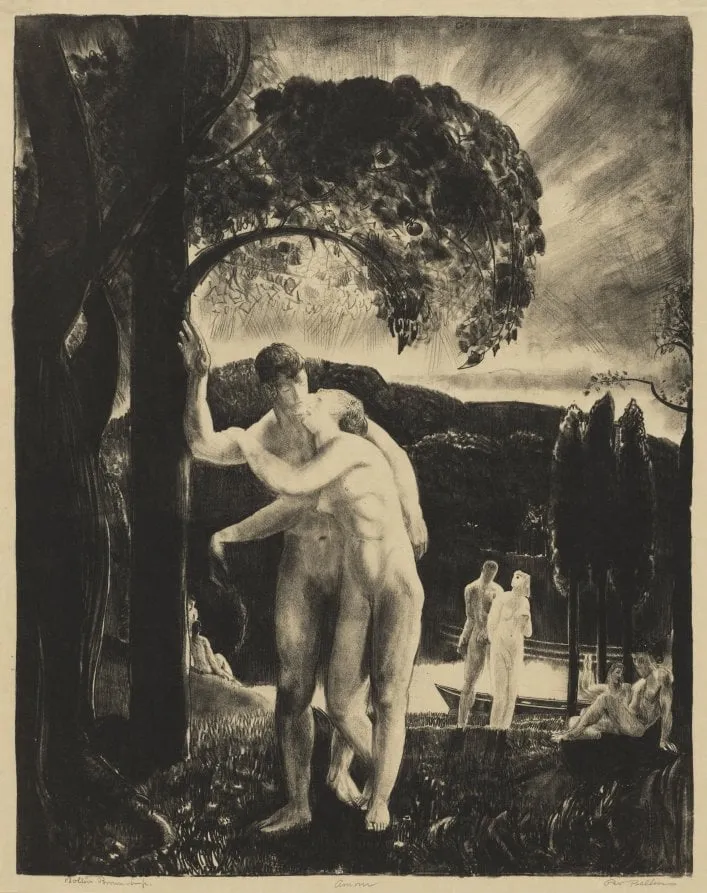
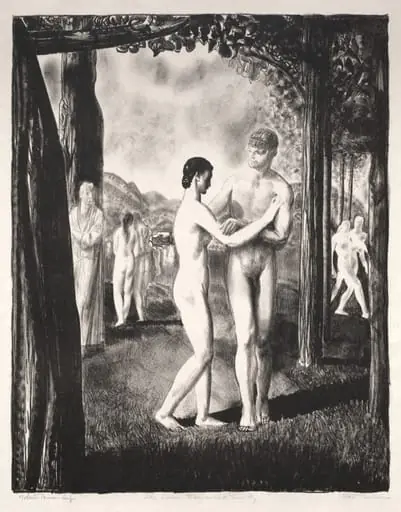
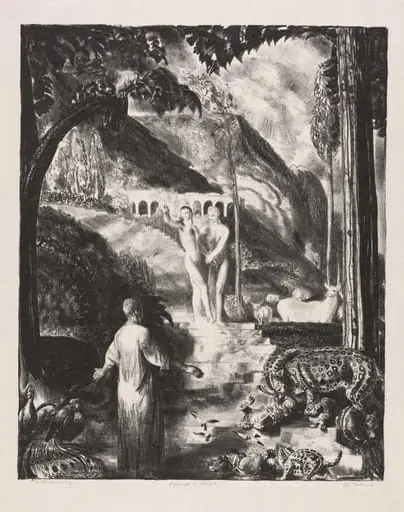
Amour is a print by George Bellows. It dates from 1923 and is held in the collection of the Cleveland Museum of Art.
About this work
Overview
Amour, a 1923 print by American realist George Bellows, depicts a serene, intimate moment of two figures embracing beneath a dense, leafy tree. Contrasting with the tranquil foreground, the background features a somber, partially illuminated sky and distant silhouettes near water.
Subject & Meaning
The subject of Amour is a tender embrace, set against the backdrop of urban New York City life, characteristic of Bellows' focus on modern society. The scene conveys a sense of private, emotional connection amidst the broader cityscape.
Technique & Style
Bellows employed strong chiaroscuro in Amour, juxtaposing deep shadows (notably in the tree and foreground shadows) with brighter, softly shaded figures. This contrast highlights the embracing couple, while the textured rendering of the tree and rough shadows adds depth.
History & Provenance
Created in 1923, Amour is now part of The Cleveland Museum of Art's collection, reflecting the institution's holdings of early 20th-century American realist works.
Context
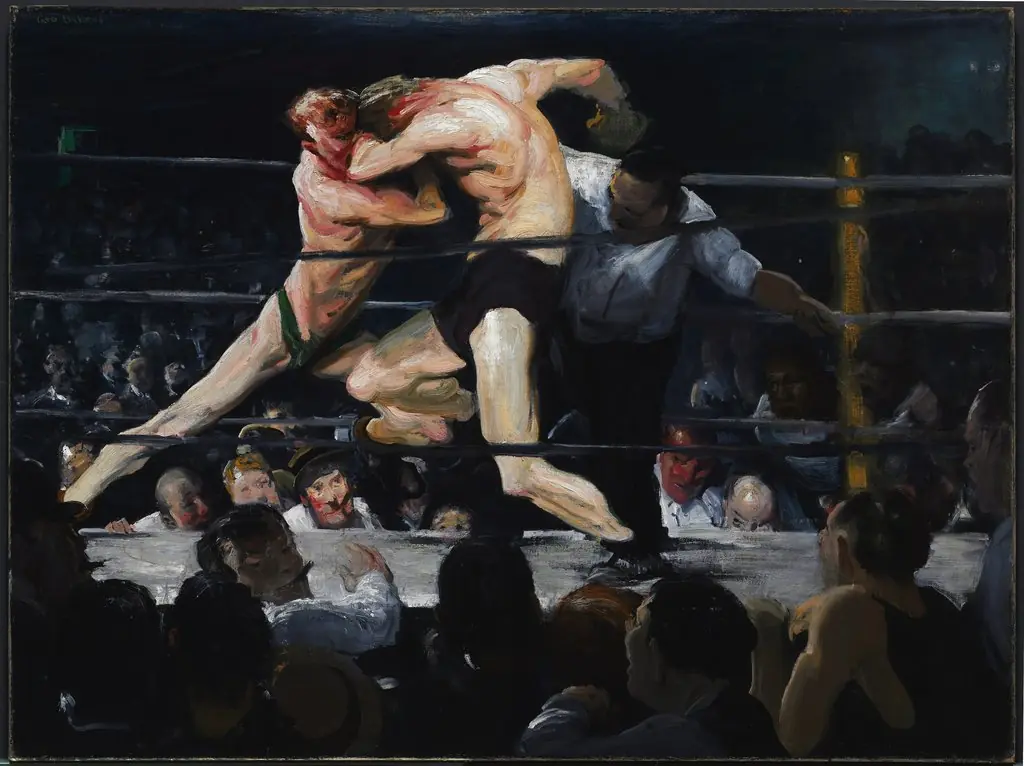
Amour sits within Bellows' broader oeuvre of capturing dynamic, often poignant, aspects of early 20th-century New York City life, though this work leans more towards serene intimacy than his typically vibrant urban scenes.
Legacy
As part of Bellows' body of work, Amour contributes to the legacy of American Realism, particularly in its use of chiaroscuro to evoke emotional depth in everyday life scenes, influencing subsequent generations of realist artists.
Artist & collection
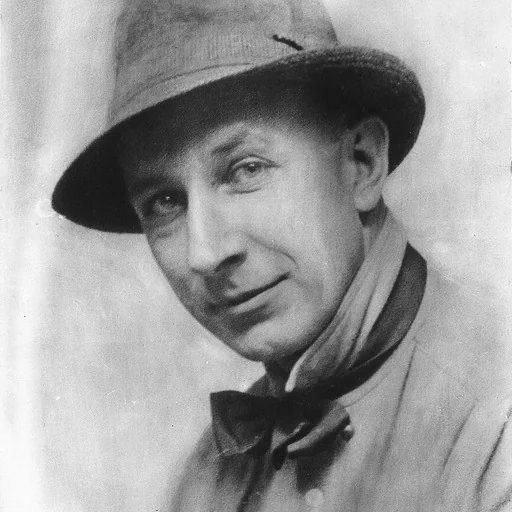
Artist
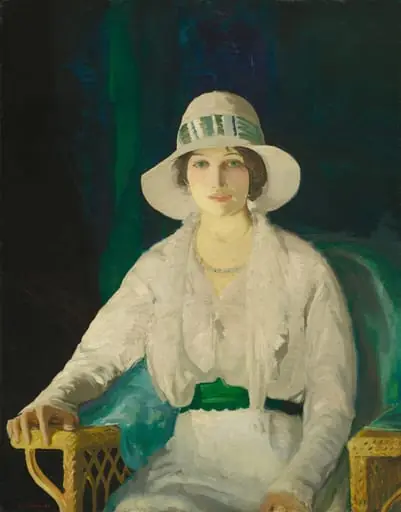
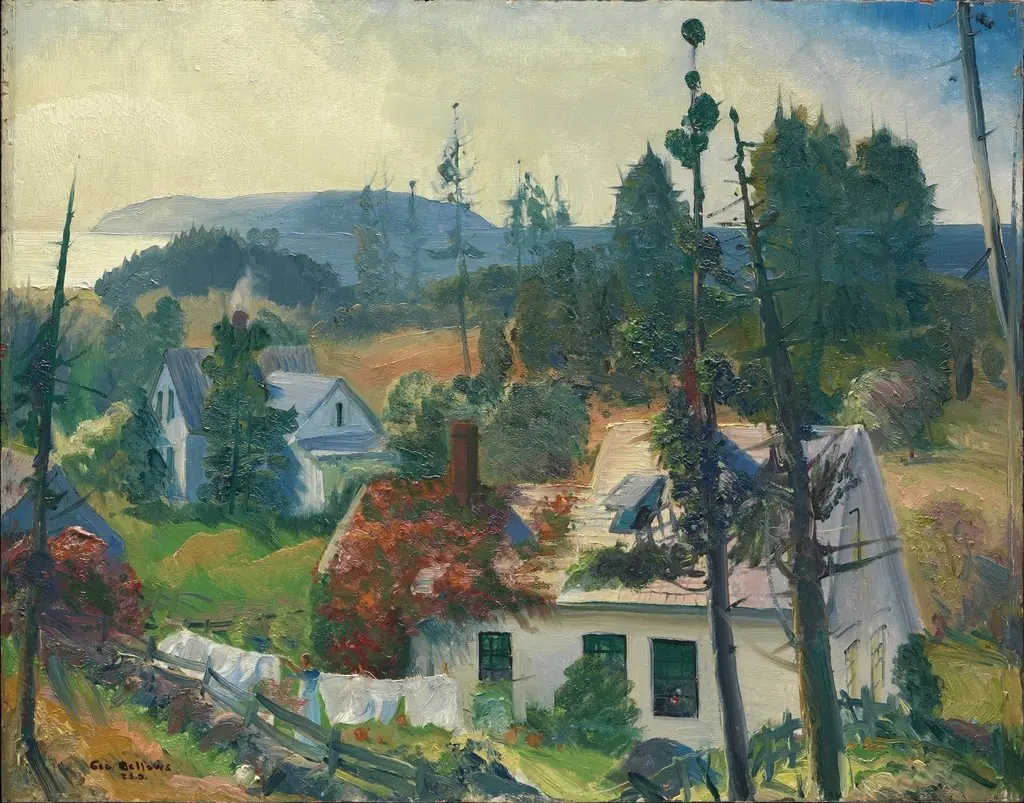
George Wesley Bellows (August 12 or August 19, 1882 – January 8, 1925) was an American realist painter, known for his bold depictions of urban life in New York City.