Artwork
Farewell to Utopia
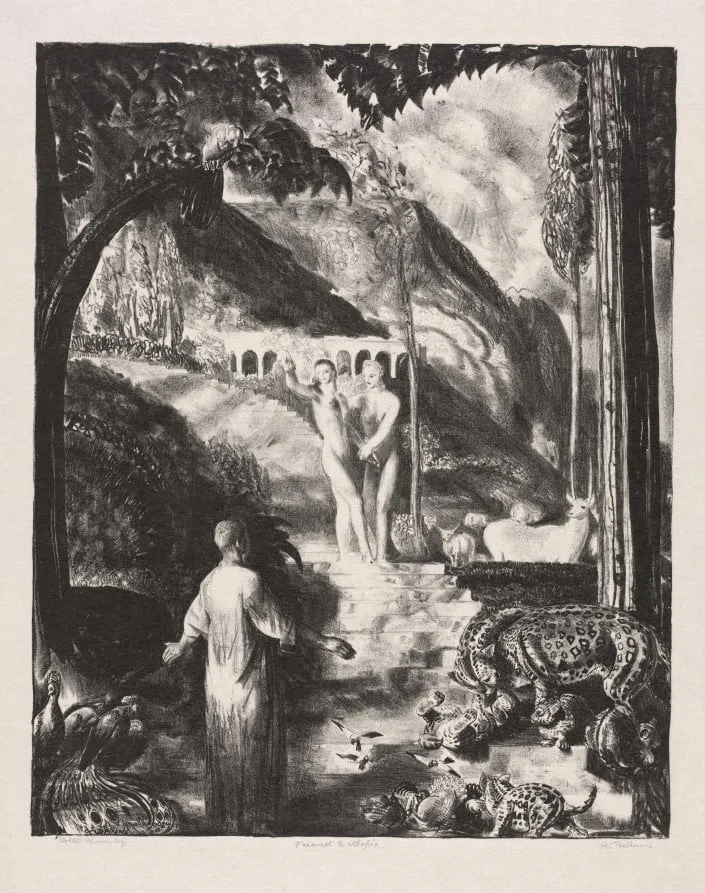
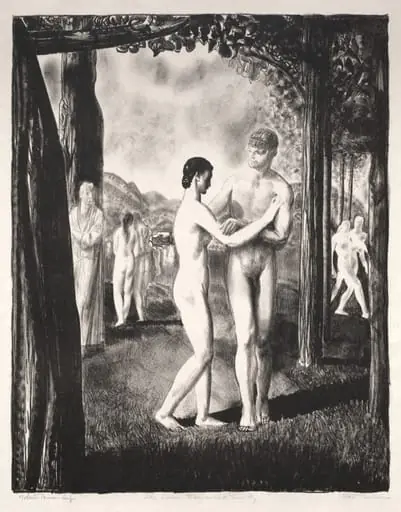
Farewell to Utopia is a print by George Bellows. It dates from 1923 and is held in the collection of the Cleveland Museum of Art.
About this work
Overview
It reflects a shift in Bellows’s focus toward introspective themes, suggesting a personal or philosophical reckoning with ideals of progress and community.
Completed in 1923, *Farewell to Utopia* is a print by American artist George Bellows, marking a departure from his usual urban subjects. Unlike his dynamic cityscapes, this work presents a quiet, contemplative moment set against a natural landscape. It reflects a shift in Bellows’s focus toward introspective themes, suggesting a personal or philosophical reckoning with ideals of progress and community.
Subject & Meaning
The scene centers on a solitary man in the foreground, observing a group on a distant staircase, with a woman at its core. The figures appear disconnected, their gestures subdued. The mountainous backdrop and overcast sky evoke isolation and ambiguity. Rather than celebrating collective aspiration, the image suggests the fading of communal hopes, possibly reflecting postwar disillusionment or the artist’s own evolving worldview.
Technique & Style
Bellows employed bold, textured brushwork to build atmosphere, using muted tones of brown, gray, and green to unify the composition. The contrast between the detailed foreground figure and the softer, atmospheric distance creates emotional tension. His handling of light and shadow emphasizes solitude, while the expressive strokes lend the scene a sense of quiet unease, distinct from his earlier, more vigorous style.
History & Provenance
The work entered the collection of The Cleveland Museum of Art in the 20th century, where it remains today. Its acquisition reflects institutional interest in Bellows’s lesser-known, introspective works beyond his famous urban scenes. Though not widely exhibited during his lifetime, its inclusion in the museum’s holdings underscores its significance as a rare example of his late, contemplative phase.
Context
Created in the aftermath of World War I and amid rising social unrest in America, *Farewell to Utopia* aligns with broader cultural anxieties about the collapse of idealism. Bellows, once known for depicting the vitality of urban labor and class struggle, now turned to quieter, more ambiguous imagery. This shift mirrors a generation’s retreat from collective optimism toward personal reflection and uncertainty.
Legacy
Though less celebrated than Bellows’s New York scenes, *Farewell to Utopia* is recognized as a pivotal work in understanding his artistic evolution. It reveals a nuanced engagement with emotional and political disillusionment, offering a counterpoint to his earlier energy. Scholars view it as a quiet but significant meditation on the limits of idealism in modern life.
Artist & collection
Artist
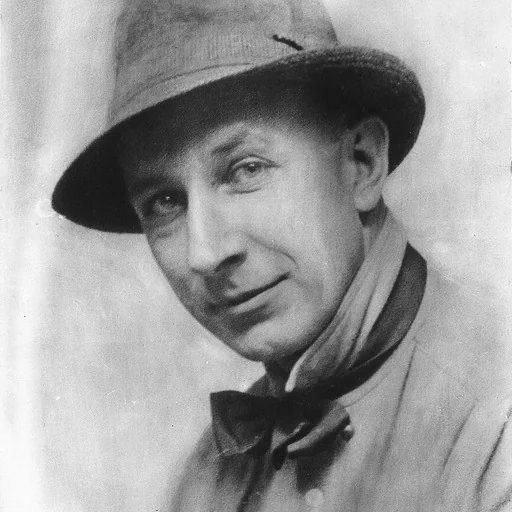
George Wesley Bellows (August 12 or August 19, 1882 – January 8, 1925) was an American realist painter, known for his bold depictions of urban life in New York City.

 The Forest Maiden
 Das Waldfräulein (The Lady of the Forest)
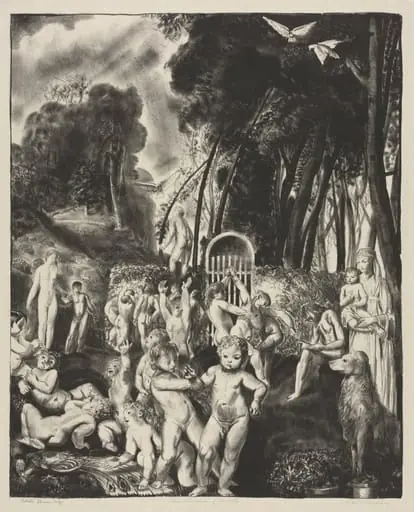 The Garden of Growth
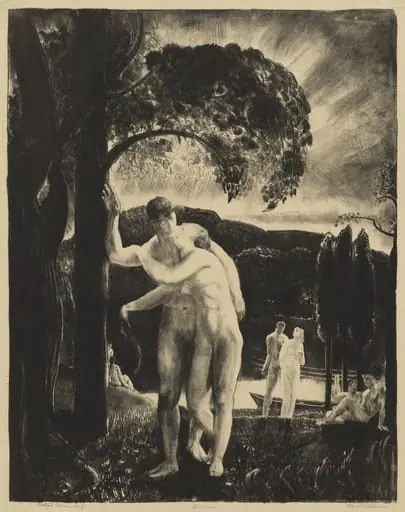 Amour
Amour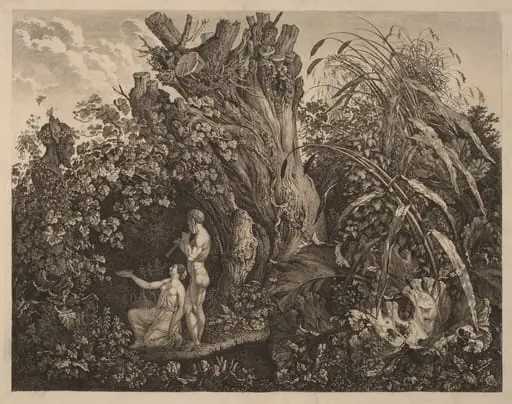 An Offering to Pan
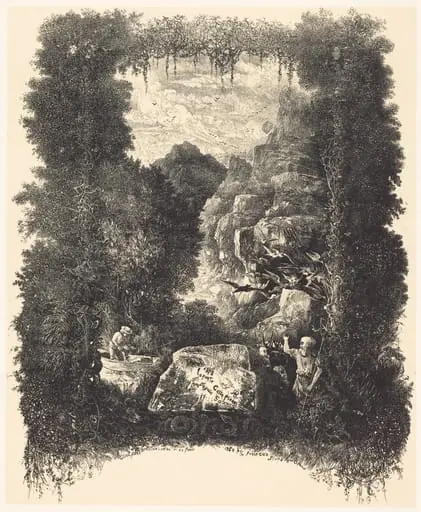 Frontispiece
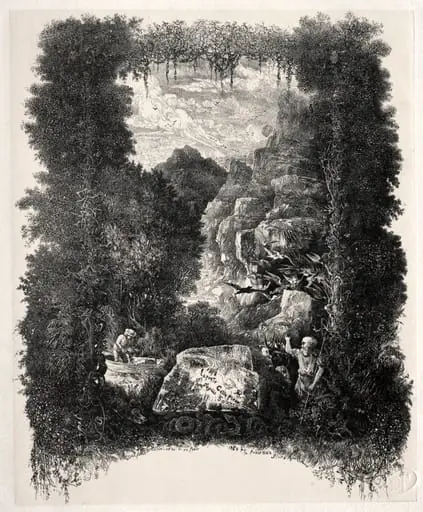 First frontispiece for Fables and Fairy-Tales by Thierry-Faletans
 The Lovers that Passed Him By
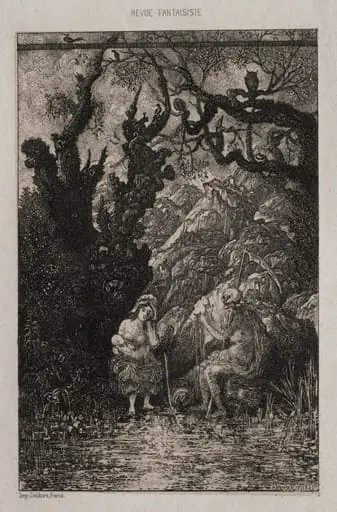 Death and the Young Mother
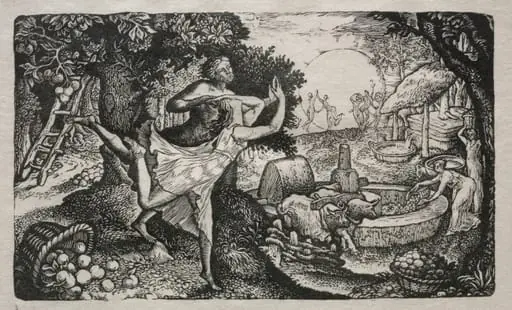 The Cyder Feast: A Vision of Joy and Thanksgiving
 The Homeward Star
 The Return to Life