Artwork
Statuette
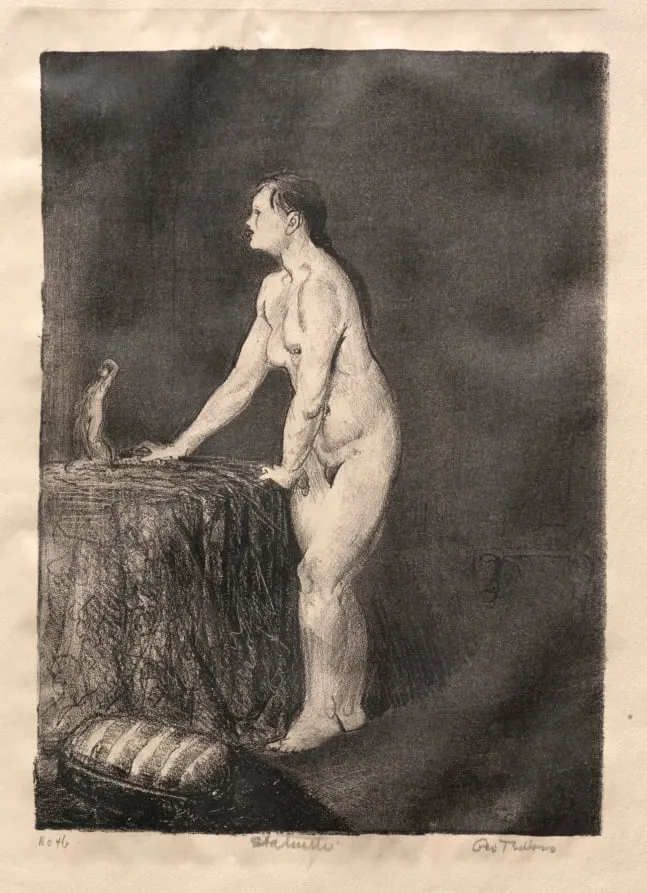
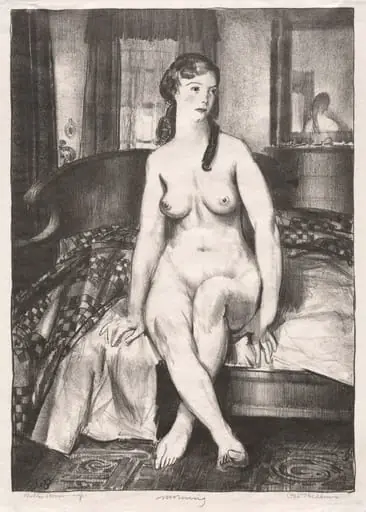
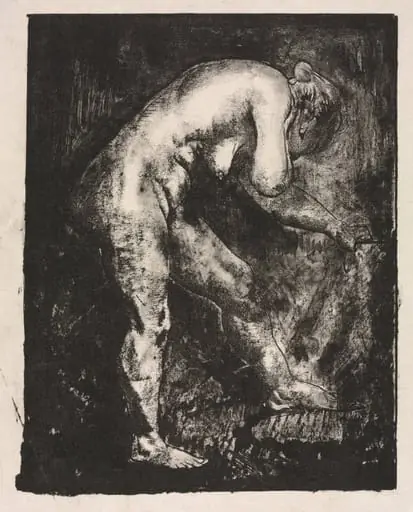
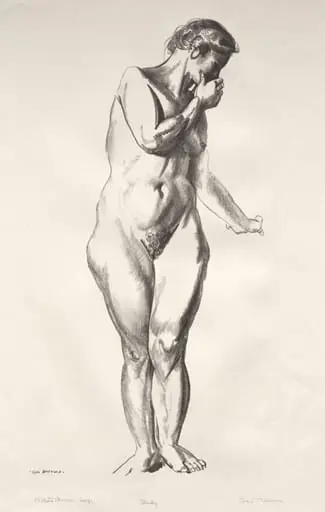
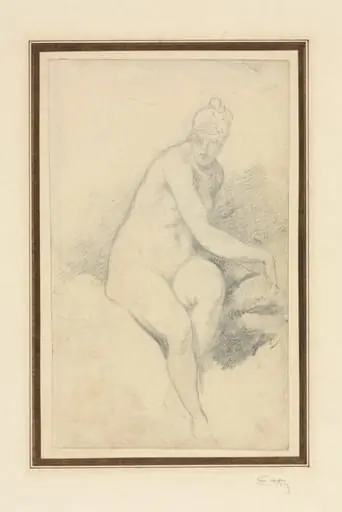
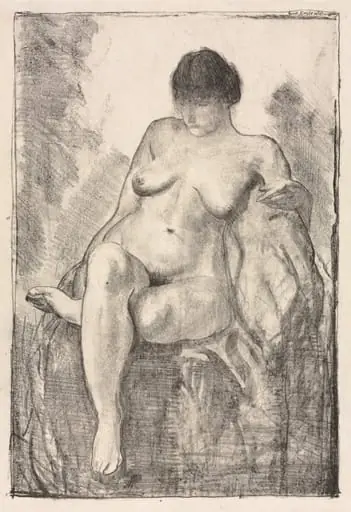
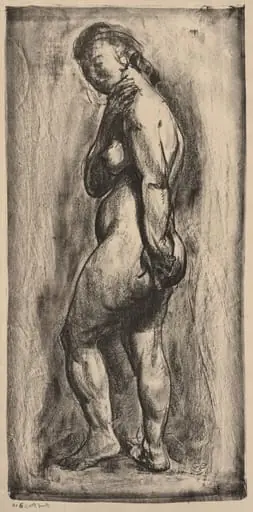
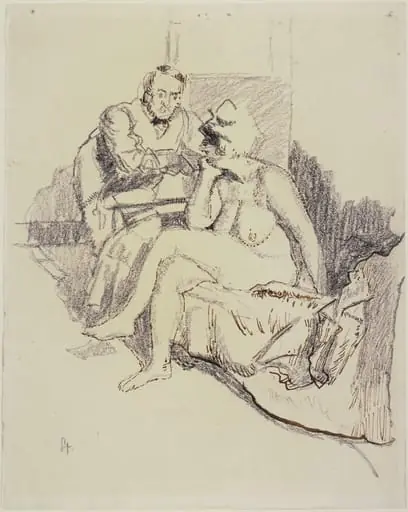
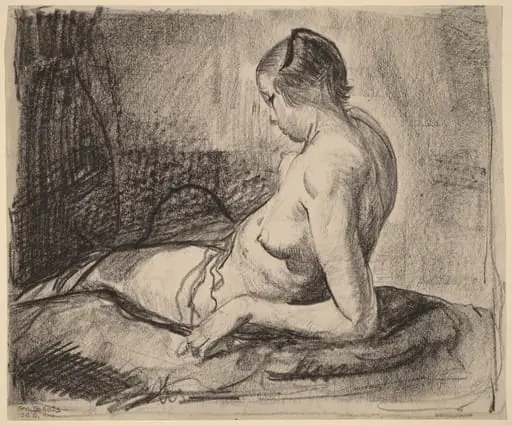
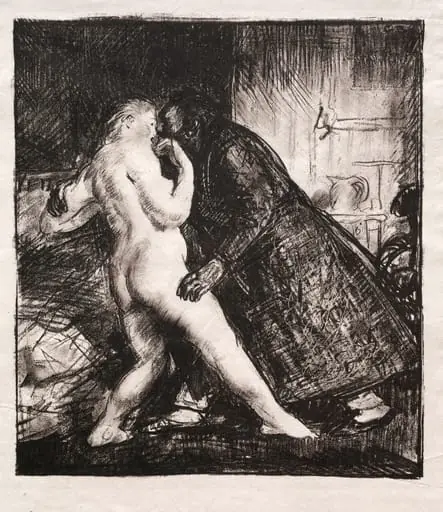
Statuette is a print by George Bellows. It dates from 1917 and is held in the collection of the Cleveland Museum of Art.
About this work
Overview
This 1917 statuette by George Bellows, housed in The Cleveland Museum of Art, exemplifies the artist's realist approach, extending his direct and unidealized depiction of everyday life from painting to sculpture.
Subject & Meaning
The piece portrays a barefoot woman standing sideways, leaning on a wooden table with a small, indeterminate object and a striped cloth beside her. Her relaxed pose and the everyday setting reflect Bellows' focus on capturing contemporary, unromanticized subjects.
Technique & Style
The work emphasizes simple shapes and shadows to define the woman's form, characteristic of Bellows' realist style. The overall impression is that of a quick study, prioritizing the play of light and dark (chiaroscuro) to create depth and drama.
History & Provenance
Created in 1917, the statuette is part of The Cleveland Museum of Art's collection. Specific details about its creation context or earlier ownership are not provided.
Context
This piece aligns with Bellows' broader practice of documenting urban, everyday life in early 20th-century America, though it shifts focus from his more common New York City scenes to a more intimate, possibly domestic setting.
Legacy
As part of Bellows' oeuvre, the statuette contributes to the legacy of American Realism, showcasing the artist's ability to apply his realist principles across mediums. Its impact lies in its honest portrayal of ordinary life, characteristic of the movement's values.
Artist & collection
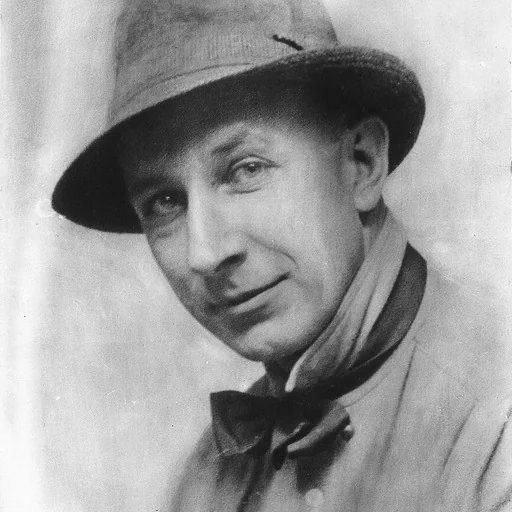
Artist
George Wesley Bellows (August 12 or August 19, 1882 – January 8, 1925) was an American realist painter, known for his bold depictions of urban life in New York City.