Artwork
The Law is too Slow
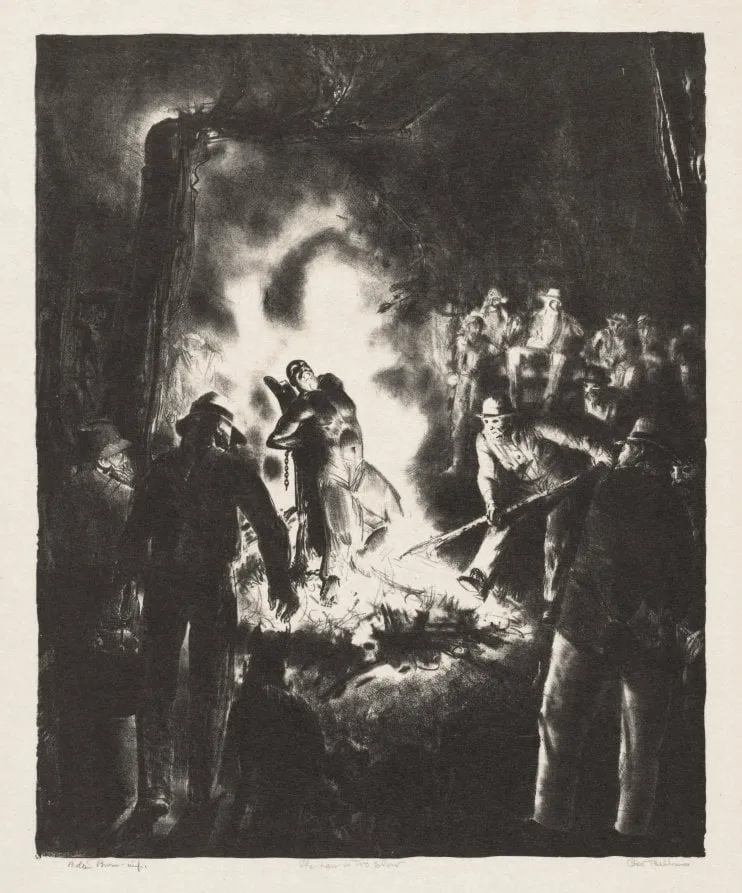
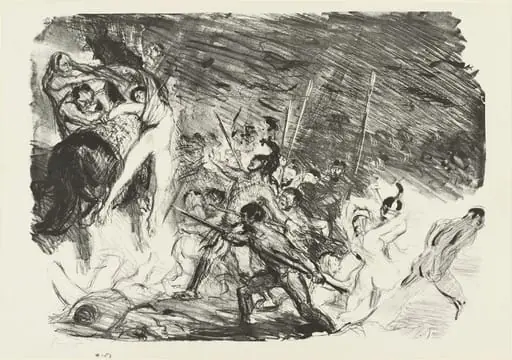
The Law is too Slow is a print by George Bellows. It dates from 1923 and is held in the collection of the Cleveland Museum of Art.
About this work
Overview
The image does not depict a real event but serves as a powerful allegory against the systemic brutality of lynching in early 20th-century America.
Created in 1923, this lithograph by George Bellows was commissioned as an illustration for Mary Johnston’s fictional anti-lynching story 'Nemesis,' published in Century Magazine. It visually interprets the tale’s central act of racial violence, using stark contrasts and symbolic composition to convey moral outrage. The image does not depict a real event but serves as a powerful allegory against the systemic brutality of lynching in early 20th-century America.
Subject & Meaning
The print centers on a Black man, his body illuminated as if sacred, suspended before a mob of white men. Some observers appear detached, even entertained, evoking the spectacle of public lynchings. The man’s posture and radiant form suggest martyrdom, drawing subtle parallels to religious iconography. The title, 'The Law is too Slow,' critiques both the mob’s vigilante justice and the legislative inaction of Congress, which repeatedly failed to pass federal anti-lynching legislation.
Technique & Style
Bellows employs chiaroscuro to heighten emotional tension, isolating the victim in a pool of light while the mob recedes into shadow. Bold, angular lines define the figures, conveying aggression and rigidity. The lithographic medium allows for sharp contrasts and textured surfaces, reinforcing the brutality of the scene. The composition directs the viewer’s gaze to the central figure, whose physical presence dominates the frame despite his vulnerability.
History & Provenance
The print was produced specifically for the May 1923 issue of Century Magazine, accompanying Johnston’s story. It was not widely exhibited as a standalone work during Bellows’s lifetime but circulated in print form to a national audience. Its original purpose was editorial, intended to provoke moral reflection among readers. Later, it gained recognition as part of broader efforts to document artistic responses to racial violence in the United States.
Context
Created during the Jim Crow era, the lithograph responds to a climate in which lynching was used to enforce racial hierarchy, often with impunity. Despite widespread public outcry and advocacy by groups like the NAACP, Congress blocked anti-lynching legislation for decades. Bellows’s image aligns with a small but significant body of progressive art that sought to expose racial terror, countering mainstream media’s silence or complicity.
Legacy
Though initially a magazine illustration, the print endures as a sobering document of American racial violence. It is now held in major collections as an example of socially engaged printmaking. Its visual language—combining realism with symbolic gravity—has influenced later artists addressing injustice. The work remains a reference point in discussions of art’s role in confronting systemic oppression.
Artist & collection
Artist
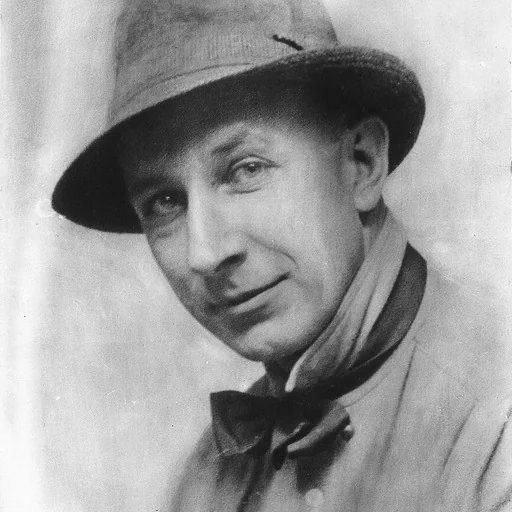
George Wesley Bellows (August 12 or August 19, 1882 – January 8, 1925) was an American realist painter, known for his bold depictions of urban life in New York City.

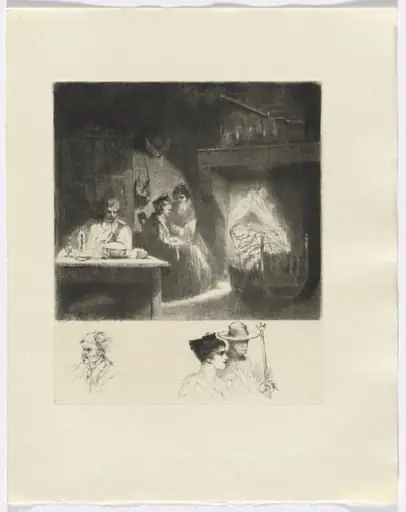 Frédéric Mistral: Mémoires et Recits by Frédéric Mistral: family scene/ bust of three figures (insert after p. 48)
 Untitled
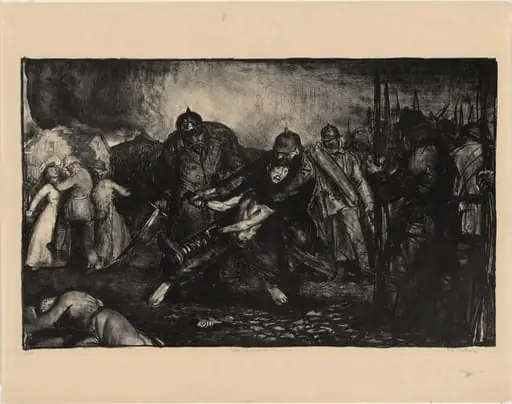 The Germans Arrive
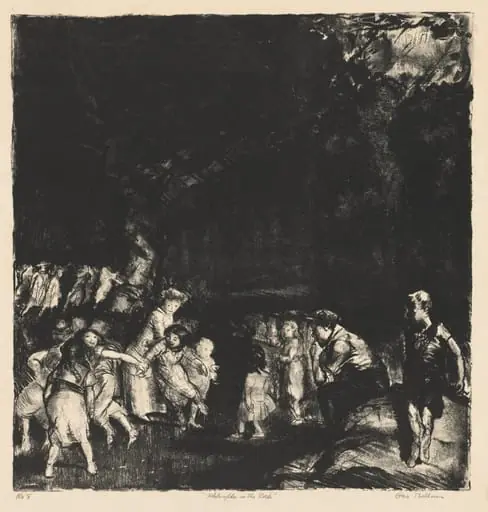 Philosopher on the Rock
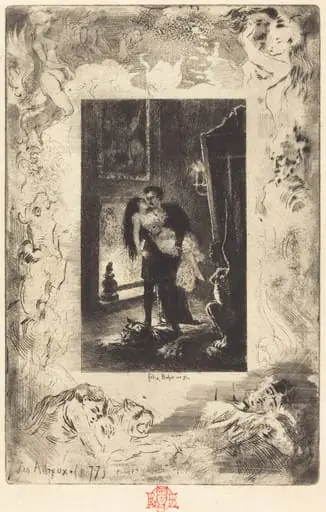 Les Adieux (The Parting)
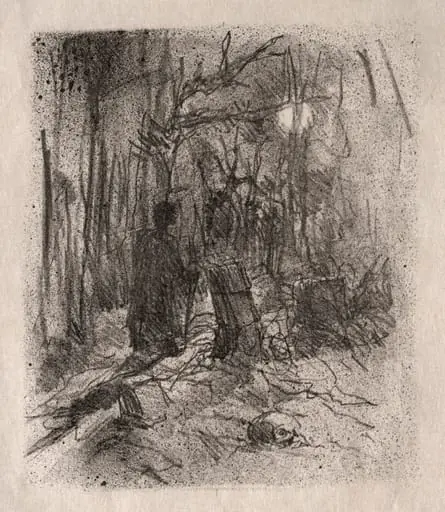 La Cimetière de Busk
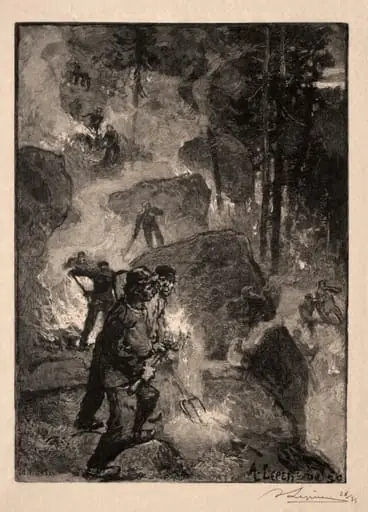 Brûleurs de Fougères
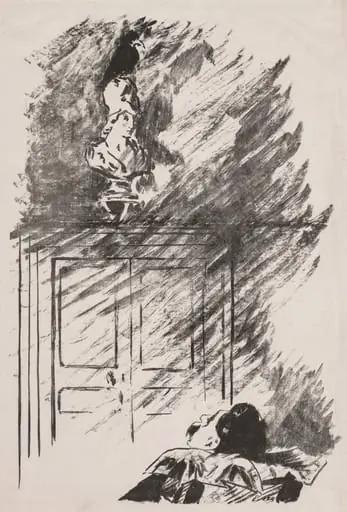 Perched upon a Bust of Pallas
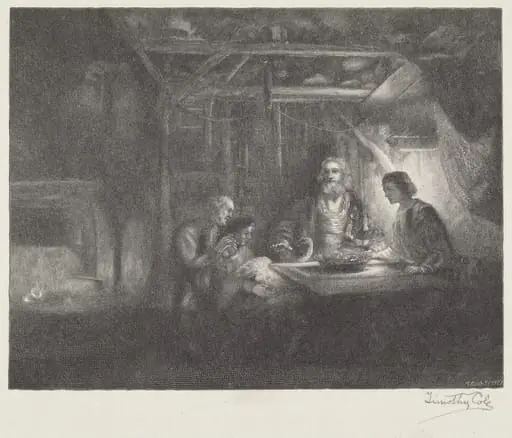 Philemon and Baucis
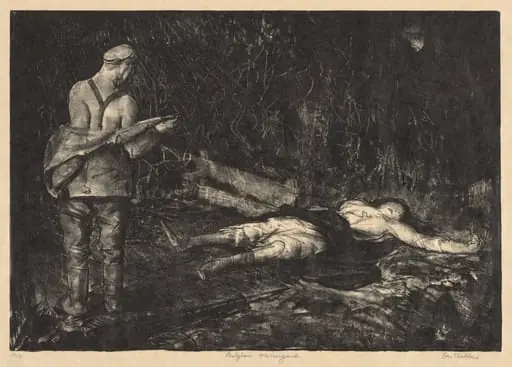 War Series: Belgian Farmyard