Artwork
Philemon and Baucis
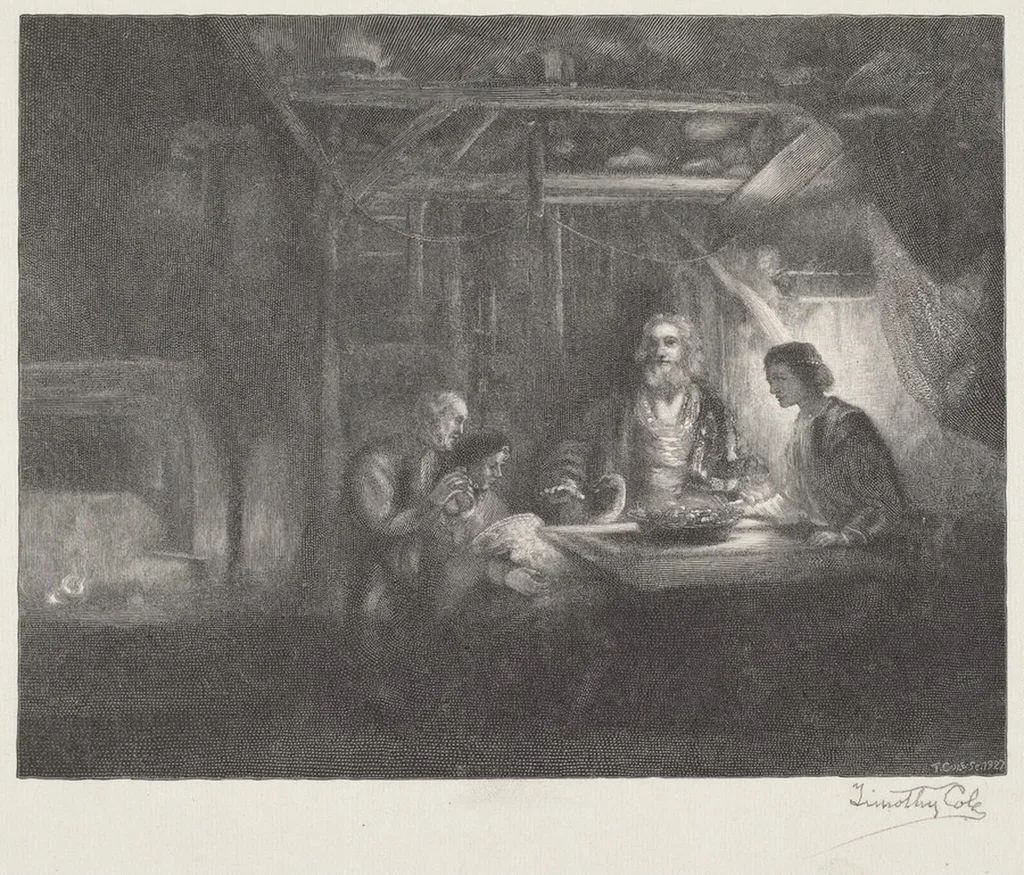
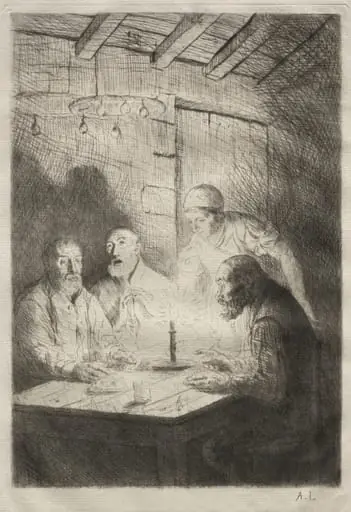
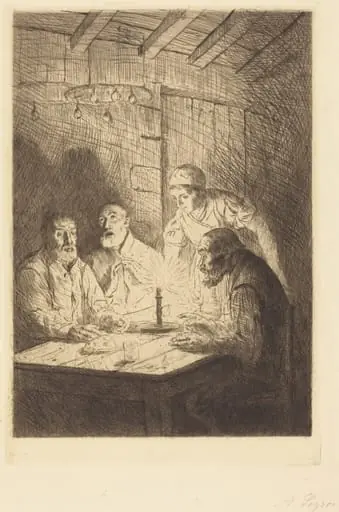
Philemon and Baucis is an ink print by Timothy Cole. It dates from 1927 and is held in the collection of the National Gallery of Art.
About this work
Overview
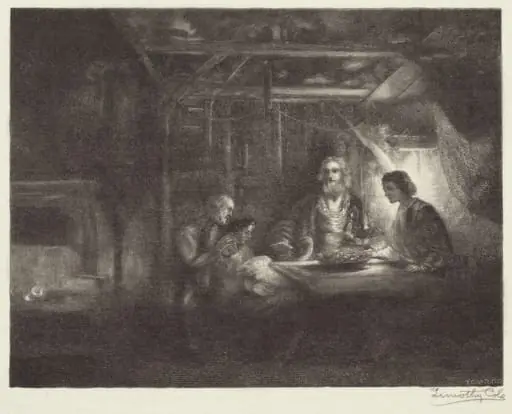
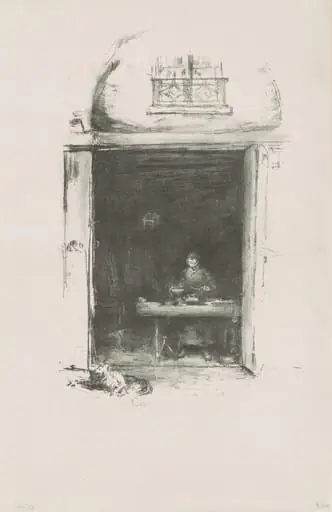
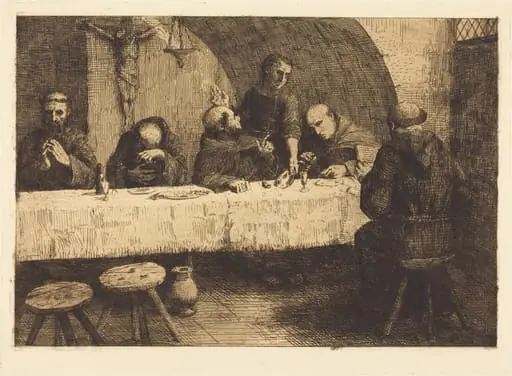
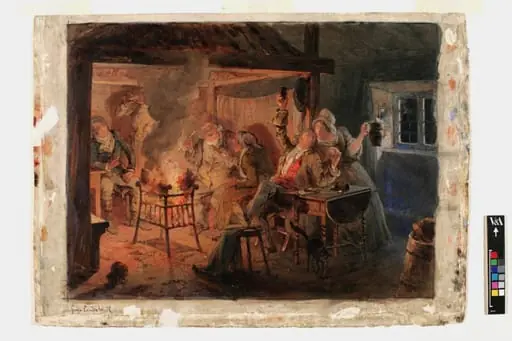
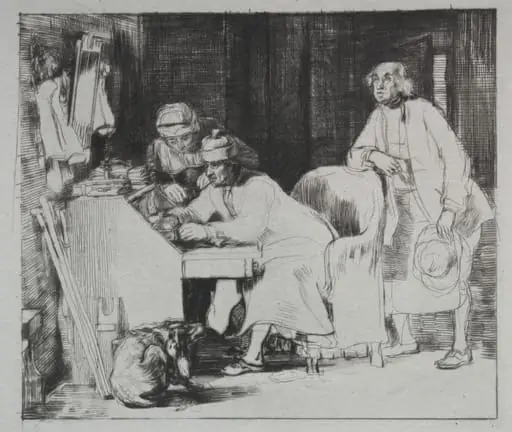
Timothy Cole’s 1927 wood engraving depicts the mythological figures Philemon and Baucis alongside a third guest, rendered in fine linear detail.
Timothy Cole’s 1927 wood engraving depicts the mythological figures Philemon and Baucis alongside a third guest, rendered in fine linear detail. The composition centers on a modest interior scene, where three figures share a quiet moment around a table. The work belongs to the printmaking tradition of the early 20th century, emphasizing texture and tonal gradation through hand-carved wood blocks rather than inked lines on metal.
Subject & Meaning
The scene illustrates the ancient Greek tale of Philemon and Baucis, an elderly couple who hospitably welcomed disguised gods. The third figure likely represents one of the divine visitors. Their calm demeanor and shared meal reflect themes of humility, generosity, and divine reward. Cole’s choice to capture this intimate moment underscores the moral quietude of the myth rather than its miraculous climax.
Technique & Style
Using wood engraving, Cole employed fine, controlled incisions to build tone and form. The interplay of light and shadow emerges through dense cross-hatching and delicate open areas, suggesting the warmth of interior space. The wooden beams and draped curtain are rendered with rhythmic precision, while the figures’ soft expressions are achieved through subtle contouring, avoiding sharp contrasts to preserve the scene’s serenity.
History & Provenance
Created in 1927, this engraving was part of Cole’s later body of work, during which he focused on literary and mythological subjects rendered in intimate scale. Though not widely exhibited at the time, it reflects his long-standing engagement with narrative printmaking. The work’s provenance traces to private collections in the northeastern United States, where Cole was based and active in artistic societies.
Context
In the 1920s, American printmakers like Cole revived traditional techniques as a counterpoint to modernist abstraction. Wood engraving, once common in book illustration, was now valued for its craftsmanship and narrative clarity. Cole’s choice of a classical myth aligned with a broader cultural interest in timeless moral tales, even as industrialization reshaped daily life.
Legacy
Cole’s engraving remains a quiet example of early 20th-century narrative printmaking. While not widely reproduced, it is held in institutional collections as a representative work of his technical precision and thematic restraint. It contributes to the understanding of how classical stories were visually reinterpreted in an era increasingly focused on modernity.
Artist & collection