Artwork
Philosopher on the Rock
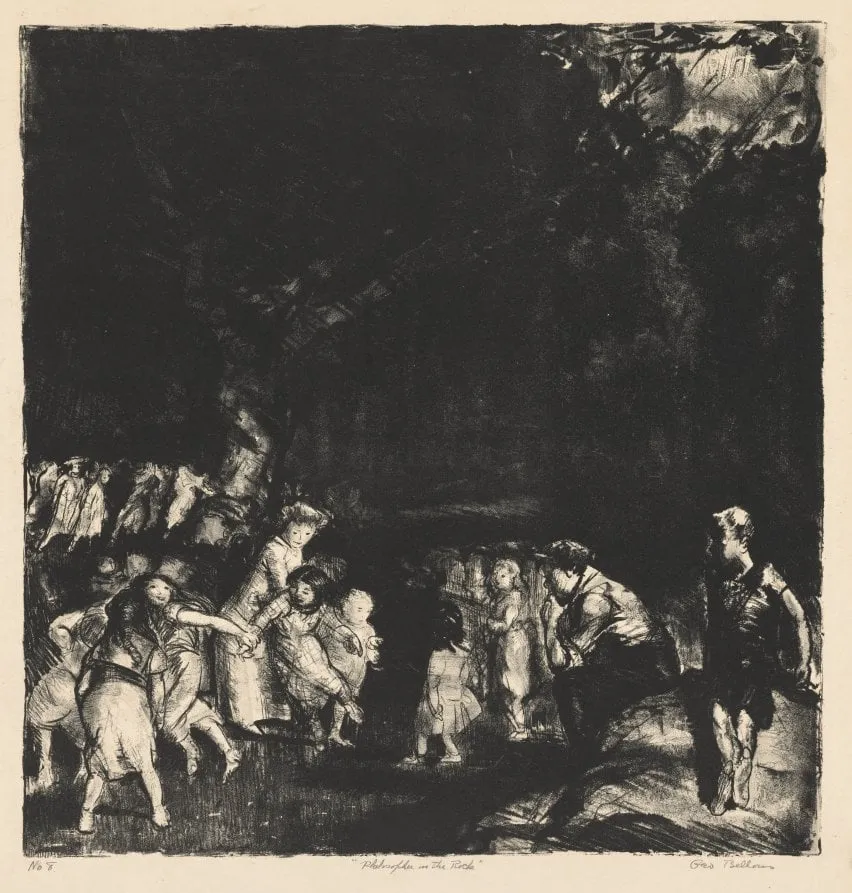
Philosopher on the Rock is a print by George Bellows. It dates from 1916 and is held in the collection of the Cleveland Museum of Art.
About this work
Overview
Created in 1916, *Philosopher on the Rock* is a print by American artist George Bellows, notable for his unidealized portrayals of urban life.
Created in 1916, *Philosopher on the Rock* is a print by American artist George Bellows, notable for his unidealized portrayals of urban life. Unlike his more famous city scenes, this work depicts a quiet, nocturnal gathering around a fire. Executed with sharp, expressive lines and strong tonal contrasts, it reflects Bellows’ commitment to realism, capturing human presence through atmosphere rather than narrative detail.
Subject & Meaning
The scene shows a small group of figures gathered around a low fire on a rocky outcrop, their postures suggesting weariness or contemplation. No single figure dominates; instead, the composition emphasizes collective solitude. The title implies introspection, though the figures remain anonymous, their identities obscured by shadow. The fire becomes both a physical and symbolic center—offering warmth, light, and fleeting connection in an otherwise dark, indifferent environment.
Technique & Style
Bellows employed a high-contrast lithographic technique, using deep blacks and stark highlights to model form and mood. The figures are rendered with rough, angular strokes that suggest texture and movement without fine detail. The background recedes into near-total darkness, intensifying the glow of the fire. This use of chiaroscuro draws attention to hands, faces, and the flickering light, creating a sense of intimacy amid isolation.
History & Provenance
The print entered the collection of the Cleveland Museum of Art in the 20th century, where it remains today. While not among Bellows’ most widely exhibited works, it was produced during a period of intense printmaking activity, following his established reputation as a painter. Its inclusion in a major public collection underscores its significance as a quieter, more introspective counterpart to his bustling urban scenes.
Context
In 1916, Bellows was deeply engaged with themes of labor, marginalization, and human resilience. Though *Philosopher on the Rock* lacks the overt social commentary of his boxing or tenement scenes, it aligns with his interest in ordinary people in moments of stillness. The work reflects broader early 20th-century artistic trends that favored emotional authenticity over idealization, particularly in print media accessible to a wider audience.
Legacy
Though less discussed than Bellows’ large-scale paintings, this print exemplifies his ability to convey psychological depth through minimal means. Its emphasis on light, shadow, and quiet human presence influenced later realist printmakers who sought to capture the dignity of everyday life. The work endures as a subtle, evocative example of American printmaking at its most restrained and atmospheric.
Artist & collection
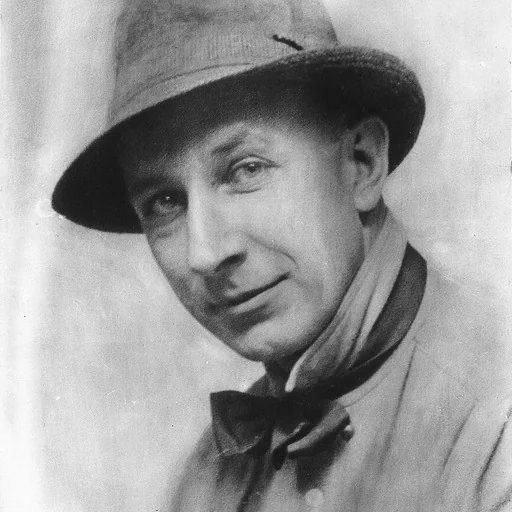
Artist
George Wesley Bellows (August 12 or August 19, 1882 – January 8, 1925) was an American realist painter, known for his bold depictions of urban life in New York City.

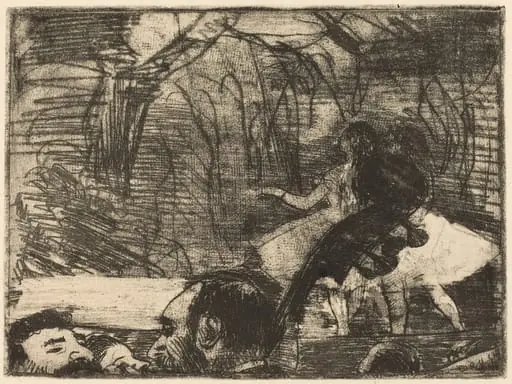 On Stage I
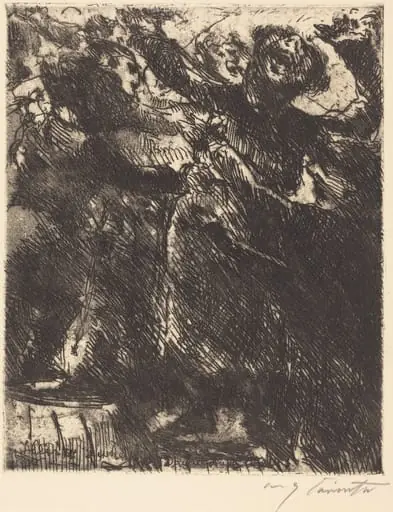 Kapuzinerpredigt—"Hetzt sich lieber herum mit der Dirn'" (The Capuchin's Sermon—"He Prefers to Run Around with a Girl")
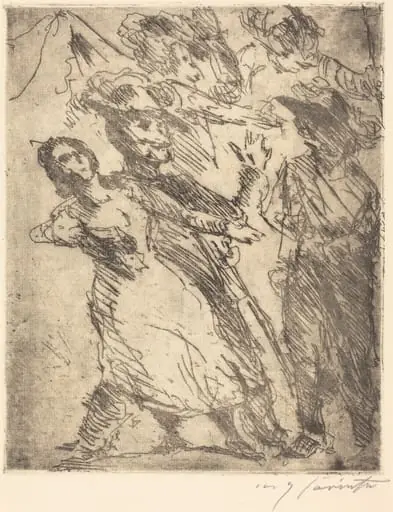 Kavaliere mit einer frau (Cavaliers with a Woman)
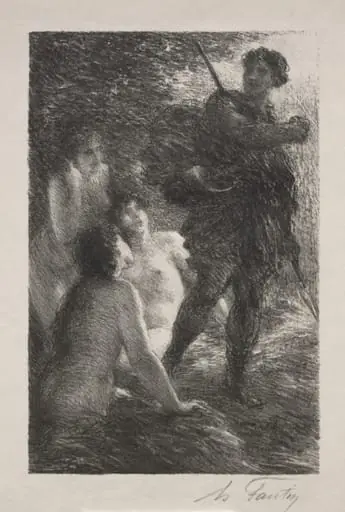 Twilight of the Gods, Act III: Sigfried and the Rhine Maidens
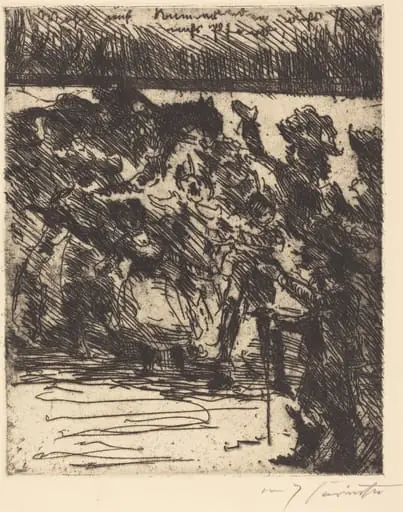 "Wohl auf, kameraden, aufs pferd, aufs pferd! Ins feld, in die freiheit gezogen!" ("Come On, Comrades, to Horse, to Horse! To Battle, Bound for Liberty!")
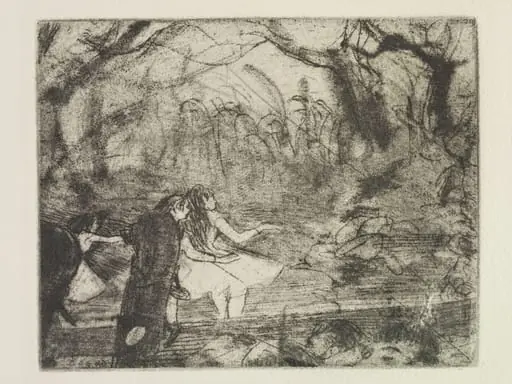 Sur la Scène
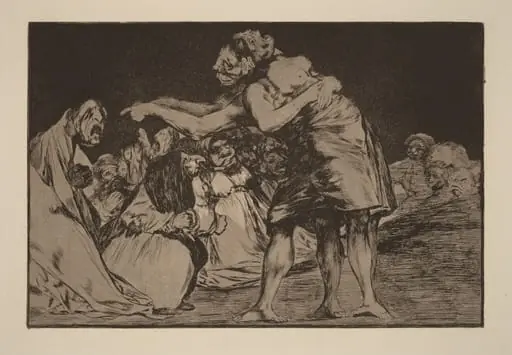 Disparate desordenado (Disorderly Folly)
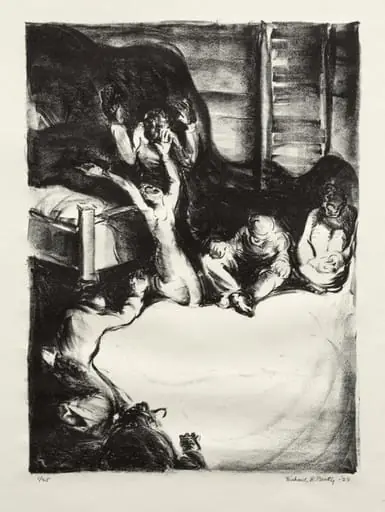 Porgy
Porgy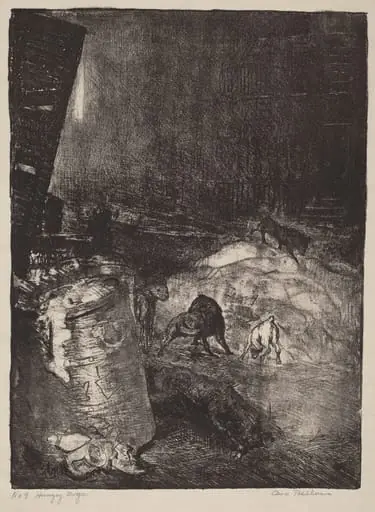 Hungry Dogs, second stone
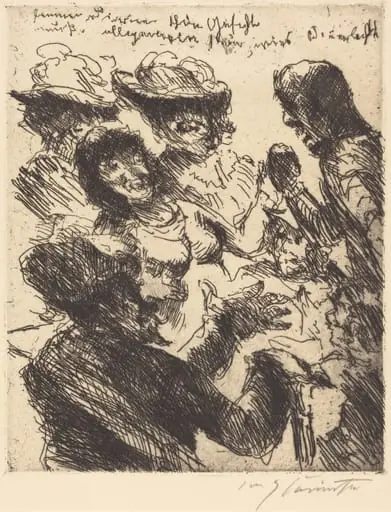 "Einer dirne schön gesicht muss allgemein sein wie's sonnenlicht" ("A Pretty Girl's Face is Like the Sunshine")
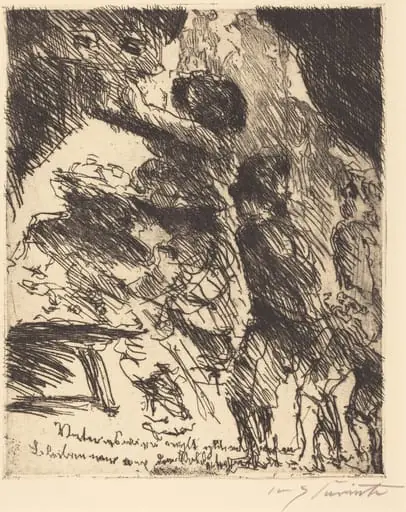 "Vater, es wird nicht gut ablaufen, bleiben wir von dem soldatenhaufen" ("Father, This Won't Turn Out Well, We should stay away from the gang of soldiers")
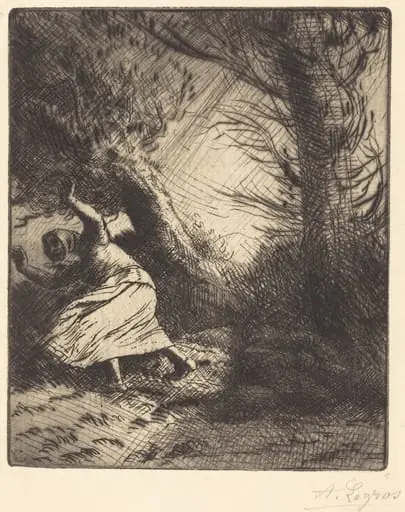 Thunder (Un coup de foudre)