Artwork
Return of the Useless
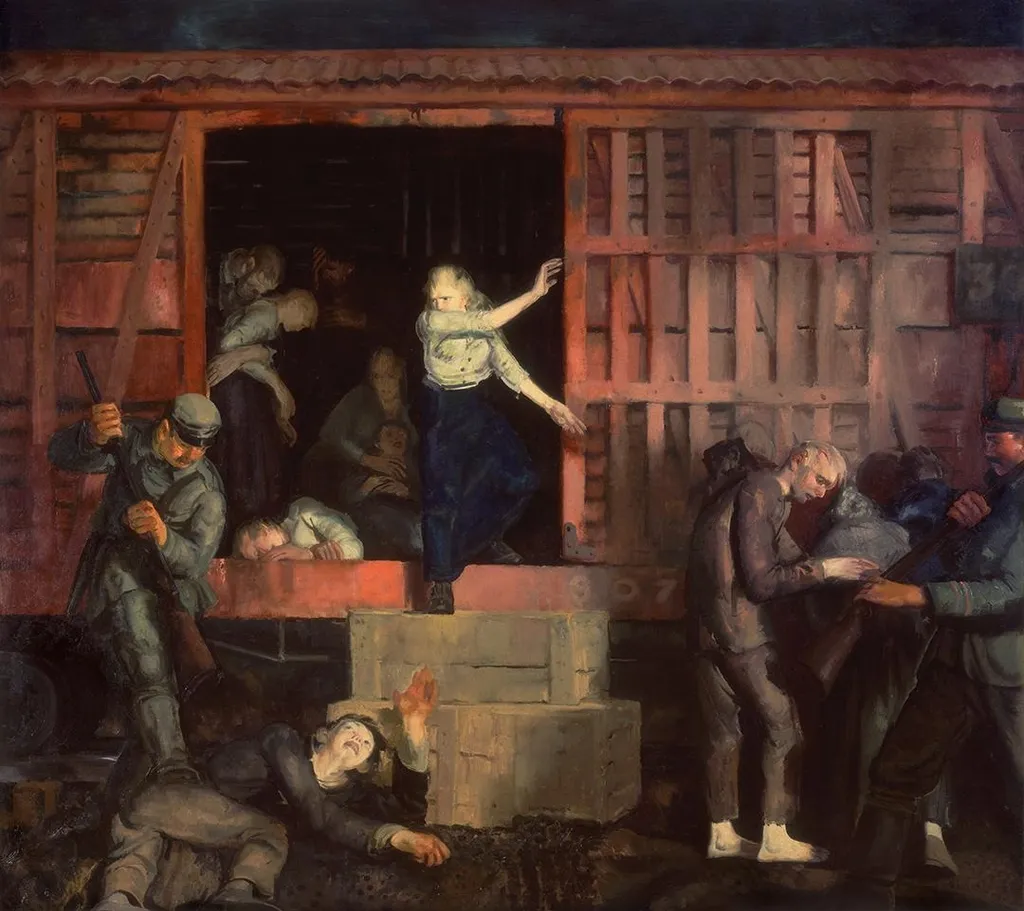
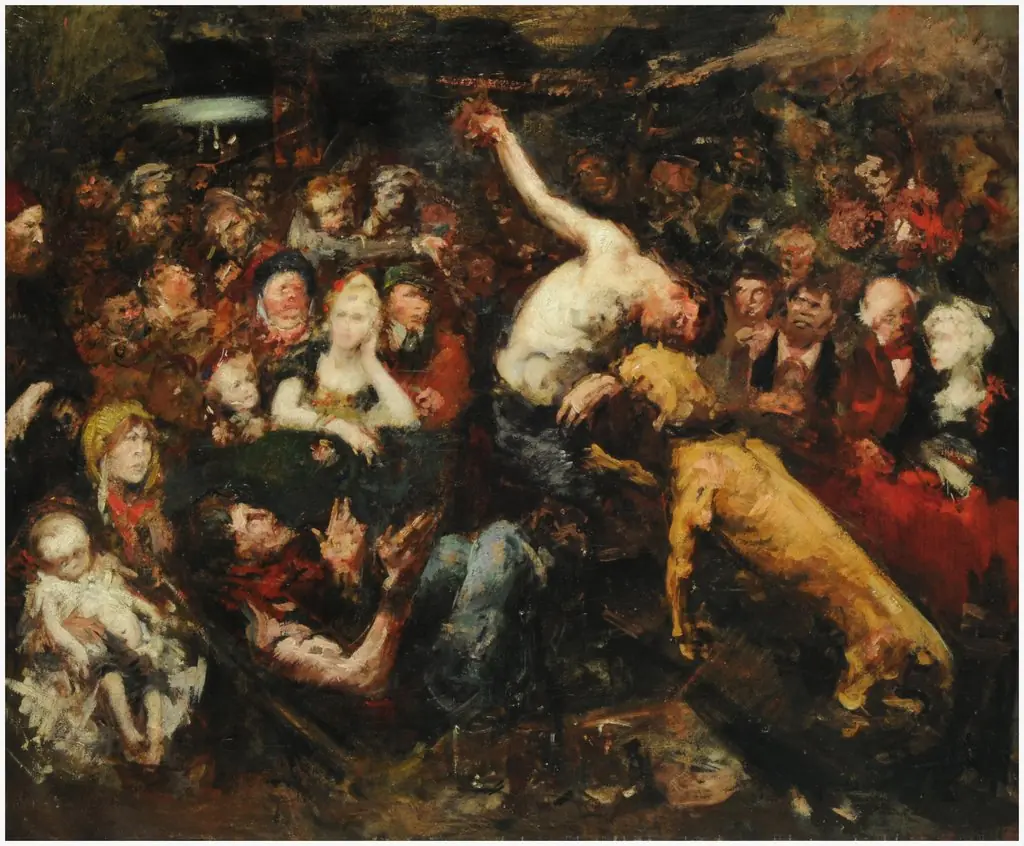
Return of the Useless is an oil painting by the Realist artist George Bellows. It dates from 1918 and is held in the collection of the Crystal Bridges Museum of American Art.
About this work
Overview
Painted in 1918, *Return of the Useless* is an oil-on-canvas work by American artist George Bellows. It emerged during World War I, marking a shift from his earlier urban scenes to a more somber engagement with wartime suffering. The painting reflects Bellows’ sustained interest in unvarnished depictions of human experience, rendered with vigorous brushwork and a restrained palette.
Subject & Meaning
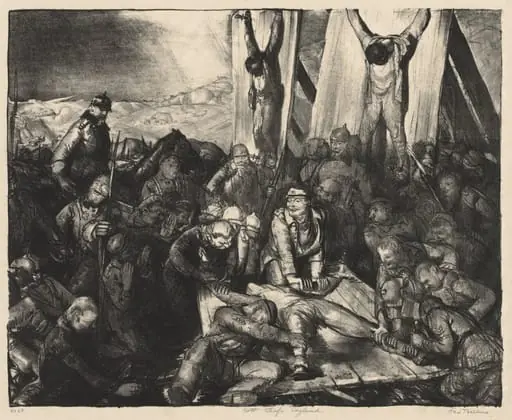
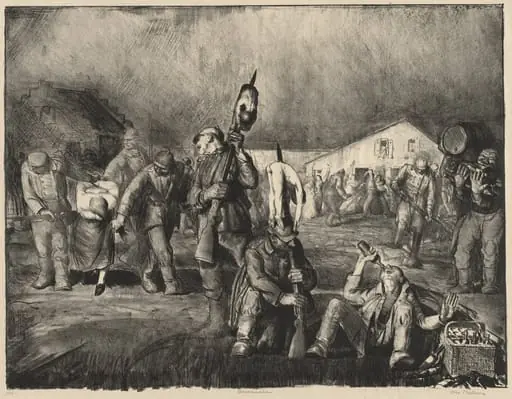
The painting portrays the aftermath of battle, focusing on exhausted soldiers returning from the front. Figures are shown in disarray, their bodies weary and expressions hollow, suggesting the psychological toll of war. The title, ironic and bleak, critiques the futility of conflict and the devaluation of human life in its wake.
Technique & Style
Bellows employed thick, expressive brushstrokes and a muted, earth-toned palette to convey grim realism. Forms are loosely defined, emphasizing movement and emotional weight over detail. The composition lacks heroic grandeur, instead favoring chaotic, intimate groupings that draw the viewer into the soldiers’ quiet despair.
History & Provenance
Completed in 1918, the painting was acquired by the Crystal Bridges Museum of American Art in Bentonville, Arkansas, where it remains in the permanent collection. Its provenance traces back to early 20th-century American collectors who valued Bellows’ unflinching social commentary, though it was not widely exhibited during his lifetime.
Context
Created during the final year of World War I, the work responds to growing public awareness of the war’s brutality, even in neutral America. Bellows, though not a combatant, was influenced by wartime imagery and reports. His shift from urban grit to military themes reflected a broader artistic reckoning with modern violence and its human cost.
Legacy
*Return of the Useless* stands as one of Bellows’ less commonly reproduced works, yet it exemplifies his commitment to realism beyond the cityscape. It contributes to a quieter strand of American war art that prioritizes psychological truth over heroism, influencing later generations focused on the personal dimensions of conflict.
Artist & collection
Artist
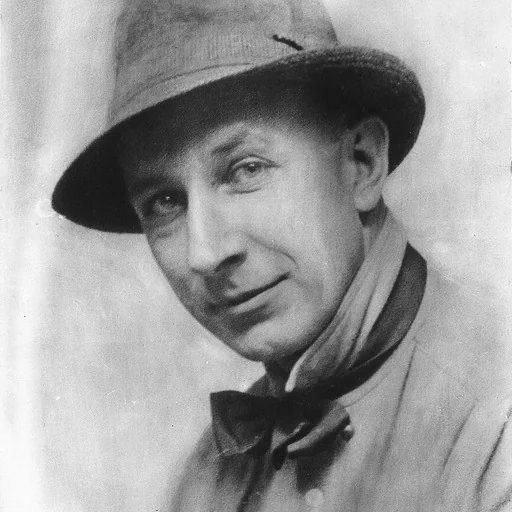
George Wesley Bellows (August 12 or August 19, 1882 – January 8, 1925) was an American realist painter, known for his bold depictions of urban life in New York City.

Museum
Crystal Bridges Museum of American Art
Continue through works from the same source collection.