Artwork
Gypsy Camp, Holland
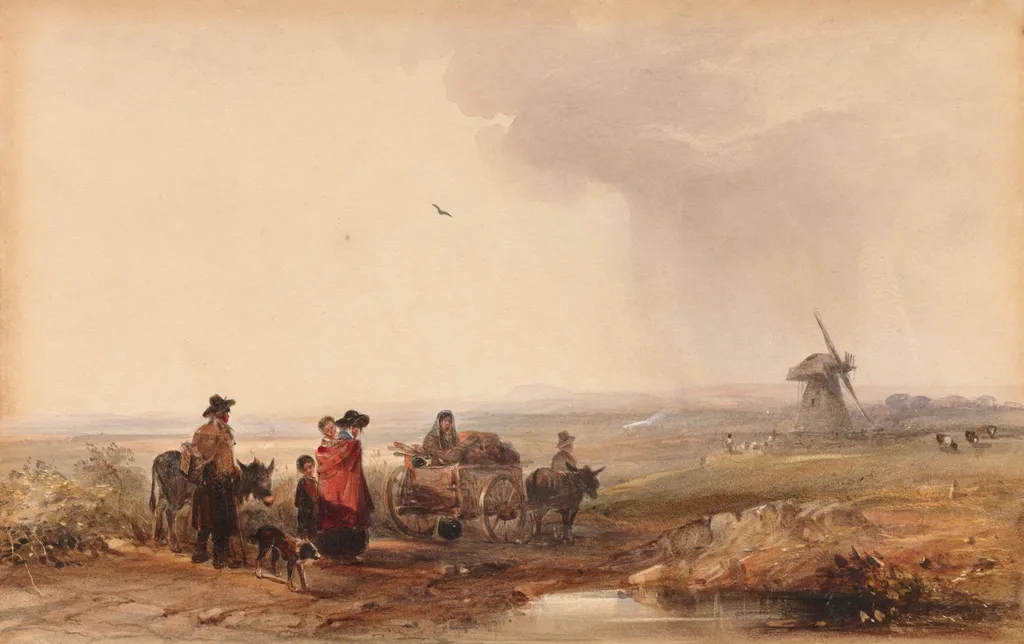
Gypsy Camp, Holland is a drawing by the Romanticist artist George Bryant Campion. It dates from 1804 and is held in the collection of the Cleveland Museum of Art.
About this work
The painting is a great example of Romanticism, and it would be interesting to explore more works by George Bryant Campion, the artist who created it.
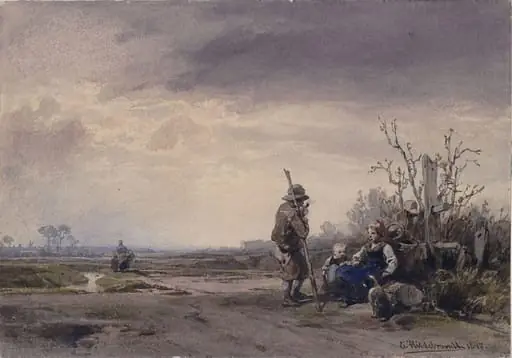
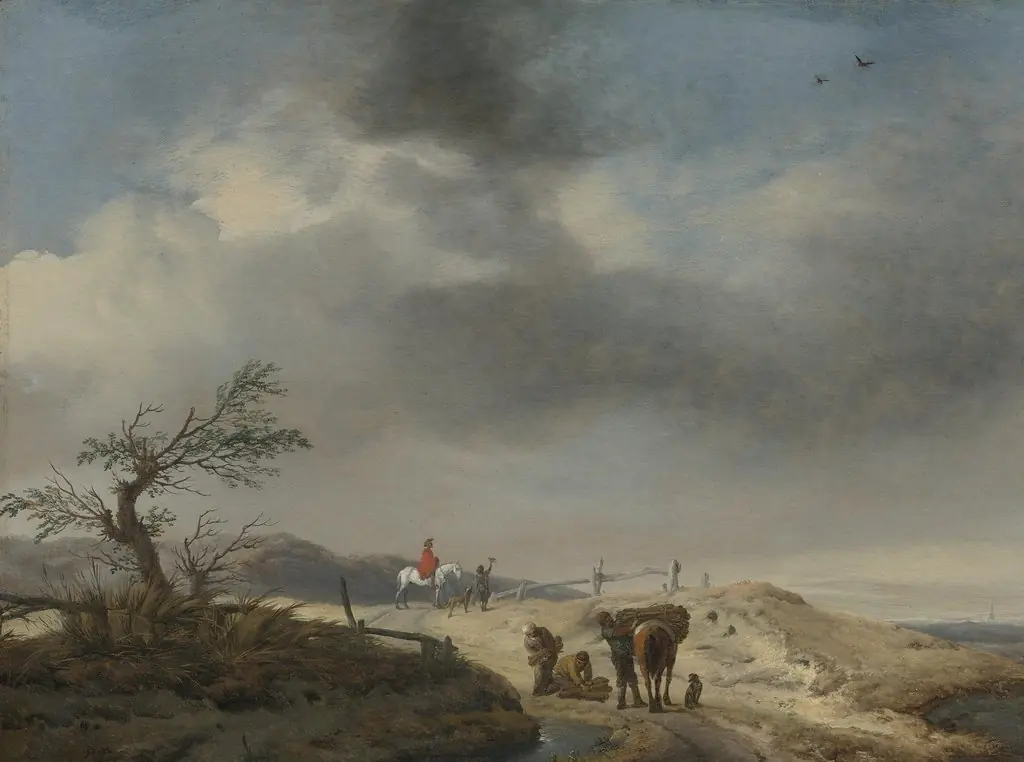
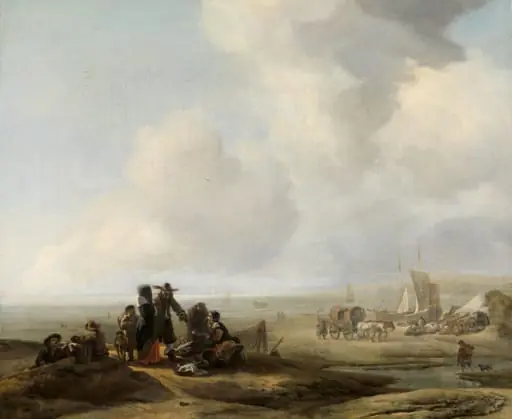
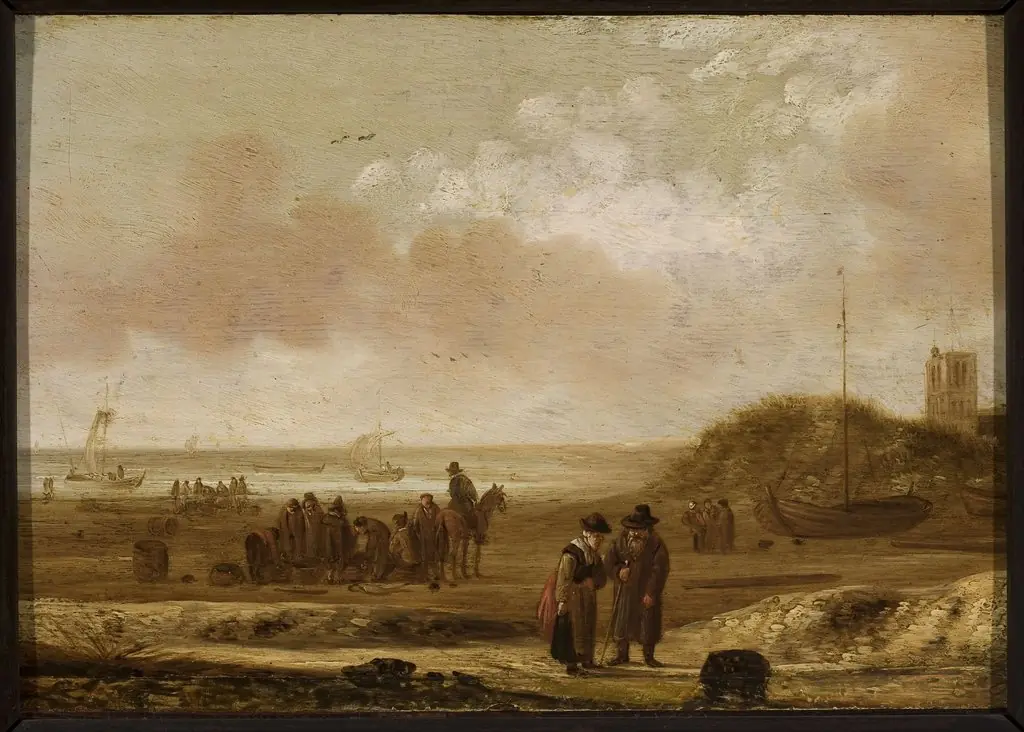
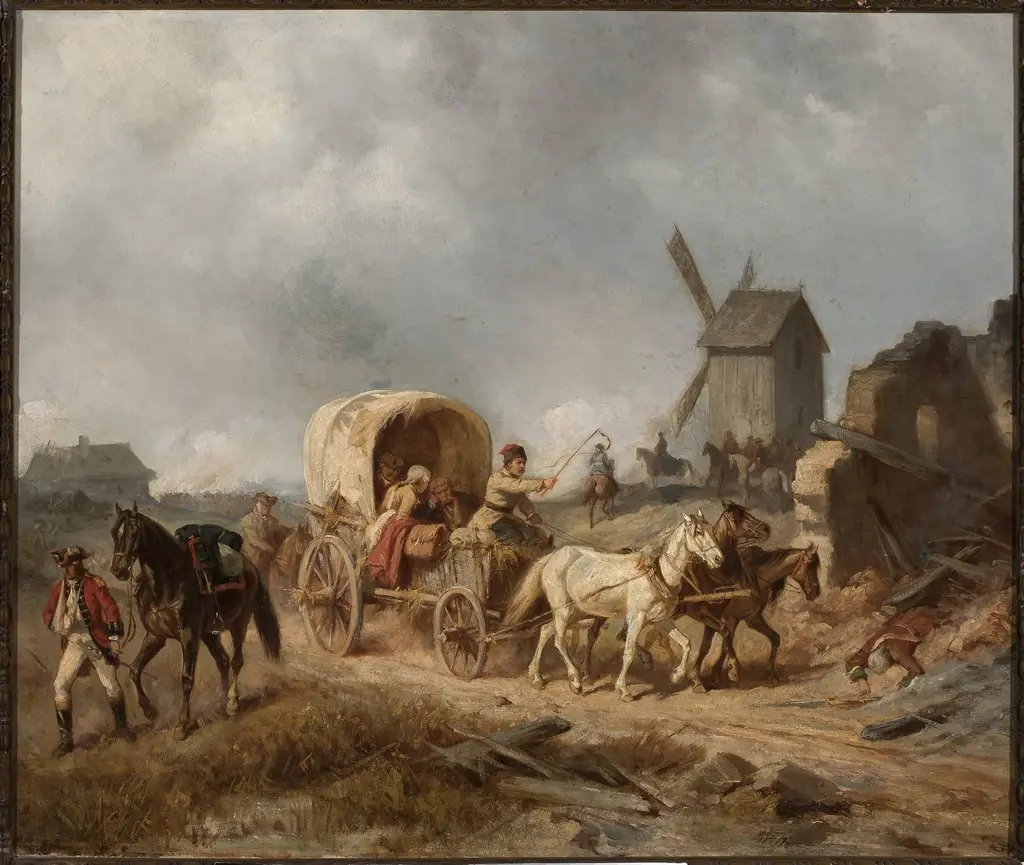
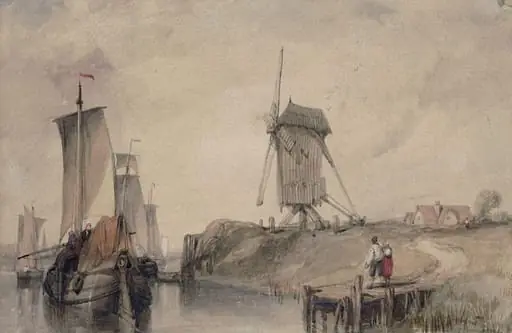
In the painting, a group of people are gathered near a cart, surrounded by a landscape with a windmill in the distance. The people are dressed in clothing that appears to be from the 19th century, and they are engaged in various activities. One person is standing next to the cart, while another is sitting on it.
The scene is set against a backdrop of rolling hills and a cloudy sky, which adds to the sense of atmosphere and mood. The artist has used a range of colors to create a sense of depth and texture, with the windmill standing out as a prominent feature in the distance.
The painting is a great example of Romanticism, and it would be interesting to explore more works by George Bryant Campion, the artist who created it.
Overview
George Bryant Campion’s drawing titled *Gypsy Camp, Holland*, executed around 1804, depicts a small encampment set within a Dutch landscape. The composition centers on a group of figures gathered beside a cart, with a windmill rising on the horizon. The work is part of the Cleveland Museum of Art’s collection and exemplifies early‑19th‑century Romantic interest in rural life and atmospheric settings.
Subject & Meaning
The scene presents itinerant figures—identified as gypsies—engaged in everyday tasks, suggesting a moment of temporary settlement. Their 19th‑century attire and the presence of a cart convey mobility, while the surrounding hills and cloudy sky create a mood of transience and contemplation of nature’s vastness. The windmill, a familiar Dutch motif, anchors the locale and hints at the cultural landscape of Holland.
Technique & Style
Campion employs fine pen and wash to render delicate textures and tonal variations. Subtle gradations of ink produce depth in the rolling hills, while the cloudy sky is suggested through soft, overlapping strokes. The drawing’s muted palette and emphasis on atmospheric effects align it with Romantic sensibilities, focusing on mood over precise detail.
History & Provenance
Created circa 1804, the drawing entered the Cleveland Museum of Art’s holdings through acquisition in the 20th century, though the exact path of ownership prior to museum purchase remains undocumented. Its presence in the museum’s collection underscores the institution’s interest in early Romantic British drawings that portray continental scenes.
Artist & collection
Artist
George Bryant Campion (1795–1870) was an English watercolour landscape painter.