Artwork
Landscape in Holland
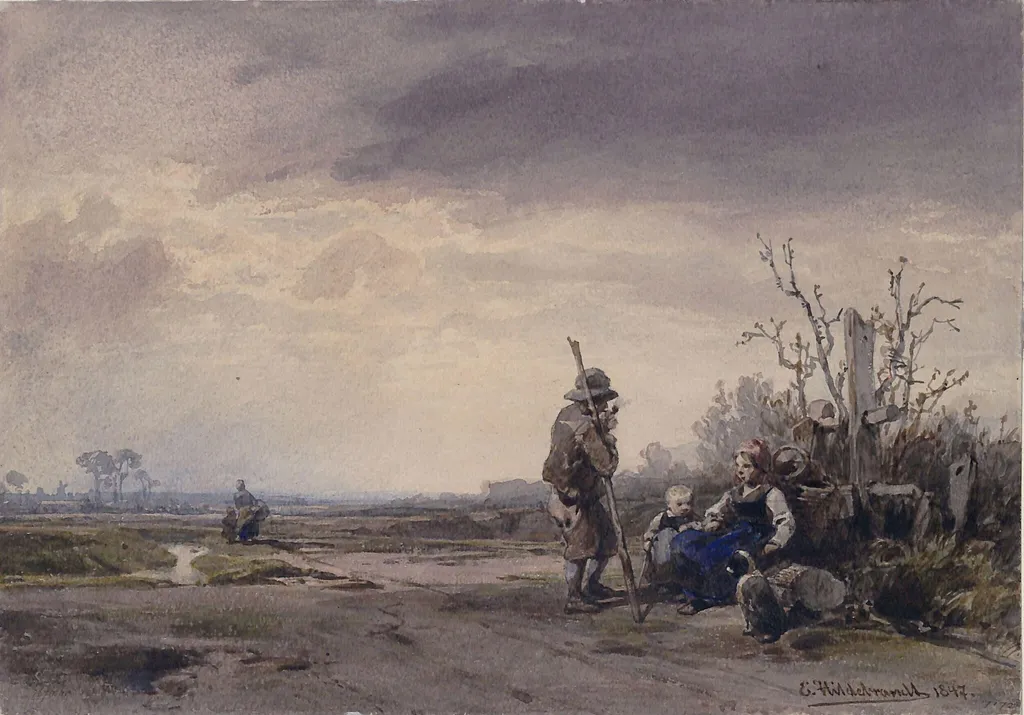
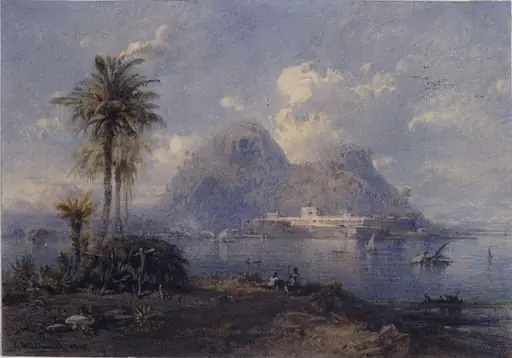
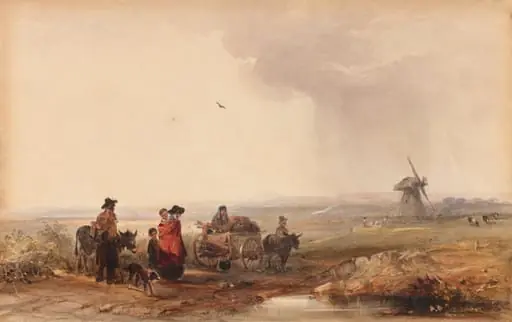
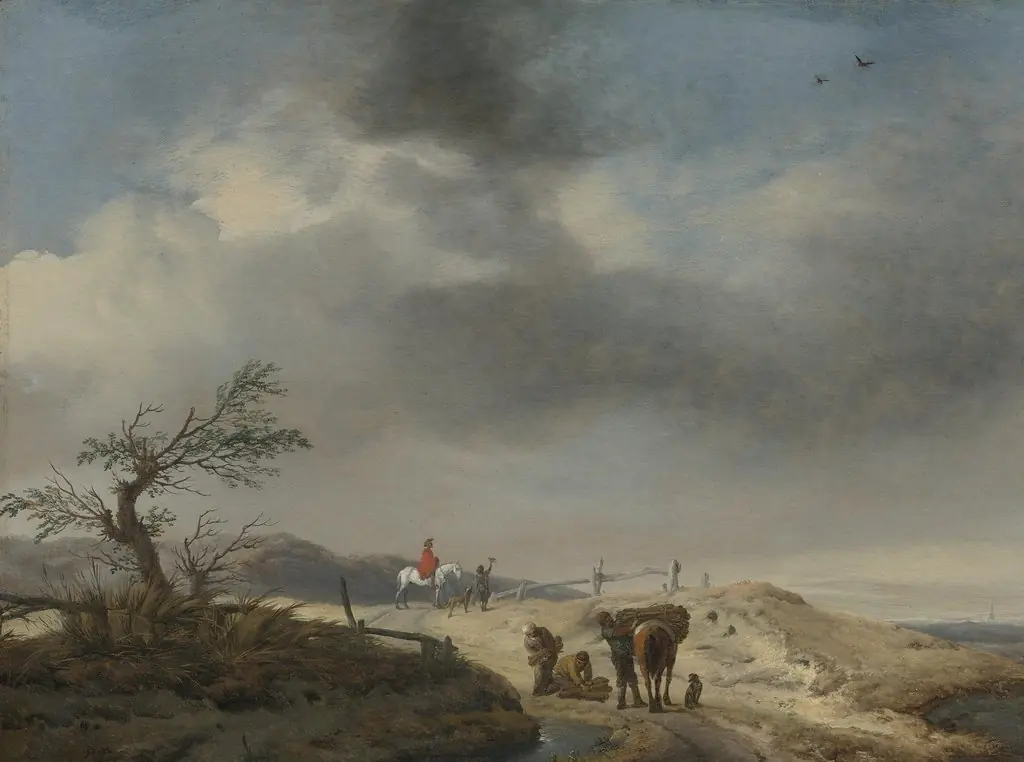
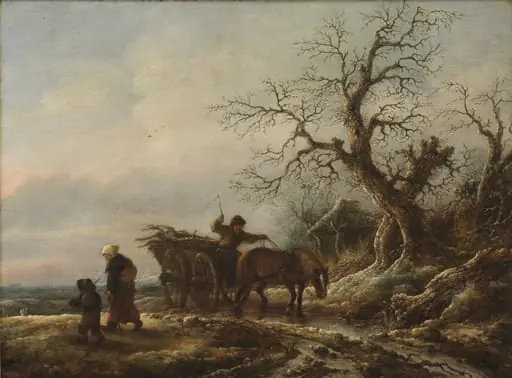
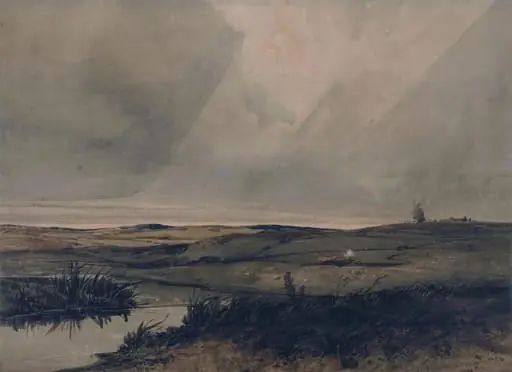
Landscape in Holland is a watercolor work on paper by the German Romanticist artist Eduard Hildebrandt. It dates from 1847 and is held in the collection of the Victoria and Albert Museum.
About this work
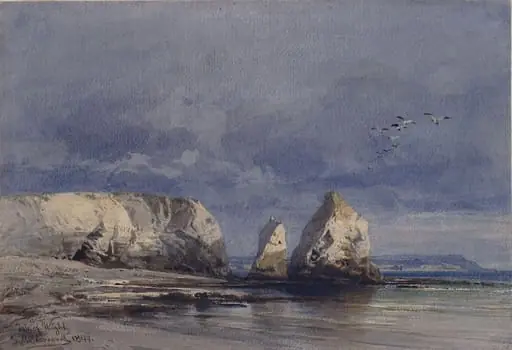
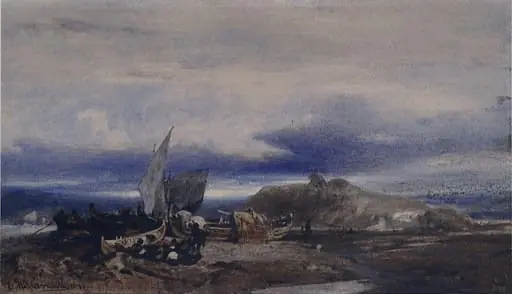
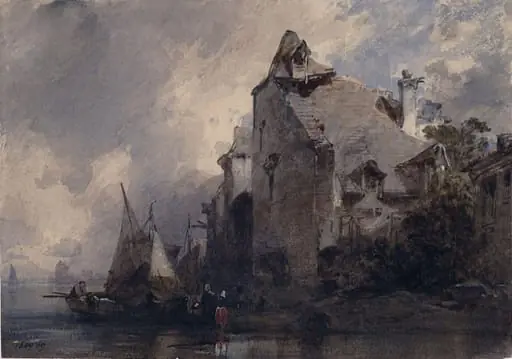
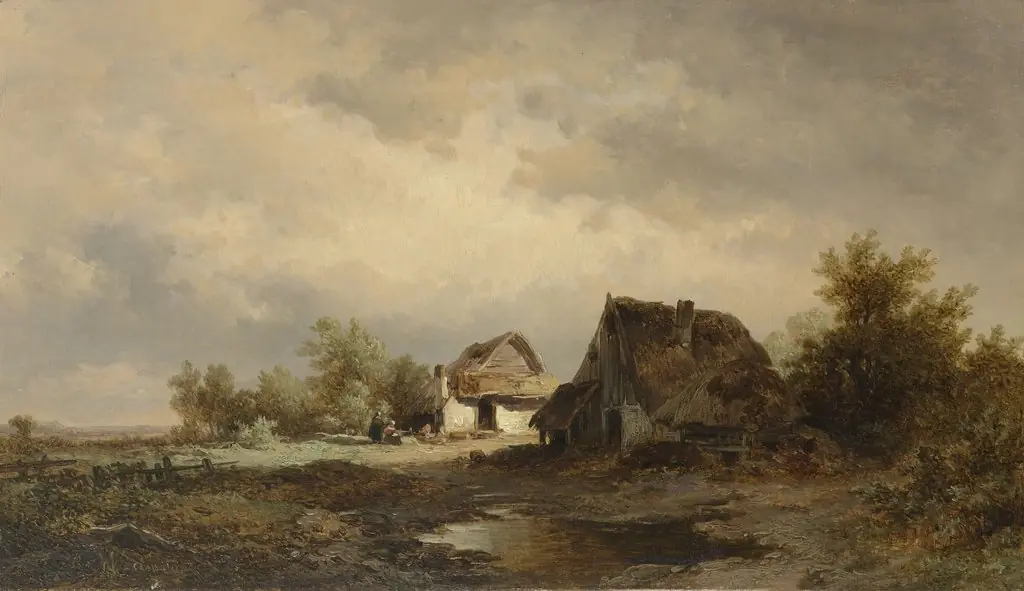
You're looking at a watercolour painting of a Dutch landscape. It's a pretty simple scene: there's a house in the distance, a tree or two, and some fields. The artist, Eduard Hildebrandt, painted it in 1847. The painting is part of the Romanticism movement, which focused on nature and emotion. If you want to learn more about this style, check out Romanticism.
Overview
Landscape in Holland, painted in 1847 by Eduard Hildebrandt, is a watercolour depicting a quiet stretch of the Dutch countryside. The work is part of the Victoria and Albert Museum’s collection and exemplifies 19th-century landscape watercolour practice. Its modest scale and restrained palette reflect a focus on atmospheric observation rather than dramatic spectacle.
Subject & Meaning
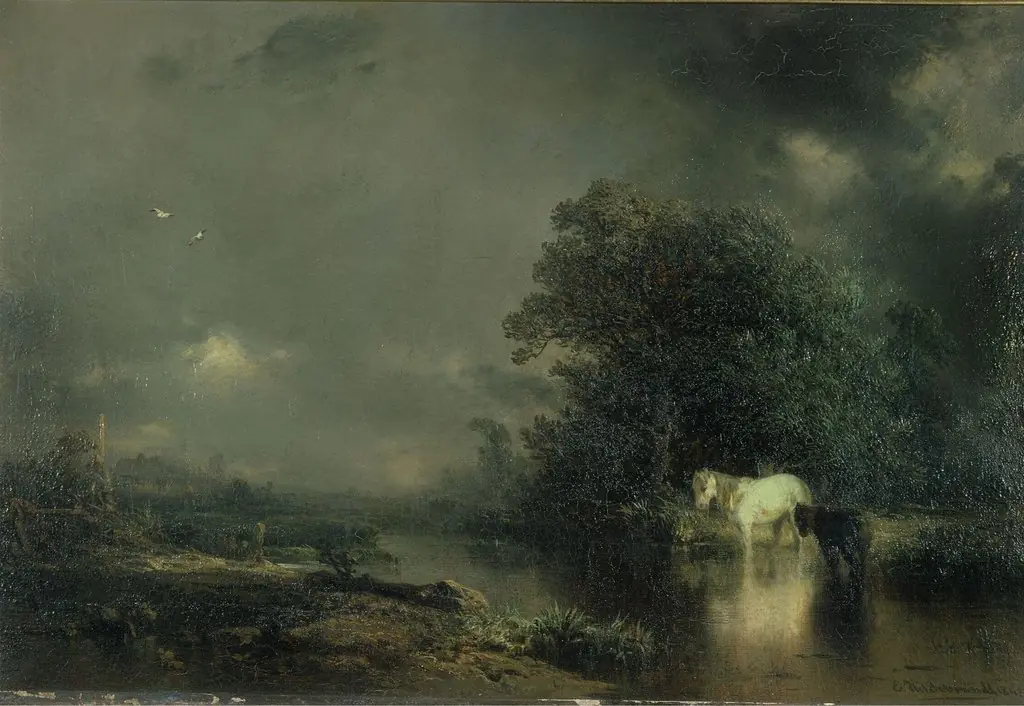
The scene presents a rural Dutch horizon with a modest dwelling, scattered trees, and open fields under a soft sky.
The scene presents a rural Dutch horizon with a modest dwelling, scattered trees, and open fields under a soft sky. There is no human activity, and the composition conveys stillness rather than narrative. The absence of grandeur suggests an intimate engagement with everyday terrain, aligning with Romanticism’s quieter, contemplative side—valuing solitude and the quiet dignity of the natural world.
Technique & Style
Hildebrandt employed transparent watercolour washes to build subtle tonal gradations, capturing light and air with minimal detail. The brushwork is deliberate but unobtrusive, allowing the paper’s white to suggest highlights and the wet-on-wet technique to soften edges between land and sky. This restrained method emphasizes mood over precision, characteristic of Romantic landscape watercolours in Northern Europe.
History & Provenance
Created during Hildebrandt’s active period in Germany and the Netherlands, the work entered the Victoria and Albert Museum’s collection in the 19th century, likely through acquisition or donation. Its preservation reflects the museum’s early interest in watercolour as a serious medium. No record of prior ownership or exhibition history beyond the museum’s archives is widely documented.
Context
In the mid-19th century, watercolour was increasingly valued in Britain and Northern Europe for its capacity to capture transient effects of light and weather. Hildebrandt’s work fits within a broader trend of artists documenting regional landscapes with scientific precision and emotional restraint, influenced by both Romantic ideals and emerging topographical traditions.
Legacy
Though not widely exhibited today, Landscape in Holland remains a representative example of academic watercolour practice from the period. It contributes to the understanding of how Romantic sensibilities were adapted in quieter, non-dramatic forms, particularly in the Netherlands and Germany, where landscape was studied as a quiet, enduring presence rather than a theatrical subject.
Own this work as a print
Artist & collection