Artwork
A River Scene
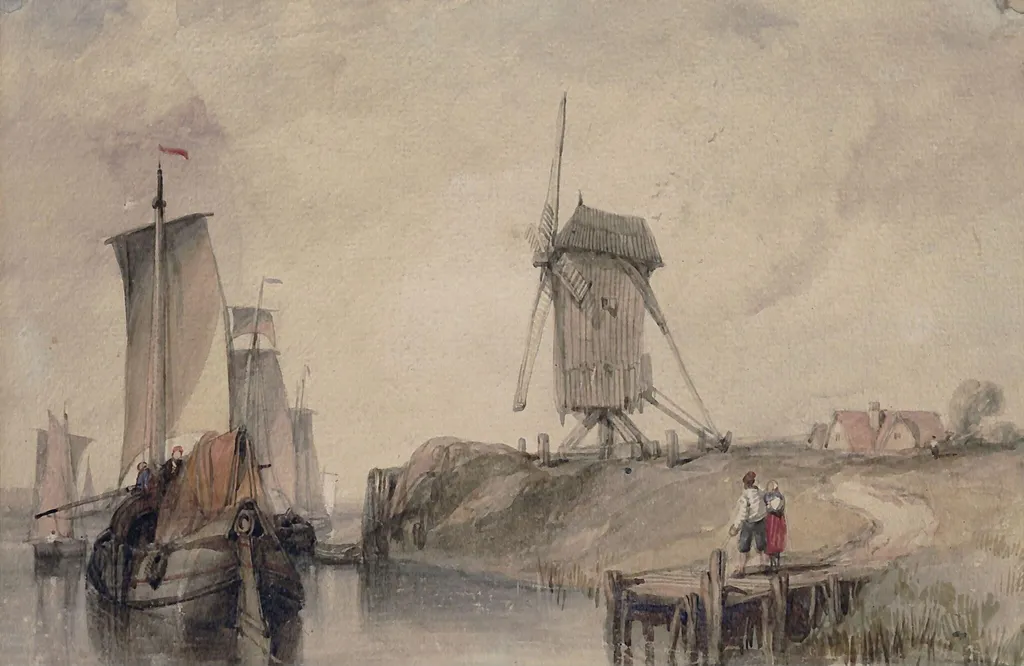
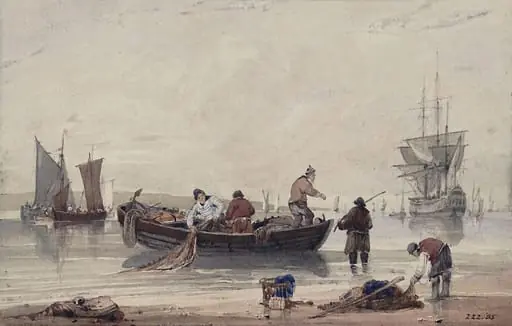
A River Scene is a watercolor work on paper by the British Romanticist artist Alfred Gomersal Vickers. It dates from 1830 and is held in the collection of the Victoria and Albert Museum.
About this work
Overview
Alfred Gomersal Vickers’ watercolour, dated around 1830, depicts a tranquil river scene now in the collection of the Victoria and Albert Museum. The composition presents a calm waterway flanked by a rocky shoreline, two modest wooden vessels, a solitary windmill, and a modest cluster of dwellings, all rendered in a subdued palette that conveys a gentle atmosphere.
Subject & Meaning
The work portrays a quiet riverside settlement, where two aged boats rest near a craggy bank—one bearing a red pennant, the other occupied by a few figures. A windmill rises above the shore, while a couple strolls beside a low wooden fence, suggesting everyday life intertwined with the water’s presence. The scene evokes a nostalgic glimpse of a community reliant on river trade and agriculture.
Technique & Style
Vickers employs delicate washes of pale hues, allowing forms to blend into a soft, slightly hazy environment. The watercolour medium enables subtle transitions of light and atmosphere, while the restrained tonal range emphasizes serenity over drama. This approach aligns with early‑nineteenth‑century tendencies toward naturalistic representation and a calm, contemplative mood.
History & Provenance
Created circa 1830, the painting entered the Victoria and Albert Museum’s holdings as part of its extensive watercolour collection. Its acquisition reflects the museum’s interest in British landscape works of the period, preserving Vickers’ contribution to the genre and providing insight into the visual culture of early Romantic-era riverine scenes.
Own this work as a print
Artist & collection
Artist
Alfred Gomersal Vickers painted English landscapes and seascapes in watercolor around the 1830s.

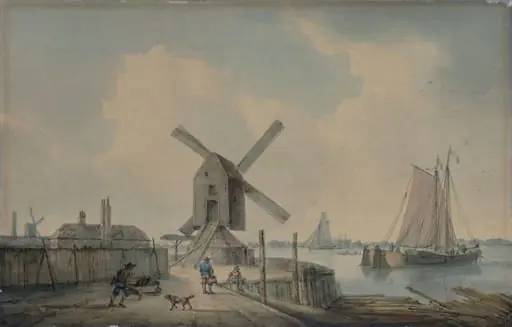 A Shore Scene with Windmills and Shipping
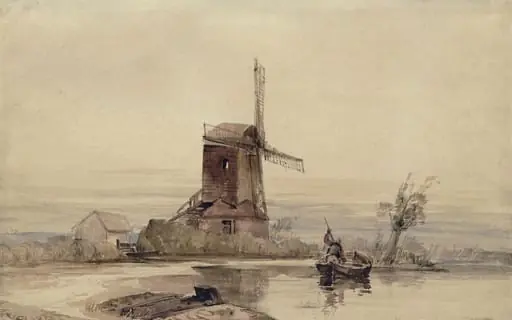 Old windmill by the side of a river, in the foreground a man in a boat
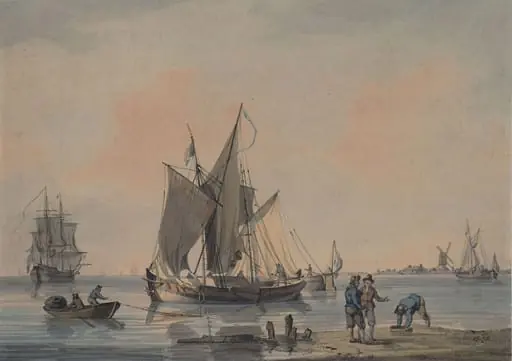 Coast scene with shipping and figures
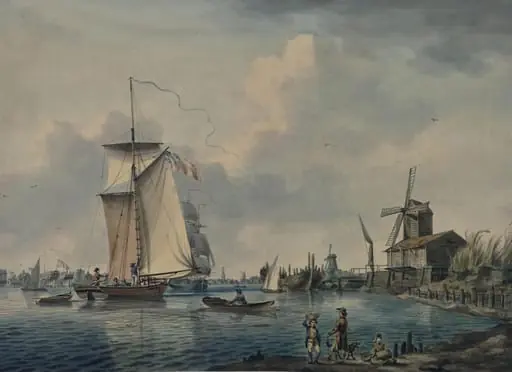 Deptford, with shipping
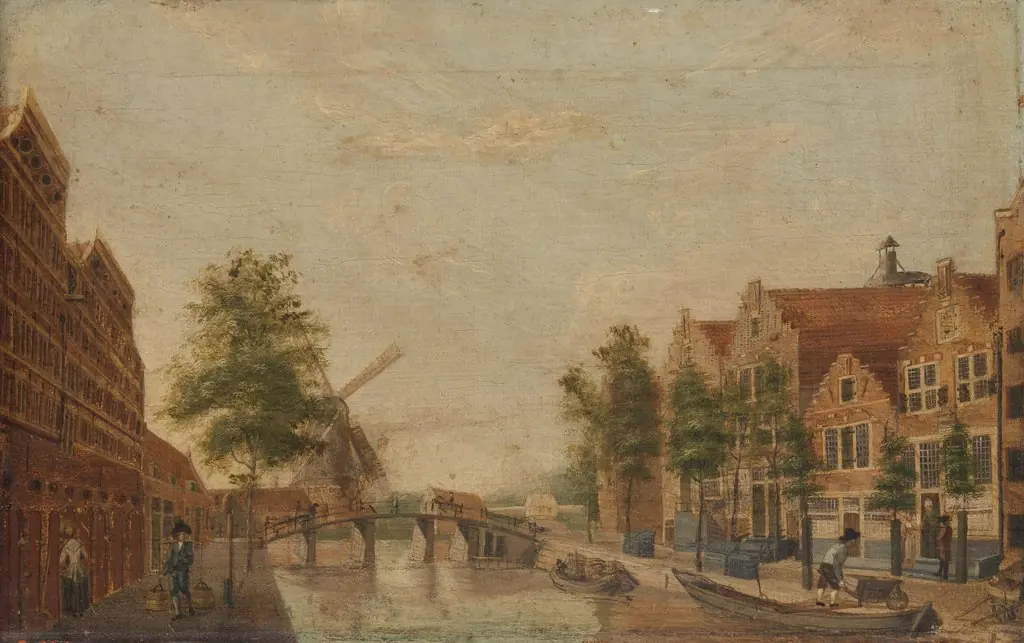 The Brouwersgracht in Amsterdam
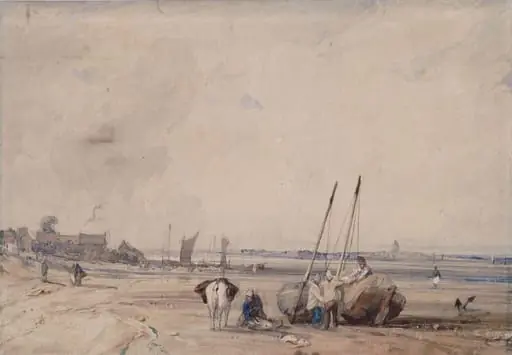 Eu, Normandy
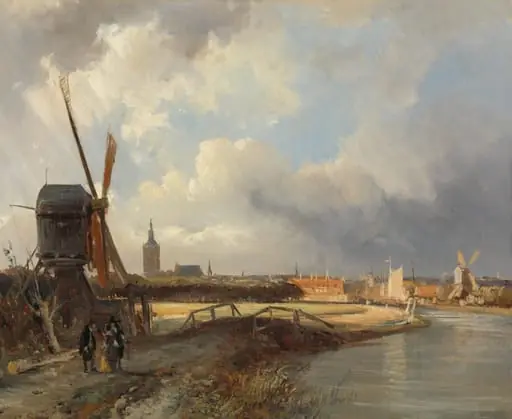 Gezicht op Den Haag
 River Scenery
 Coast Scene
 A Haarlem
 View of The Hague from the Delftse Vaart in the 17th Century
 River scene with fishermen and boats