Artwork
A boatwoman with a child on her back, and a window with shutters opened
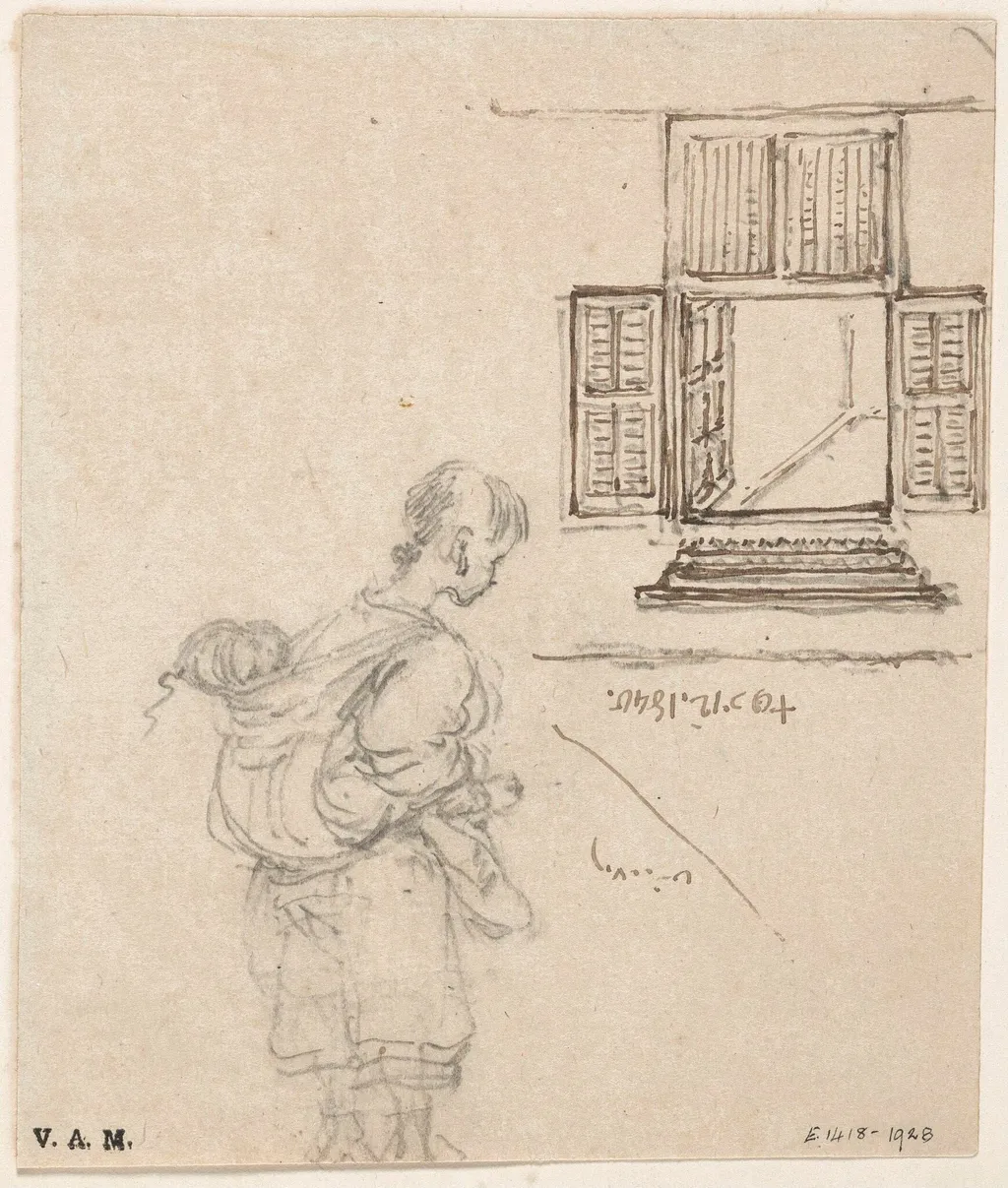
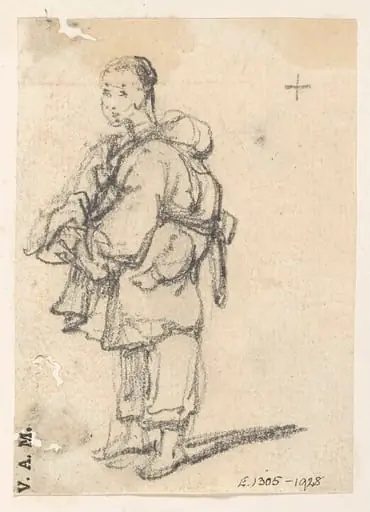
A boatwoman with a child on her back, and a window with shutters opened is a drawing by the Romanticist artist George Chinnery. It dates from 8 and is held in the collection of the Victoria and Albert Museum.
About this work
The drawing shows a boatwoman with a child on her back and a window with shutters opened.
This work is interesting because it gives us a glimpse into everyday life. The artist, George Chinnery, made this drawing in 1840, which helps us understand what people's daily lives were like back then.
You can learn more about this style by looking into the movement: Romanticism.
Overview
This 1840 drawing by George Chinnery depicts a boatwoman carrying a child on her back, paired with a window featuring open shutters. Executed in pencil or ink, it belongs to a series of observational sketches made during Chinnery’s time in southern China. The composition captures a quiet, unidealized moment, reflecting the artist’s interest in ordinary life rather than grand narratives.
Subject & Meaning
The open window beside her introduces a domestic space, possibly hinting at the boundary between public labor and private refuge.
The figure of the boatwoman, bare-headed and bent forward, suggests the physical demands of daily labor. The child secured to her back implies familial responsibility and the integration of work and domestic life. The open window beside her introduces a domestic space, possibly hinting at the boundary between public labor and private refuge. Together, these elements convey a sense of routine endurance.
Technique & Style
Chinnery rendered the scene with swift, economical lines, emphasizing form and posture over detail. The shading is subtle, using hatching to suggest volume and weight without heavy contrast. The window’s geometric structure contrasts with the organic curve of the woman’s body, creating visual balance. This direct, observational approach aligns with sketchbook practices common among travelers documenting unfamiliar environments.
History & Provenance
Created during Chinnery’s residence in Macau and Guangzhou, the drawing is part of a larger body of work produced between the 1820s and 1850s. It likely originated in his personal sketchbooks, later dispersed among private collectors and institutions. The drawing’s survival offers rare visual documentation of local laborers from a Western artist’s perspective during the early colonial period in southern China.
Context
Chinnery worked in a region increasingly shaped by foreign trade and cultural exchange. While Romanticism emphasized emotion and nature, his drawings diverged from its grandeur, focusing instead on the quiet dignity of common people. His sketches served as ethnographic records, offering European audiences a glimpse into daily life beyond the exoticized stereotypes prevalent in Western art of the era.
Legacy
This drawing contributes to a broader archive of 19th-century visual anthropology, preserving details of dress, posture, and environment that written records often omit. Chinnery’s unembellished approach influenced later artists documenting Asian life, and his sketches remain valuable for historians studying cross-cultural encounters in the age of maritime trade.
Artist & collection
Artist
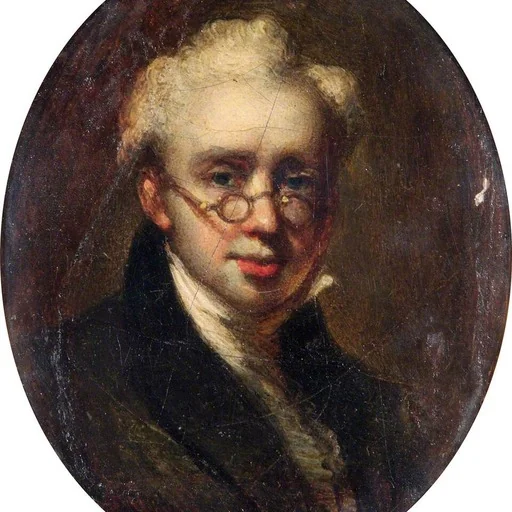
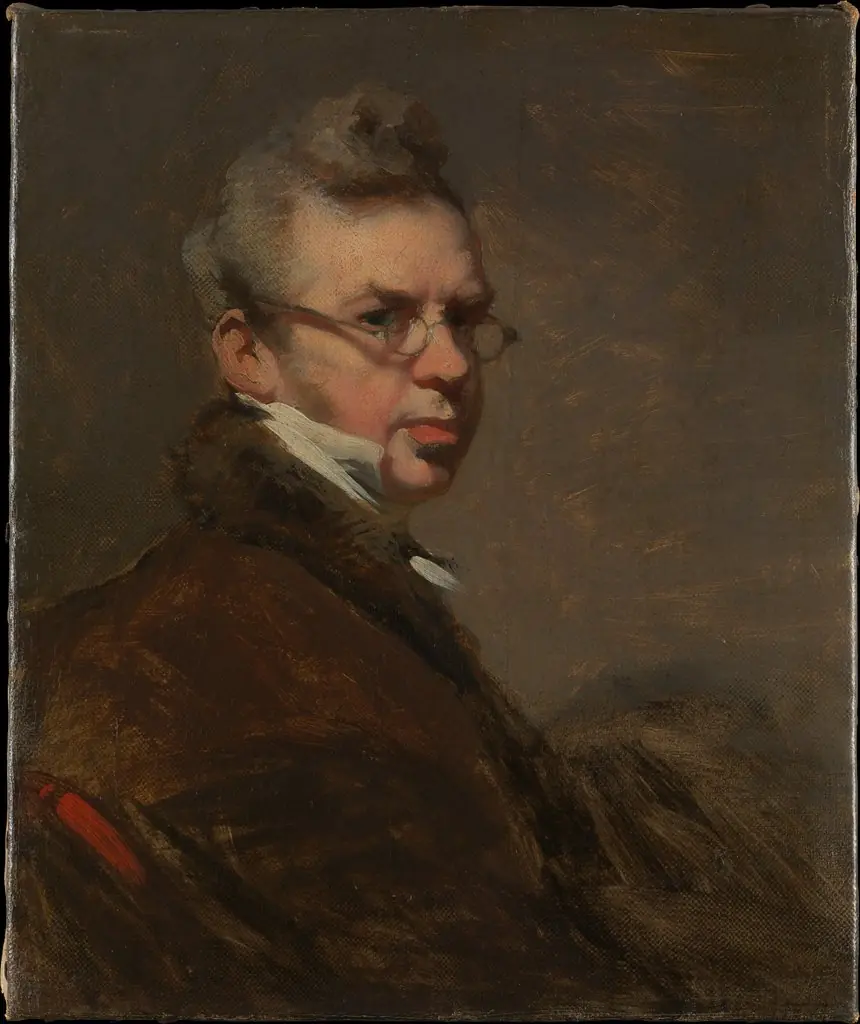
George Chinnery (Chinese: 錢納利; 5 January 1774 – 30 May 1852) was an English painter who spent most of his life in Asia, especially India and southern China.

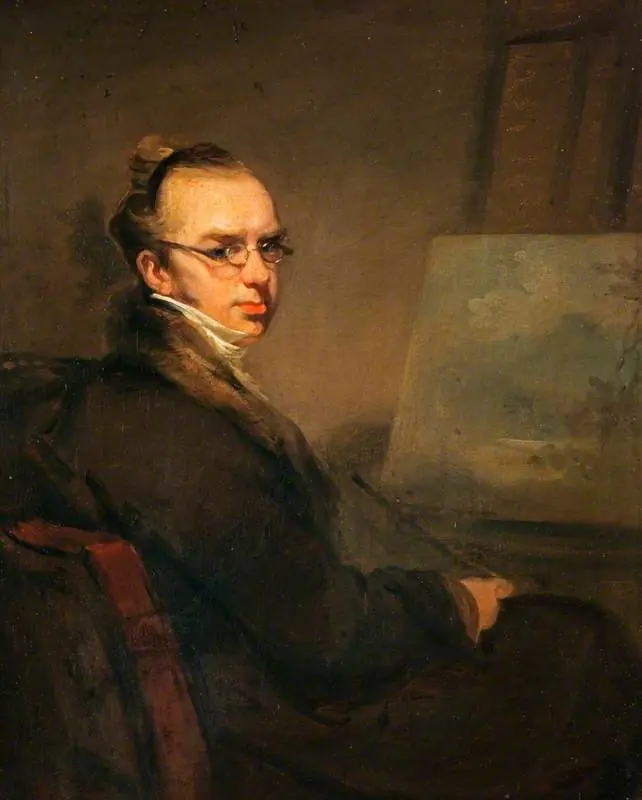
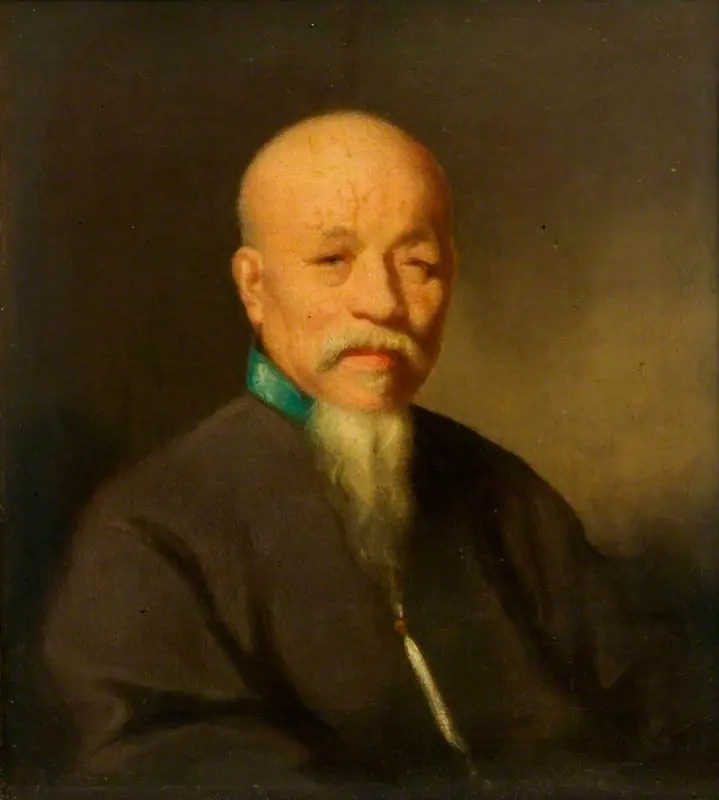
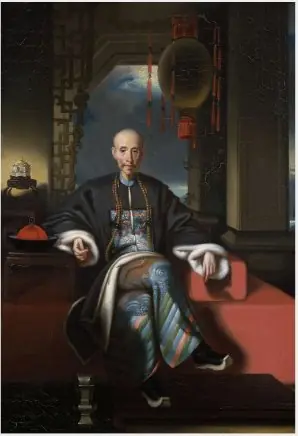
 A boatwoman with a child on her back
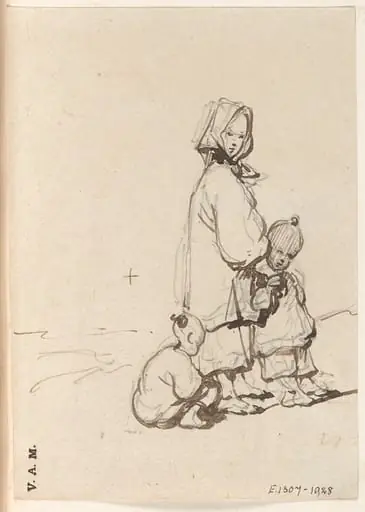 A Macau boatwoman with two children
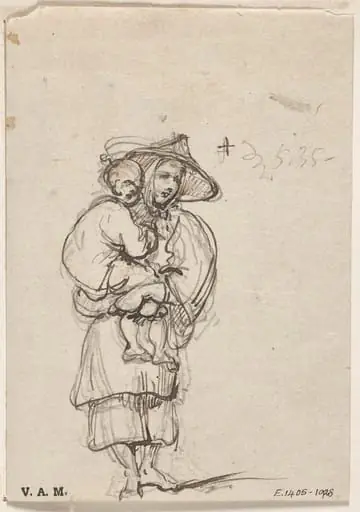 A boatwoman holding a child
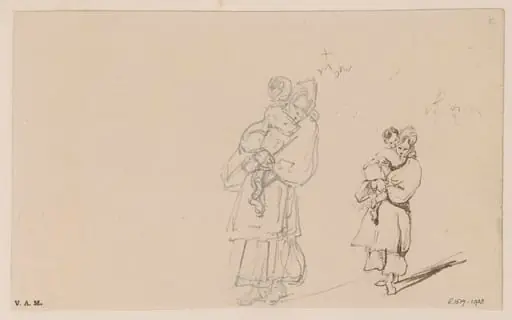 Two drawings of a boatwoman holding a child
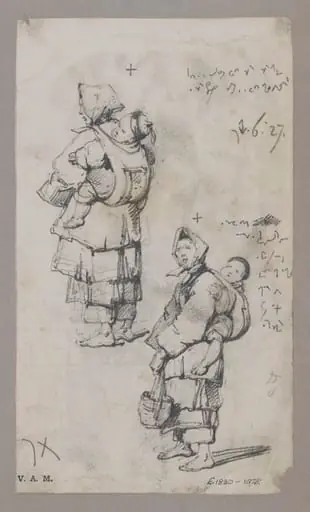 Two drawings of a boatwoman with a child on her back
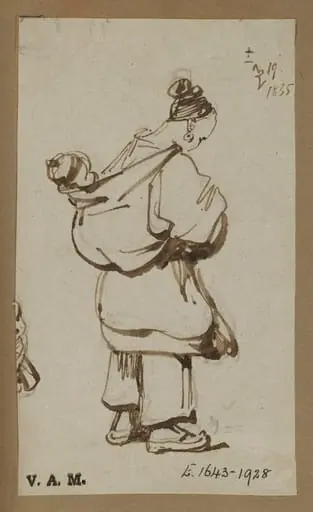 A Chinese boatwoman with a child in a sling on her back
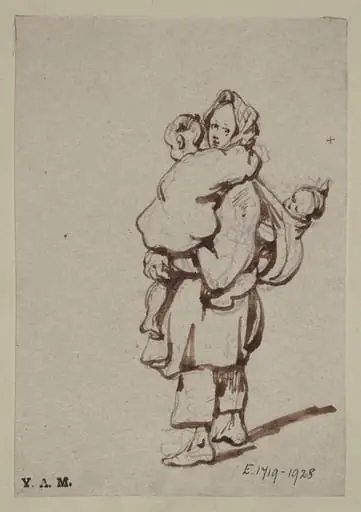 A boatwoman with two children
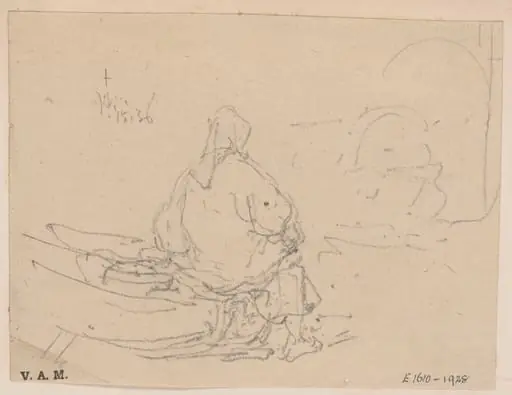 A boatwoman sitting on a beached boat