Artwork
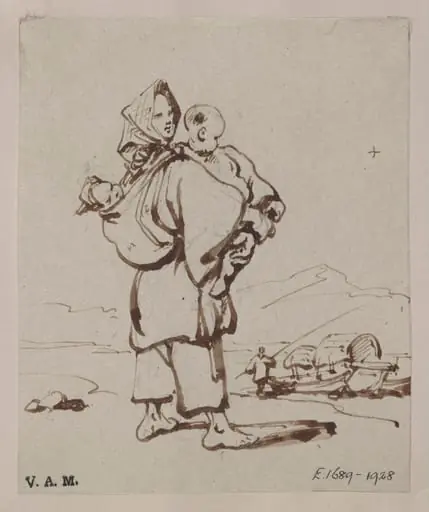
A boatwoman holding a child
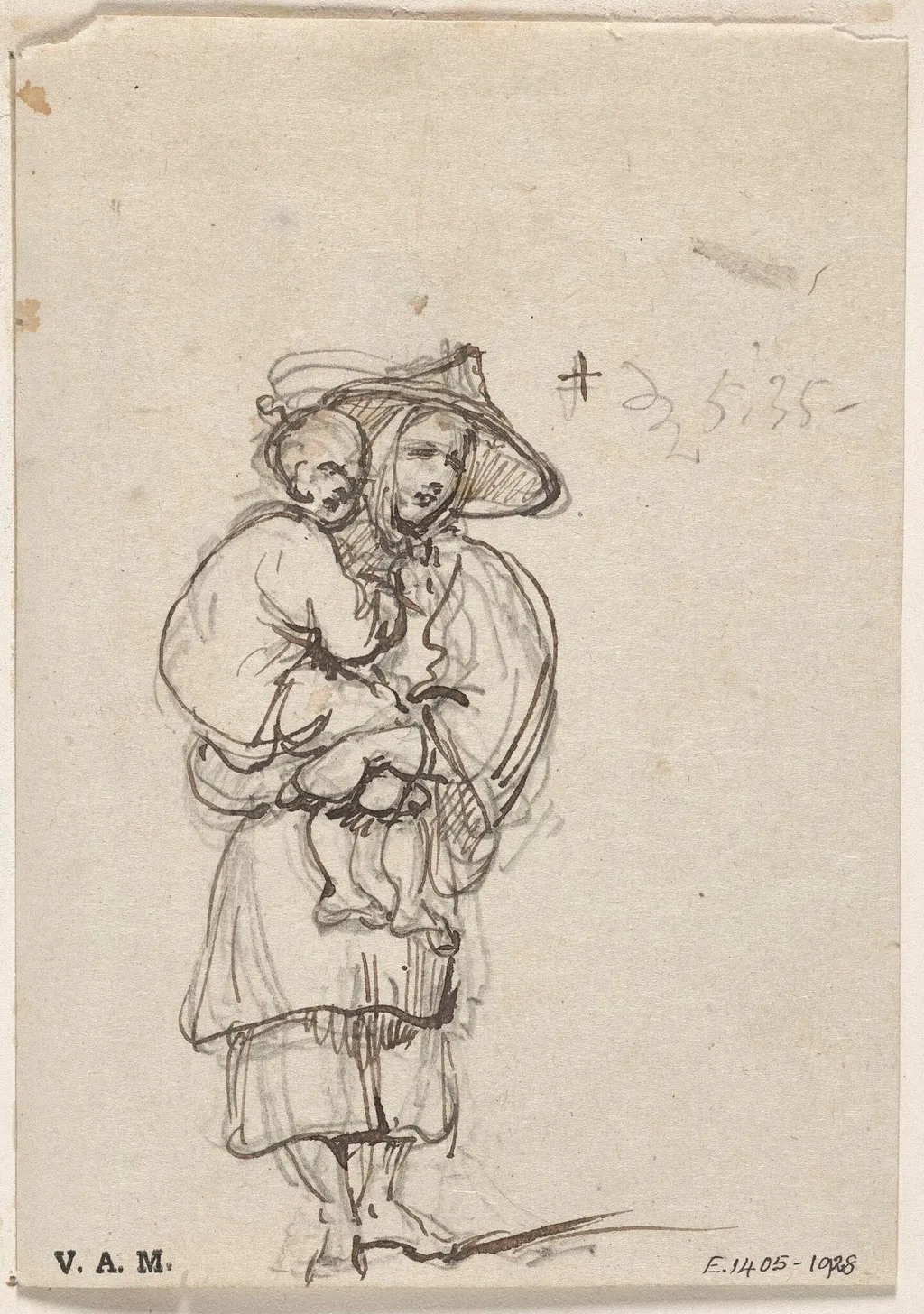
A boatwoman holding a child is a drawing by the Romanticist artist George Chinnery. It dates from 8 and is held in the collection of the Victoria and Albert Museum.
About this work
This is a drawing from 1835. George Chinnery shows a boatwoman standing with a child in her arms. It’s a simple scene, but it feels real.
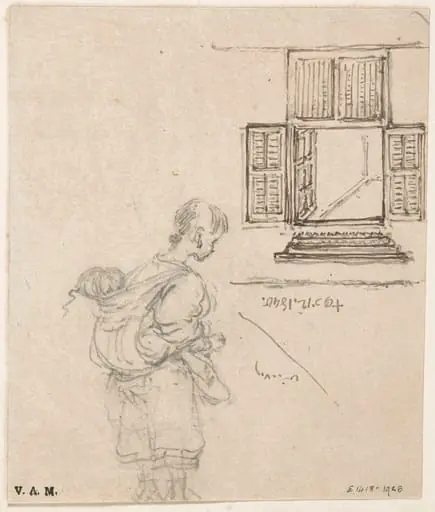
The drawing has extra sketches on the back. They show figures cut off below the waist. That detail makes you wonder about the rest of the story.
Check out another drawing by George Chinnery.
Overview
The reverse side contains partial figure studies, truncated at the waist, suggesting the sheet was reused during sketching sessions.
This 1835 drawing by George Chinnery depicts a standing boatwoman cradling a child. Executed in a straightforward, observational style, the image captures a quiet, everyday moment. The reverse side contains partial figure studies, truncated at the waist, suggesting the sheet was reused during sketching sessions. These hidden drawings hint at the artist’s working process and the material constraints of his practice.
Subject & Meaning
The scene portrays a working woman in a domestic or laboring role, holding a child with quiet dignity. There is no overt narrative or symbolism—only the presence of care and routine. The lack of context or setting focuses attention on the physical relationship between the two figures, emphasizing endurance and intimacy over drama or idealization.
Technique & Style
Chinnery employs loose, confident lines with minimal shading to define form and movement. The drawing’s economy of line conveys weight and posture without detail, reflecting his skill in rapid observation. The figures are rendered with a sense of immediacy, as if captured in passing, reinforcing the authenticity of the moment and the artist’s direct engagement with his subject.
History & Provenance
The drawing originates from Chinnery’s time in southern China, where he lived and worked for much of his later life. It likely stems from his habit of sketching local life during his travels. The reuse of the paper—figures on the reverse—suggests it was part of a working sketchbook, not a finished piece intended for display, aligning with his practice of documenting daily scenes on available materials.
Context
In the 1830s, Chinnery was one of the few Western artists residing in Guangzhou, documenting the lives of ordinary people amid foreign trade enclaves. His drawings of local women, laborers, and children offer rare visual records of non-elite life in early 19th-century southern China, contrasting with the more formal portraits and landscapes common among his contemporaries.
Legacy
This drawing exemplifies Chinnery’s role as a keen observer of cross-cultural daily life. Its unembellished realism and the presence of reverse sketches have made it a valuable artifact for understanding his method and the material culture of 19th-century artistic practice. It remains a quiet testament to the lives he encountered, preserved not as spectacle but as simple record.
Artist & collection
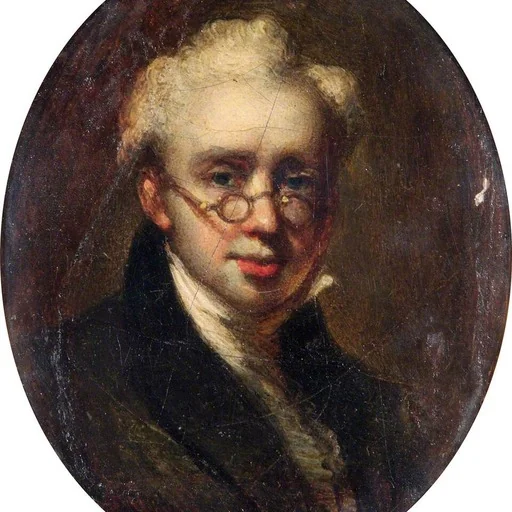
Artist
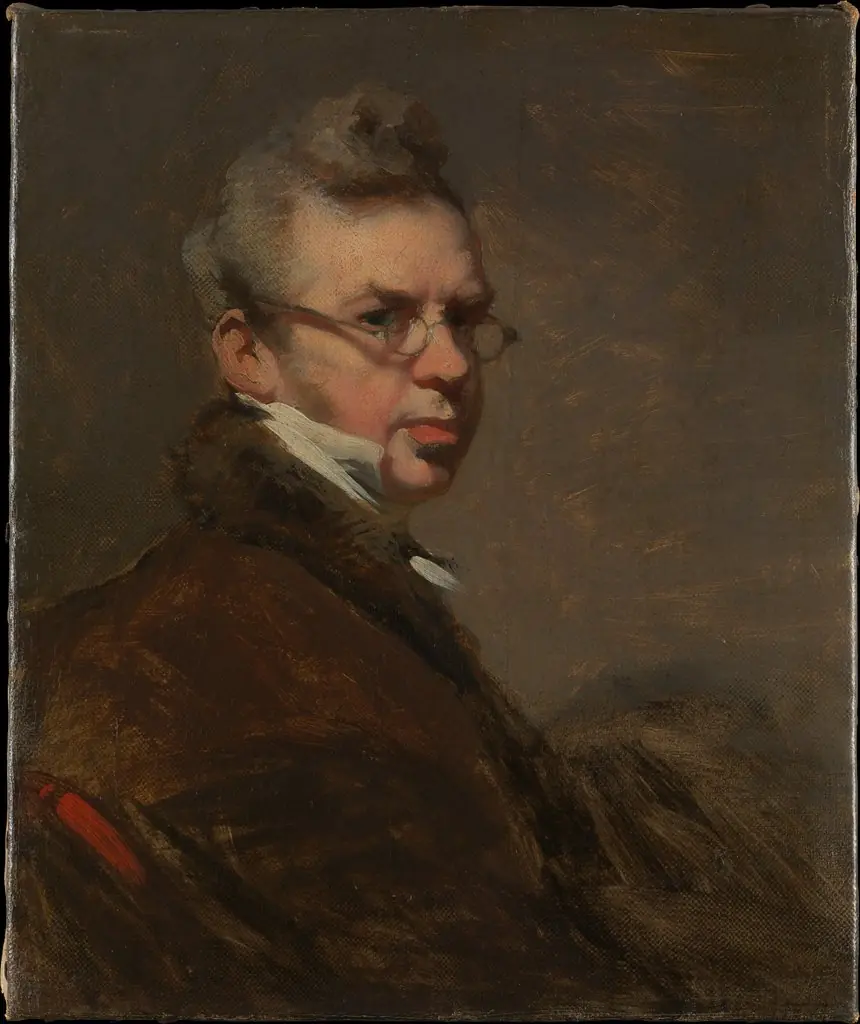
George Chinnery (Chinese: 錢納利; 5 January 1774 – 30 May 1852) was an English painter who spent most of his life in Asia, especially India and southern China.

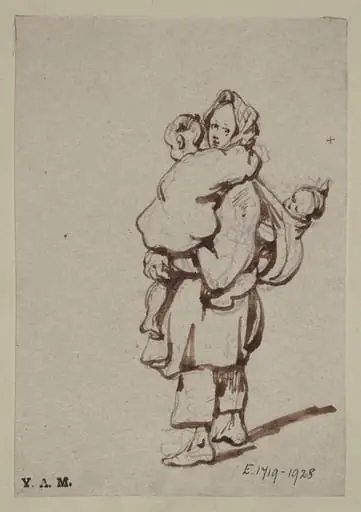 A boatwoman with two children
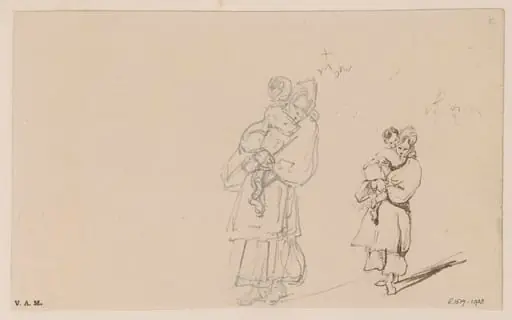 Two drawings of a boatwoman holding a child
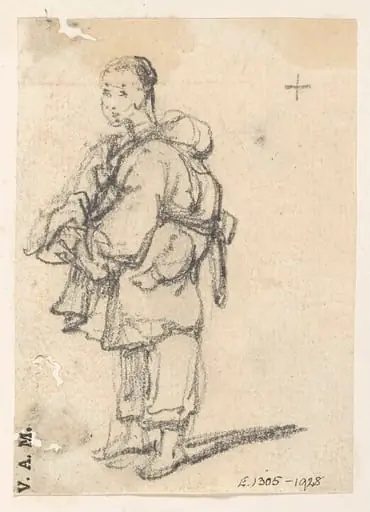 A boatwoman with a child on her back
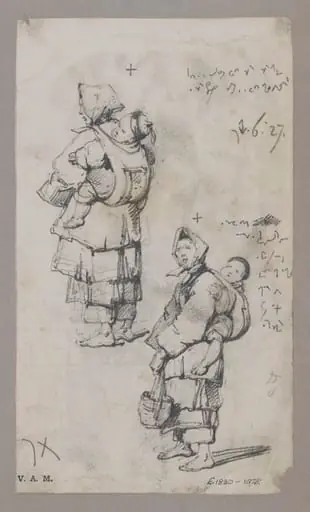 Two drawings of a boatwoman with a child on her back
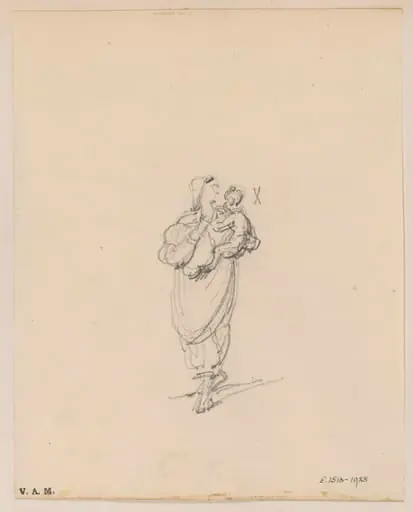 An Indian woman holding a child
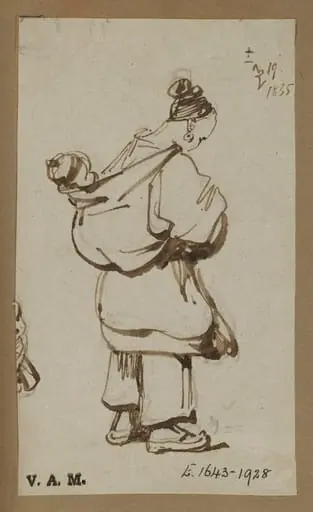 A Chinese boatwoman with a child in a sling on her back
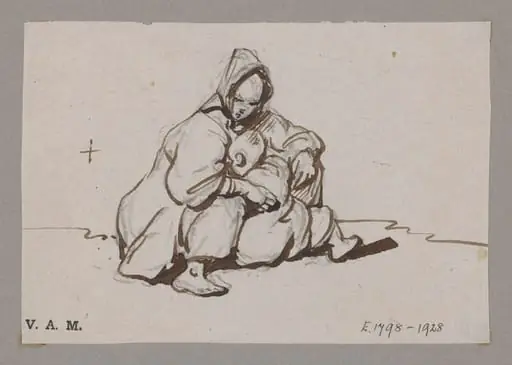 A seated boatwoman and child
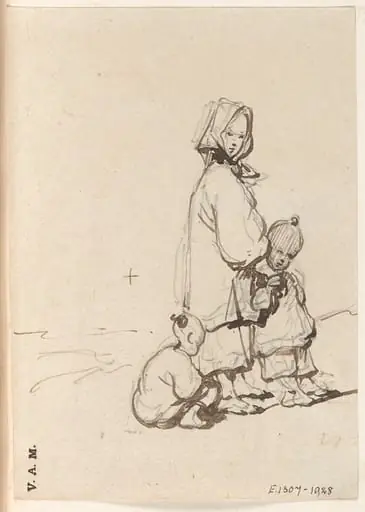 A Macau boatwoman with two children
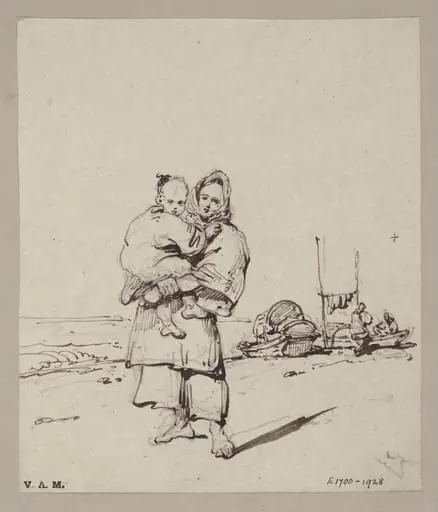 A Chinese boatwoman carrying a child
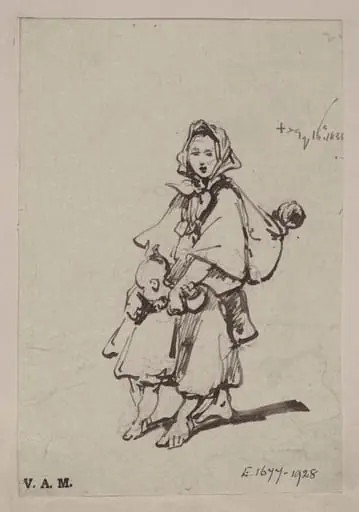 A boatwoman with two children, one of them strapped to her back
 A boatwoman holding two children
 A boatwoman with a child on her back, and a window with shutters opened