Artwork
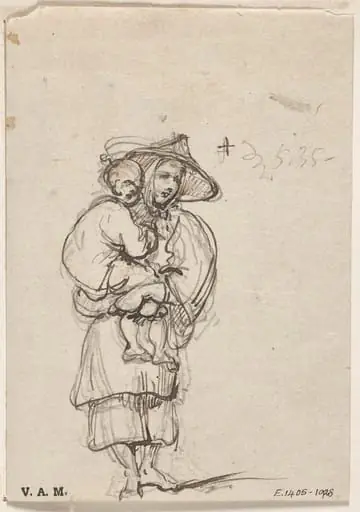
A boatwoman with a child on her back
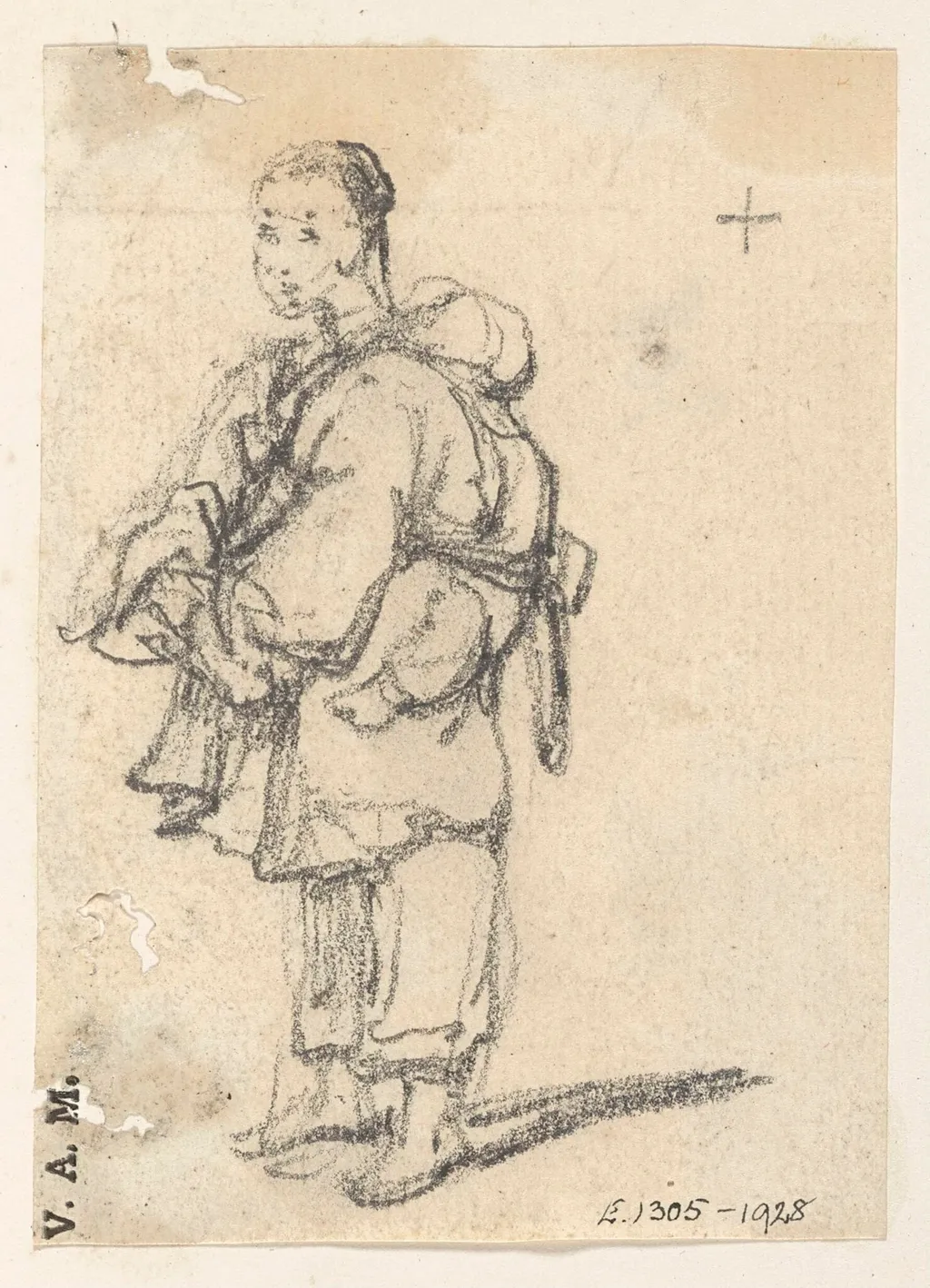
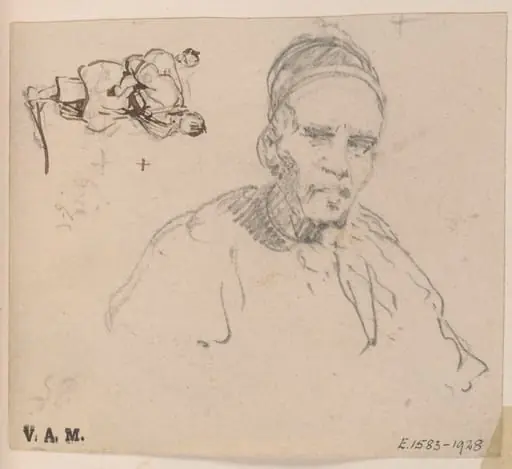
A boatwoman with a child on her back is a drawing by the Romanticist artist George Chinnery. It dates from 19 and is held in the collection of the Victoria and Albert Museum. This pencil drawing depicts a Macau boatwoman carrying a child secured to her back, rendered in a loose, spontaneous style.
About this work
George Chinnery drew a Macau boatwoman with a child strapped to her back. It’s a quick sketch on paper, not a big painting. This work is part of a group dated between 1825 and 1852.
The artist often showed everyday life in Macau. This drawing fits the Romantic style, where feelings and details matter more than perfect lines.
Take a look at George Chinnery next.
Overview
The work captures a fleeting moment of daily life, emphasizing atmosphere over formal finish, typical of Chinnery’s approach to recording local scenes.
This pencil drawing depicts a Macau boatwoman carrying a child secured to her back, rendered in a loose, spontaneous style. Created between 1825 and 1852, it belongs to a series of observational sketches by George Chinnery during his time in southern China. The work captures a fleeting moment of daily life, emphasizing atmosphere over formal finish, typical of Chinnery’s approach to recording local scenes.
Subject & Meaning
The subject is a working woman engaged in routine labor, her posture and the child’s position suggesting both physical strain and intimate care. Chinnery avoids idealization, presenting the figure with quiet dignity. The image reflects the lives of Macau’s riverine communities, whose labor sustained the port’s economy, offering a glimpse into the social fabric often overlooked in colonial-era art.
Technique & Style
Executed in pencil on paper, the drawing employs rapid, fluid lines to suggest form and movement rather than define them precisely. Shading is minimal, relying on tone and gesture to convey weight and texture. This approach aligns with Romantic sensibilities, prioritizing emotional resonance and immediacy over academic precision, characteristic of Chinnery’s sketchbook practice.
History & Provenance
The drawing is one of many works Chinnery produced during his decades in Macau, where he lived from 1825 until his death in 1852. It was likely made on-site, as part of his habit of documenting local life. After his death, his sketches were preserved by family and collectors, eventually entering institutional holdings where they remain as records of 19th-century southern China.
Context
Chinnery’s drawings emerged during a period of increased Western presence in Macau, a Portuguese trading post with a mixed population. While many contemporaries focused on grand architecture or portraiture, Chinnery turned to ordinary people, capturing their routines with empathy. His work stands apart from official colonial imagery, offering a more intimate, unvarnished view of daily existence.
Legacy
Chinnery’s sketches, including this one, are valued today for their documentary quality and humanistic perspective. They provide rare visual evidence of the lives of working-class women in 19th-century Macau. Though not widely exhibited in his lifetime, these drawings have since become essential references for scholars studying cross-cultural exchange and the evolution of Western art in Asia.
Artist & collection
Artist
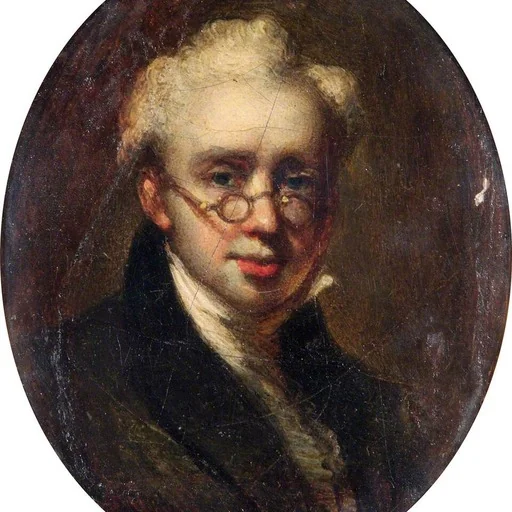
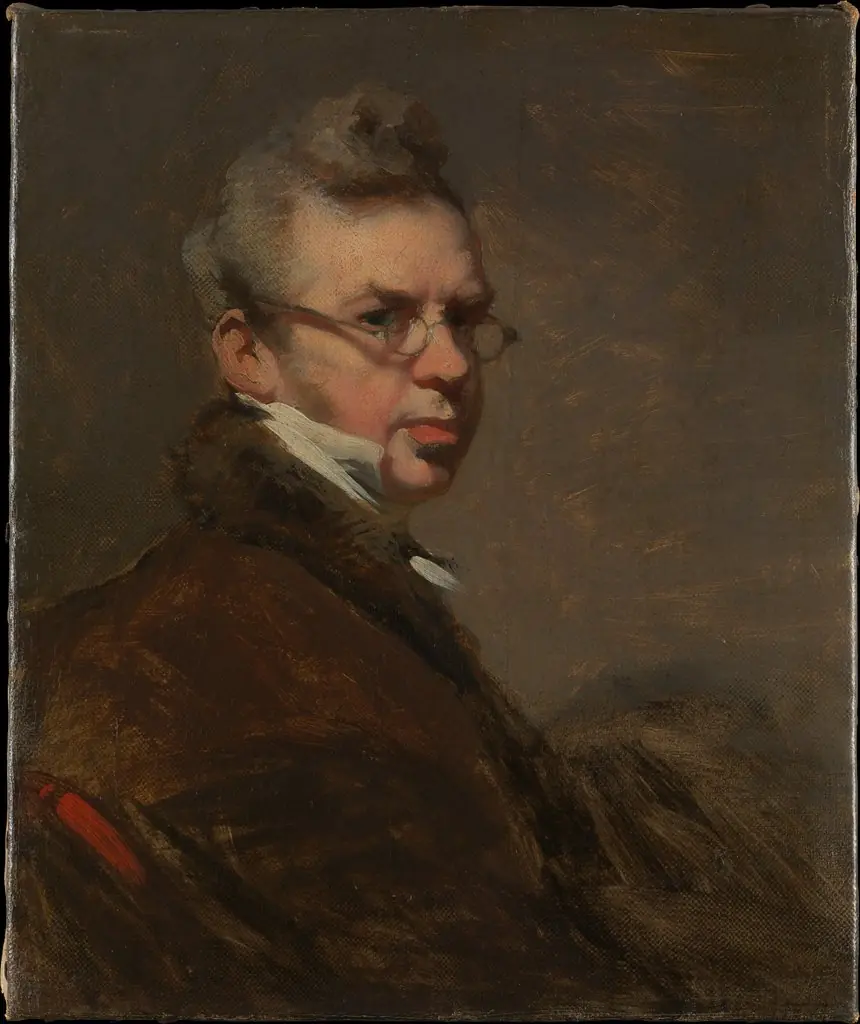
George Chinnery (Chinese: 錢納利; 5 January 1774 – 30 May 1852) was an English painter who spent most of his life in Asia, especially India and southern China.

 A boatwoman holding a child
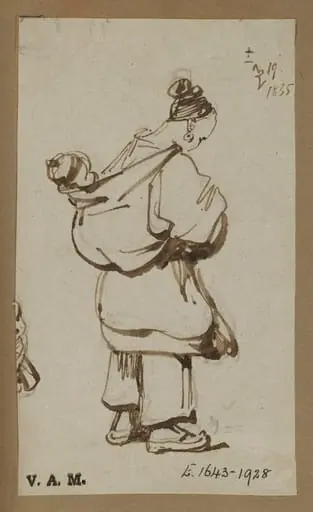 A Chinese boatwoman with a child in a sling on her back
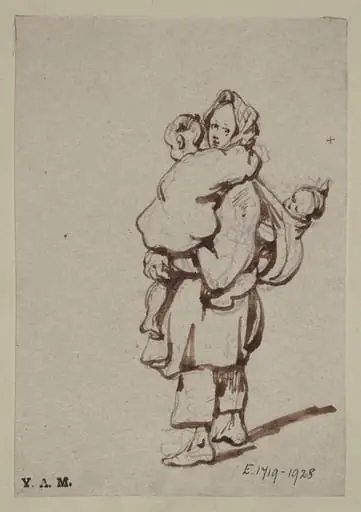 A boatwoman with two children
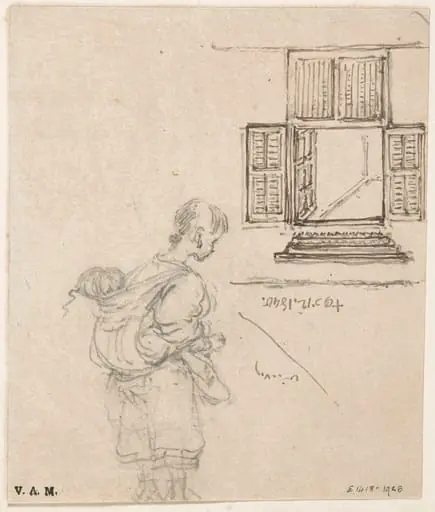 A boatwoman with a child on her back, and a window with shutters opened
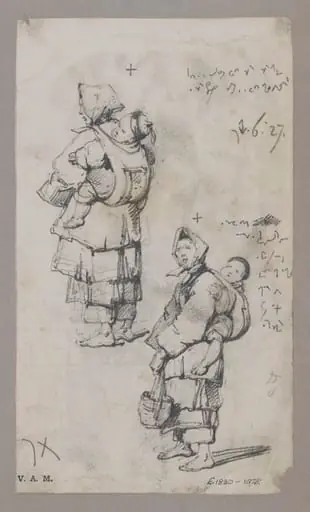 Two drawings of a boatwoman with a child on her back
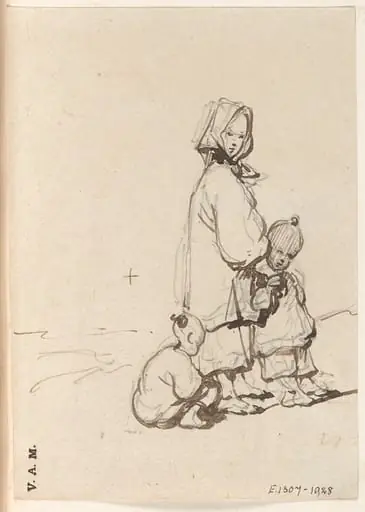 A Macau boatwoman with two children
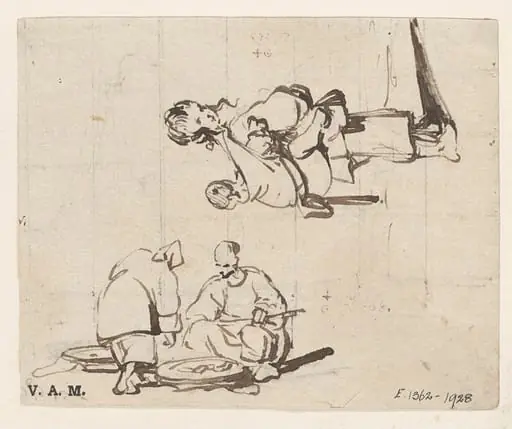 A boatwoman with a vendor, and a boatwoman with a child
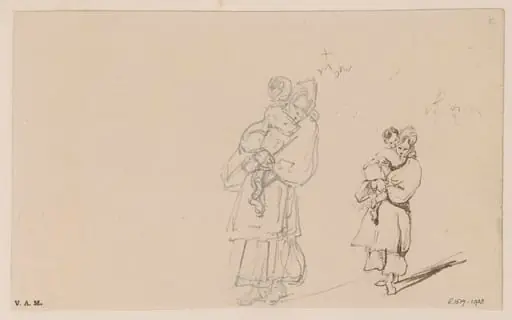 Two drawings of a boatwoman holding a child
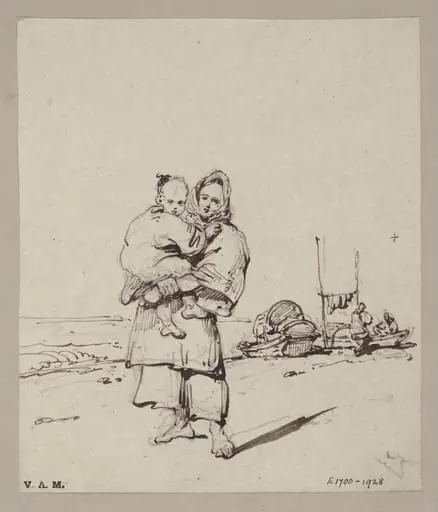 A Chinese boatwoman carrying a child
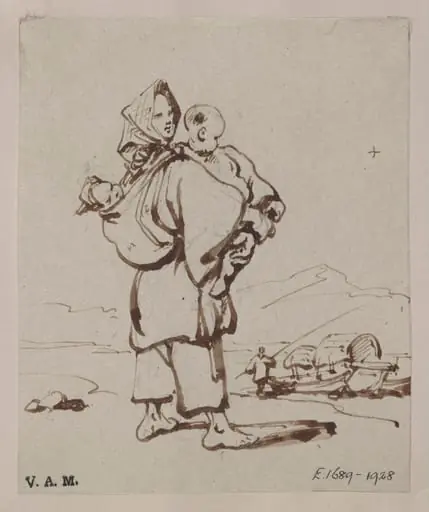 A boatwoman holding two children
 A Chinese man, and a boatwoman carrying a child