Artwork
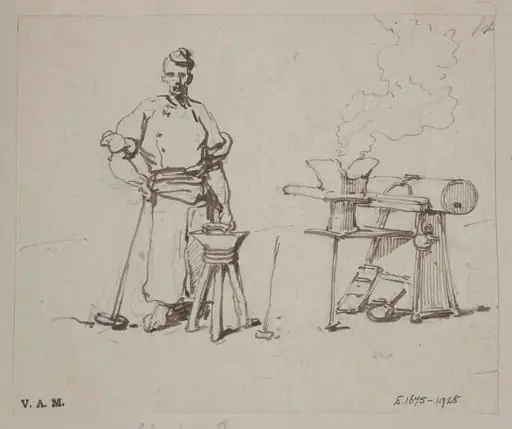
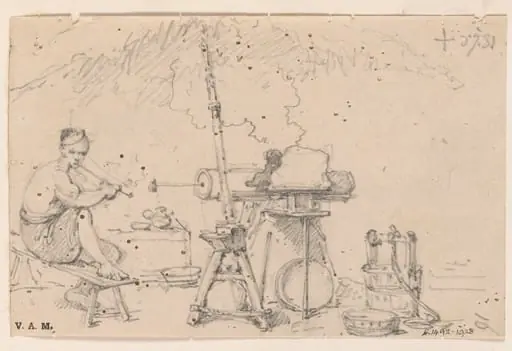
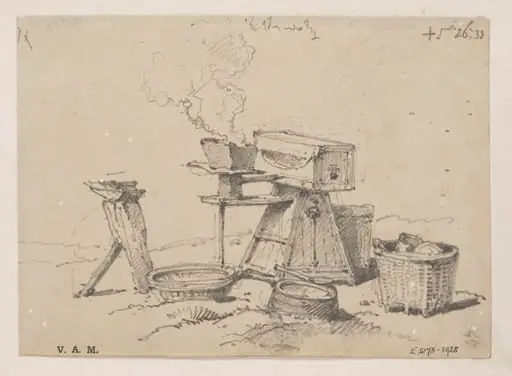
A Chinese blacksmith
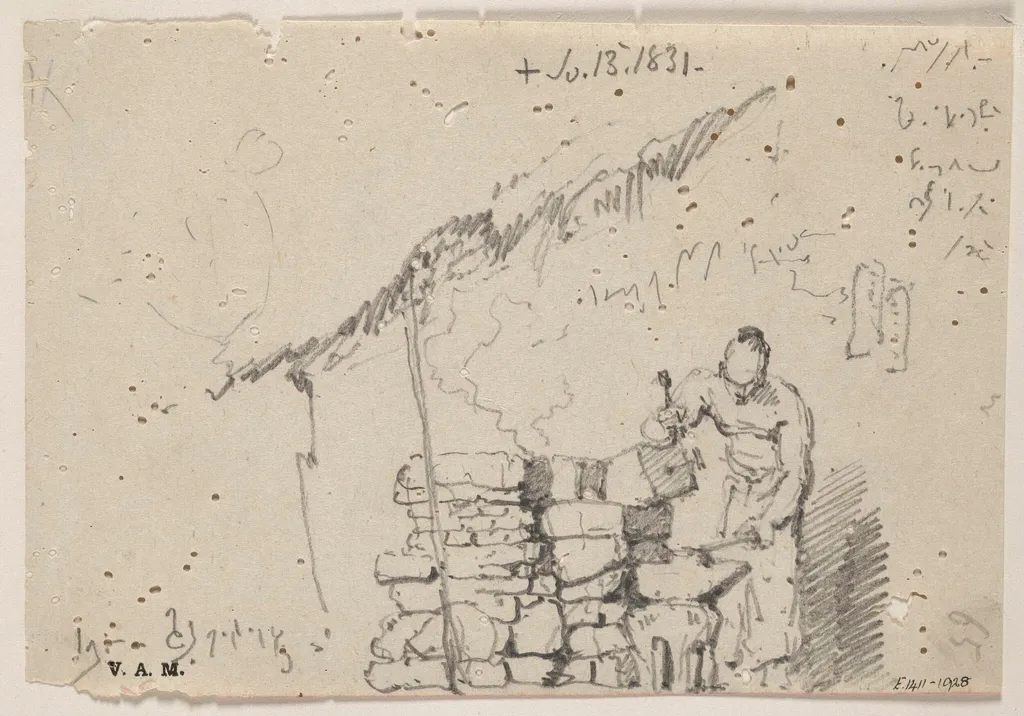
A Chinese blacksmith is a drawing by the Romanticist artist George Chinnery. It dates from 10 and is held in the collection of the Victoria and Albert Museum.
About this work
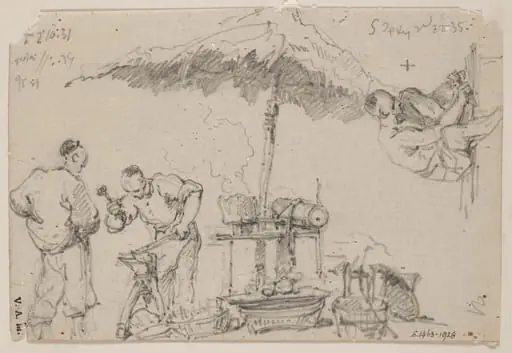
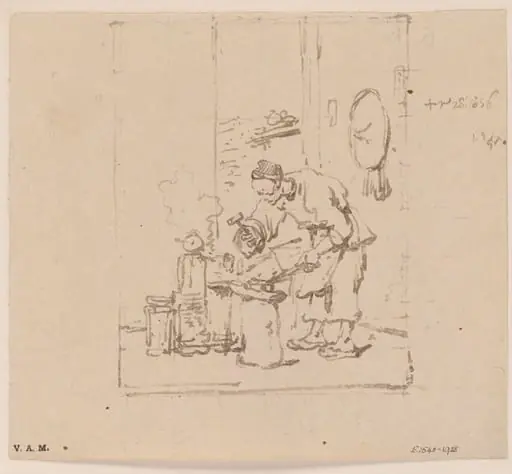
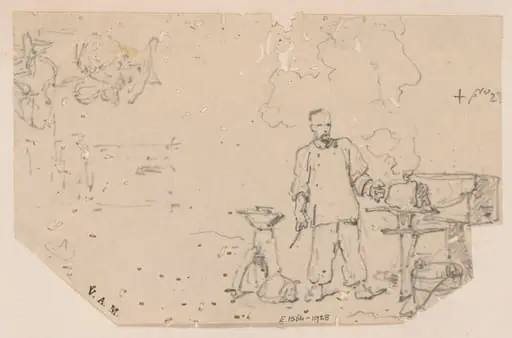
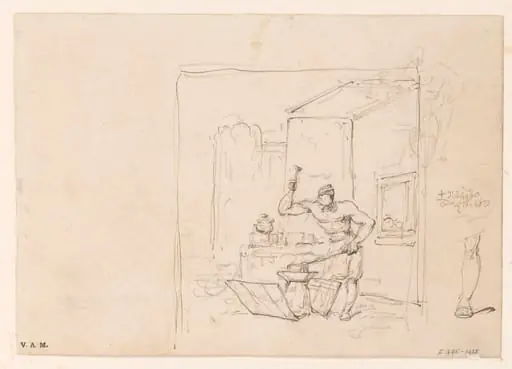
This is a quick sketch by George Chinnery from 1831. It shows a blacksmith at work, hammering metal on an anvil under a straw roof. You can see the furnace and bellows beside him.
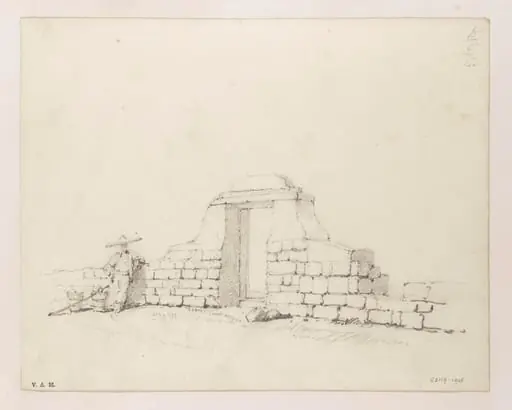
The artist used simple tools to build a scene full of motion and warmth. On the back of the sheet, Chinnery added small pencil sketches of a dog and some buildings.
Check out more drawings by George Chinnery.
Overview
This 1831 drawing by George Chinnery captures a moment of labor in southern China, rendered with swift, economical pencil strokes.
This 1831 drawing by George Chinnery captures a moment of labor in southern China, rendered with swift, economical pencil strokes. The blacksmith works beneath a thatched shelter, surrounded by tools of his trade: a stone-supported furnace and leather bellows. The reverse side holds two small, spontaneous sketches—a dog and distant hillside structures—suggesting the artist’s habit of reusing paper and observing his surroundings beyond the primary subject.
Subject & Meaning
The scene centers on the blacksmith’s focused labor, emphasizing physical exertion and the rhythm of craftsmanship. No idealization is present; the figure is shown in functional attire, engaged in a routine task essential to daily life. The inclusion of tools and shelter reflects the modest, grounded conditions of artisanal work in early 19th-century China, offering a quiet testament to local industry.
Technique & Style
Chinnery employed loose, rapid pencil lines to convey movement and texture without detail. The hammer’s arc, the curve of the bellows, and the roughness of the straw roof are suggested rather than defined. The shading is minimal, relying on line weight and placement to suggest volume and light. The reverse sketches reveal a spontaneous, observational approach, typical of his travel sketches.
History & Provenance
Created during Chinnery’s years in Macau and Guangzhou, the drawing belongs to a body of work documenting life in southern China between 1802 and 1852. Likely made on-site, it was probably kept among his personal studies rather than intended for public display. Its survival reflects the value placed on his observational records by later collectors.
Context
In the early 1830s, foreign traders and artists in coastal China were among the few outsiders permitted to observe local life closely. Chinnery’s drawings offer rare visual records of Chinese artisans at work, distinct from formal portraiture or ceremonial scenes. His focus on laborers and everyday settings contrasts with the exoticizing tendencies of many contemporary Western depictions.
Legacy
Chinnery’s sketches, including this one, remain important for their unembellished documentation of 19th-century Chinese craftsmanship. They provide insight into material culture and working conditions not captured in official records. Today, they are studied as ethnographic records and as examples of cross-cultural visual observation during a period of limited Western access.
Artist & collection
Artist
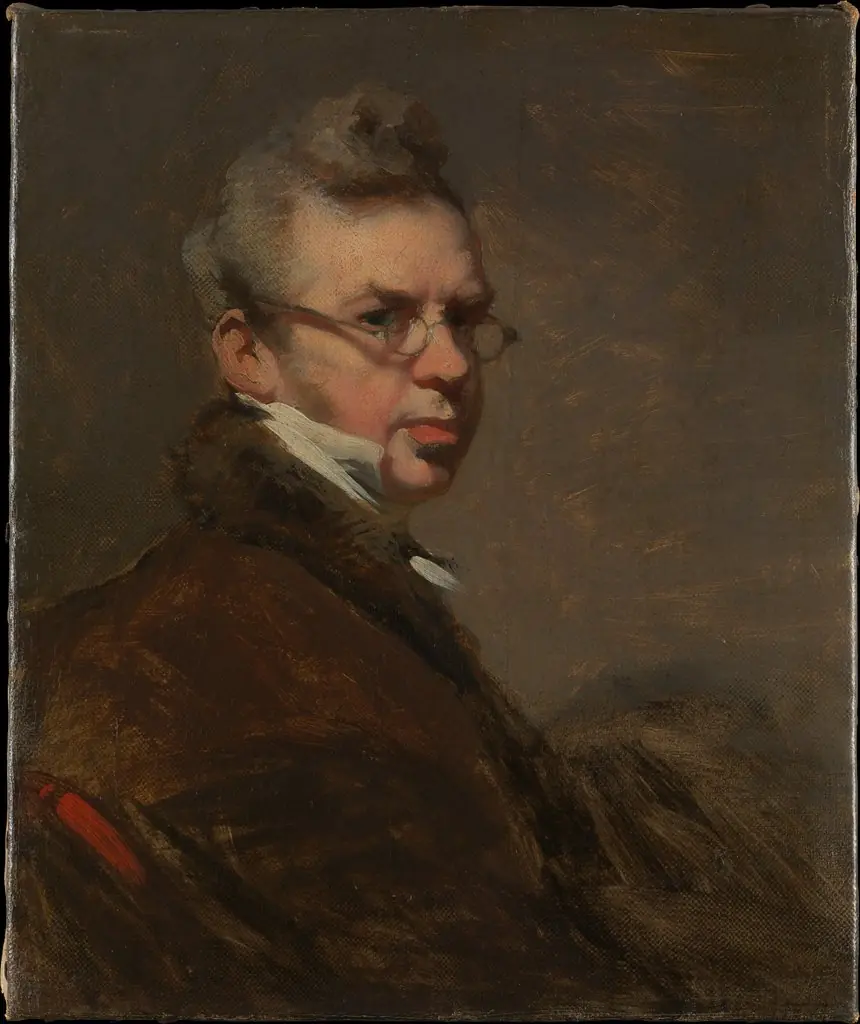
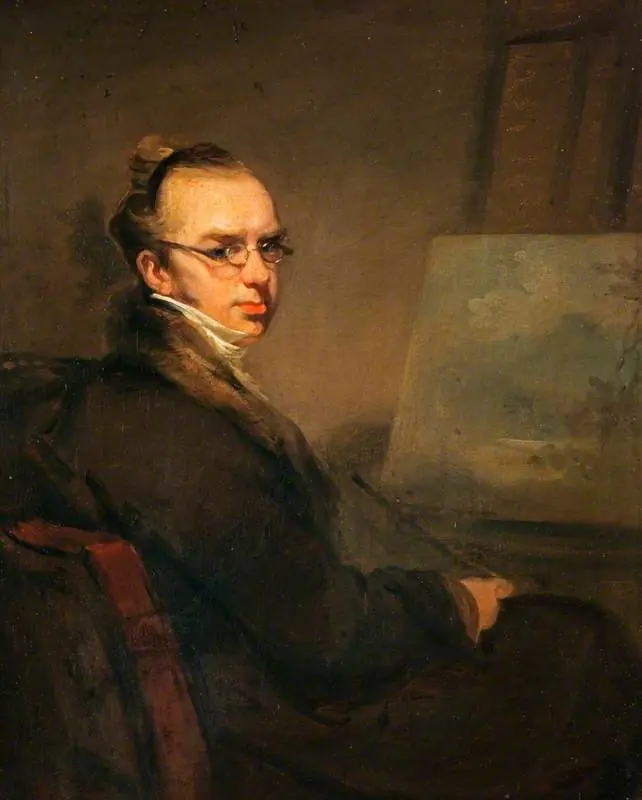
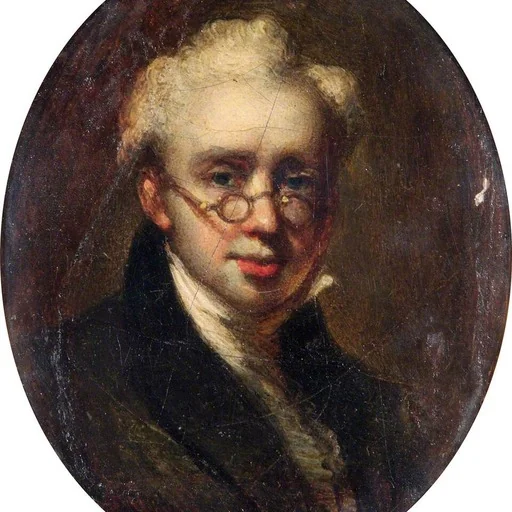
George Chinnery (Chinese: 錢納利; 5 January 1774 – 30 May 1852) was an English painter who spent most of his life in Asia, especially India and southern China.