Artwork
A Chinese blacksmith by his anvil
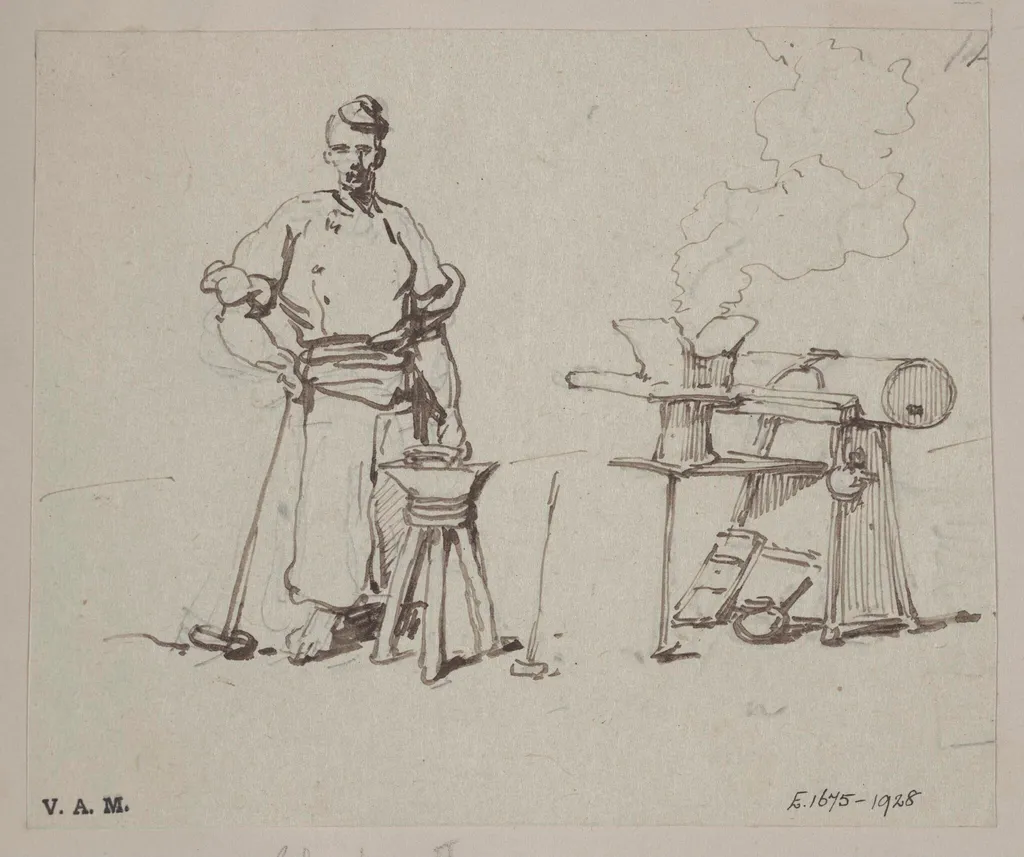
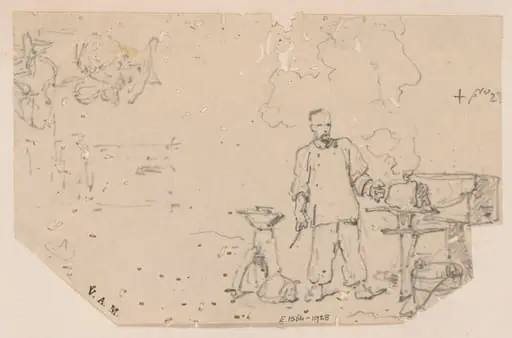
A Chinese blacksmith by his anvil is a drawing by the Romanticist artist George Chinnery. It dates from 19 and is held in the collection of the Victoria and Albert Museum. The work is a drawing that portrays a Chinese blacksmith positioned beside his anvil.
About this work
Overview
The work is a drawing that portrays a Chinese blacksmith positioned beside his anvil. Adjacent to him are a portable furnace and a set of bellows, tools essential to his craft. The composition captures a moment of labor, emphasizing the relationship between the artisan and his equipment.
Subject & Meaning
The figure represents a traditional metalworker, a role central to historical Chinese industry. By focusing on the blacksmith and his implements, the drawing highlights the physicality of manual production and the skill required to shape metal, offering insight into everyday labor practices.
Technique & Style
Rendered in line and shading typical of drawing media, the piece employs careful delineation to convey the textures of metal, wood, and fabric. The artist uses contrast to differentiate the solid form of the anvil from the softer, more dynamic shapes of the furnace and bellows.
Context
The artwork reflects an interest in documenting occupational scenes, a theme common in East Asian visual culture. By depicting a blacksmith at work, it aligns with broader artistic efforts to record the tools and techniques of traditional crafts during a period of industrial transition.
Own this work as a print
Artist & collection
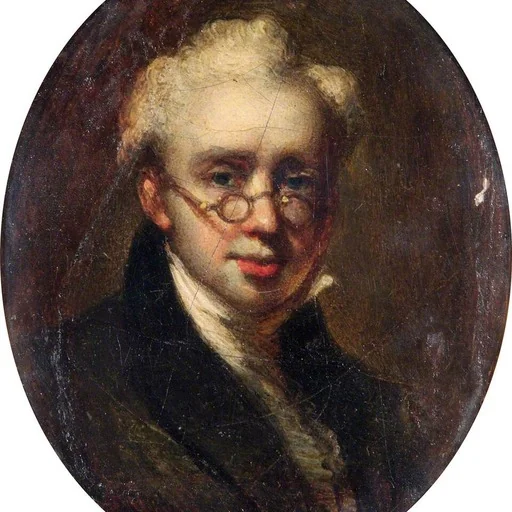
Artist
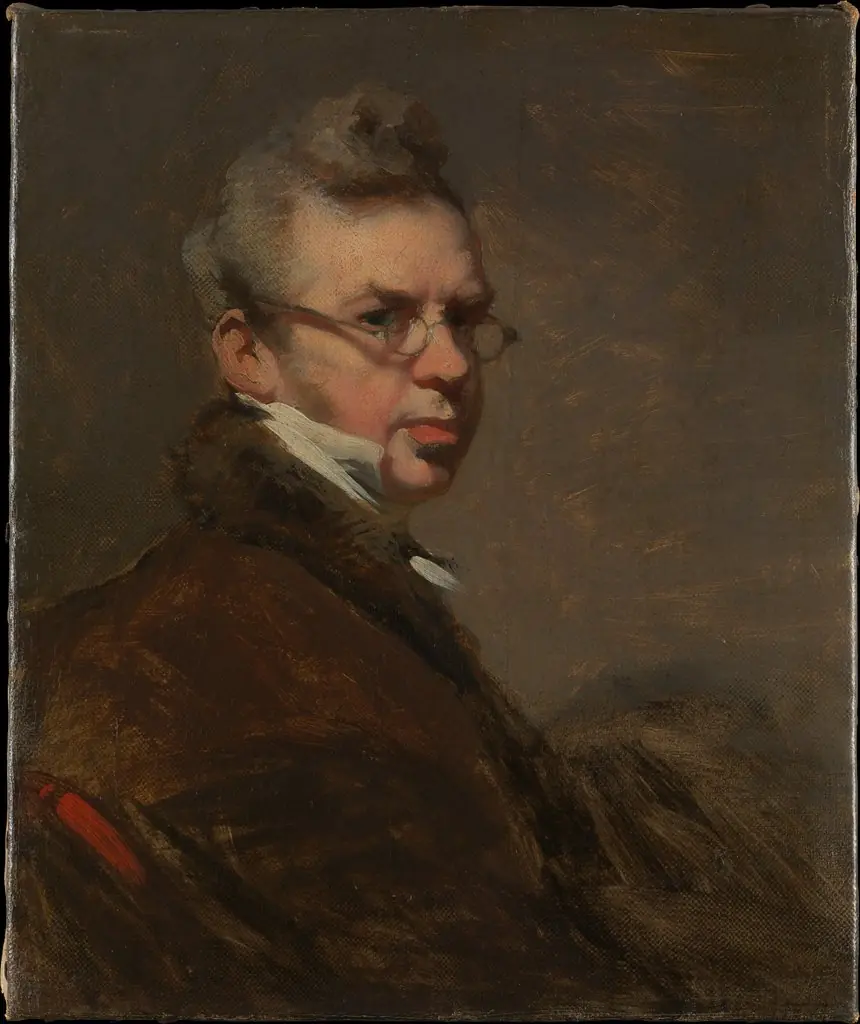
George Chinnery (Chinese: 錢納利; 5 January 1774 – 30 May 1852) was an English painter who spent most of his life in Asia, especially India and southern China.

 A blacksmith and a seated man
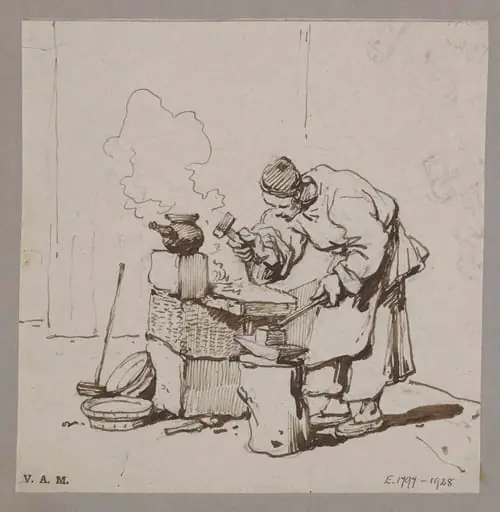 A blacksmith at his anvil
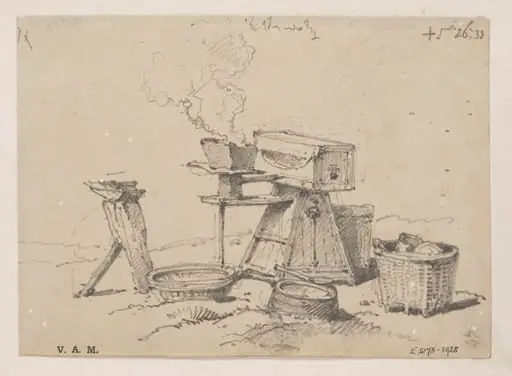 A Chinese blacksmith's equipment
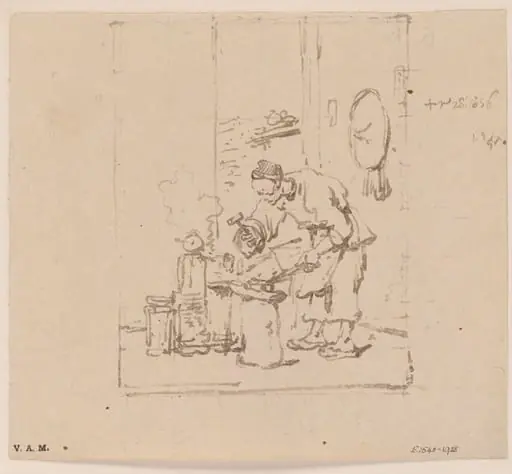 A Chinese blacksmith at work
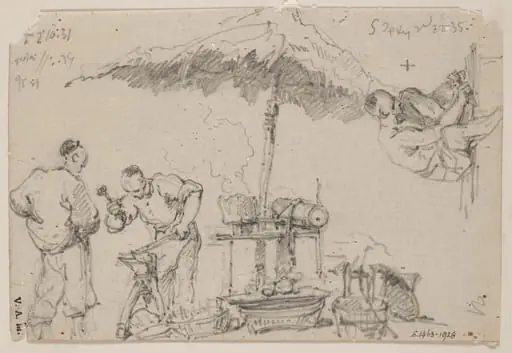 Two blacksmiths beneath a parasol
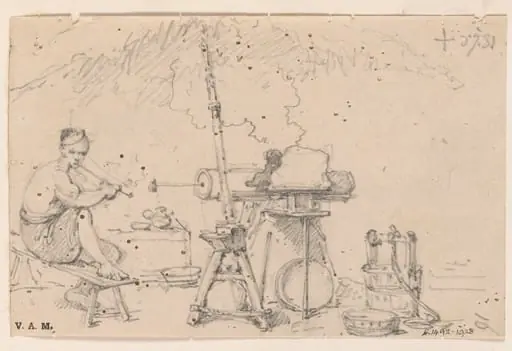 A Chinese blacksmith at his forge
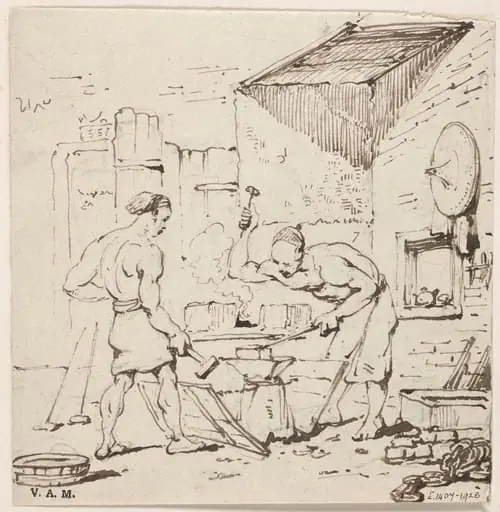 Two blacksmiths at work
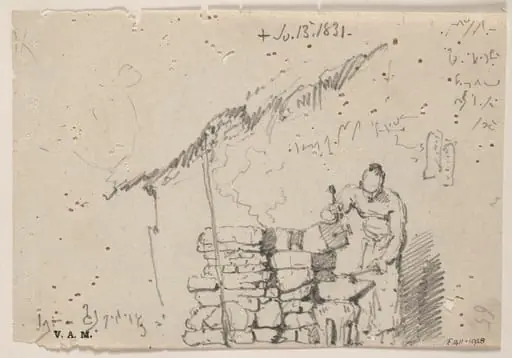 A Chinese blacksmith
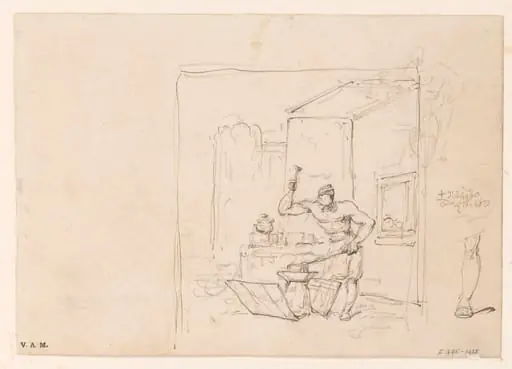 A Chinese blacksmith hammering at his anvil
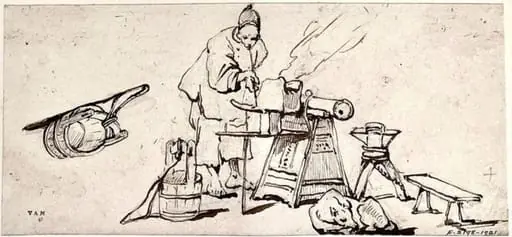 A blacksmith with his eqipment and a sleeping dog
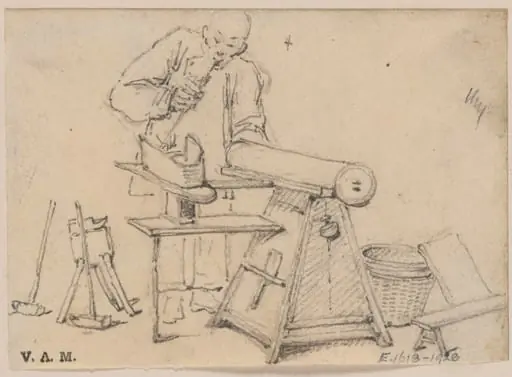 A blacksmith lighting a pipe from his furnace
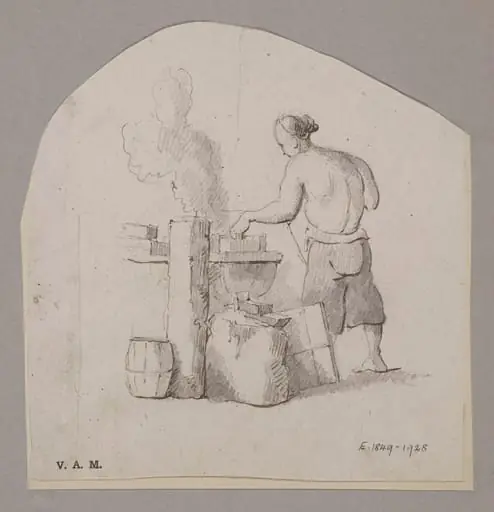 A blacksmith with his equipment