Artwork
Two blacksmiths beneath a parasol
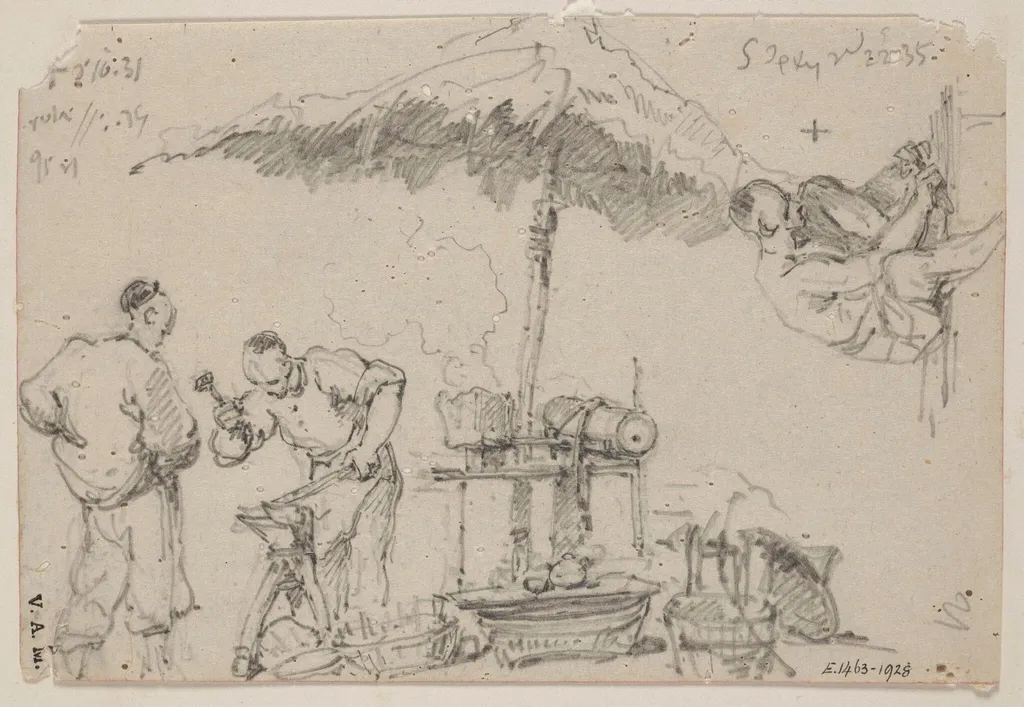
Two blacksmiths beneath a parasol is a drawing by the Romanticist artist George Chinnery. It dates from 8 and is held in the collection of the Victoria and Albert Museum. This pencil drawing, created between 1831 and 1835, captures two figures in a Chinese blacksmith’s workshop.
About this work
George Chinnery made a drawing called "Two blacksmiths beneath a parasol." It shows a Chinese blacksmith at work near a furnace and bellows. A second man watches under the parasol.
This was drawn between 1831 and 1835. On the back are small sketches of figures, barely started.
The drawing lives at the Victoria and Albert Museum.
museum: Victoria and Albert Museum
Overview
This pencil drawing, created between 1831 and 1835, captures two figures in a Chinese blacksmith’s workshop. One man works at an anvil while another observes beneath a parasol. Tools and equipment—including a furnace and bellows—are arranged nearby. The sheet also contains faint, unfinished sketches on its reverse, suggesting the artist used it as a working surface during travel or study.
Subject & Meaning
The scene portrays labor in a domestic industrial setting, emphasizing quiet observation rather than dramatic action. The blacksmith’s focused work and the watcher’s stillness suggest a moment of routine, not spectacle. The parasol implies an outdoor or semi-sheltered space, grounding the scene in everyday life rather than idealized craftsmanship.
Technique & Style
Executed in pencil, the drawing uses light, fluid lines to define form and space without heavy shading. The figures are rendered with economical detail, focusing on posture and gesture. The background elements—furnace, baskets, bellows—are suggested rather than fully modeled, reflecting a spontaneous, observational approach typical of the artist’s field studies.
History & Provenance
The drawing was made by George Chinnery during his time in southern China, likely in Macau or Guangzhou. It entered the Victoria and Albert Museum’s collection as part of a larger group of his works, acquired for their ethnographic and artistic value. The presence of sketches on the reverse indicates it was part of a portable sketchbook used during his travels.
Context
Chinnery, a British artist living in Asia, documented local life with unusual directness for his time. This drawing reflects a broader 19th-century interest in recording non-European labor practices, though without overt exoticism. His sketches served both personal study and potential future compositions, offering rare visual records of Chinese artisanal work during the early colonial era.
Legacy
The work remains a quiet testament to Chinnery’s commitment to observing ordinary life. Unlike grand historical or portraiture commissions, this drawing preserves an unembellished moment of labor, contributing to a more nuanced understanding of 19th-century Chinese society through the eyes of a foreign resident. Its preservation in the V&A underscores its value as a documentary artifact.
Artist & collection
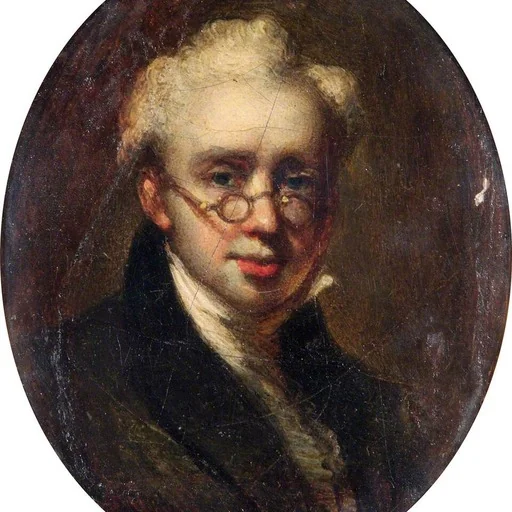
Artist
George Chinnery (Chinese: 錢納利; 5 January 1774 – 30 May 1852) was an English painter who spent most of his life in Asia, especially India and southern China.

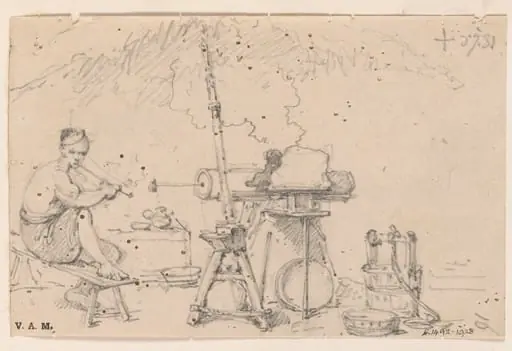 A Chinese blacksmith at his forge
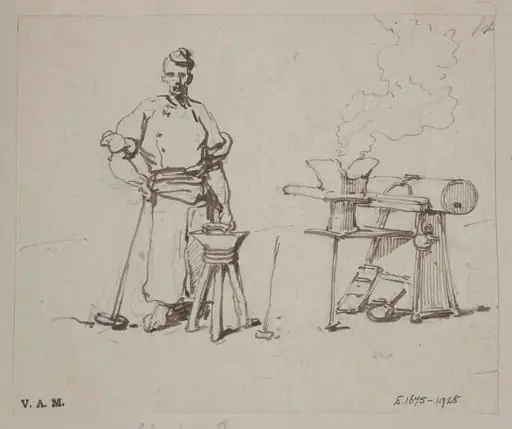 A Chinese blacksmith by his anvil
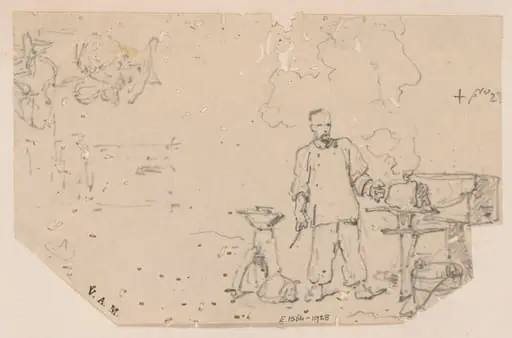 A blacksmith and a seated man
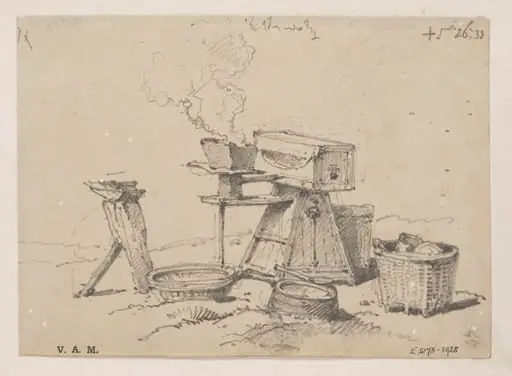 A Chinese blacksmith's equipment
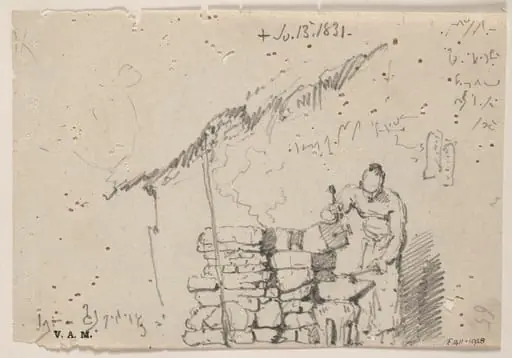 A Chinese blacksmith
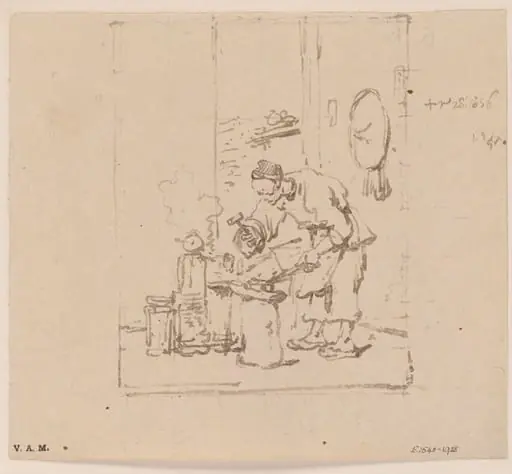 A Chinese blacksmith at work
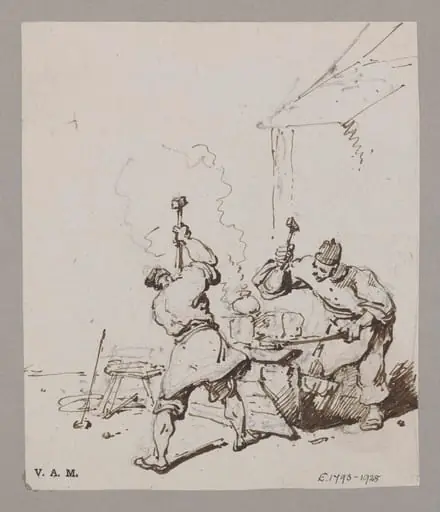 Chinese blacksmiths
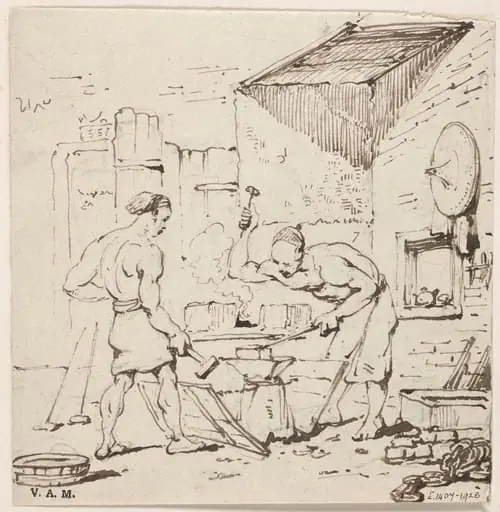 Two blacksmiths at work
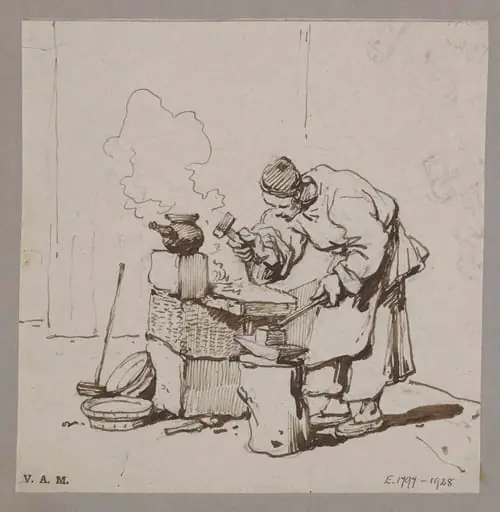 A blacksmith at his anvil
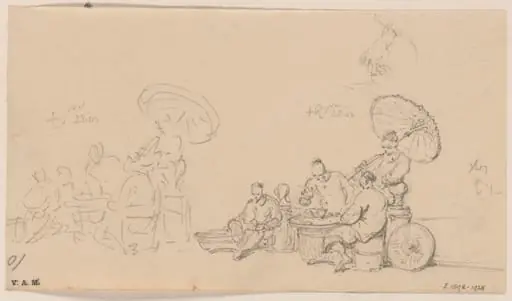 Chinese figures around a basket
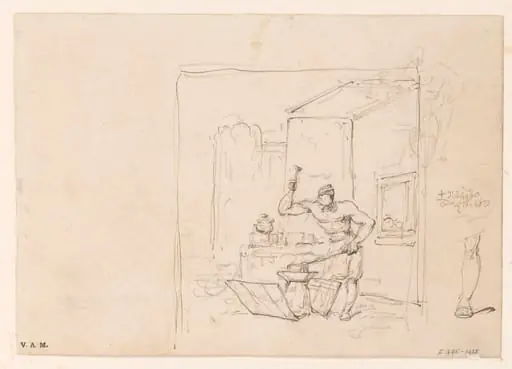 A Chinese blacksmith hammering at his anvil