Artwork
A Chinese junk, Macau
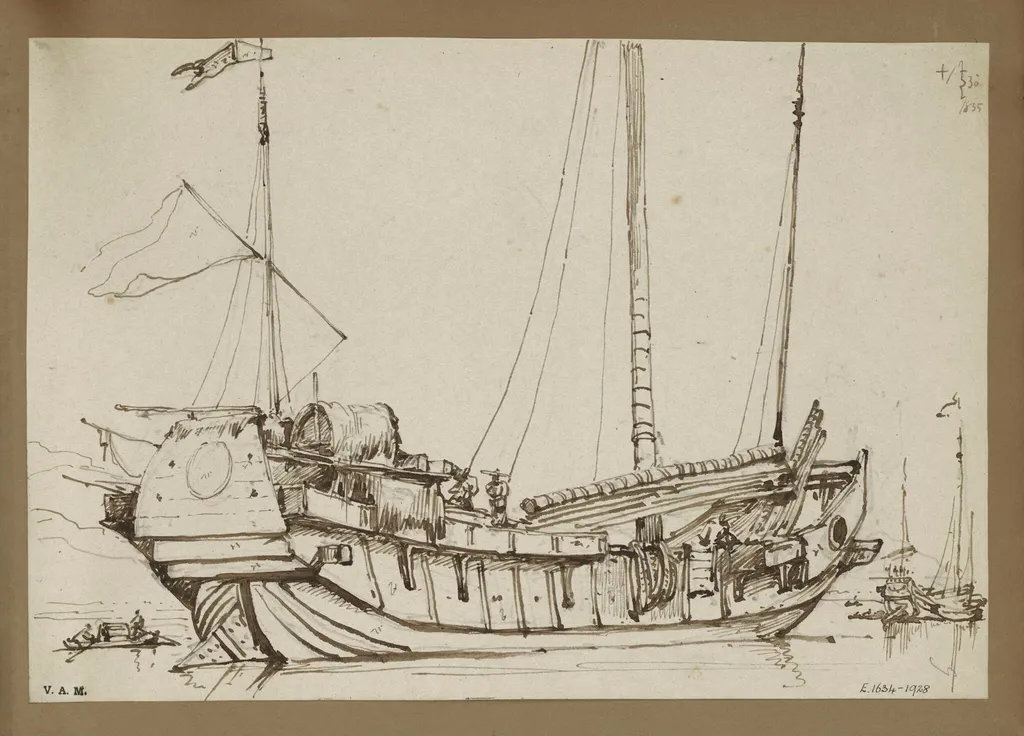
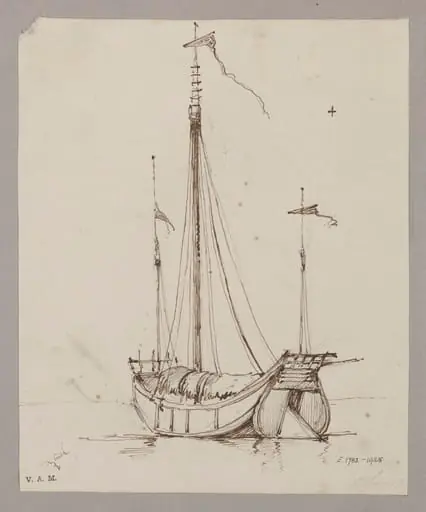
A Chinese junk, Macau is a drawing by the Romanticist artist George Chinnery. It dates from 20 and is held in the collection of the Victoria and Albert Museum. This ink drawing, created in 1835, depicts a three-masted Chinese junk anchored in Macau Bay.
About this work
It’s a calm scene, but full of details only someone who watched boats every day would notice.
This is a drawing of a Chinese junk from Macau. It shows a three-masted ship with its sails down but small flags flying at the back. The work is done in ink, likely with careful shading.
George Chinnery made it in 1835. He spent years in Macau and Macau Bay, sketching ships and people. This drawing shows the mix of Chinese and European styles he knew.
It’s a calm scene, but full of details only someone who watched boats every day would notice. Look up George Chinnery next.
Overview
This ink drawing, created in 1835, depicts a three-masted Chinese junk anchored in Macau Bay. Executed with precise linework and subtle tonal shading, it captures a quiet moment in maritime life. The vessel’s sails are lowered, yet small pennants flutter from the stern, suggesting ongoing activity. The artist, George Chinnery, lived in Macau for decades and recorded its harbor scenes with observational fidelity.
Subject & Meaning
The junk represents the hybrid maritime culture of 19th-century Macau, where Chinese seafaring traditions coexisted with European trade. The lowered sails indicate a pause in transit, perhaps awaiting tide or cargo, while the raised pennants imply identity or protocol. No dramatic action is shown—instead, the scene conveys routine, the rhythm of daily port life observed by someone deeply familiar with its rhythms.
Technique & Style
Rendered in ink with controlled brushwork, the drawing employs delicate hatching to suggest texture on sails and hull. The composition is restrained, focusing attention on the ship’s form and its interaction with the water. Chinnery’s technique blends European draftsmanship with an acute attention to Chinese vessel design, reflecting his immersion in local maritime culture rather than exoticized outsider perspective.
History & Provenance
George Chinnery produced this work during his long residence in Macau, where he lived from 1825 until his death in 1852. He made hundreds of sketches of ships, ports, and residents, many of which were later collected by British merchants and colonial officials. This drawing likely originated as a personal record, later preserved as part of his broader documentation of Macau’s visual landscape.
Context
In the 1830s, Macau was a key Portuguese trading post and a hub for Sino-Western exchange. Chinese junks like the one depicted carried goods between southern China and Southeast Asia, while European vessels anchored nearby. Chinnery’s drawings offer a rare non-official view of this interface, capturing the quiet coexistence of cultures rather than their political or commercial tensions.
Legacy
Chinnery’s sketches, including this one, remain valuable for their unembellished record of maritime life in southern China during a period of rapid change. Unlike many contemporaneous depictions, they avoid romanticism, instead offering precise, intimate observations. Today, they serve as primary visual sources for historians studying regional shipping, port culture, and cross-cultural encounter in early 19th-century Asia.
Artist & collection

Artist
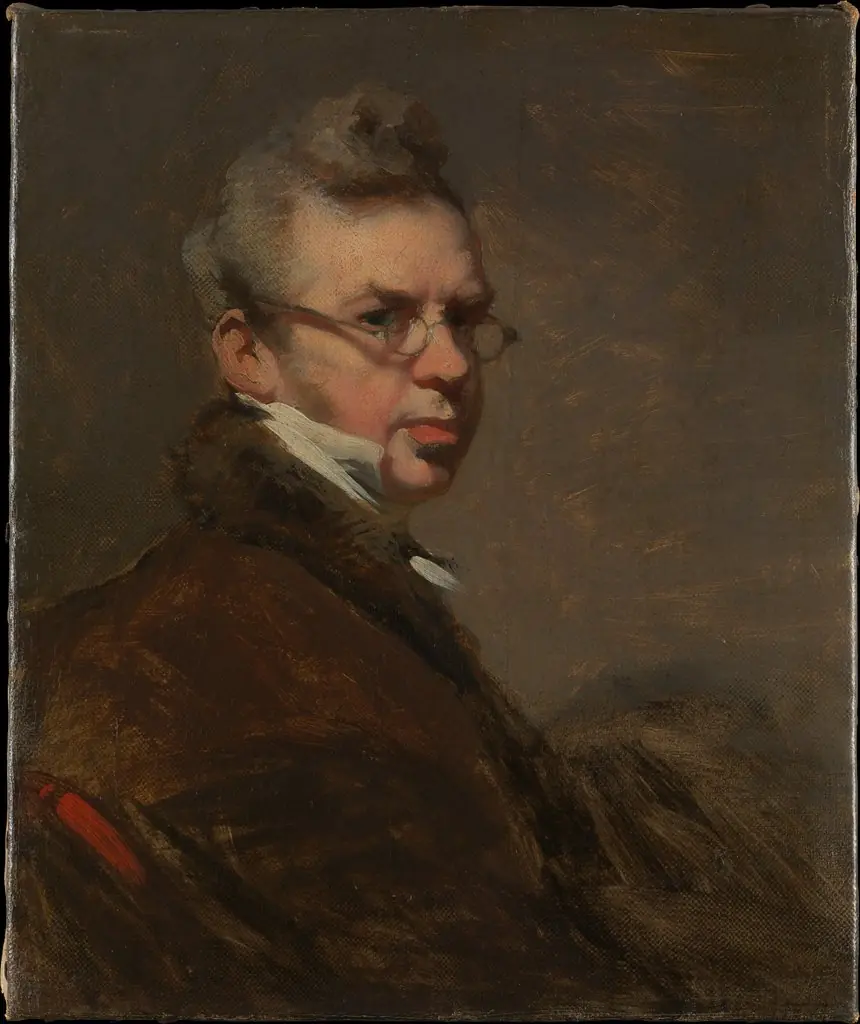
George Chinnery (Chinese: 錢納利; 5 January 1774 – 30 May 1852) was an English painter who spent most of his life in Asia, especially India and southern China.





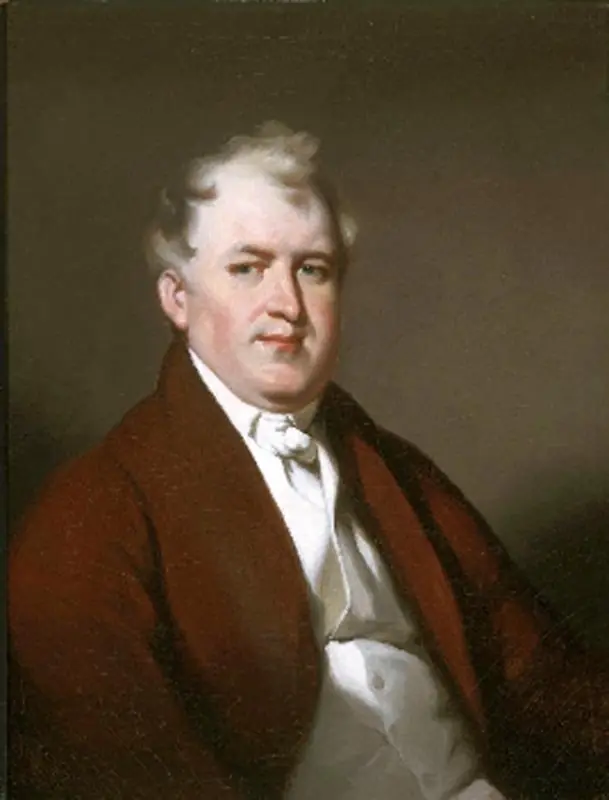
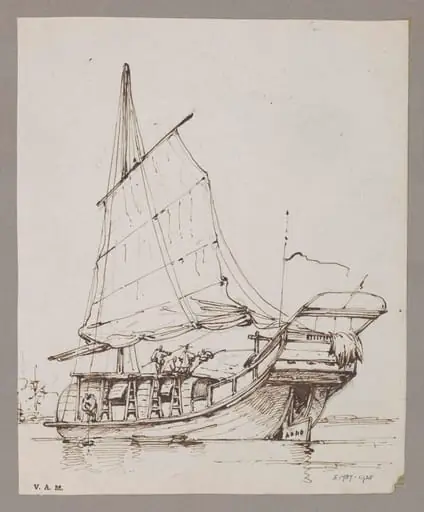 A Chinese junk with sail set
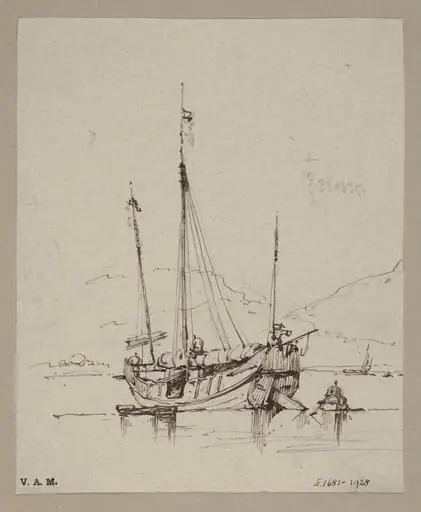 A Chinese junk with sail furled
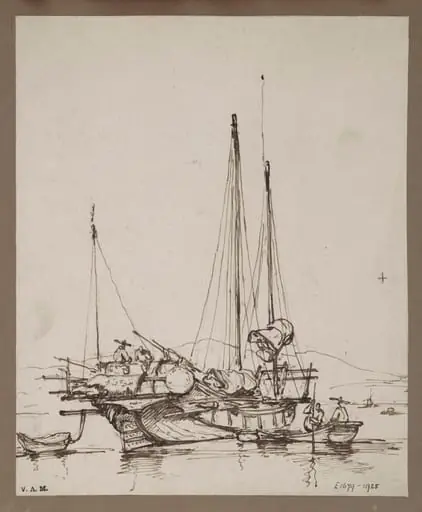 A drawing by George Chinnery of aA Chinese junk, with figures aboard and small craft alongside
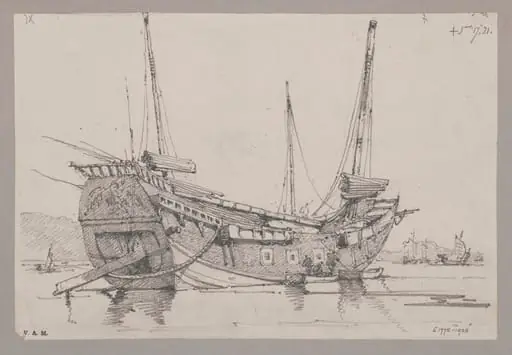 Old Chinese Junk
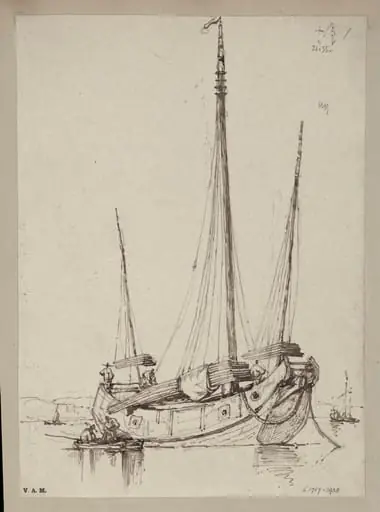 A junk hauling planks aboard
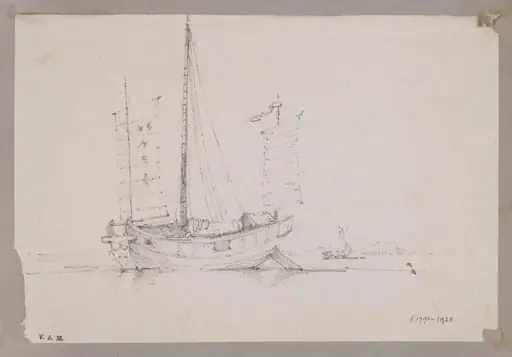 A Chinese junk
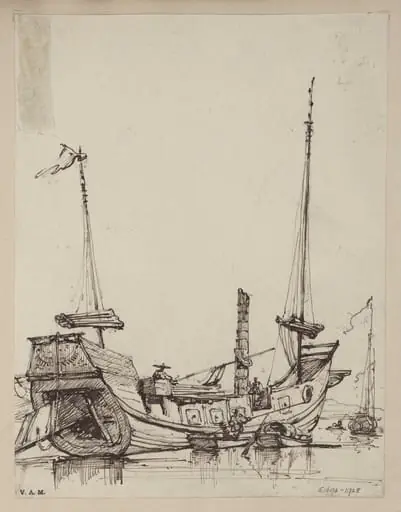 A junk undergoing repairs
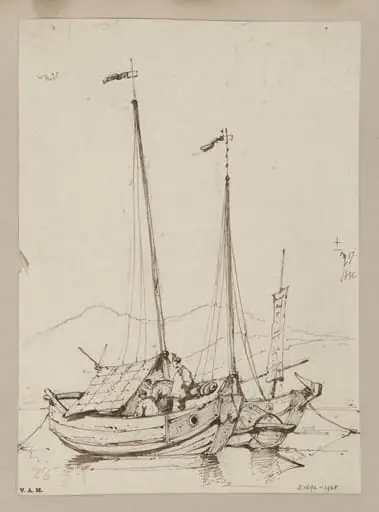 Two small junks at anchor, Macau
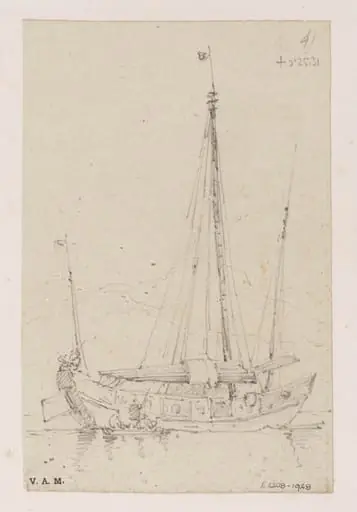 A three-masted junk with a smaller boat alongside
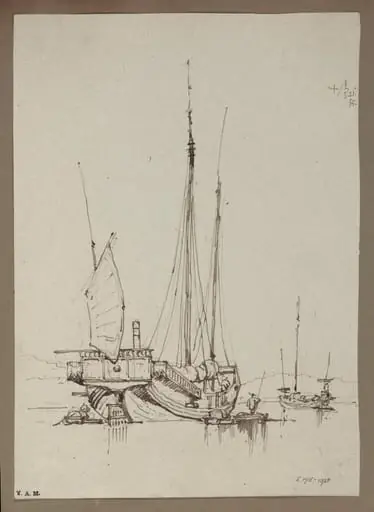 Untitled
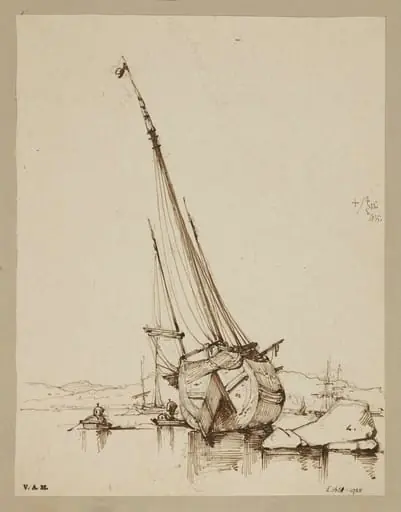 A junk grounded in shallow water, Macau
 Untitled