Artwork
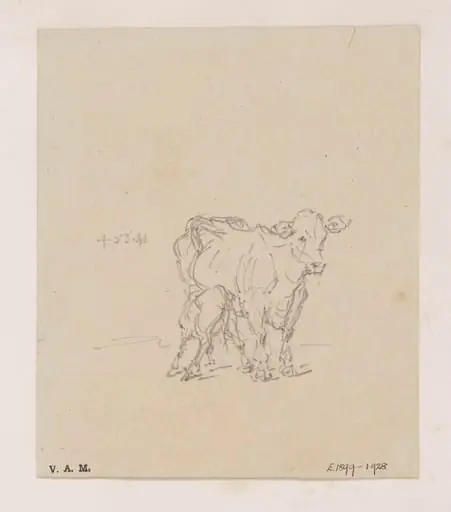
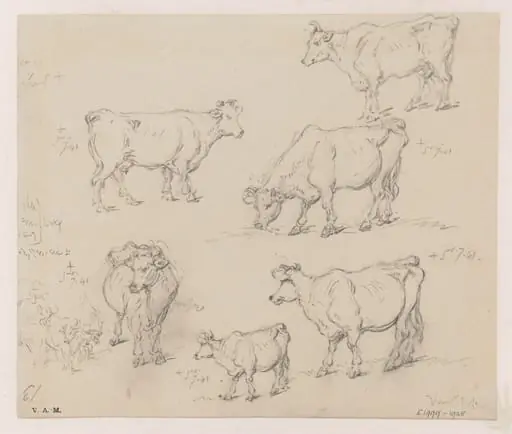
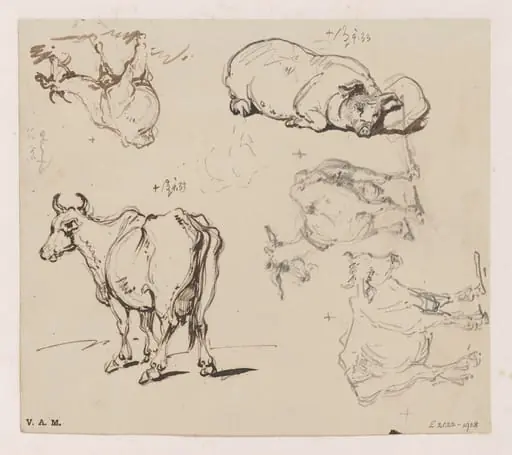
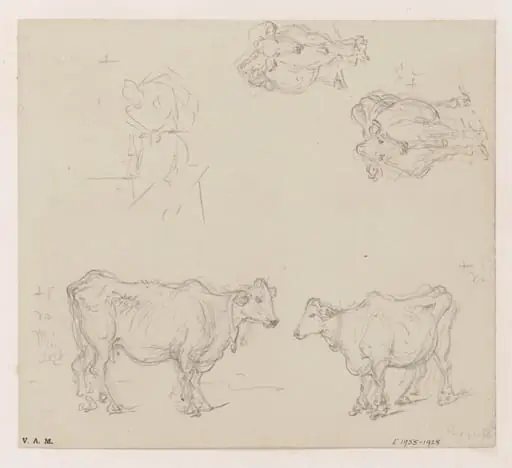
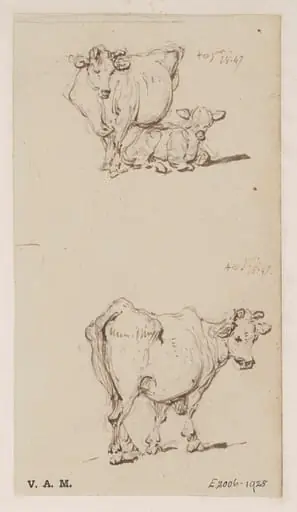
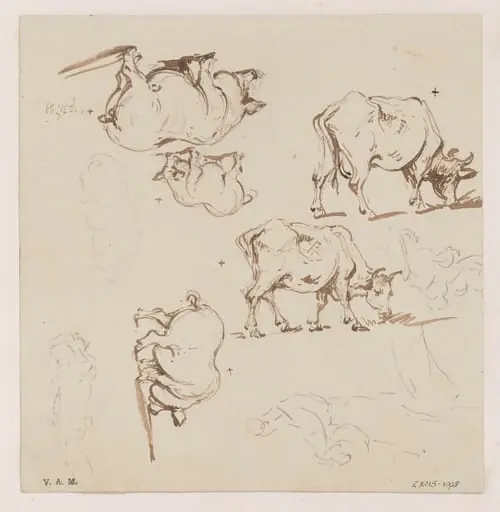
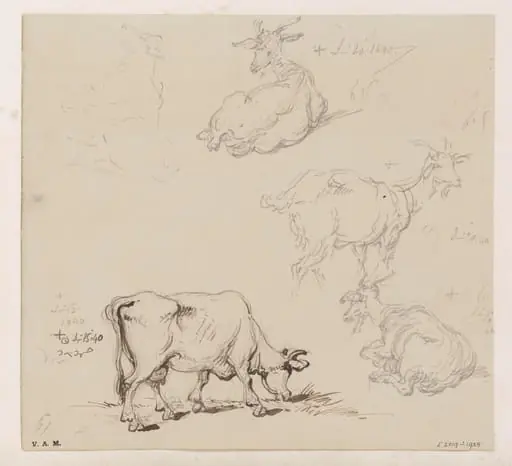
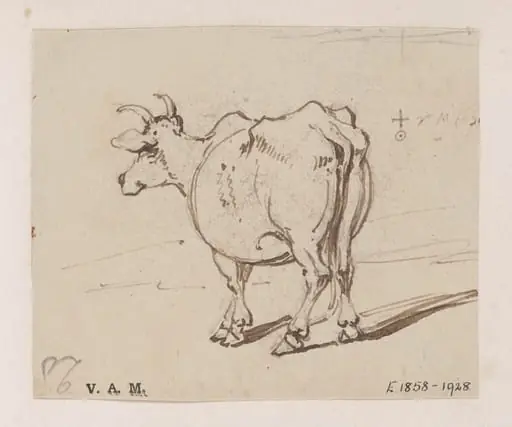
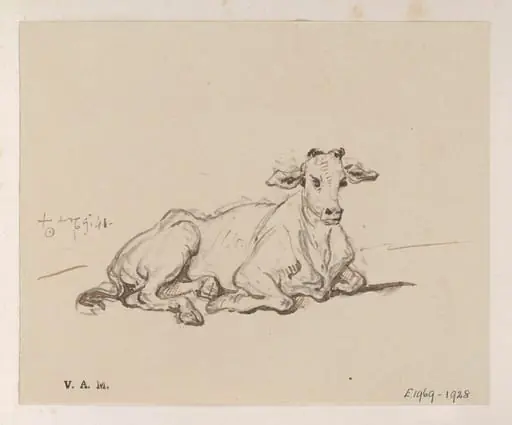
A cow and calf, with other sketches
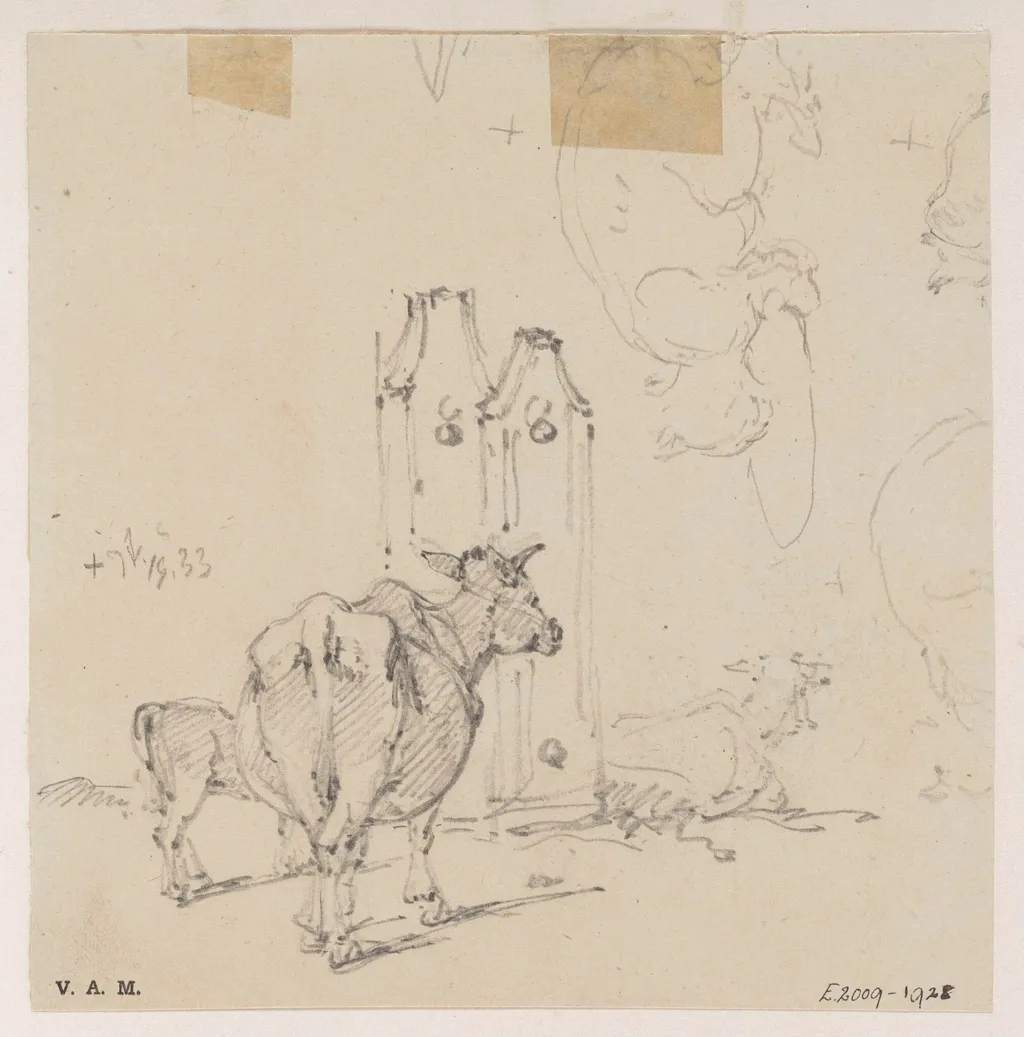
A cow and calf, with other sketches is a drawing by the Romanticist artist George Chinnery. It dates from 10 and is held in the collection of the Victoria and Albert Museum.
About this work
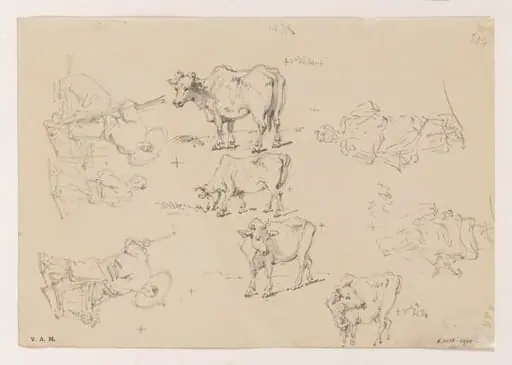
George Chinnery drew a cow and calf standing by two posts in 1833. The drawing is simple, just a few quick marks for other animals at the edges.
The sketch feels alive because the cow and calf look calm and real. Chinnery kept it loose but clear, using just pencil lines.
Look up the Victoria and Albert Museum for more works like this.
Overview
Created in 1833, this pencil drawing by George Chinnery depicts a cow and her calf standing near two vertical posts. The composition is uncluttered, with only faint, partial outlines of other animals visible at the margins, suggesting spontaneous observation. The work is one of many informal studies Chinnery made during his time in Asia, capturing everyday rural scenes with quiet attention.
Subject & Meaning
The cow and calf are rendered with a sense of stillness and mutual presence, emphasizing their natural bond. No narrative or symbolism is imposed; the focus is on the quiet dignity of ordinary livestock. The cropped figures at the edges imply the scene extends beyond the page, reinforcing the sketch’s role as a direct record of observation rather than a finished composition.
Technique & Style
Chinnery employed loose, economical pencil strokes to define form without detail. The cow’s bulk and the calf’s delicate posture are suggested through minimal lines, avoiding heavy shading or contouring. This restrained approach reflects his practice of rapid field sketching, prioritizing immediacy and movement over polish, yet retaining clarity and anatomical accuracy.
History & Provenance
The drawing entered the Victoria and Albert Museum’s collection as part of a larger group of Chinnery’s works acquired after his death. It was likely made during his years in southern China and India, where he regularly documented local life. Its modest scale and unfinished quality align with his habit of keeping private studies separate from commissioned pieces.
Context
In the early 1830s, Chinnery lived in Macau and Guangzhou, where European artists had limited access to formal studios. He turned to sketching the surrounding landscape and animals as a way to engage with his environment. This drawing reflects a broader trend among expatriate artists to record daily scenes outside colonial centers, often with personal, unidealized sensitivity.
Legacy
Chinnery’s informal sketches, including this one, remain valuable for their unembellished view of 19th-century rural life in Asia. They offer insight into his working method and the quiet observational habits of Western artists abroad. Though not widely exhibited, they inform scholarly understanding of cross-cultural visual practices during the colonial era.
Artist & collection
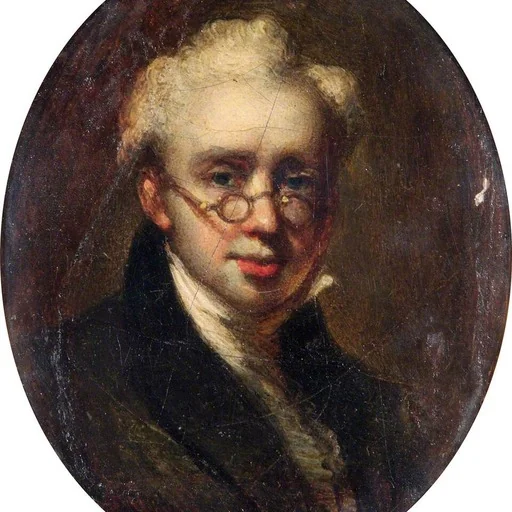
Artist
George Chinnery (Chinese: 錢納利; 5 January 1774 – 30 May 1852) was an English painter who spent most of his life in Asia, especially India and southern China.