Artwork
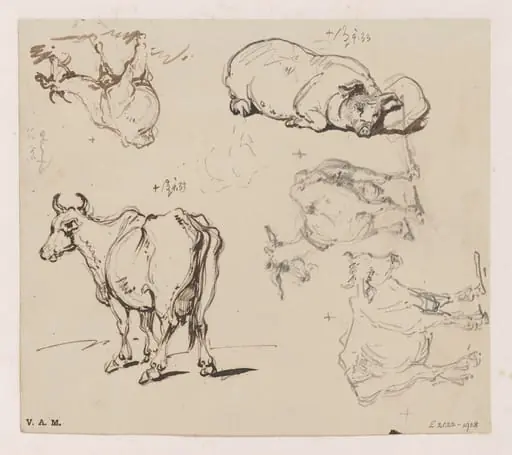
A cow and three pigs
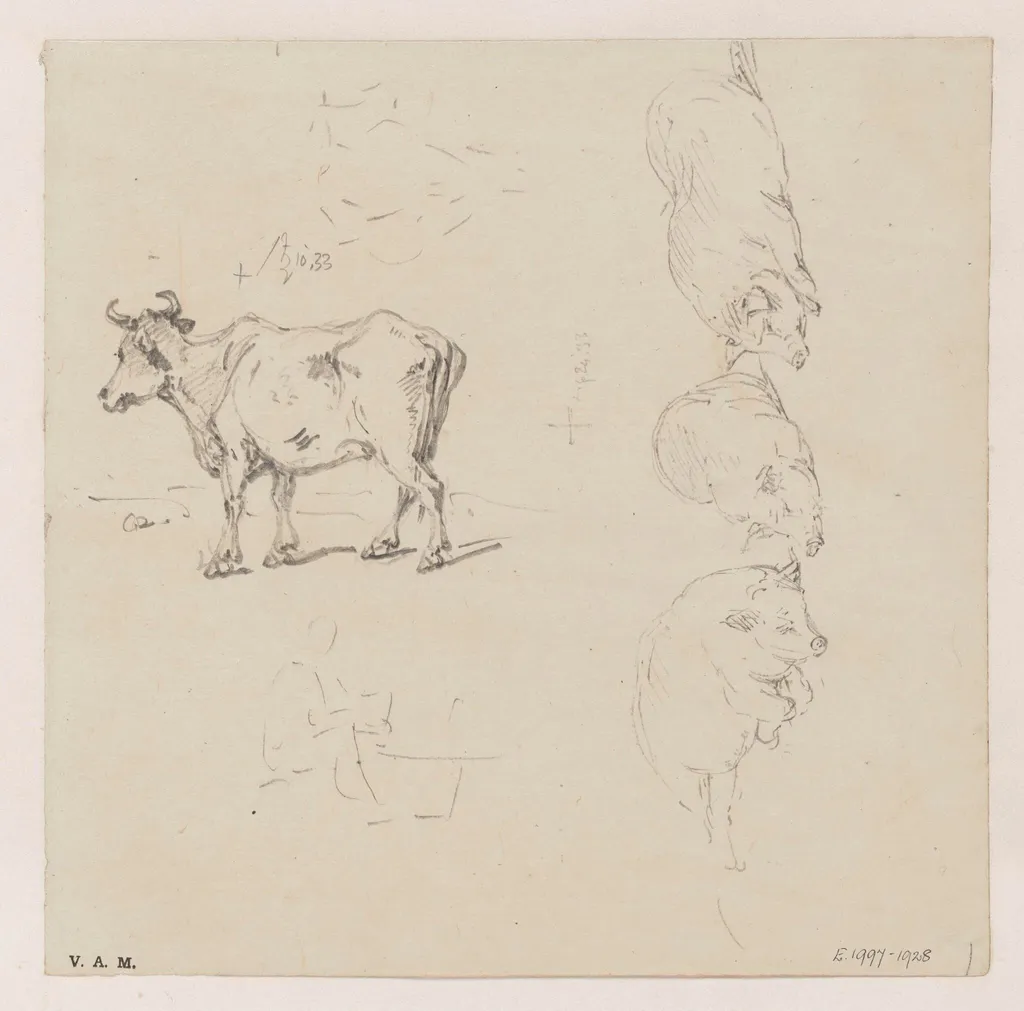
A cow and three pigs is a drawing by the Romanticist artist George Chinnery. It dates from 16 and is held in the collection of the Victoria and Albert Museum.
About this work
It’s a simple scene, but Chinnery worked fast—he finished the whole piece in less than a month.
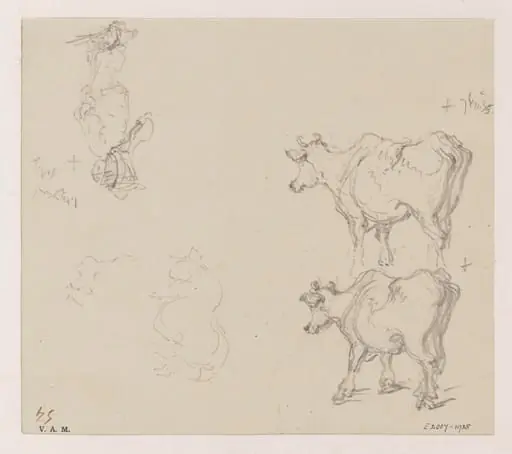
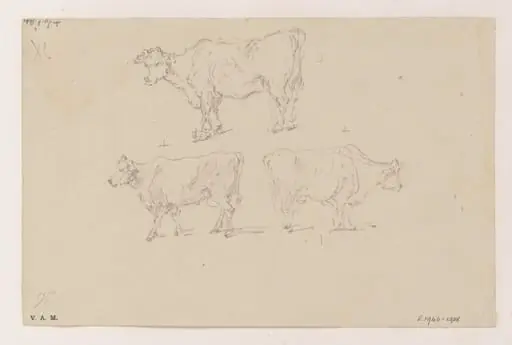
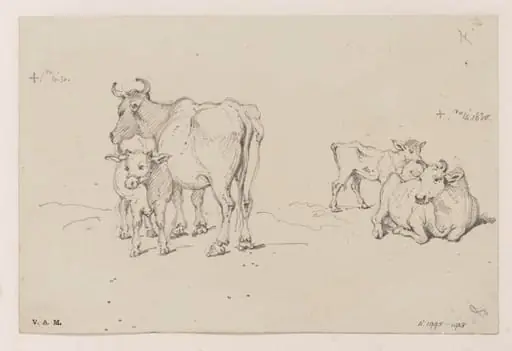
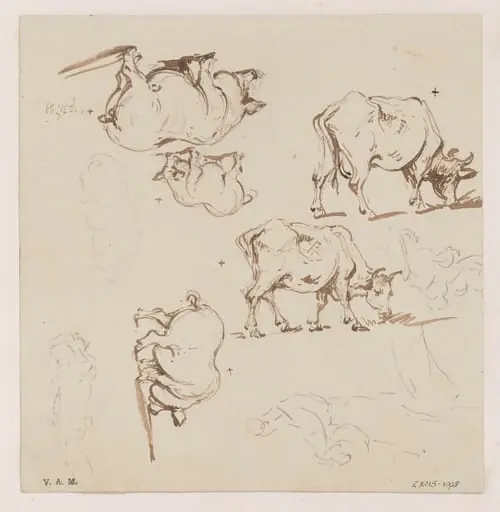
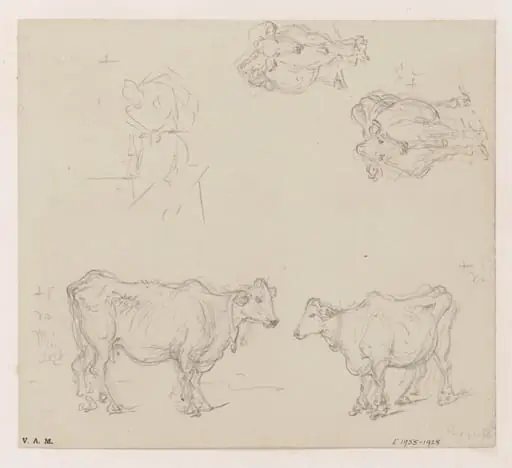
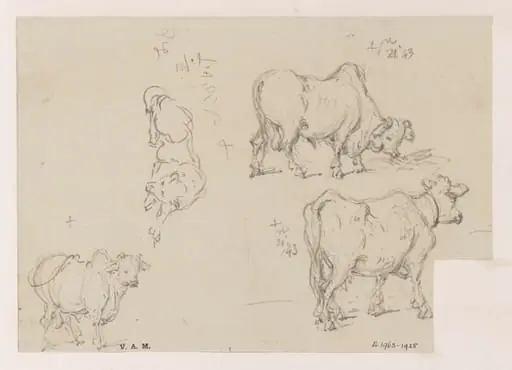
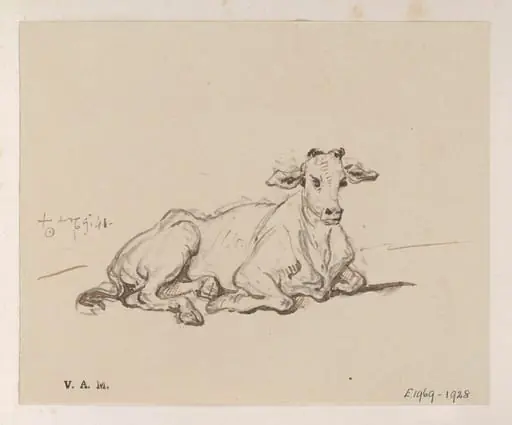
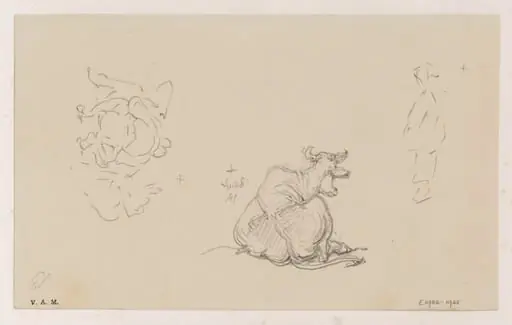
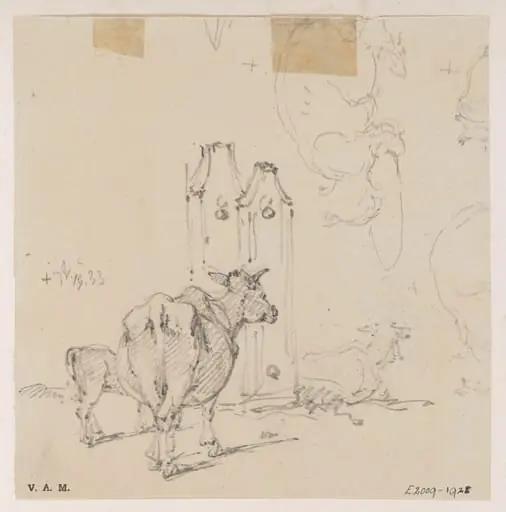
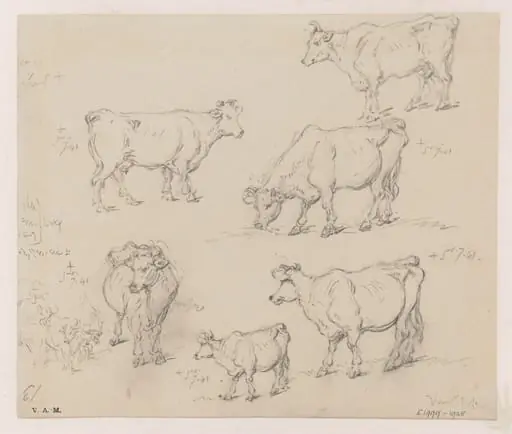
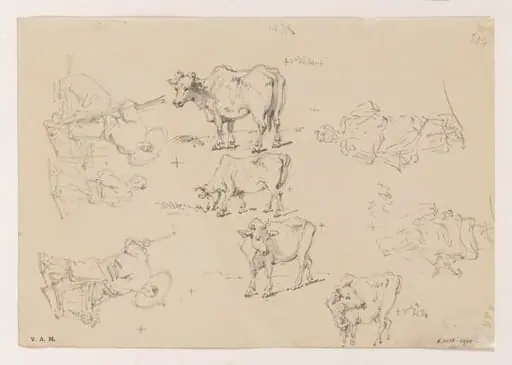
George Chinnery drew a cow standing tall beside three pigs lying down. He made this work in 1833 using just a pencil or pen. The museum says there are also two quick sketches in the same drawing.
It’s a simple scene, but Chinnery worked fast—he finished the whole piece in less than a month. The drawing shows the animals in peaceful poses, with light touches for shading.
Check out more of George Chinnery’s work next.
Overview
Created in 1833, this pencil or pen drawing by George Chinnery depicts a single standing cow alongside three recumbent pigs. Two additional faint sketches accompany the main composition, suggesting spontaneous observation. The entire work was completed in under a month, reflecting Chinnery’s rapid, direct approach to capturing form and movement in rural life.
Subject & Meaning
The animals are rendered in calm, natural postures—standing and lying—without narrative or symbolism. The scene reflects everyday rural observation rather than allegory. Chinnery’s focus on ordinary livestock suggests an interest in the quiet rhythms of agricultural life, valued for its simplicity rather than its grandeur.
Technique & Style
Chinnery used minimal, light pencil or pen strokes to define the animals’ forms, relying on subtle shading to suggest volume and texture. The lines are swift yet deliberate, capturing posture and weight without detail. The inclusion of tentative sketches around the main figures reveals a working process rooted in immediate observation and revision.
History & Provenance
The drawing was made during Chinnery’s time in Asia, where he documented local scenes and animals with the same attentiveness he applied to portraits and landscapes. Its survival as a standalone sheet indicates it was likely kept as a study or personal record, not intended for public display at the time of creation.
Context
Chinnery’s work in the 1830s often blended European drawing traditions with subjects from his surroundings in India and China. This piece aligns with his broader practice of recording domestic animals and rural settings, reflecting both his training and his immersion in Asian environments far from his British origins.
Legacy
Though modest in scale, the drawing exemplifies Chinnery’s ability to convey presence and stillness with economy. It contributes to understanding his sketchbook culture—where fleeting moments of daily life were preserved with quiet precision, offering insight into his artistic process beyond formal commissions.
Own this work as a print
Artist & collection
Artist
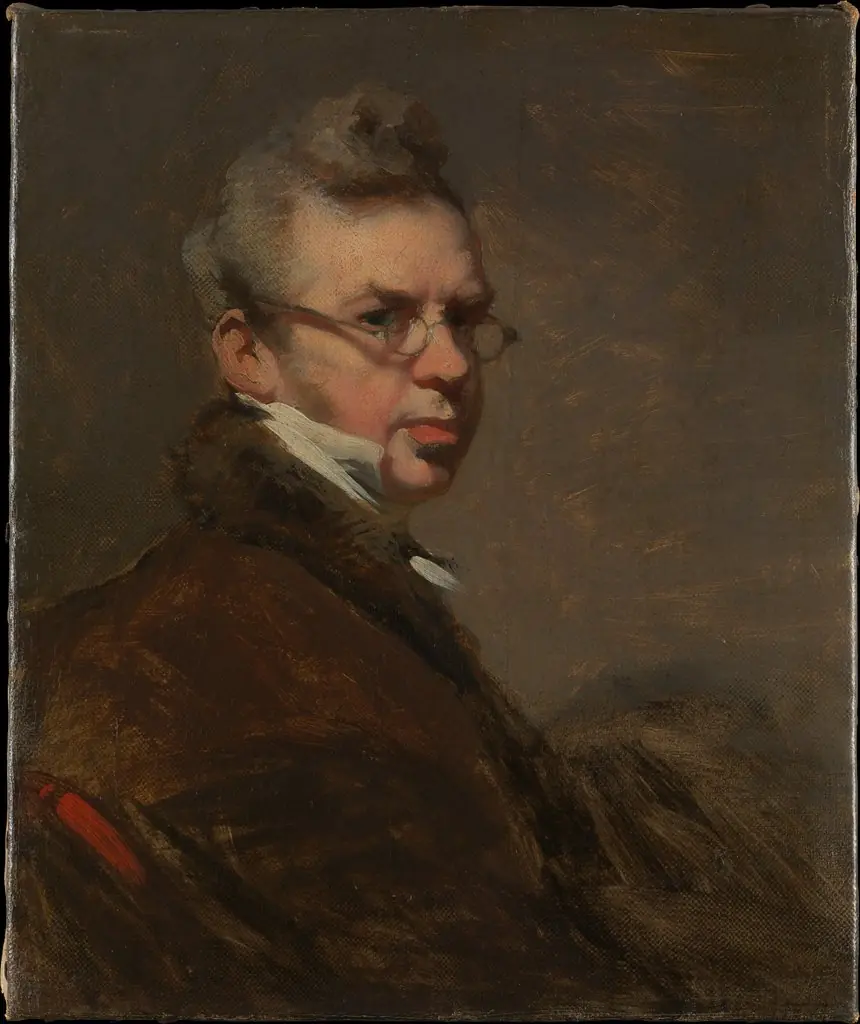
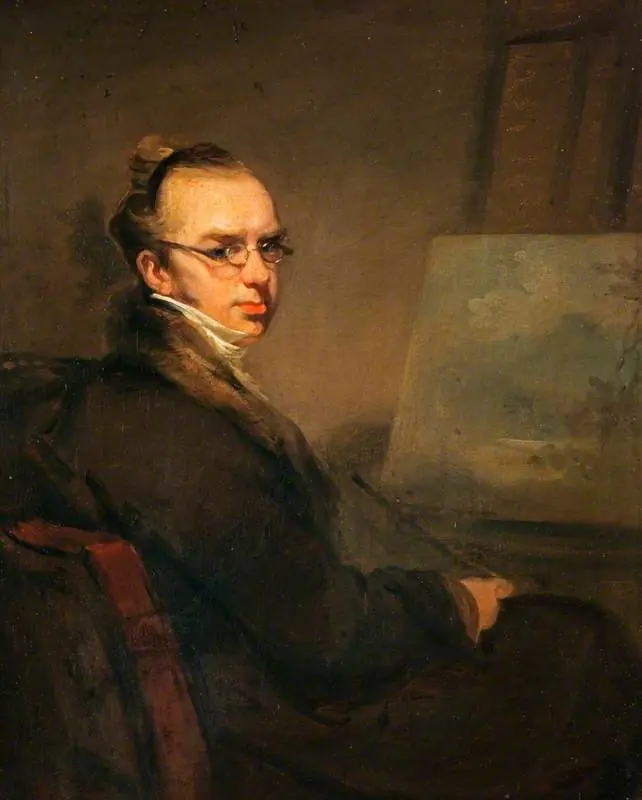
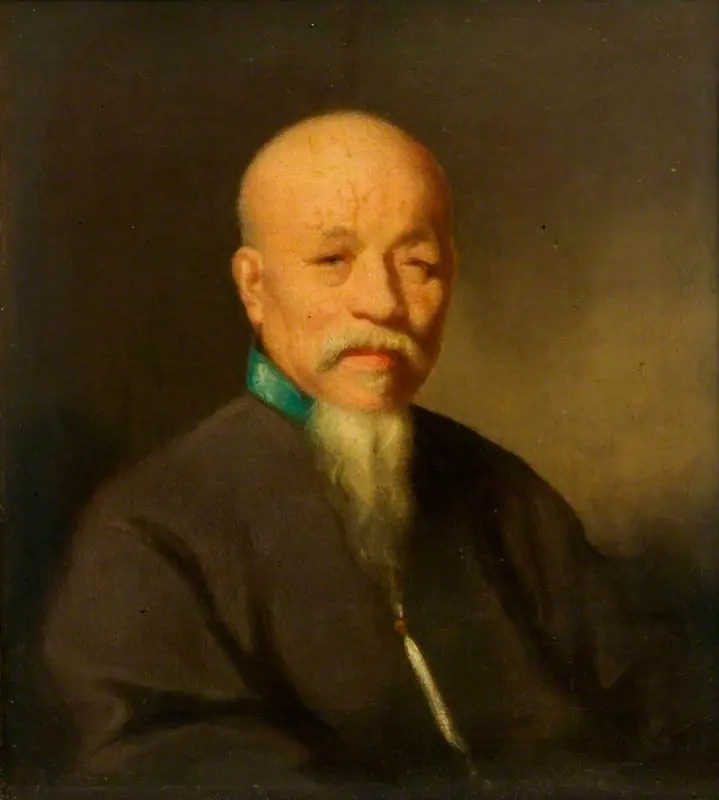
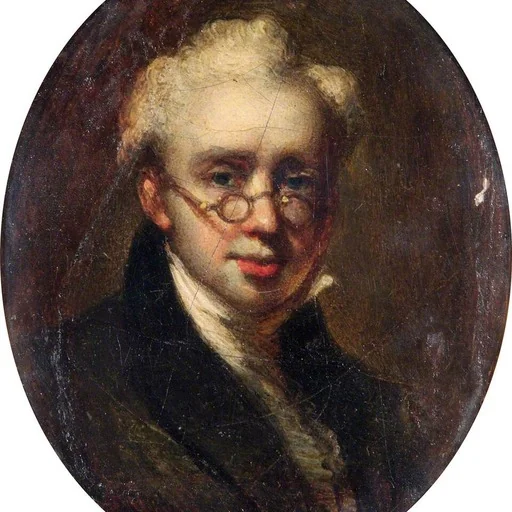
George Chinnery (Chinese: 錢納利; 5 January 1774 – 30 May 1852) was an English painter who spent most of his life in Asia, especially India and southern China.