Artwork
A Tanka boat with a figure operating a lift net
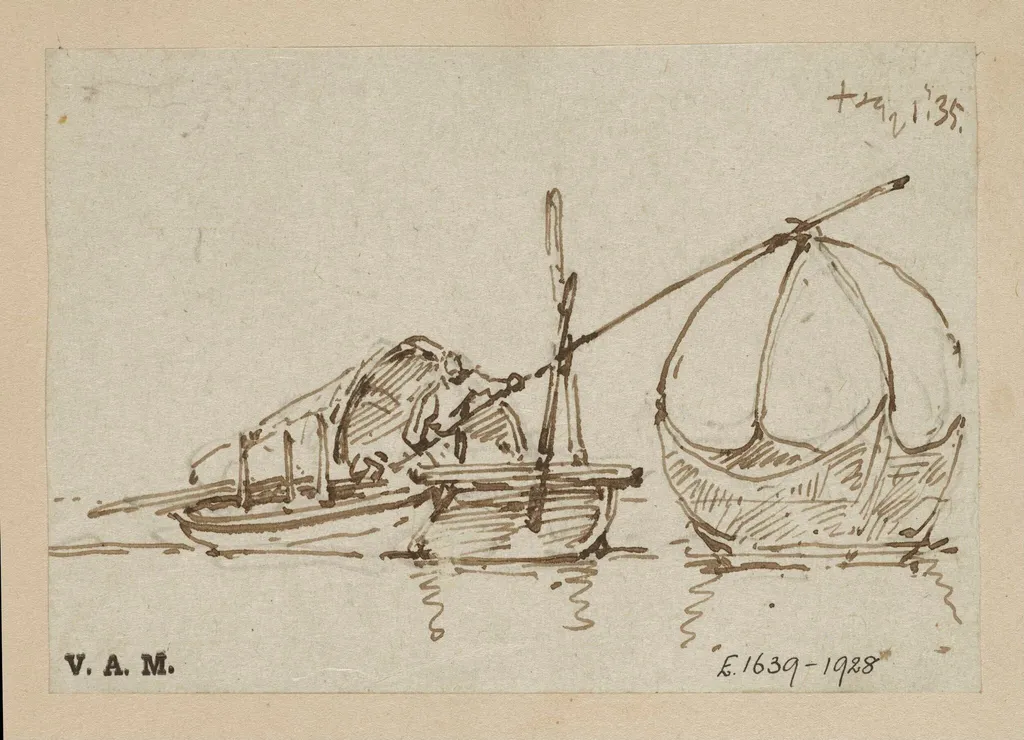
A Tanka boat with a figure operating a lift net is a drawing by the Romanticist artist George Chinnery. It dates from 6 and is held in the collection of the Victoria and Albert Museum.
About this work
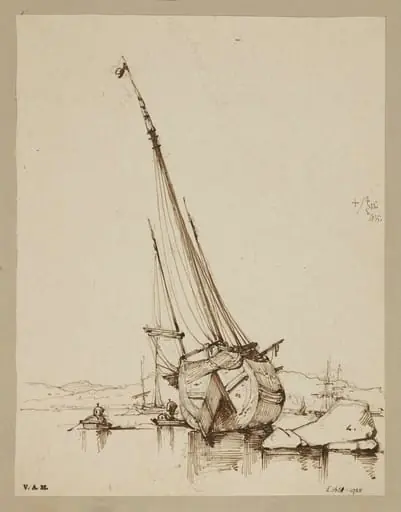
George Chinnery drew this scene in 1835. It shows a person in a small Tanka boat, working with a net on a pole. The drawing captures a quiet moment on the water.
Tanka boats were used by fishermen in southern China. The net hangs just below the surface, ready to catch fish. Chinnery spent years in Asia, so he knew these details well.
Check out more of Chinnery’s work next.
Overview
This 1835 drawing by George Chinnery depicts a Tanka fisherman in a small, narrow boat, engaged in the act of operating a lift net. Executed in pencil or ink, the work captures a moment of quiet labor on the water. Chinnery, who lived in southern China for decades, observed such scenes firsthand, rendering them with attention to local detail rather than exoticism.
Subject & Meaning
This method, used by the Tanka people of coastal Guangdong and Hong Kong, reflects a traditional fishing technique passed through generations.
The figure, positioned at the stern, manipulates a long pole supporting a net suspended just beneath the water’s surface. This method, used by the Tanka people of coastal Guangdong and Hong Kong, reflects a traditional fishing technique passed through generations. The image conveys neither drama nor spectacle, but the routine rhythm of subsistence work, emphasizing the intimate relationship between the fisher and their environment.
Technique & Style
Chinnery employs a restrained, linear approach, using fine strokes to define the boat’s form, the pole, and the net’s tension. The composition is spare, with minimal background, focusing attention on the figure’s posture and the mechanics of the net. The drawing’s precision suggests direct observation, with no embellishment—consistent with Chinnery’s documentary approach to his subjects.
History & Provenance
Created during Chinnery’s extended residence in Macau and Guangzhou, the drawing is one of many records he made of daily life in southern China. It was likely part of a personal sketchbook, later acquired by institutions preserving his oeuvre. Its pairing with E.1632-1928 indicates it was cataloged alongside similar works documenting regional fishing practices.
Context
The Tanka were a marginalized maritime community in southern China, living on boats and specializing in fishing. Their methods, including the lift net, were adapted to shallow coastal waters. Chinnery’s drawings offer rare visual documentation of their lives during the early 19th century, a time of increasing foreign presence in the region but limited ethnographic interest from outsiders.
Legacy
Chinnery’s drawings serve as historical records of a way of life that has since diminished. His work, though not widely exhibited in his lifetime, provides valuable insight into the material culture and labor practices of coastal communities in pre-modern China. These images remain referenced by scholars studying maritime traditions and cross-cultural observation in colonial-era Asia.
Artist & collection

Artist
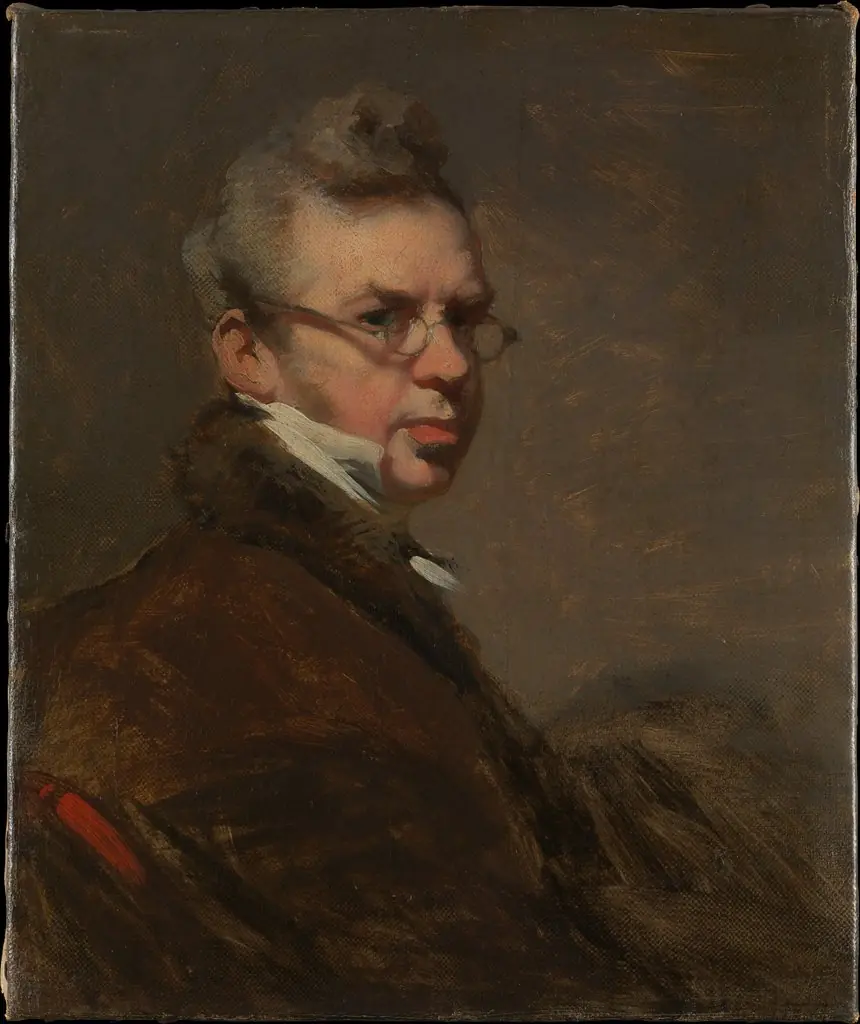
George Chinnery (Chinese: 錢納利; 5 January 1774 – 30 May 1852) was an English painter who spent most of his life in Asia, especially India and southern China.





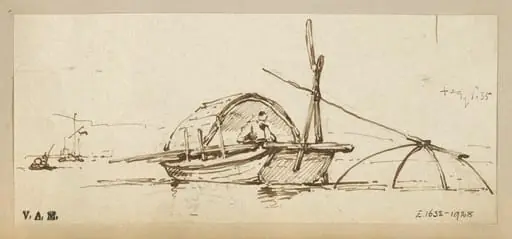 A Tanka boat, Macau, with a lift net lowered into the water
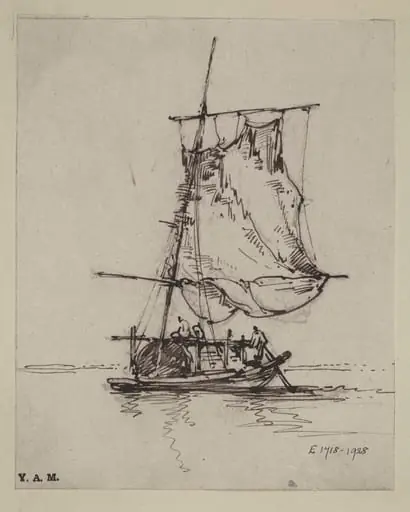 A drawing by George Chinnery of a Tanka boat with a large sail or net raised
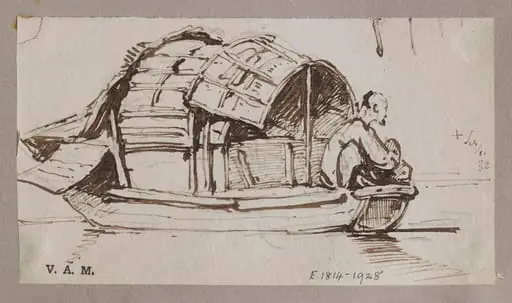 A Tanka boat with a figure seated in the stern
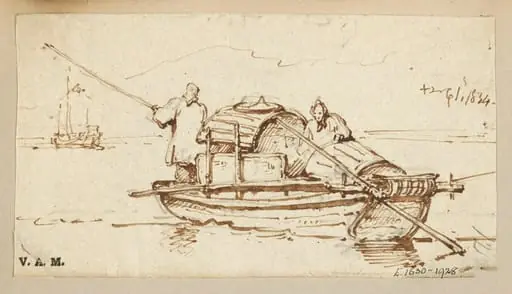 A Tanka boat with two boatwomen
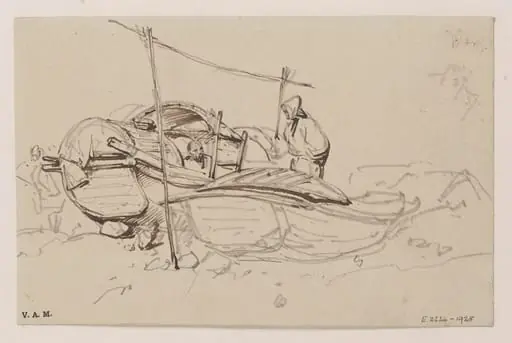 Untitled
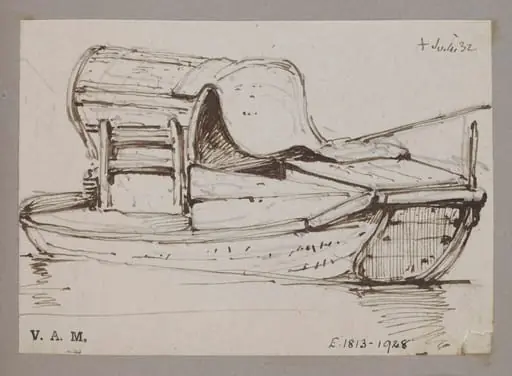 A Tanka boat
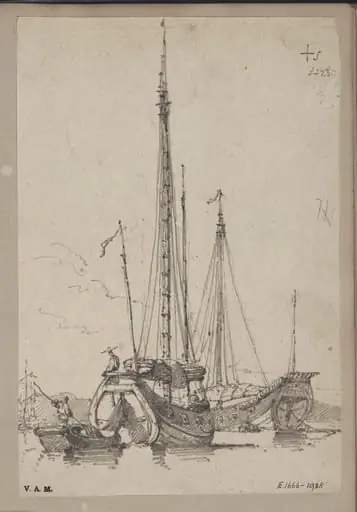 Two junks and a Tanka boat
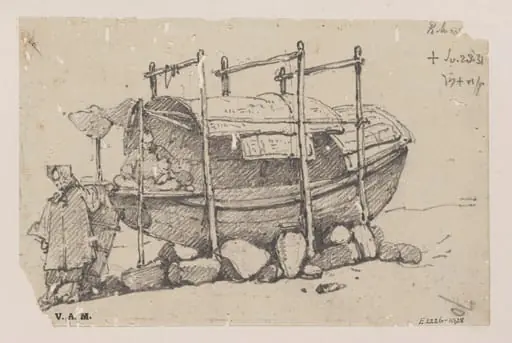 Figures by a beached Tanka boat
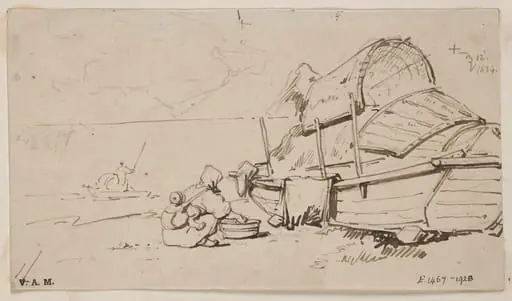 A boatwoman and child beside a beached Tanka boat
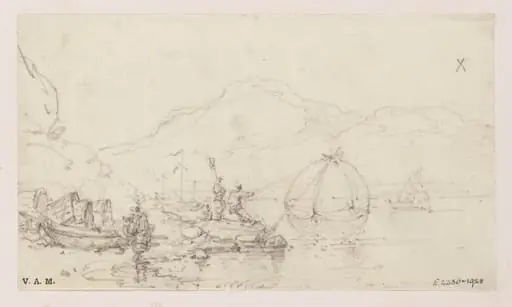 Fishermen by a beached Tanka boat, Macau
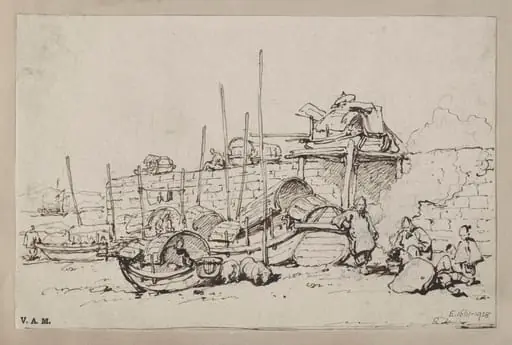 Tanka boats and boatpeople on the beach by the sea wall, Macau
 A junk grounded in shallow water, Macau