Artwork
An Indian cow, and a goat
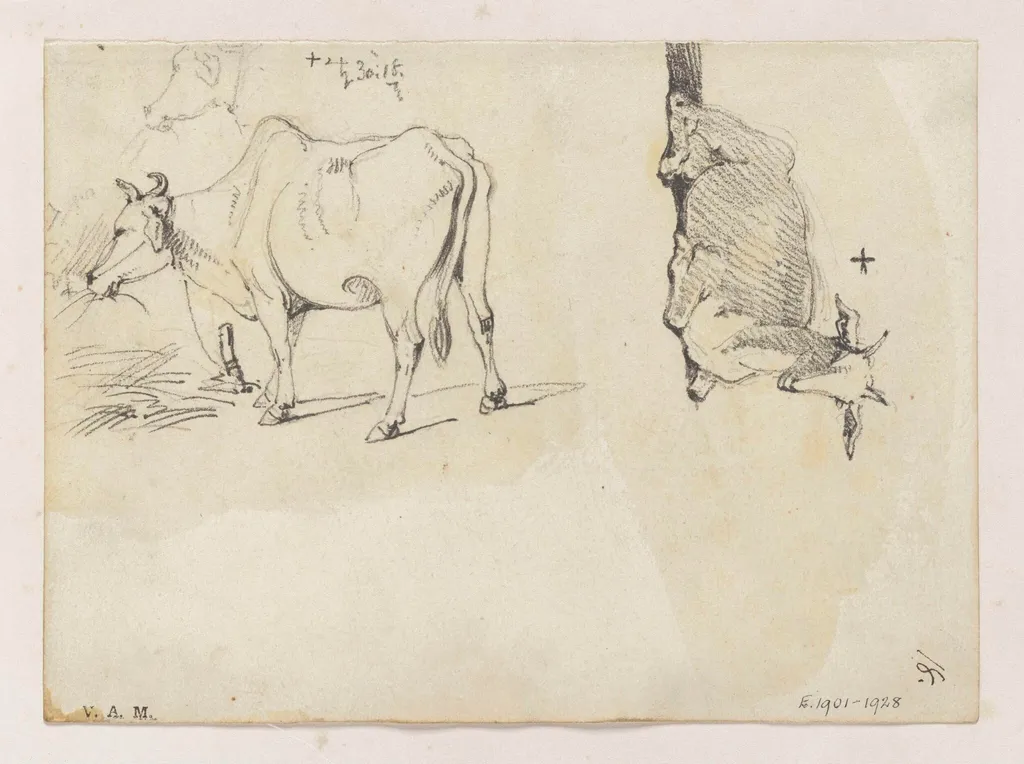
An Indian cow, and a goat is a drawing by the Romanticist artist George Chinnery. It dates from 20 and is held in the collection of the Victoria and Albert Museum.
About this work
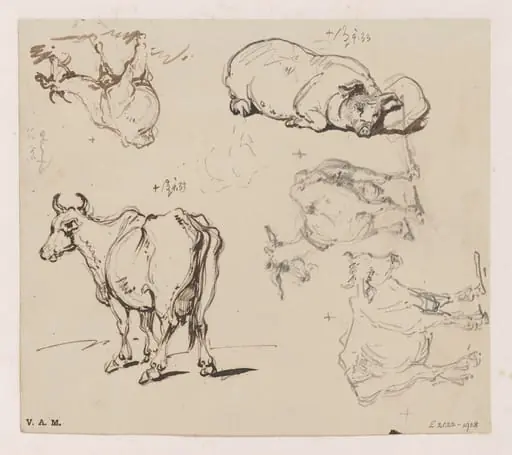
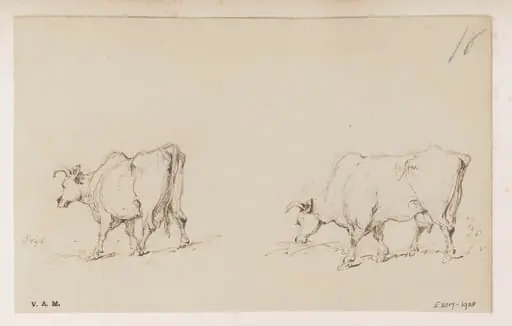
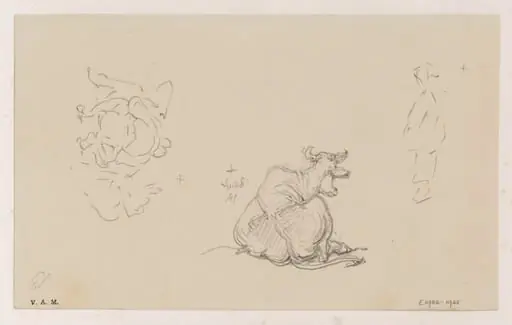
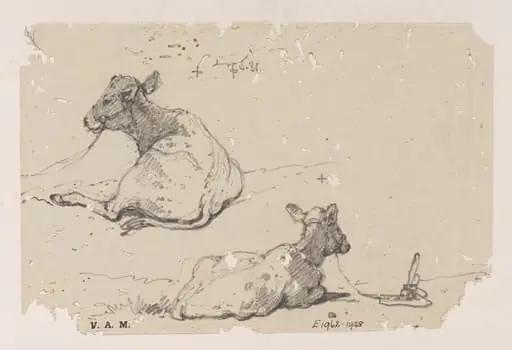
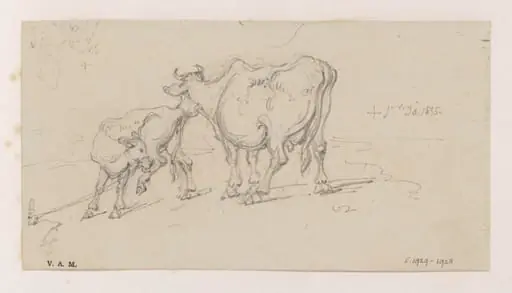
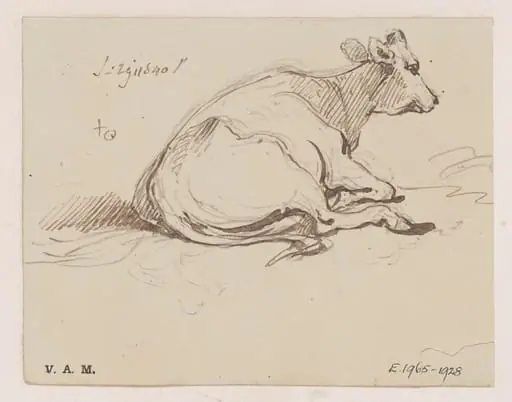
George Chinnery drew two animals in 1818. One sheet shows a tethered cow and a quick sketch of its head. At a right angle sits a goat resting on the ground.
This was made during the Romantic period, when artists favored close looks at nature and everyday life. Chinnery often sketched outdoors in India, capturing animals and people quickly.
Next time, check the Victoria and Albert Museum.
Overview
One sheet features a tethered cow alongside a loose study of its head; adjacent, rotated at a right angle, is a goat depicted in a reclining posture.
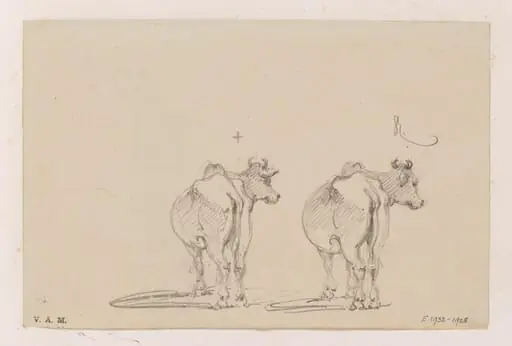
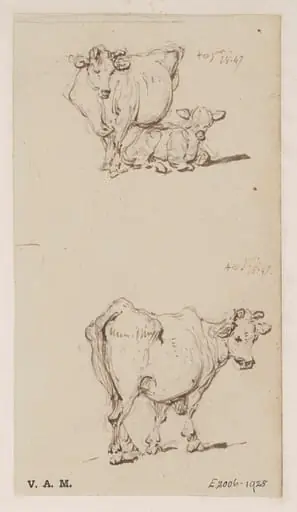
George Chinnery created two ink drawings in 1818, both depicting domestic animals observed in India. One sheet features a tethered cow alongside a loose study of its head; adjacent, rotated at a right angle, is a goat depicted in a reclining posture. These quick, observational sketches reflect Chinnery’s habit of recording everyday scenes during his time in South Asia, prioritizing immediacy over formal composition.
Subject & Meaning
The cow and goat are rendered without symbolic embellishment, emphasizing their physical presence rather than cultural or religious associations. Their quiet, unposed states suggest an interest in animal behavior and anatomy, aligning with Romantic-era attention to the natural world. Chinnery’s focus on ordinary livestock reflects a broader shift toward documenting the mundane as worthy of artistic attention.
Technique & Style
Chinnery employed fluid ink lines with minimal shading, capturing form through swift, confident strokes. The cow’s tether and the goat’s relaxed limbs are suggested rather than meticulously detailed, revealing a sketchbook sensibility. The orientation of the goat, turned at 90 degrees to the cow, indicates spontaneous composition, likely drawn on-site without revision.
History & Provenance
These drawings originated during Chinnery’s decades-long residence in India, where he produced hundreds of sketches from life. They entered the Victoria and Albert Museum’s collection as part of a larger archive of his Indian works, preserved for their ethnographic and artistic value rather than as finished pieces.
Context
Created during the Romantic period, the drawings align with a European artistic trend favoring direct observation of nature and rural life. Chinnery’s practice diverged from studio-based idealism, instead embracing the immediacy of sketching outdoors in colonial India, where animals were integral to daily existence and transport.
Legacy
Chinnery’s animal studies remain significant as records of visual documentation in 19th-century colonial India. Though not intended as major works, they offer insight into his working methods and the quiet rhythms of everyday life, influencing later artists who valued sketching as a form of direct engagement with the world.
Artist & collection
Artist
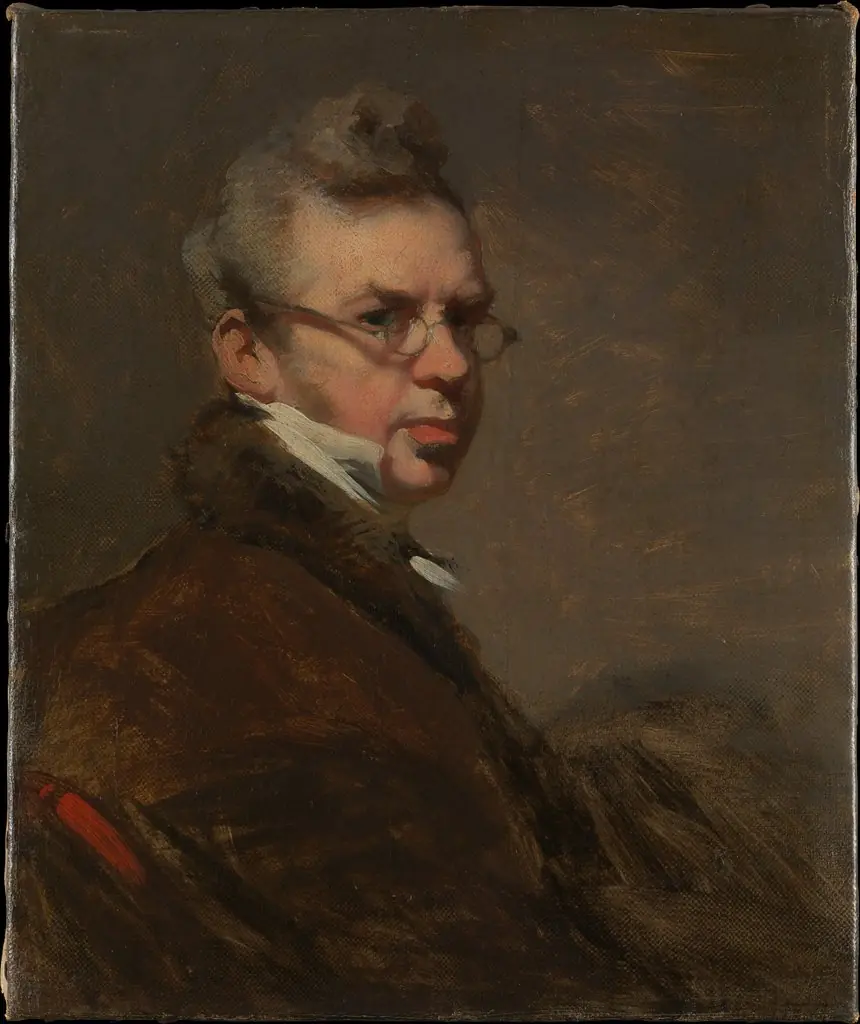
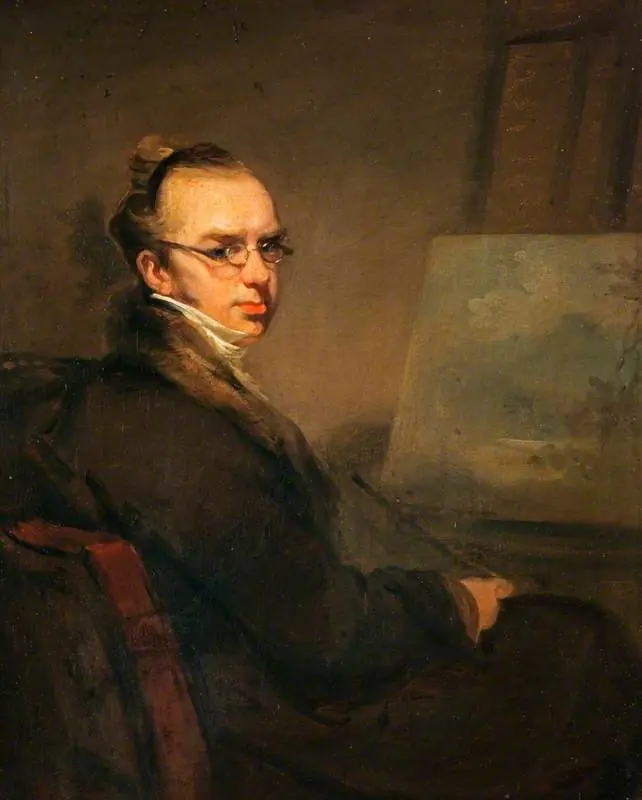
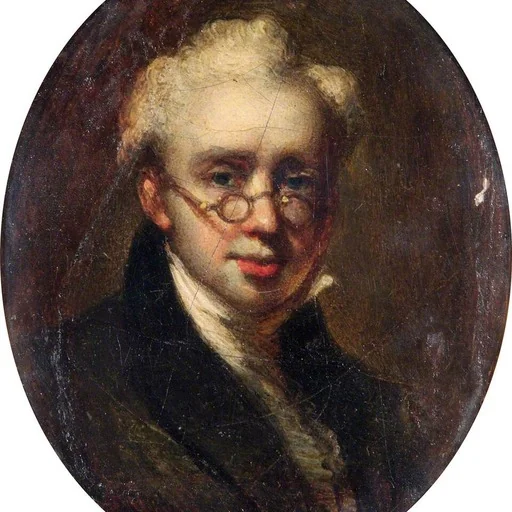
George Chinnery (Chinese: 錢納利; 5 January 1774 – 30 May 1852) was an English painter who spent most of his life in Asia, especially India and southern China.