Artwork
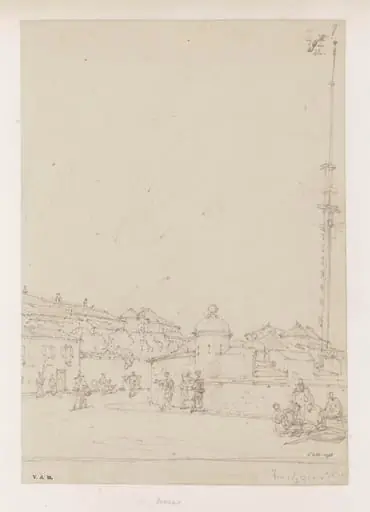
Church of S. Domingo, Macao
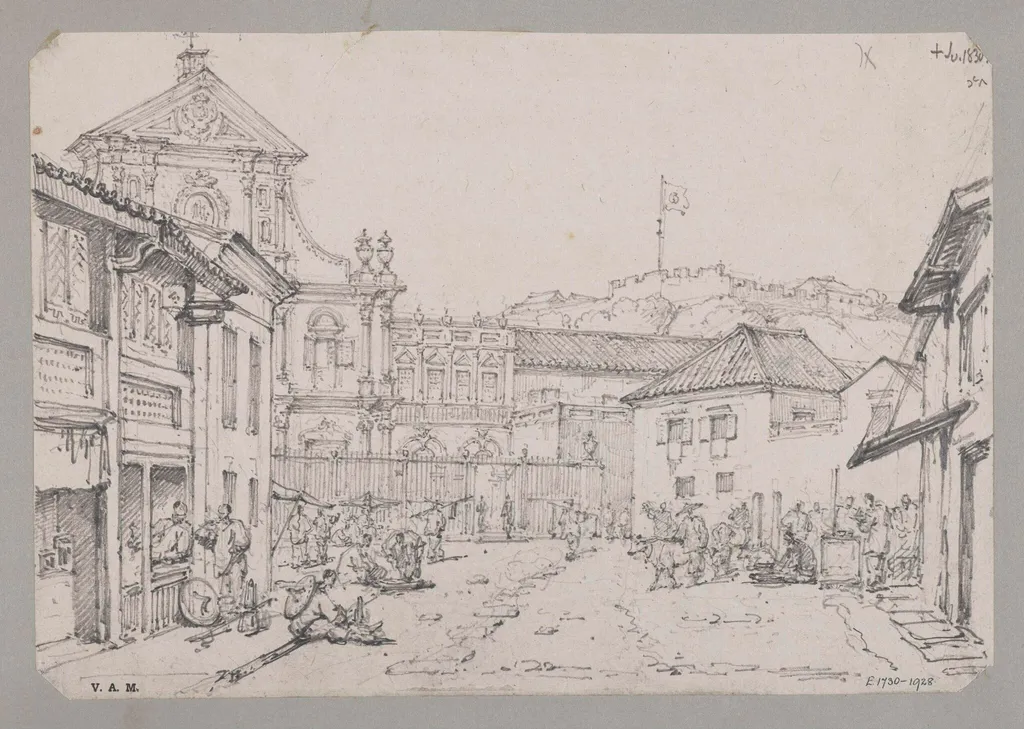
Church of S. Domingo, Macao is a drawing by the Romanticist artist George Chinnery. It dates from 4 and is held in the collection of the Victoria and Albert Museum. The drawing records a bustling street in Macau as it appeared in 1830, centered on the façade of the Church of São Domingos.
About this work
Romanticism often shows everyday life with drama in nature or places.
This drawing shows a street scene in Macao from 1830.
It’s a view of the front of S. Domingos Church.
Buildings block part of the church on the left side.
The street is busy with cowherds, vendors and shoppers.
On the hill behind, Fort Monte’s walls carry a Portuguese flag.
Romanticism often shows everyday life with drama in nature or places.
Chinnery used cross-hatching to make shadows and textures.
Look up the technique of cross-hatching.
Overview
The drawing records a bustling street in Macau as it appeared in 1830, centered on the façade of the Church of São Domingos. The church’s front is partially hidden by adjacent buildings, while the hill behind displays the ramparts of Fort Monte, topped with a Portuguese flag. The composition captures the everyday activity of cowherds, market vendors and pedestrians moving along the thoroughfare.
Subject & Meaning
Beyond its architectural focus, the work offers a snapshot of colonial Macau’s social fabric, juxtaposing religious architecture with the lively commerce of the street. The presence of the Portuguese flag on the fort underscores the city’s status as a European trading outpost, while the ordinary figures convey a sense of ordinary life under imperial influence.
Technique & Style
The artist employs fine cross‑hatching to render shadows, surface texture and the varied materials of stone, timber and cloth. This method, characteristic of early nineteenth‑century draughtsmanship, creates depth without reliance on colour. The balanced arrangement of architectural elements and human activity reflects Romantic interests in dramatizing everyday scenes within recognizable locales.
History & Provenance
Created in 1830, the drawing is attributed to the British‑Irish painter George Chinnery, who spent much of his career in China and Macau. It forms part of a series documenting the region’s urban landscape during a period of heightened European presence. The work has been preserved in museum collections that specialize in Asian colonial art, providing scholars with visual evidence of Macau’s built environment at that time.
Artist & collection
Artist
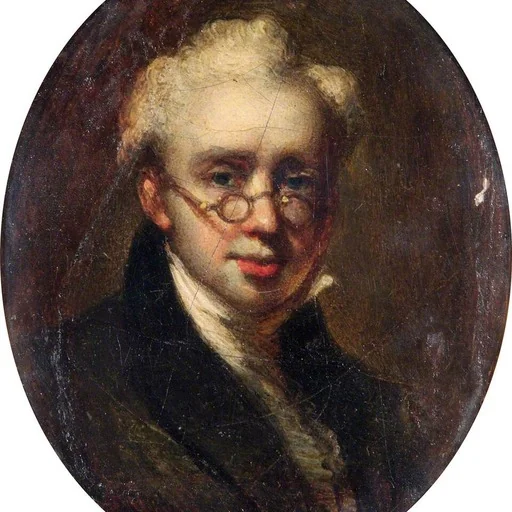
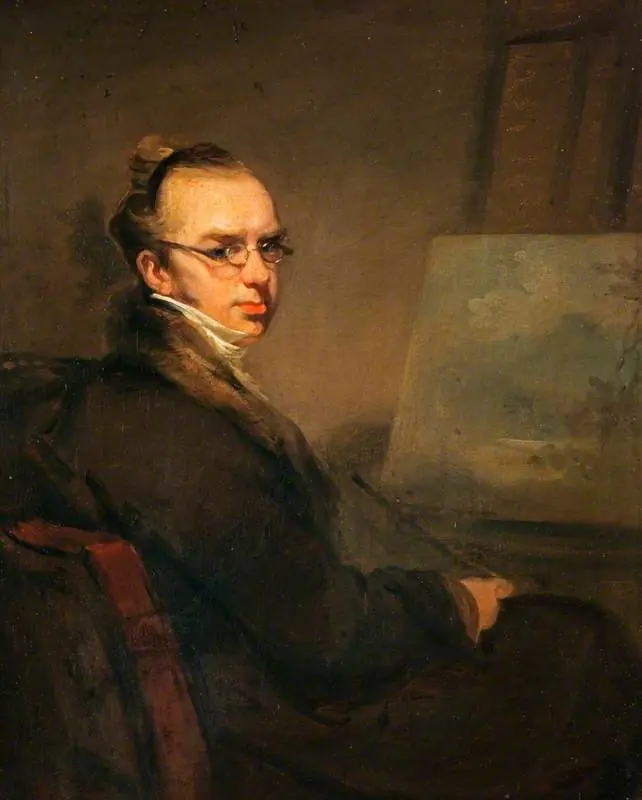
George Chinnery (Chinese: 錢納利; 5 January 1774 – 30 May 1852) was an English painter who spent most of his life in Asia, especially India and southern China.

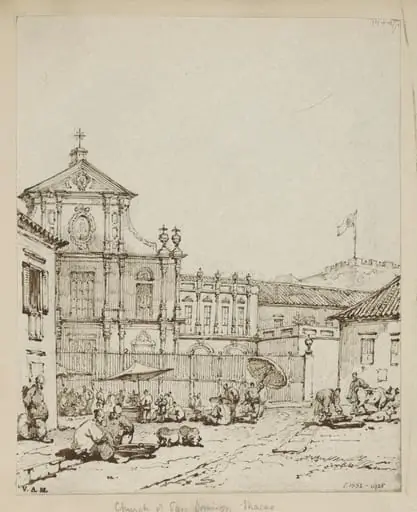 The church of S. Domingos, Macau
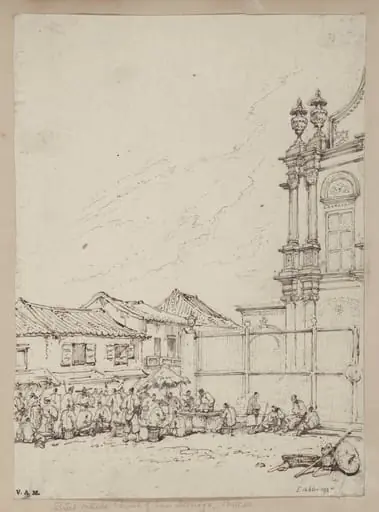 The street market outside the church of S. Domingos, Macau
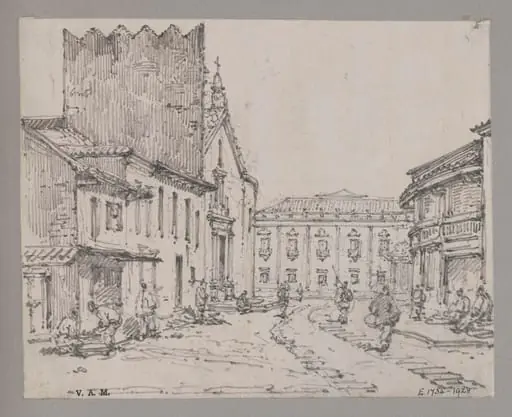 Misericordia Church and Senate House, Macao
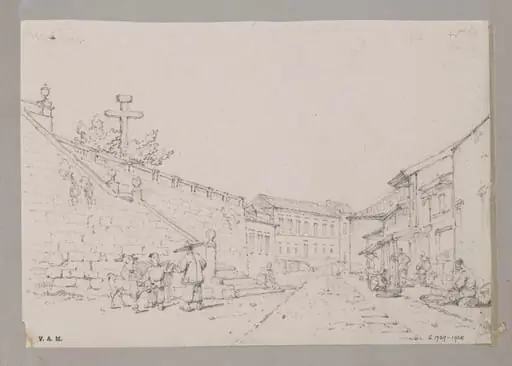 Mr. Baretto's House, Macao
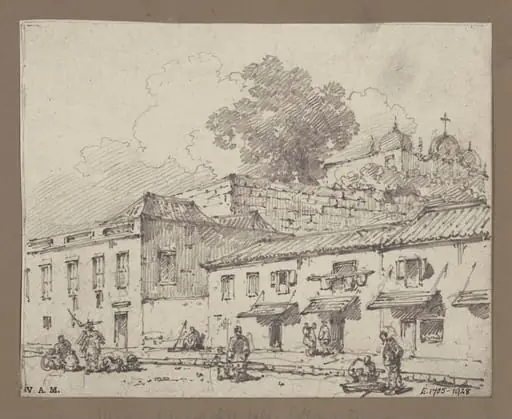 Houses below the church and college of S. José, Macau
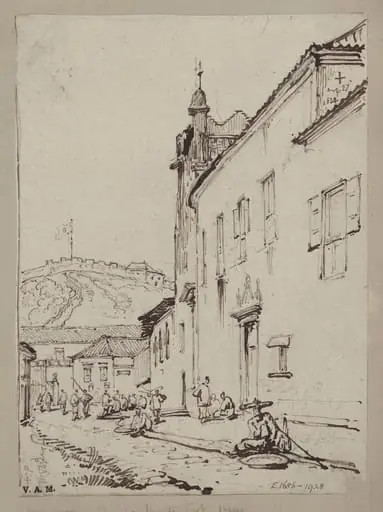 A view past the Misericordia Church towards Fort Monte, Macau
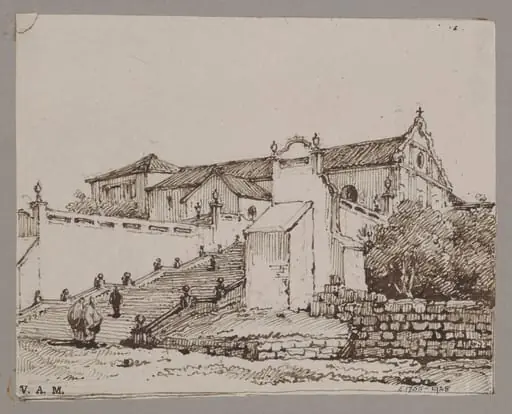 Franciscan Church, Macao
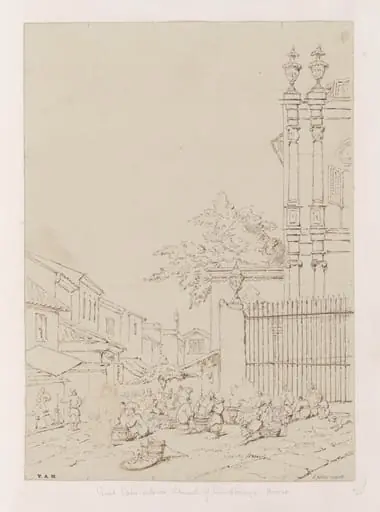 The market outside the church of S. Domingos, Macau
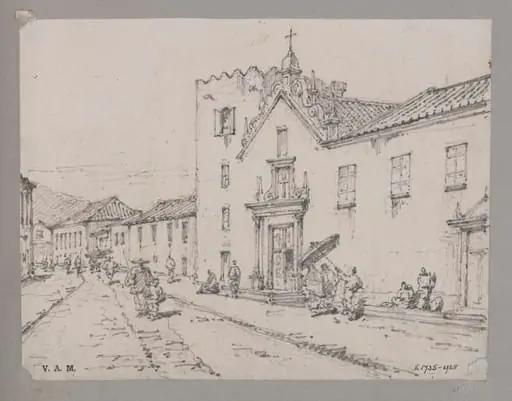 Front of Misericordia Church, Macao
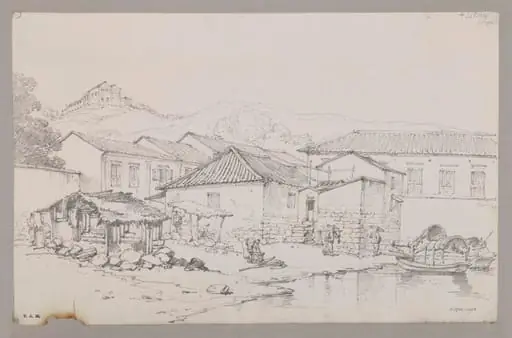 Part of the Praya Manduco and Penha Hill, Macao
 The fort of S. Pedro, Macau