Artwork
Sketches of Indian figures
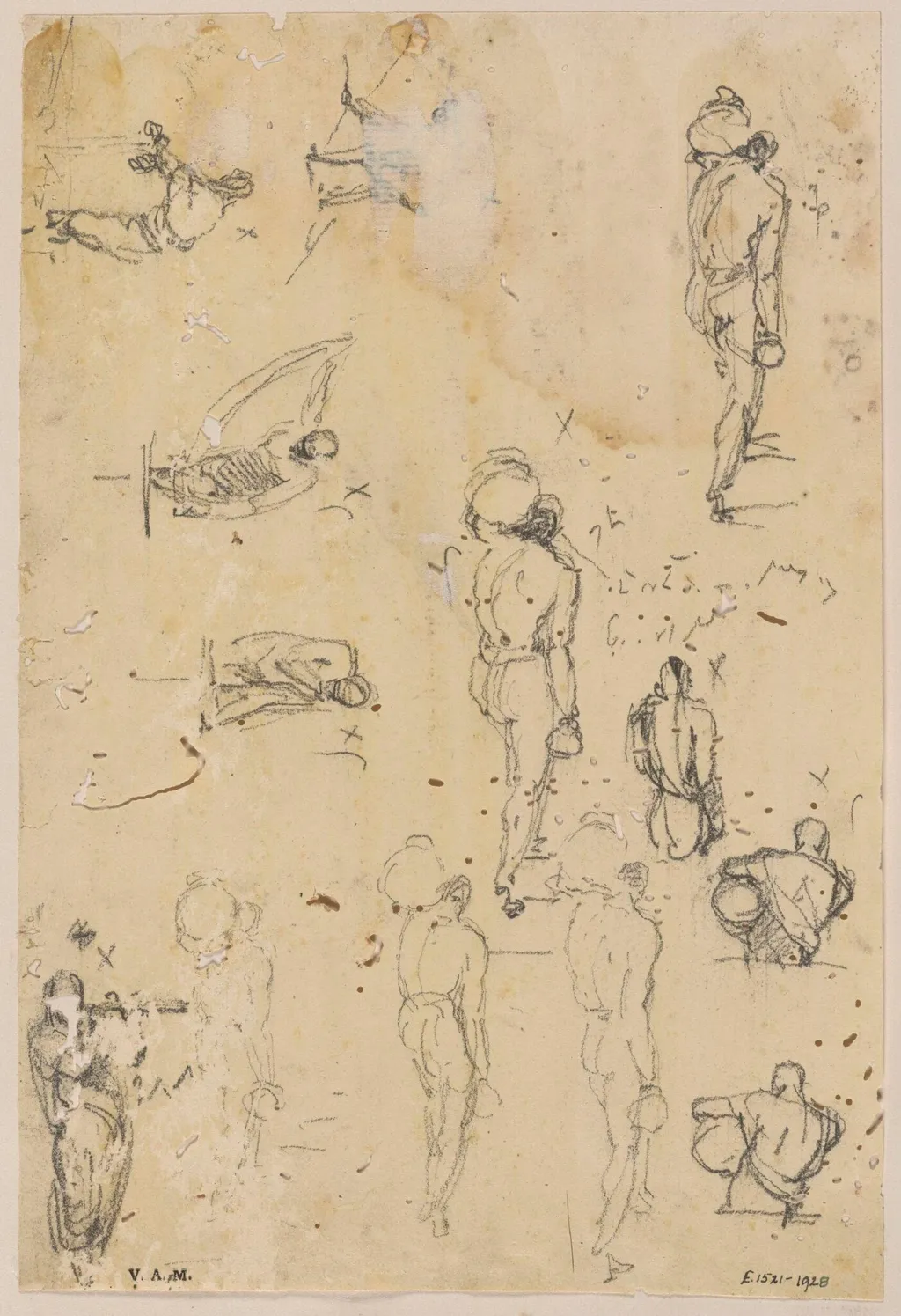
Sketches of Indian figures is a drawing by the Romanticist artist George Chinnery. It dates from 16 and is held in the collection of the Victoria and Albert Museum.
About this work
Overview
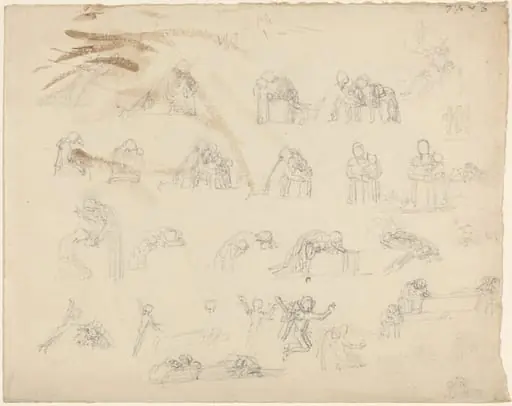
These pencil and ink drawings by George Chinnery, made in early 19th-century India, depict everyday figures engaged in routine activities.
These pencil and ink drawings by George Chinnery, made in early 19th-century India, depict everyday figures engaged in routine activities. The subjects include men and women, some partially clothed, others standing in water, carrying waterpots. Chinnery rendered them with swift, observant lines, capturing movement and posture without idealization. The sketches reflect his dual interest in documenting local life and studying the human form under natural conditions.
Subject & Meaning
The figures represent ordinary people in their daily environments—gathering water, resting, or moving through heat-laden landscapes. Clothing, or lack thereof, reflects regional norms and practical needs rather than eroticism. The waterpots and aquatic settings suggest ritual or domestic routines tied to climate and resource access. Chinnery’s focus on unposed, unidealized bodies conveys a quiet respect for lived experience under colonial rule.
Technique & Style
Chinnery employed loose, fluid lines to suggest form and motion, using minimal shading to imply light and volume. His hand moves with immediacy, capturing gestures and weight distribution without elaborate detail. The absence of background elements directs attention to the figures’ postures and physicality. The drawings feel spontaneous, as if recorded on-site, with an emphasis on anatomical truth over decorative finish.
History & Provenance
Created during Chinnery’s years in southern India and Macau, these sketches stem from his time as a British artist living under colonial administration. They were likely made for personal study or private circulation, not public exhibition. Many entered the Victoria and Albert Museum’s collection through later acquisitions, preserving them as records of cross-cultural observation during a period of shifting power and visual exchange.
Context
Chinnery worked in India during the height of British colonial presence, when European artists increasingly turned to local subjects. His drawings diverged from official imperial imagery by focusing on unremarkable moments rather than grand narratives. The sketches reflect a personal, intimate engagement with Indian life, shaped by both curiosity and the constraints of his position as a foreign observer in a complex social landscape.
Legacy
These sketches remain valuable as unfiltered records of 19th-century Indian daily life, seen through the lens of a skilled draftsman. They contribute to a broader understanding of how Western artists engaged with non-European subjects—not as exoticized figures, but as individuals in their environments. Their preservation in institutions like the V&A ensures their continued role in studies of colonial visual culture and artistic observation.
Artist & collection
Artist
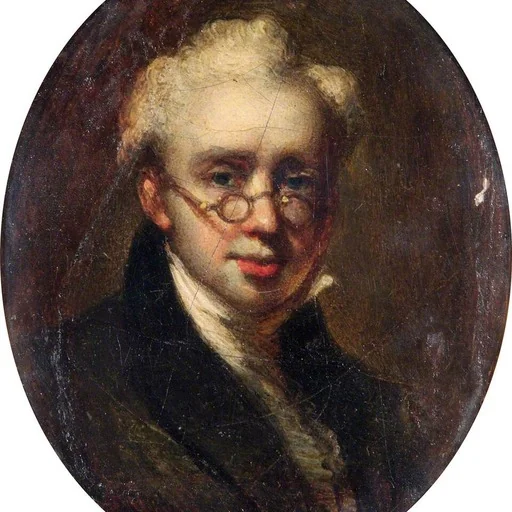
George Chinnery (Chinese: 錢納利; 5 January 1774 – 30 May 1852) was an English painter who spent most of his life in Asia, especially India and southern China.

 Sheet of Studies
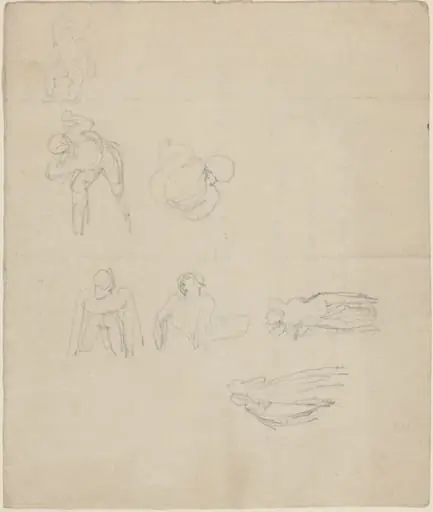 Sheet of Figures Studies
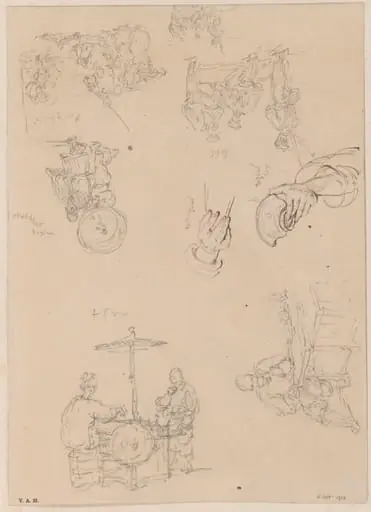 Chinese figures, soldiers, and details of hands
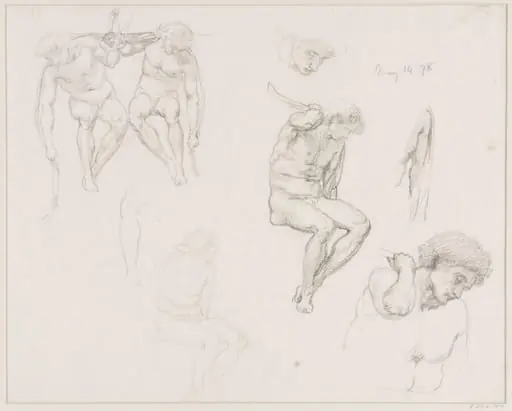 Figure studies and a head fot the mosaic decoration of the dome of St. Paul's Cathedral
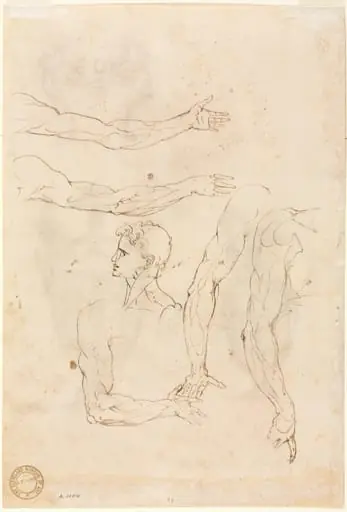 Sketches of Five Arms and a Head (verso)
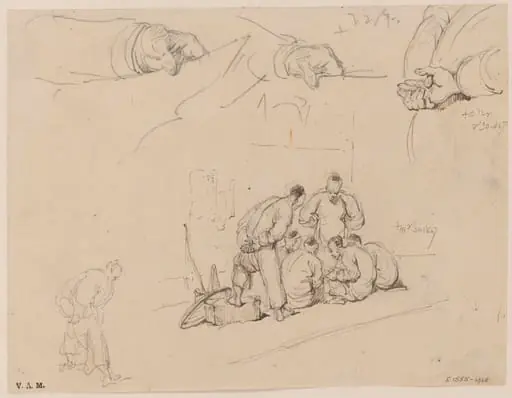 Drawings of a group of Chinese men, clasped hands, and a hand holding paper
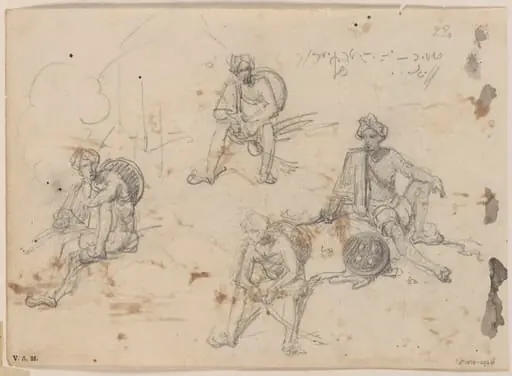 Four drawings of an Indian chowkidar
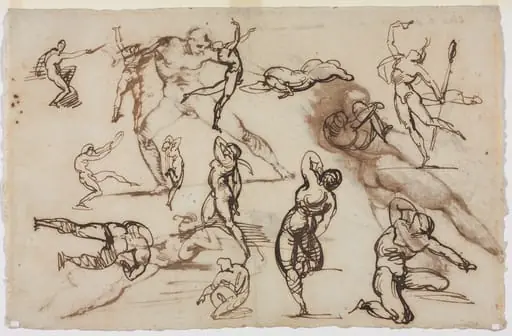 Sheet of Sketches (verso)
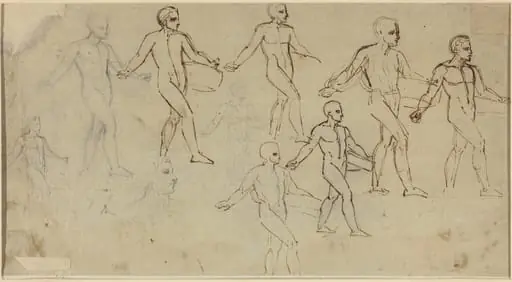 Studies of a Sower (Illustration for Thomson's _Seasons_)