Artwork
Sketches of Five Arms and a Head (verso)
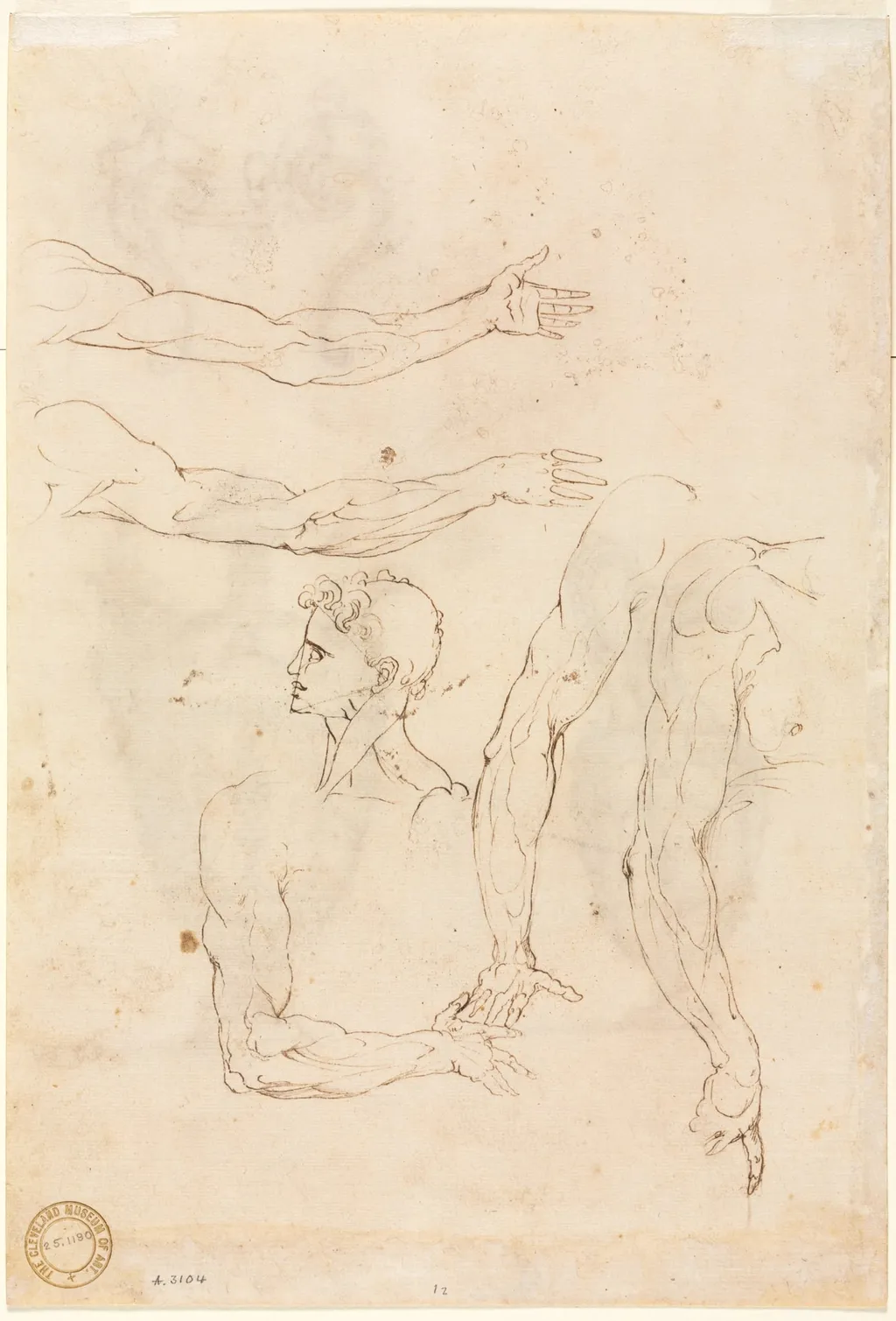
Sketches of Five Arms and a Head (verso) is a drawing by the Renaissance artist Luzio Romano. It dates from 1504 and is held in the collection of the Cleveland Museum of Art.
About this work
You see a drawing of five arms and a head on the page.
The artist was studying the body's proportions. This was a common practice in the 16th century, when artists tried to understand how the body is structured.
The detailed study of the body is similar to the work of artist Luca Signorelli, but to learn more about this style, look up the technique of sfumato.
Overview
The arrangement suggests a systematic examination of musculature and skeletal structure, likely derived from dissection.
This drawing, attributed to Luzio Romano, depicts five arms and a single head rendered in precise linear notation. Executed on the reverse side of a sheet, it reflects the anatomical studies common among Renaissance artists seeking to understand human form through direct observation. The arrangement suggests a systematic examination of musculature and skeletal structure, likely derived from dissection.
Subject & Meaning
The repeated arms and isolated head indicate a focus on proportion and spatial relationships within the human figure. The geometric triangle superimposed on the facial profile signals an intellectual engagement with classical ideals of harmony, linking bodily form to mathematical order. This was not mere documentation but an attempt to codify the body as a system of measurable ratios.
Technique & Style
Rendered in pen and ink with controlled, economical lines, the drawing emphasizes structure over texture. Shadows are suggested through hatching rather than modeling, distinguishing it from sfumato-based approaches. The clarity of contour and absence of atmospheric effects align with the analytical tradition of anatomical draftsmanship, prioritizing clarity over illusion.
History & Provenance
The work originates from the early 16th century, a period when artists increasingly accessed cadavers for study, often under the auspices of medical institutions. While Romano’s broader oeuvre is poorly documented, this sheet aligns with surviving studies by contemporaries like Signorelli, suggesting participation in a shared scholarly network of anatomical inquiry among Italian draftsmen.
Context
During the Renaissance, the study of anatomy became central to artistic training, driven by humanist ideals that elevated the human form as a reflection of cosmic order. Artists collaborated with surgeons, attended dissections, and compiled folios of studies. Romano’s sheet is one of many such records, part of a broader movement to unify art and science through empirical observation.
Legacy
Though Romano’s name is less known than his peers, this drawing exemplifies the quiet, persistent labor behind Renaissance visual culture. Such studies formed the foundation for later anatomical atlases and influenced pedagogical practices in art academies. They represent a shift from idealized representation to evidence-based depiction, shaping the trajectory of Western artistic training.
Artist & collection
Artist
Luzio Luzi (sometimes Luzzi or Luci), also known as Luzio Luzi da Todi and Luzio Romano (died late 16th century), was an Italian painter, stuccoist, and draftsman of the High Renaissance era favoring the Mannerist style.

 Border Lines (verso)
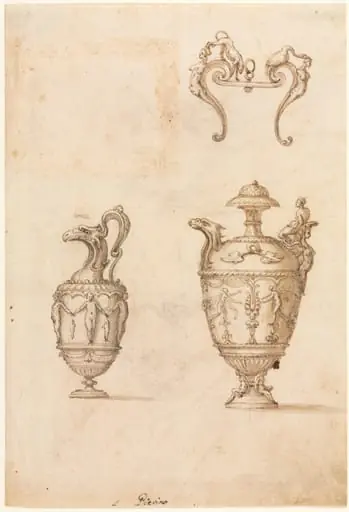 Design for Two Vases and an Ornament (recto)
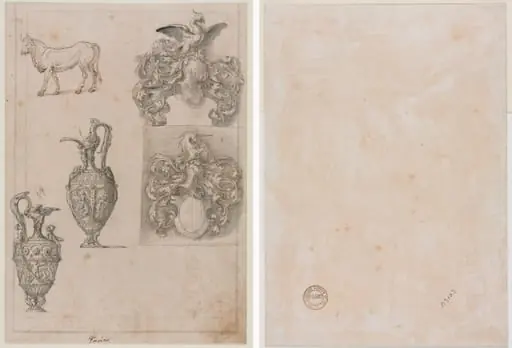 Design for Two Vases, Two Coats of Arms, and a Bull (recto) Several Line Borders (verso)
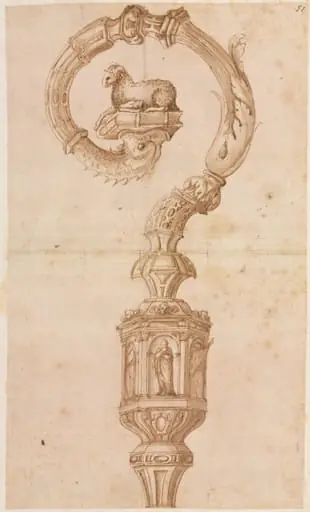 Design for a Crozier
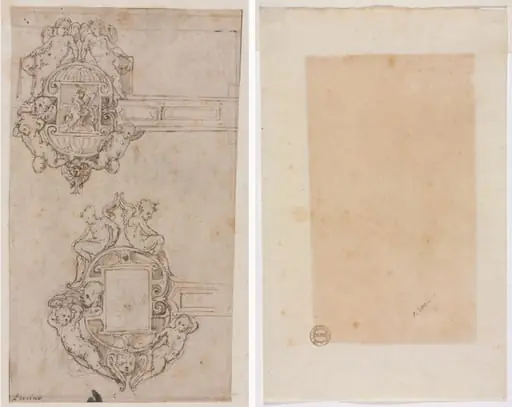 Design for Decorative Hinges (recto) Border Lines (verso)
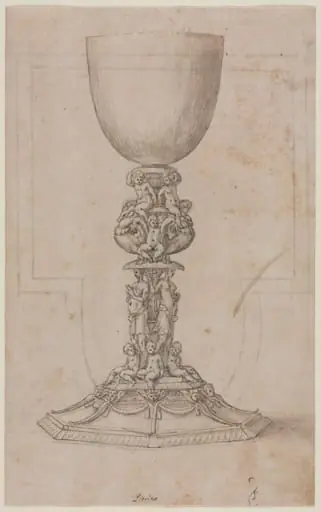 Design for a Chalice (recto)
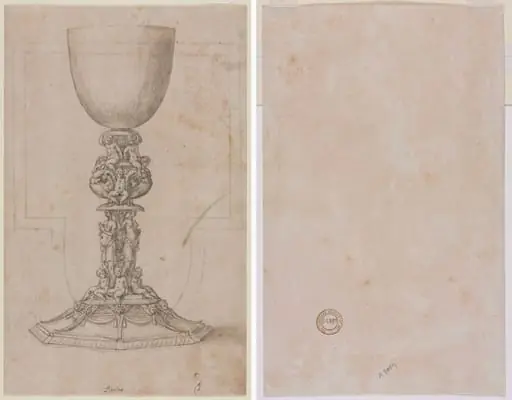 Design for a Chalice (recto) Architectural Plan (verso)
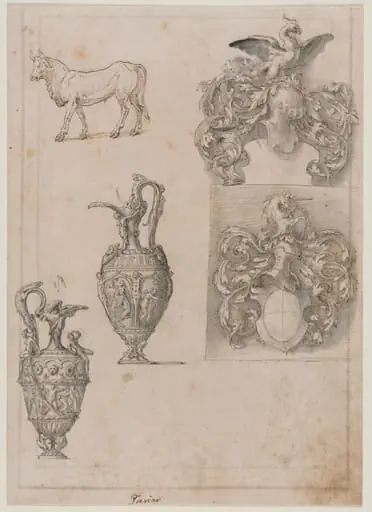 Design for Two Vases, Two Coats of Arms, and a Bull (recto)
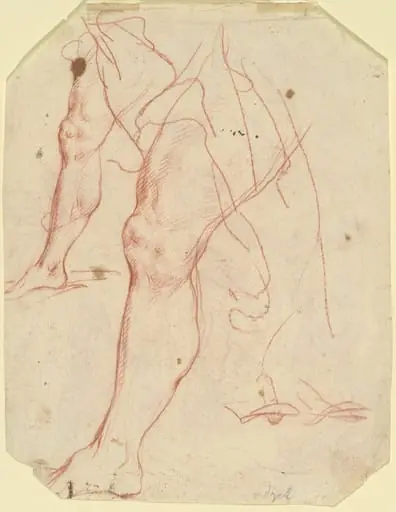 Two Studies of a Leg (verso)
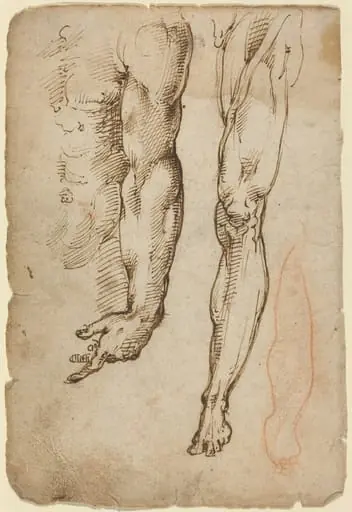 Anatomical Studies
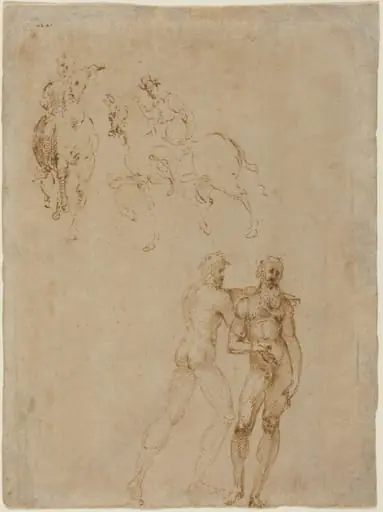 Two Horsemen and Two Male Nudes
 Studies of a Sower (Illustration for Thomson's _Seasons_)
 Studies of a Sculpture of a Male Nude, Vertebrae, and Gesturing Figures
 Studies for "Two Classical Male Figures Wrestling"
 Figure studies and a head fot the mosaic decoration of the dome of St. Paul's Cathedral
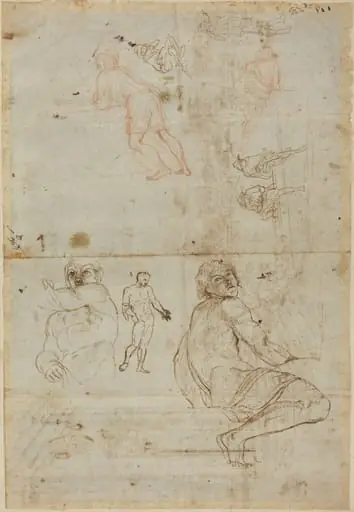 Figures from the Farnese Palace and from Life
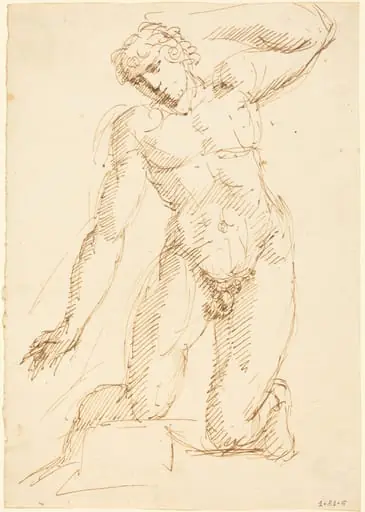 A Male Nude Kneeling