Artwork
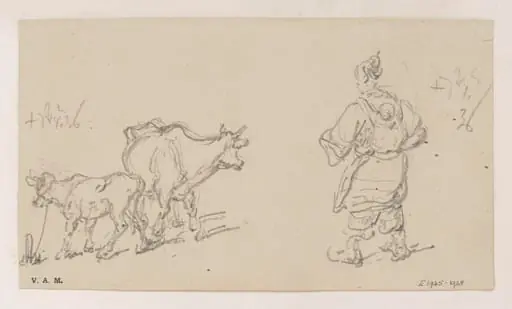
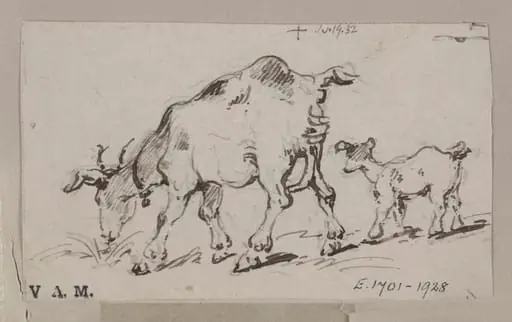
Three goats, and a boatwoman carrying a child
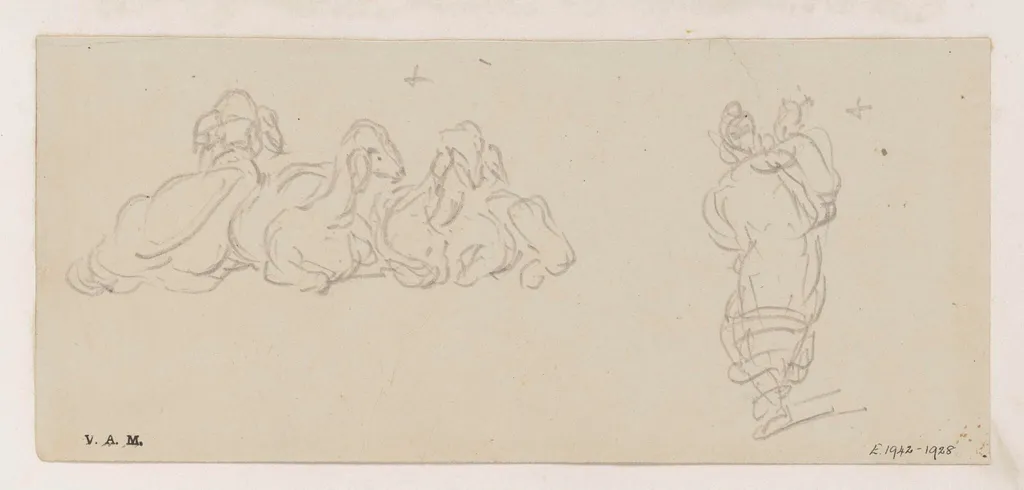
Three goats, and a boatwoman carrying a child is a drawing by the Romanticist artist George Chinnery. It dates from 19 and is held in the collection of the Victoria and Albert Museum.
About this work
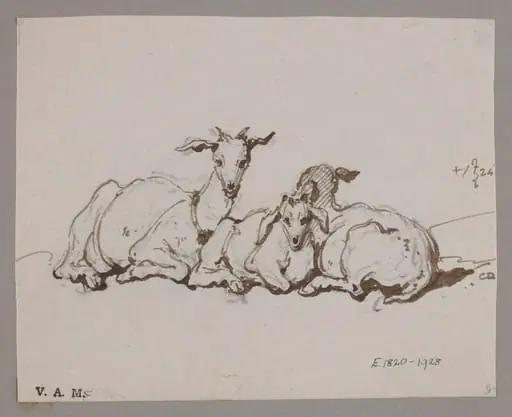
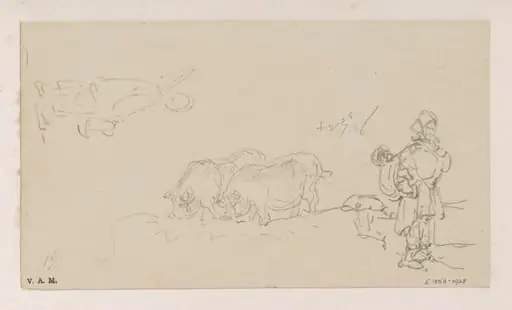
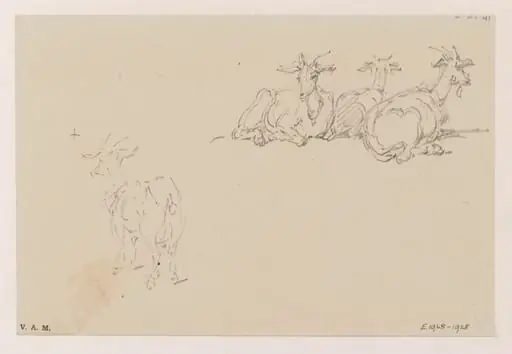
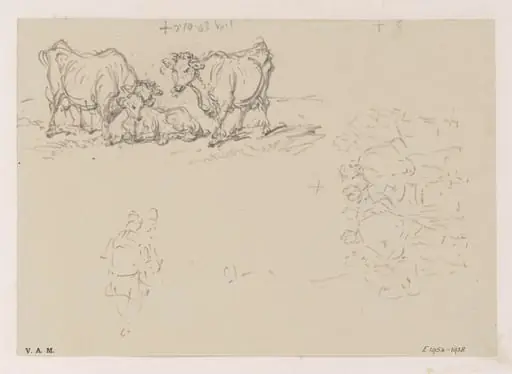
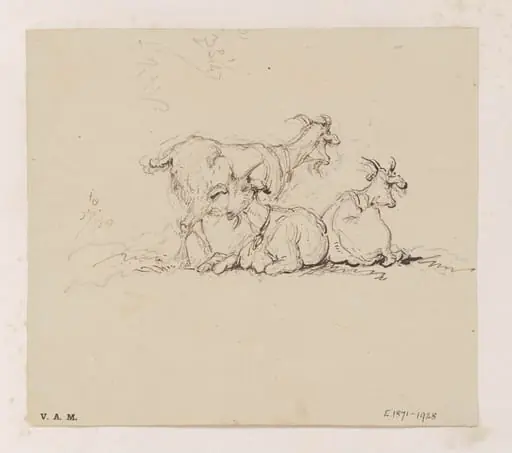
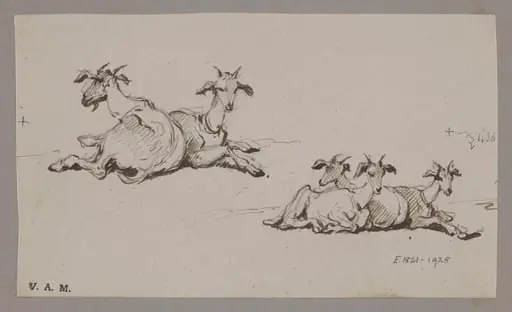
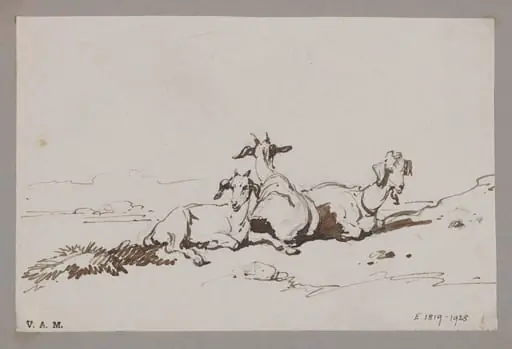
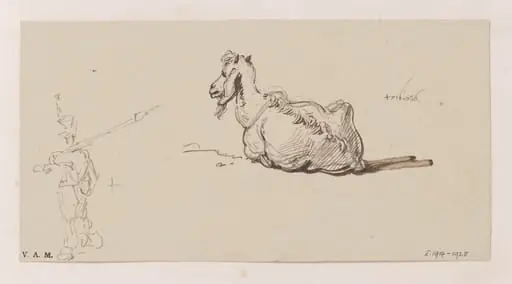
George Chinnery drew this in 1825. It’s a sheet of sketches showing three goats lying side by side. Next to them stands a boatwoman lifting a child to her shoulder.
This sheet is part of Chinnery’s habit of quick, on-the-spot drawings. He often worked in India and China, where he recorded daily life like this.
Look up the Victoria and Albert Museum.
Overview
The sheet reflects Chinnery’s practice of documenting everyday scenes as he encountered them, without formal composition or finish.
This drawing, created by George Chinnery in 1825, is one of many quick observational sketches made during his time in Asia. Executed in pencil or ink on paper, it captures two distinct figures—a group of goats resting together and a woman standing with a child on her shoulder—rendered with loose, spontaneous lines. The sheet reflects Chinnery’s practice of documenting everyday scenes as he encountered them, without formal composition or finish.
Subject & Meaning
The drawing juxtaposes domesticated animals and a human figure engaged in a quiet, routine act. The goats, grouped in repose, suggest a moment of stillness in a working environment, while the boatwoman, carrying a child, implies labor and care. Neither subject is idealized; their presence together evokes the ordinary rhythms of life in a coastal or riverine community, likely in southern China or India.
Technique & Style
Chinnery employed swift, economical strokes to define form and movement, avoiding detail in favor of gesture and posture. The goats’ bodies are suggested with minimal contours, while the woman’s stance is indicated by a few confident lines. The lack of shading or background emphasizes the immediacy of the observation, characteristic of sketches made outdoors or in transit, prioritizing record over polish.
History & Provenance
The drawing is part of a larger body of work Chinnery produced during his decades in Asia, primarily in Guangzhou and Macao. It entered the Victoria and Albert Museum’s collection as part of a group of his Asian sketches, preserved for their ethnographic and artistic value. The sheet’s survival reflects its significance as a firsthand visual record from a period when Western artists rarely documented such scenes with such directness.
Context
In the 1820s, Chinnery was among a small group of European artists living and working in southern China, where trade and cultural exchange were expanding. His sketches, including this one, offer rare glimpses into local life from a non-imperial perspective. Unlike commissioned portraits or landscapes, these drawings reveal unposed moments—animals at rest, women at work—offering insight into the textures of daily existence beyond colonial narratives.
Legacy
Chinnery’s sketches, including this sheet, remain important for their unfiltered depiction of Asian life during the early 19th century. They stand apart from the more stylized or exoticized imagery common in Western art of the period. Today, they are studied not only for their artistic merit but as historical documents that preserve the quiet dignity of ordinary people and animals in a rapidly changing region.
Artist & collection
Artist
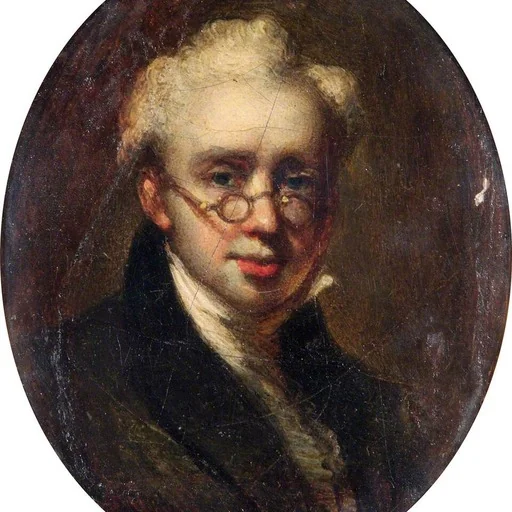
George Chinnery (Chinese: 錢納利; 5 January 1774 – 30 May 1852) was an English painter who spent most of his life in Asia, especially India and southern China.