Artwork
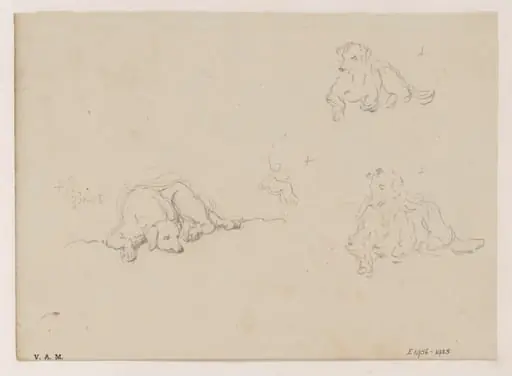
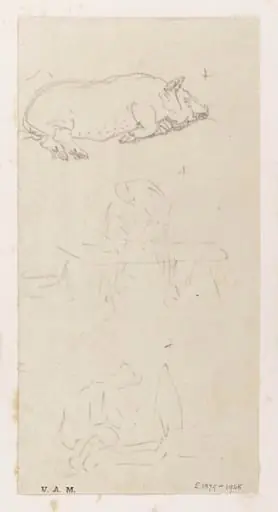
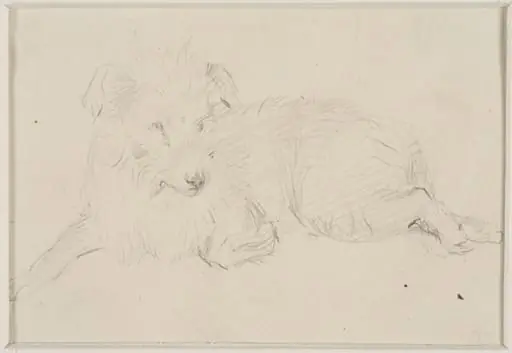
Two studies of a sleeping dog
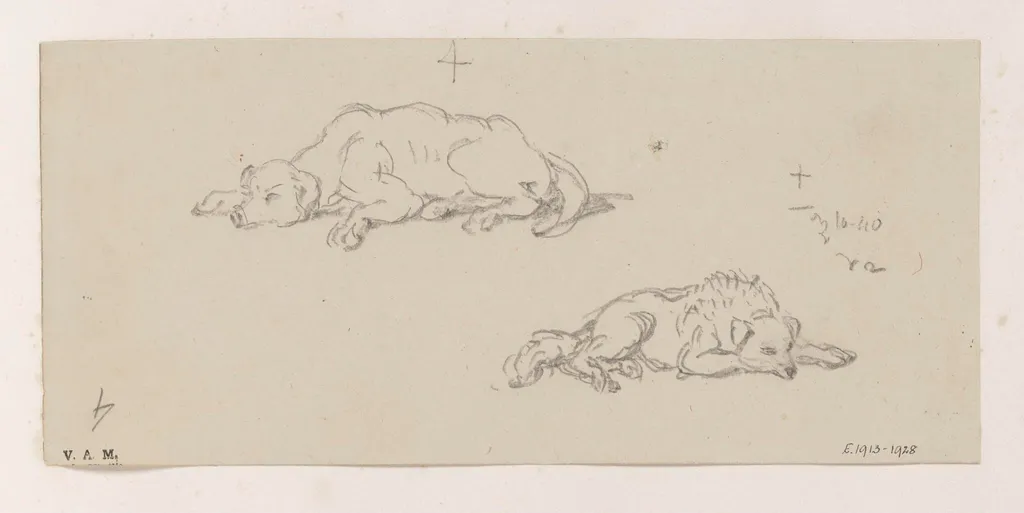
Two studies of a sleeping dog is a drawing by the Romanticist artist George Chinnery. It dates from 10 and is held in the collection of the Victoria and Albert Museum.
About this work
George Chinnery drew two quiet studies of a sleeping dog in 1840.
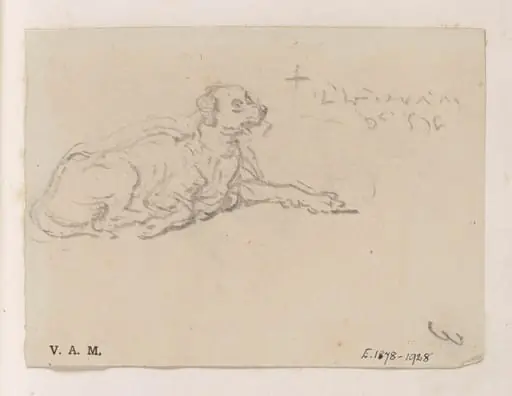
One sheet shows the pup stretched out with its front legs straight ahead.
This wasn’t a fancy pose—just a dog at rest, sketched in ink.
Chinnery worked a lot in India and China, but this sheet stayed with him.
It’s one of the small everyday subjects he liked to capture.
Look up the Victoria and Albert Museum.
Overview
The sheet remained in his personal collection, suggesting its value as a private observation rather than a commissioned piece.
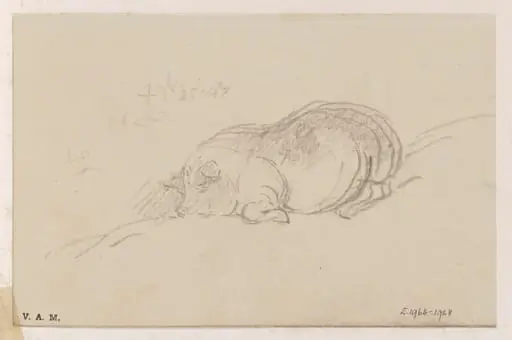
Created in 1840, this drawing by George Chinnery consists of two quick ink studies of a dog in repose. Both depict the animal lying on its side, front legs stretched forward in natural, unposed relaxation. Executed with minimal lines, the work reflects Chinnery’s interest in ordinary moments rather than grand subjects. The sheet remained in his personal collection, suggesting its value as a private observation rather than a commissioned piece.
Subject & Meaning
The subject is a common domestic dog, captured mid-sleep without theatricality or symbolism. Chinnery’s focus on such a humble, transient moment reveals his affinity for quiet, unremarkable life. There is no narrative or emotional embellishment—only the stillness of an animal at ease. This simplicity underscores his broader practice of finding dignity in the everyday, whether in people, animals, or landscapes.
Technique & Style
Chinnery used fine, fluid ink lines to suggest form with economy. The dog’s contours are defined by light, confident strokes, with subtle shading to imply volume and texture. No outlines dominate; instead, the drawing relies on suggestion and negative space. The loose, spontaneous quality reflects a direct, on-the-spot observation, typical of his sketchbook practice and consistent with his preference for immediacy over polish.
History & Provenance
The drawing remained in Chinnery’s possession throughout his life and was later acquired by the Victoria and Albert Museum. Unlike many of his works made during his years in India and China, this piece was created in Britain and never left his personal archive. Its survival as part of his private collection highlights its role as a personal study rather than a public artwork.
Context
In the early 19th century, sketching animals and domestic scenes was uncommon in academic art circles, which favored historical or portraiture subjects. Chinnery’s focus on such humble subjects aligned more with emerging Romantic sensibilities and the growing appreciation for naturalism. His time abroad influenced his observational style, but this drawing reflects a return to quiet, familiar surroundings.
Legacy
This drawing exemplifies Chinnery’s quiet contribution to British drawing traditions—emphasizing observation over grandeur. Though not widely exhibited in his lifetime, such works have since been recognized for their sincerity and technical restraint. They offer insight into an artist who found artistic value in the unassuming, influencing later generations interested in everyday realism.
Artist & collection
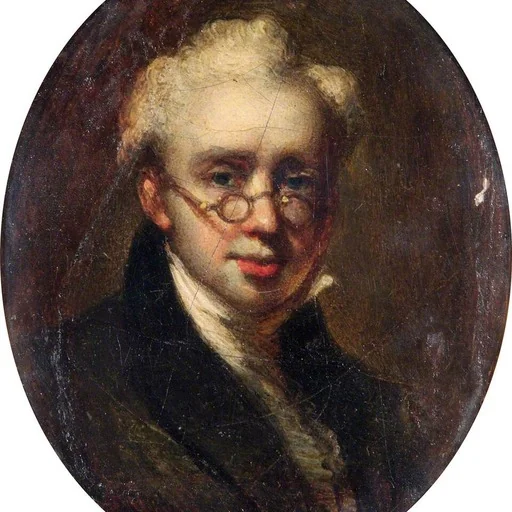
Artist
George Chinnery (Chinese: 錢納利; 5 January 1774 – 30 May 1852) was an English painter who spent most of his life in Asia, especially India and southern China.