Artwork
Portrait of Alexander A. Bibikov (1765-1822)
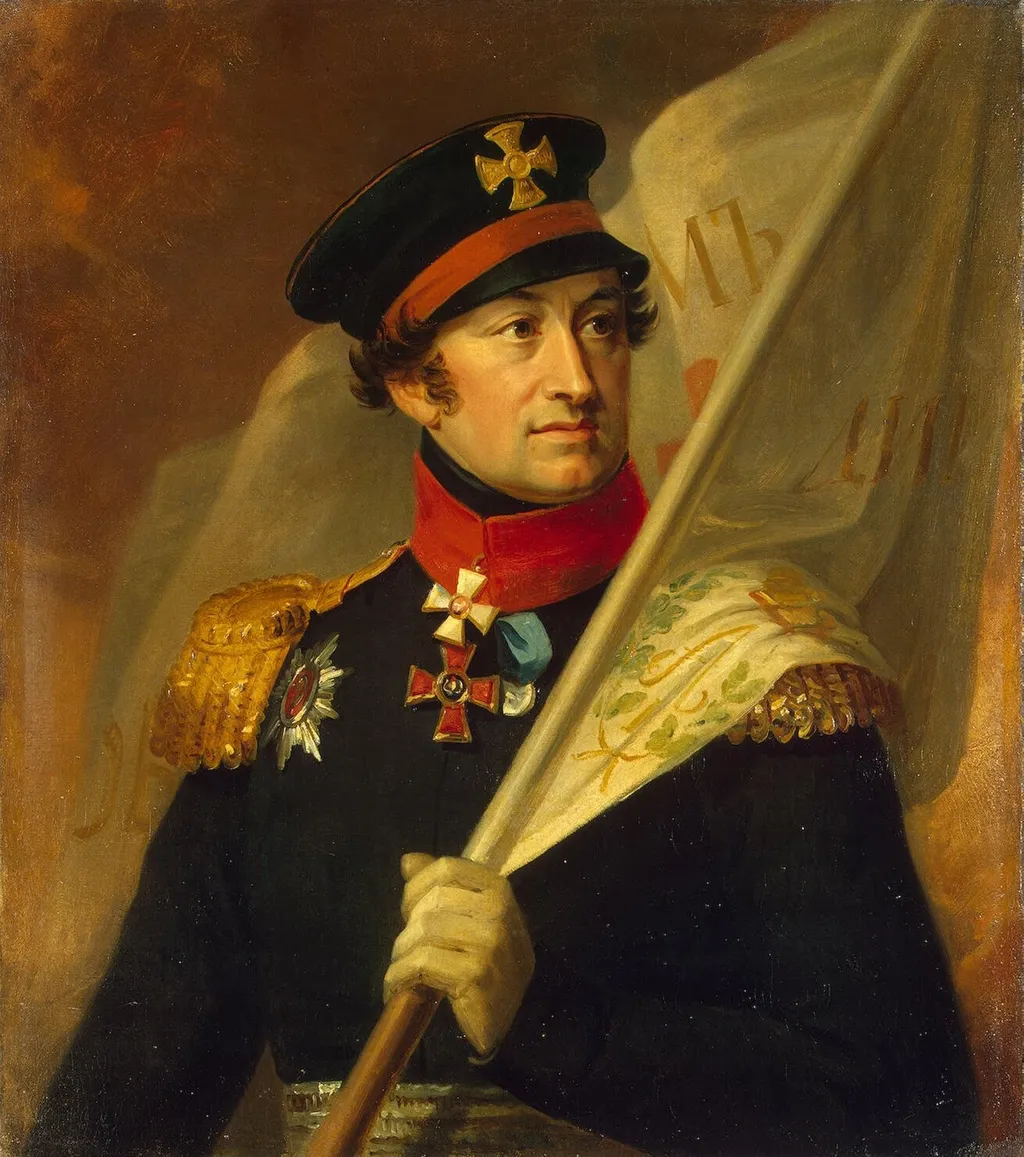
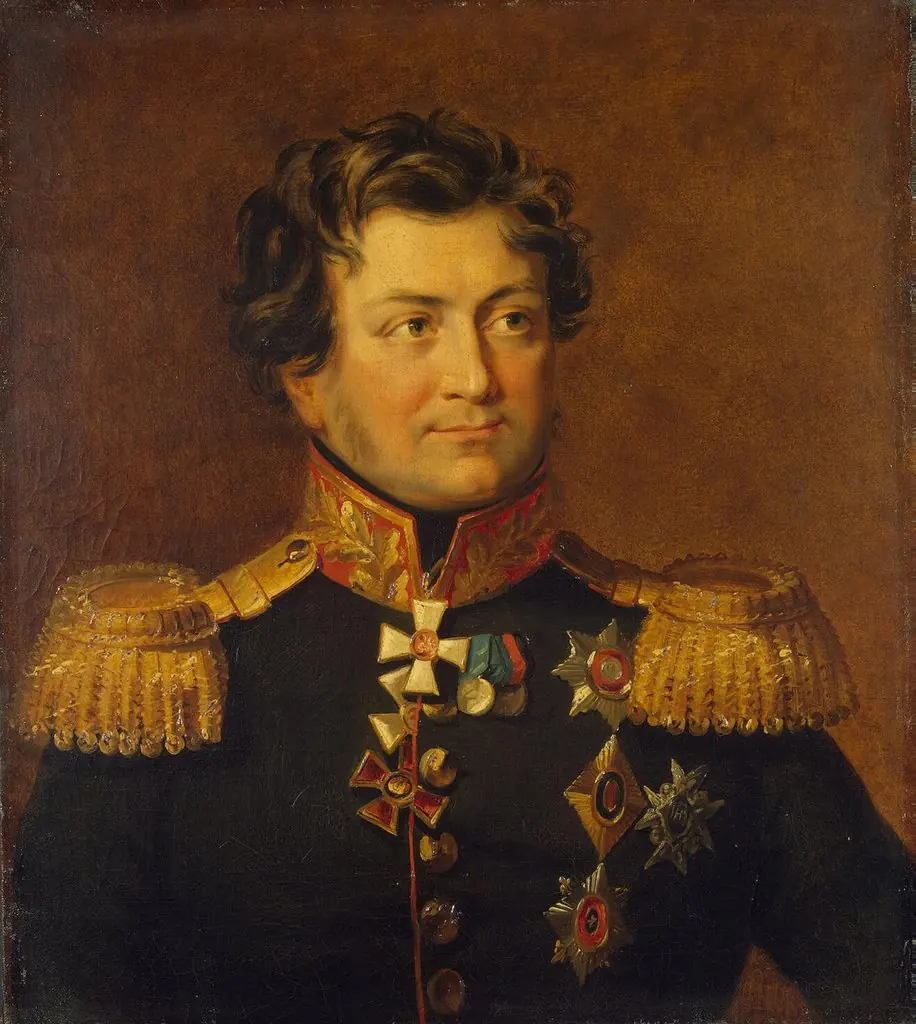
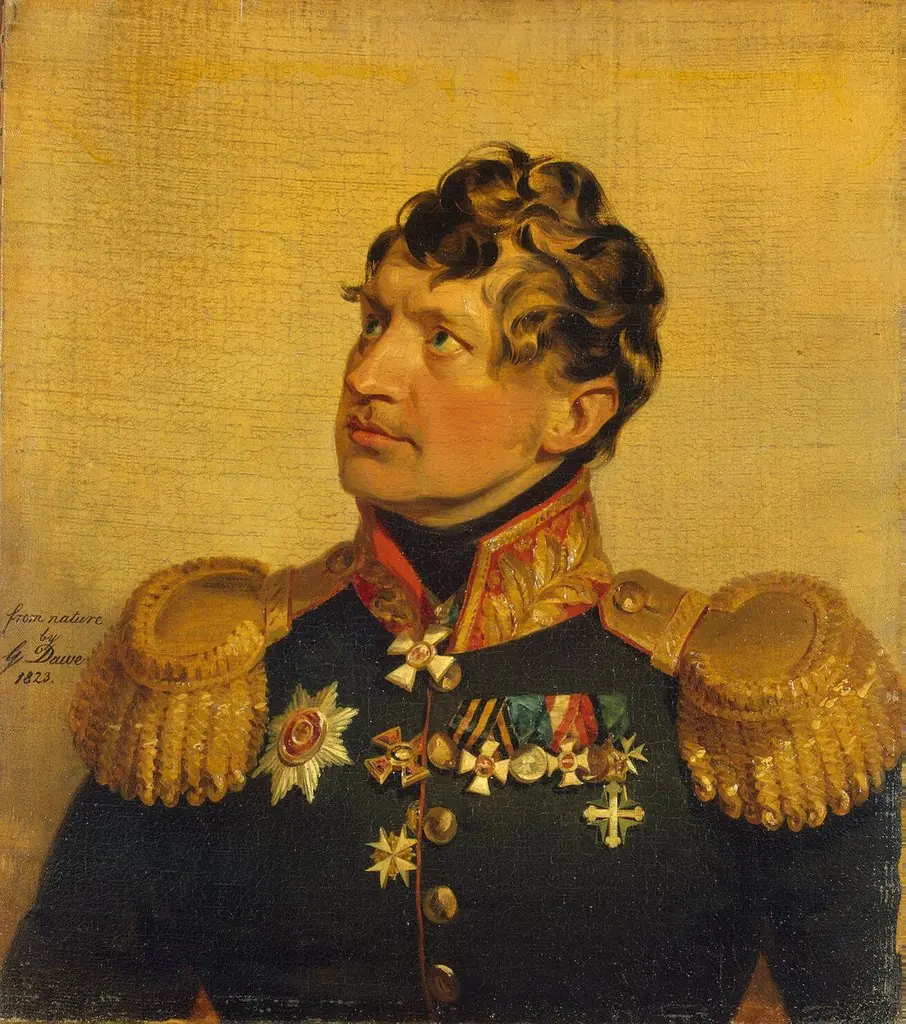
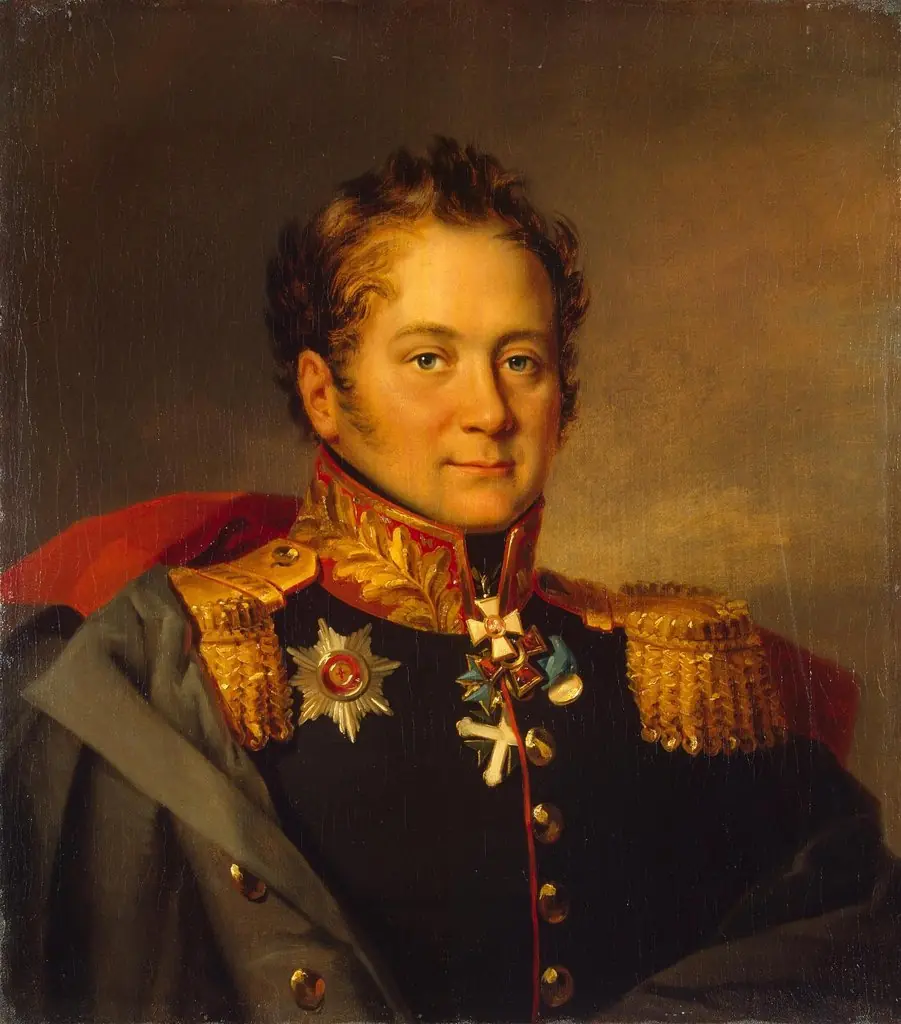
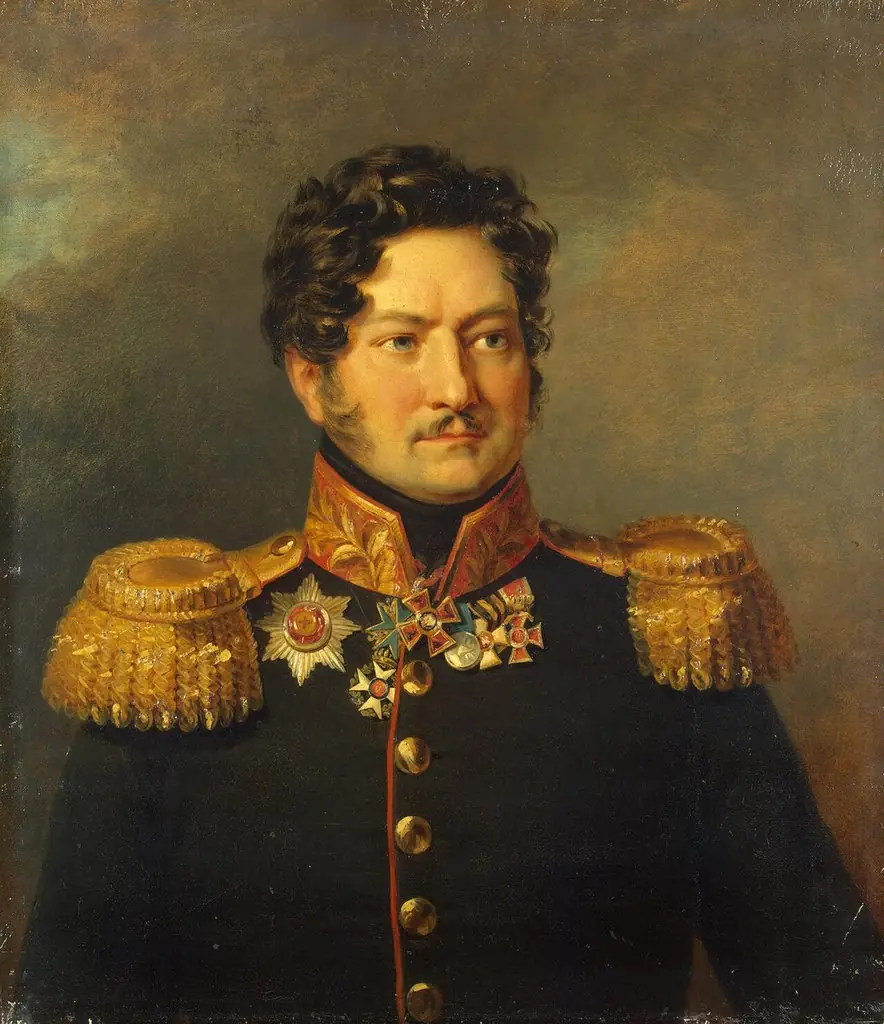
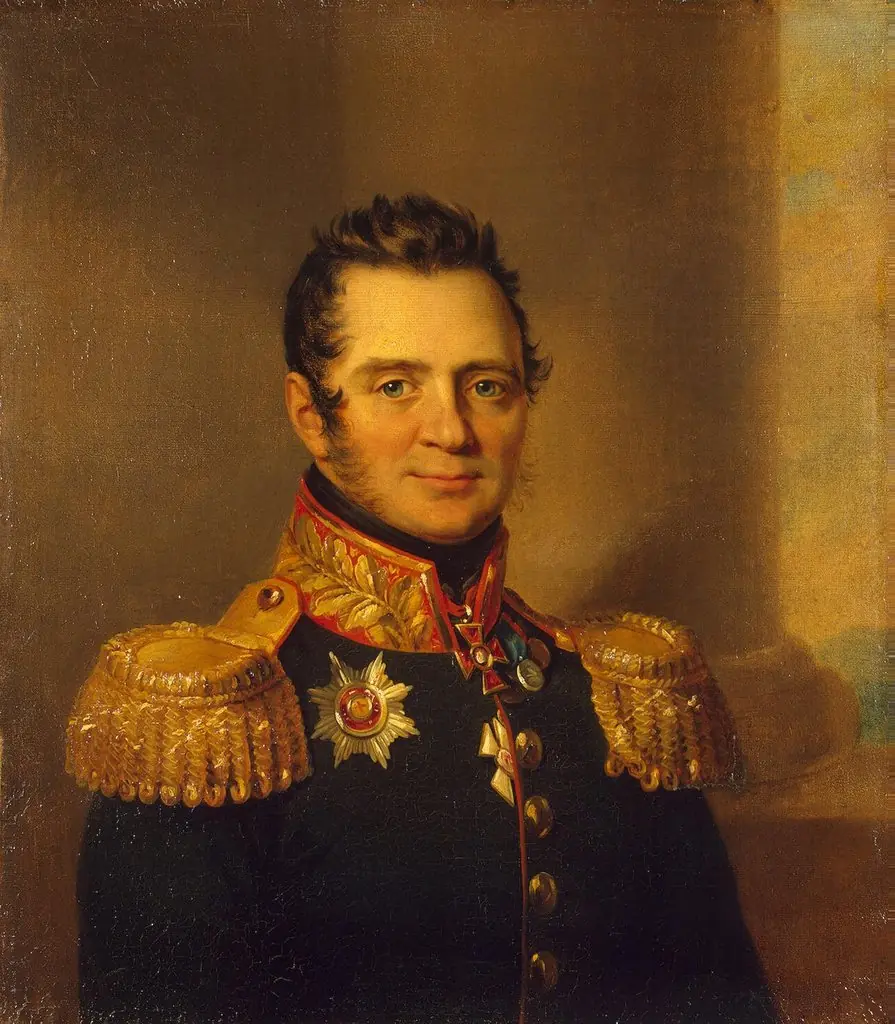
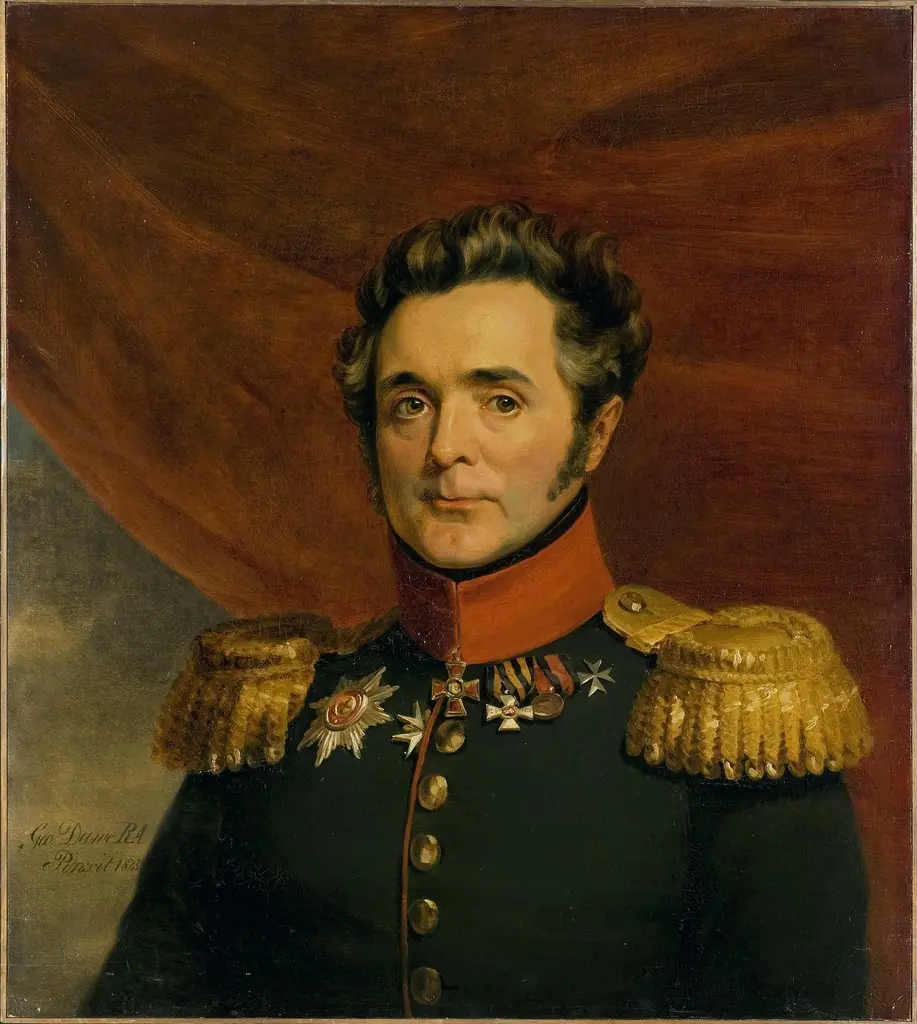
Portrait of Alexander A. Bibikov (1765-1822) is an oil painting by George Dawe. It dates from 1828 and is held in the collection of the Hermitage Museum.
About this work
Overview
George Dawe’s 1828 oil portrait presents Alexander A. Bibikov, a senior military officer of post‑Napoleonic Russia. The canvas, now part of the State Hermitage Museum’s collection, captures the subject in a formal pose against a dark backdrop, emphasizing his rank through uniform details and medals.
Subject & Meaning
Bibikov is shown wearing a black military hat trimmed with a red ribbon, a richly decorated coat, and a white sash edged in gold. A baton rests in one hand while the other rests on the sash, symbols of command and authority that underline his status within the Russian armed forces.
Technique & Style
Dawe employs a restrained palette and precise brushwork to render the textures of fabric, metal, and skin. The chiaroscuro of the dark background isolates the figure, allowing the luminous medals and gold trim to catch the viewer’s eye, a hallmark of early‑19th‑century portraiture.
History & Provenance
Commissioned during Dawe’s productive period in Saint Petersburg, the portrait reflects his reputation among Russian patrons and literary circles, including acquaintances such as Pushkin. After its creation, the work entered the State Hermitage Museum, where it remains on display as part of the museum’s Russian portrait series.
Context
The painting dates to the years following Napoleon’s 1812 invasion, a time when the Russian military elite were celebrated for their role in defending the empire. Bibikov’s attire and insignia correspond to the honors awarded to officers who distinguished themselves in that conflict.
Artist & collection
Artist
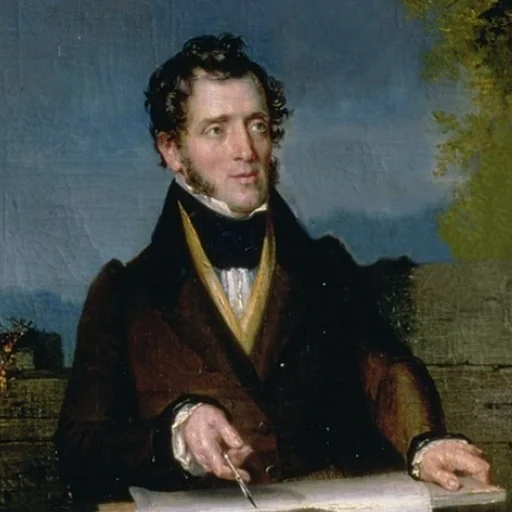
George Dawe (6 February 1781 – 15 October 1829) was an English portraitist who painted 329 portraits of Russian generals active during Napoleon's invasion of Russia for the Military Gallery of the Winter Palace.

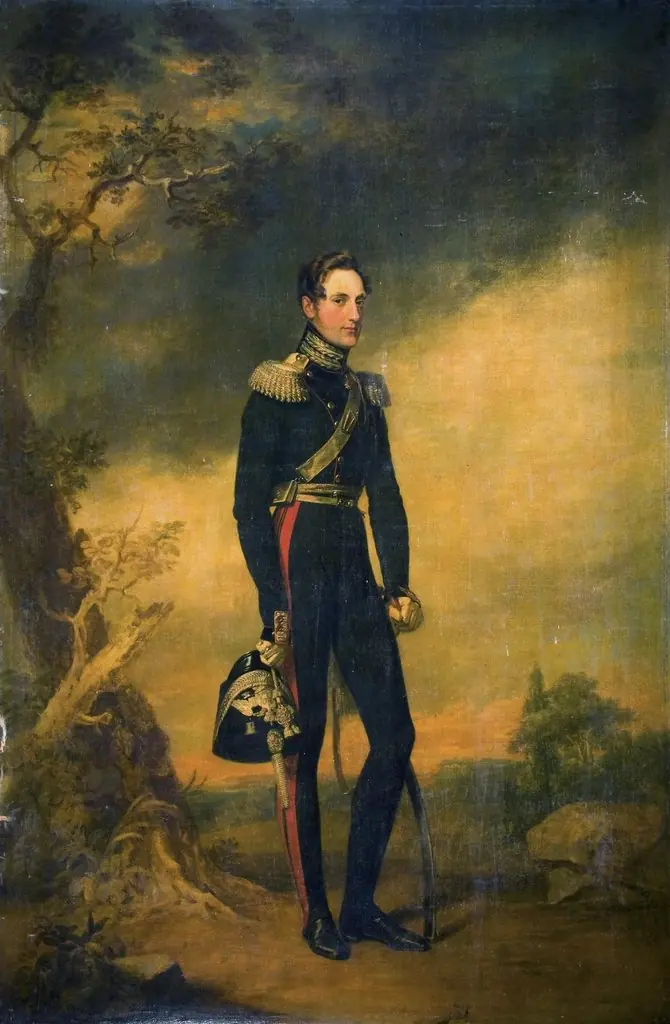 Portrait of Grand Duke Nikolai Pavlovich
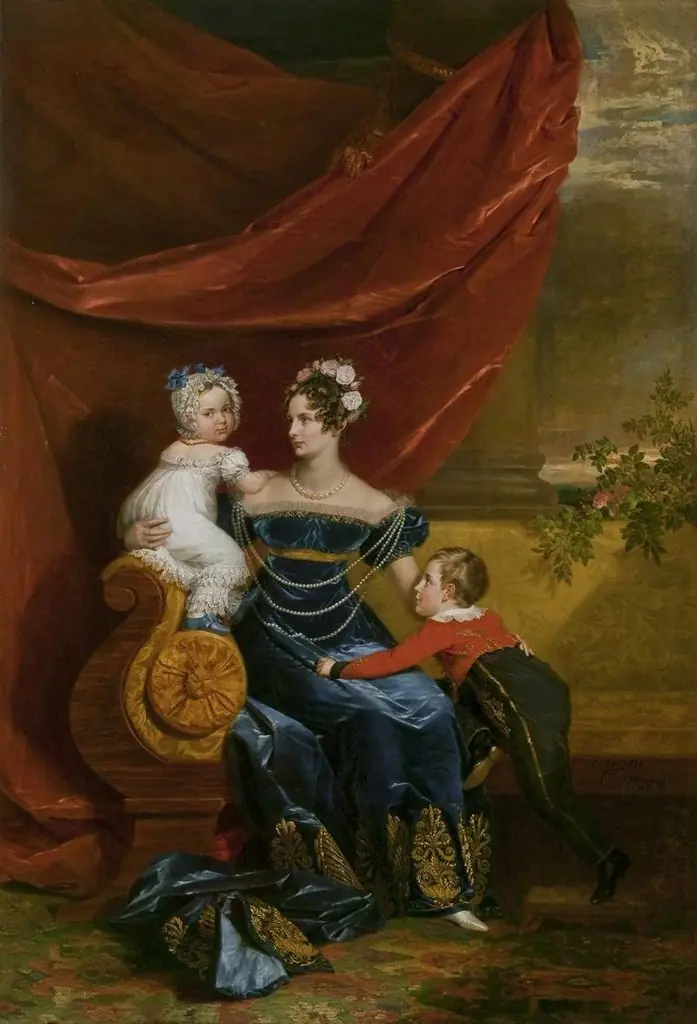 Portrait of Grand Duchess Alexandra Fiodorovna with Children
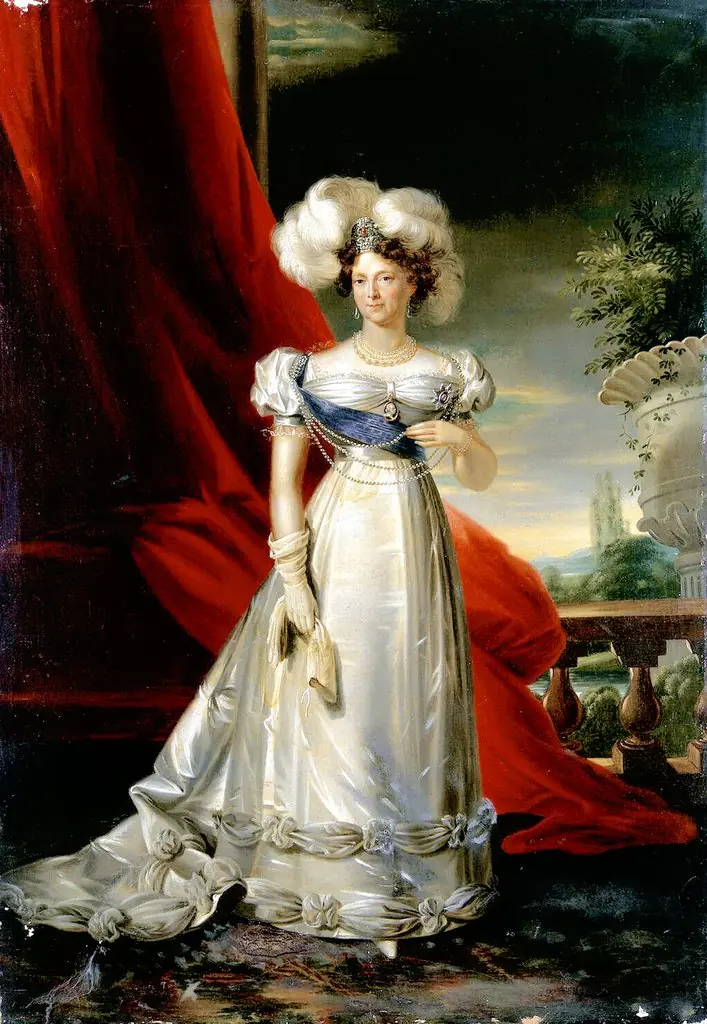 Portrait of the Empress Dowager Maria Feodorovna
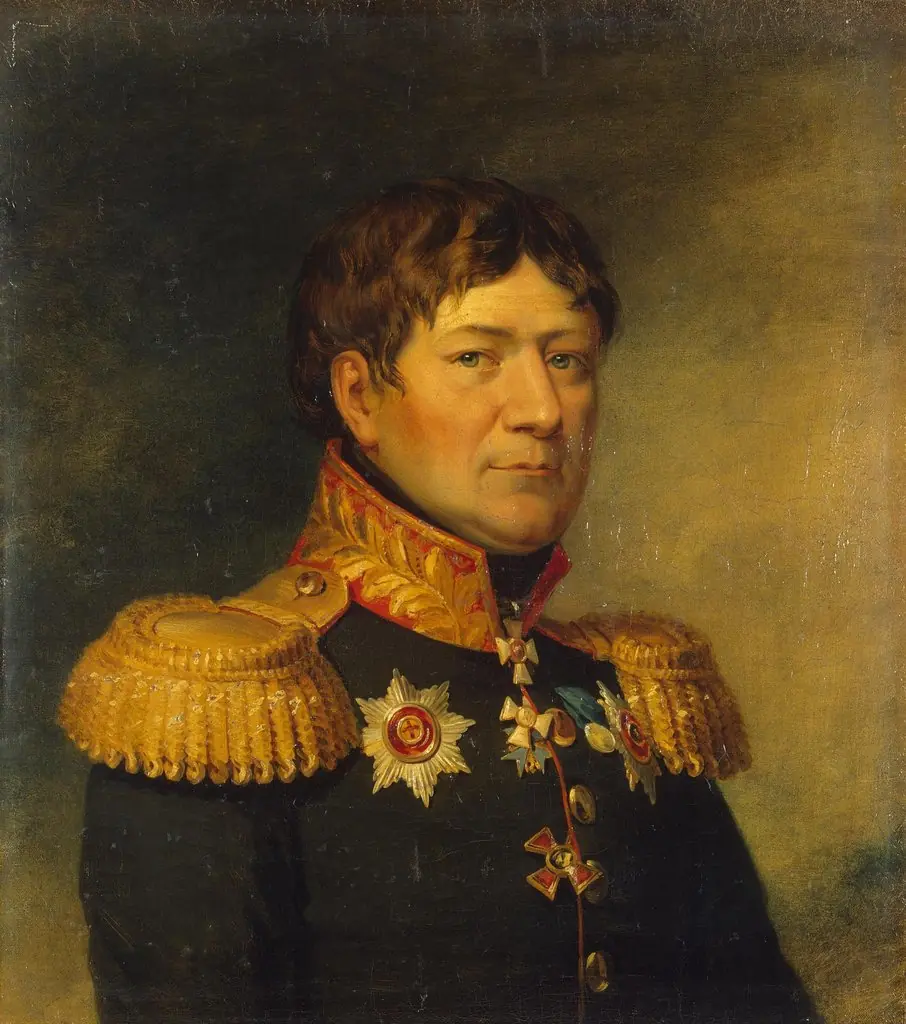 Portrait of Yegor M. Pillar (1767-1830)
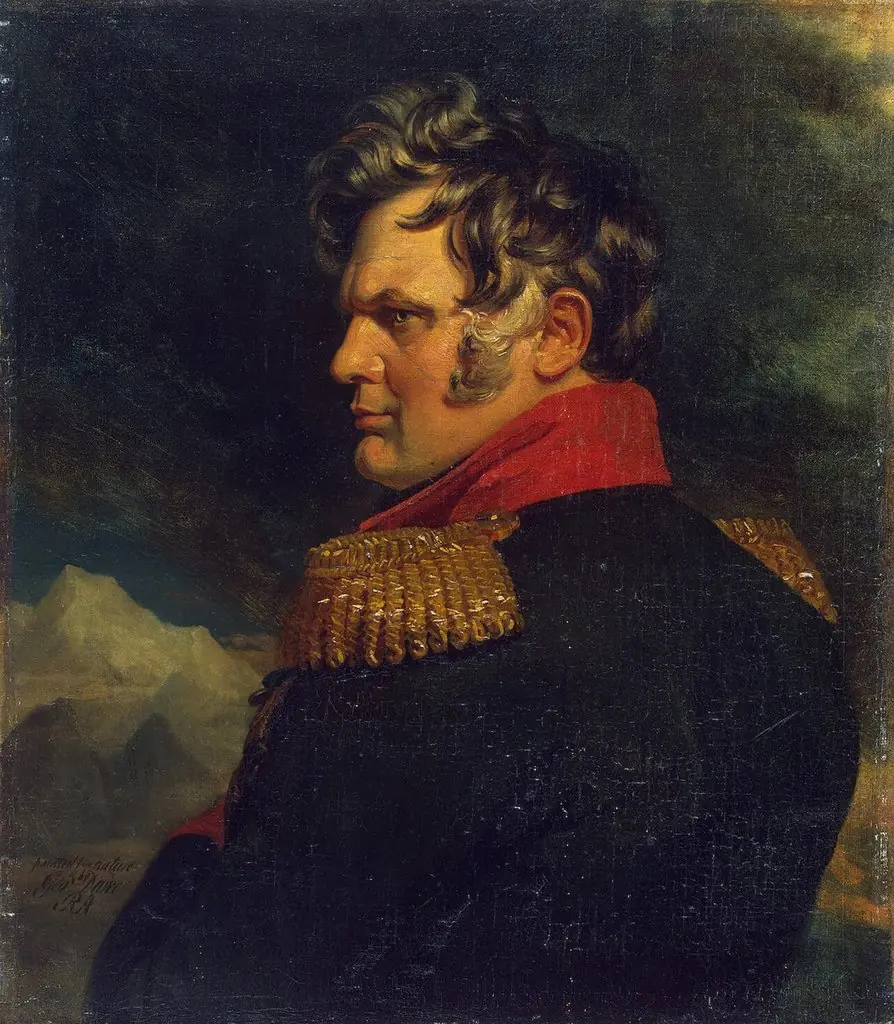 Portrait of Alexei P. Yermolov (1772/77-1861)
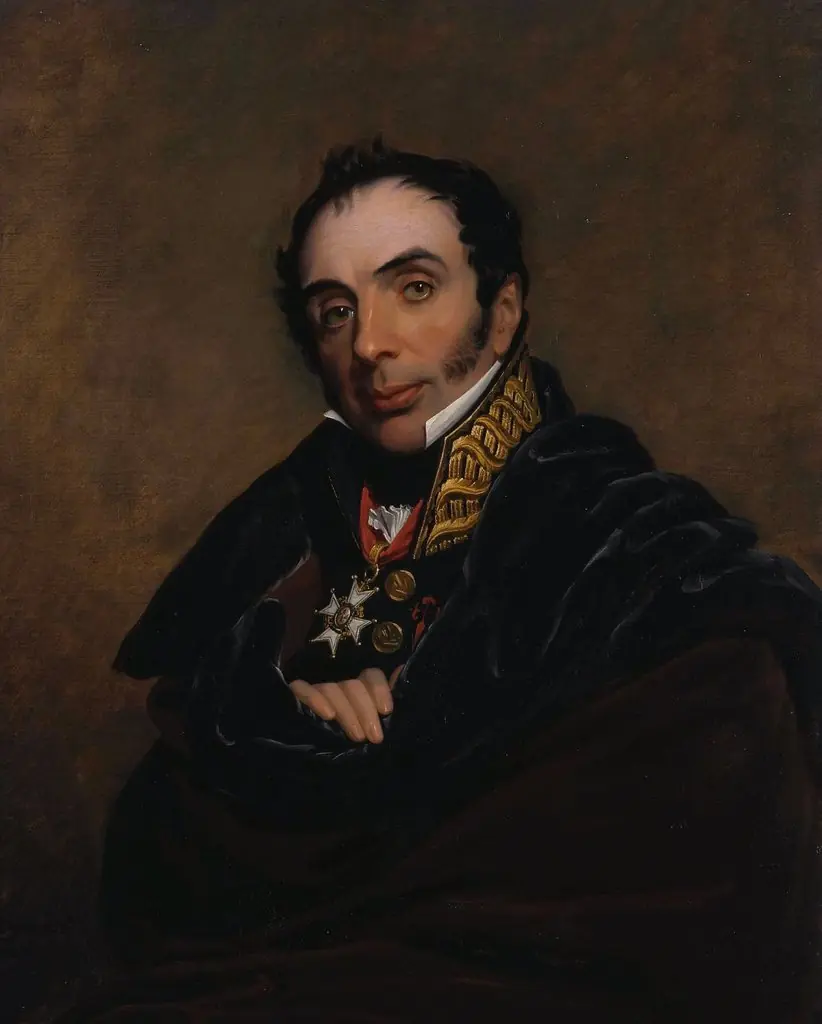 Portrait of Miguel Ricardo de Alava
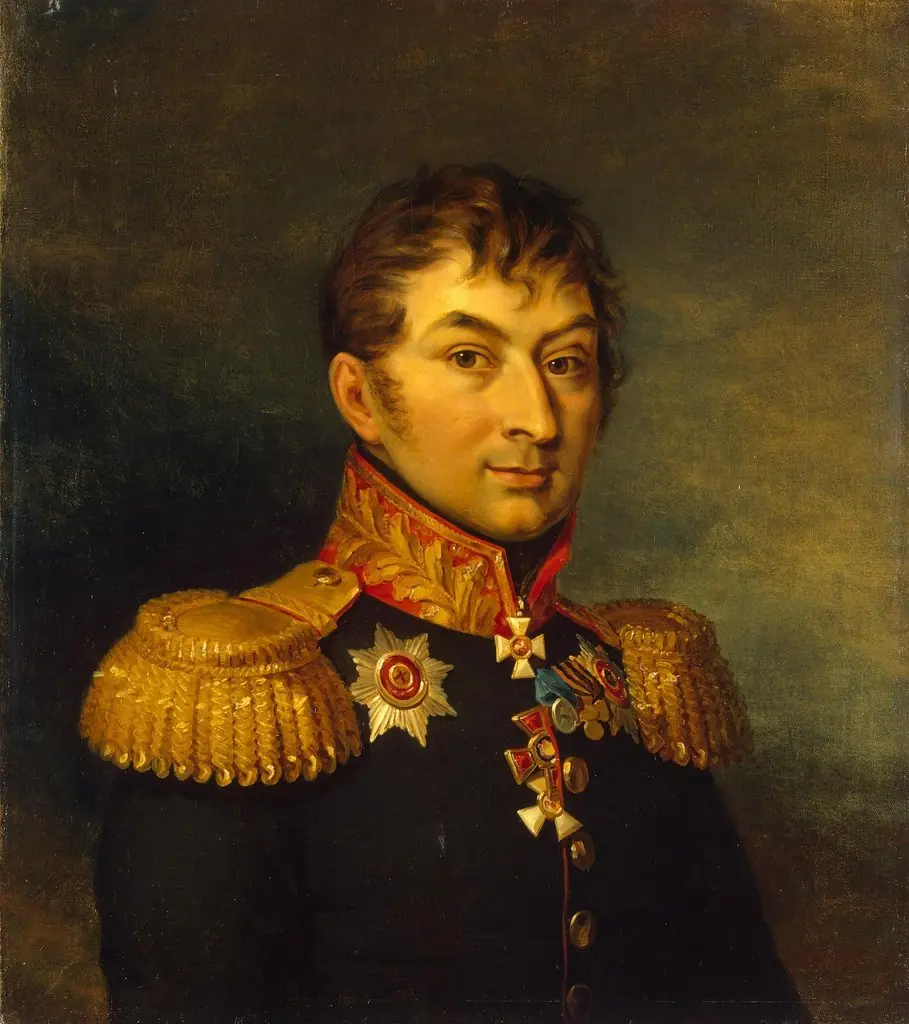 Portrait of Ivan D. Panchulidzev (1759-1815) (1st)
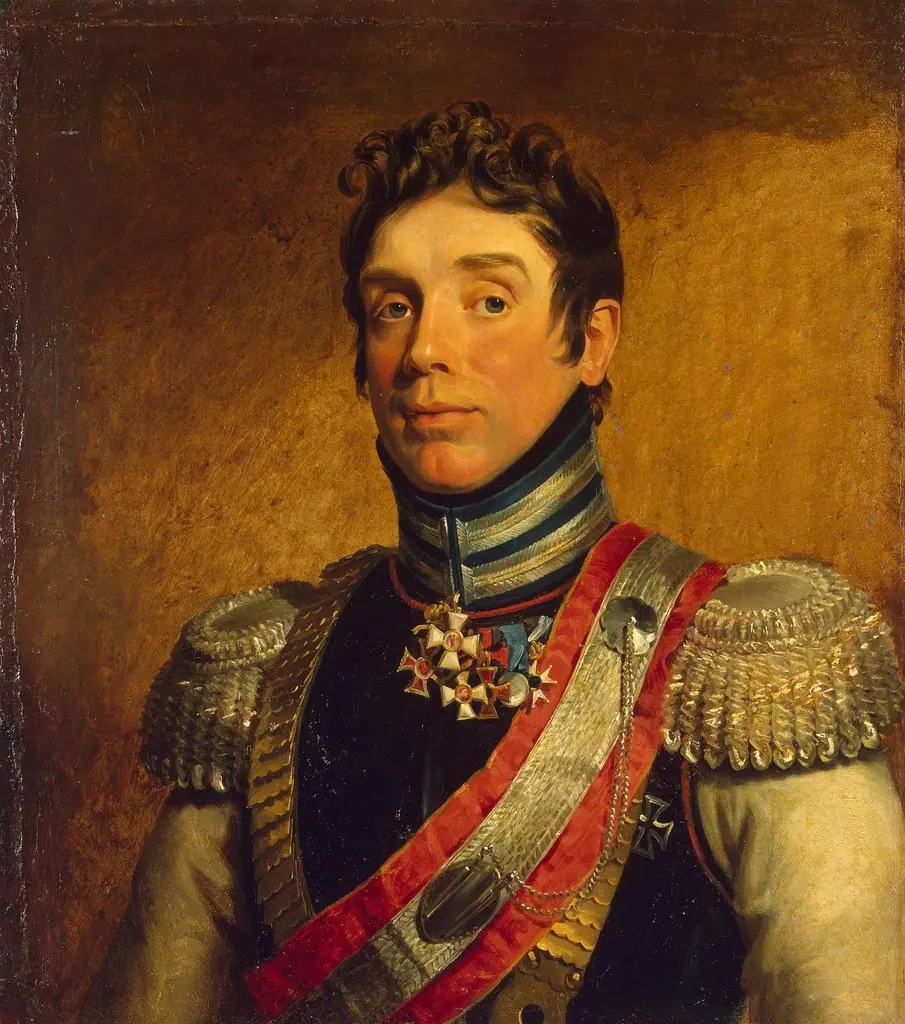 Portrait of Karl V. Budberg (1774-1829)