Artwork
Portrait of Robert Ye. Renny (1767-1832)
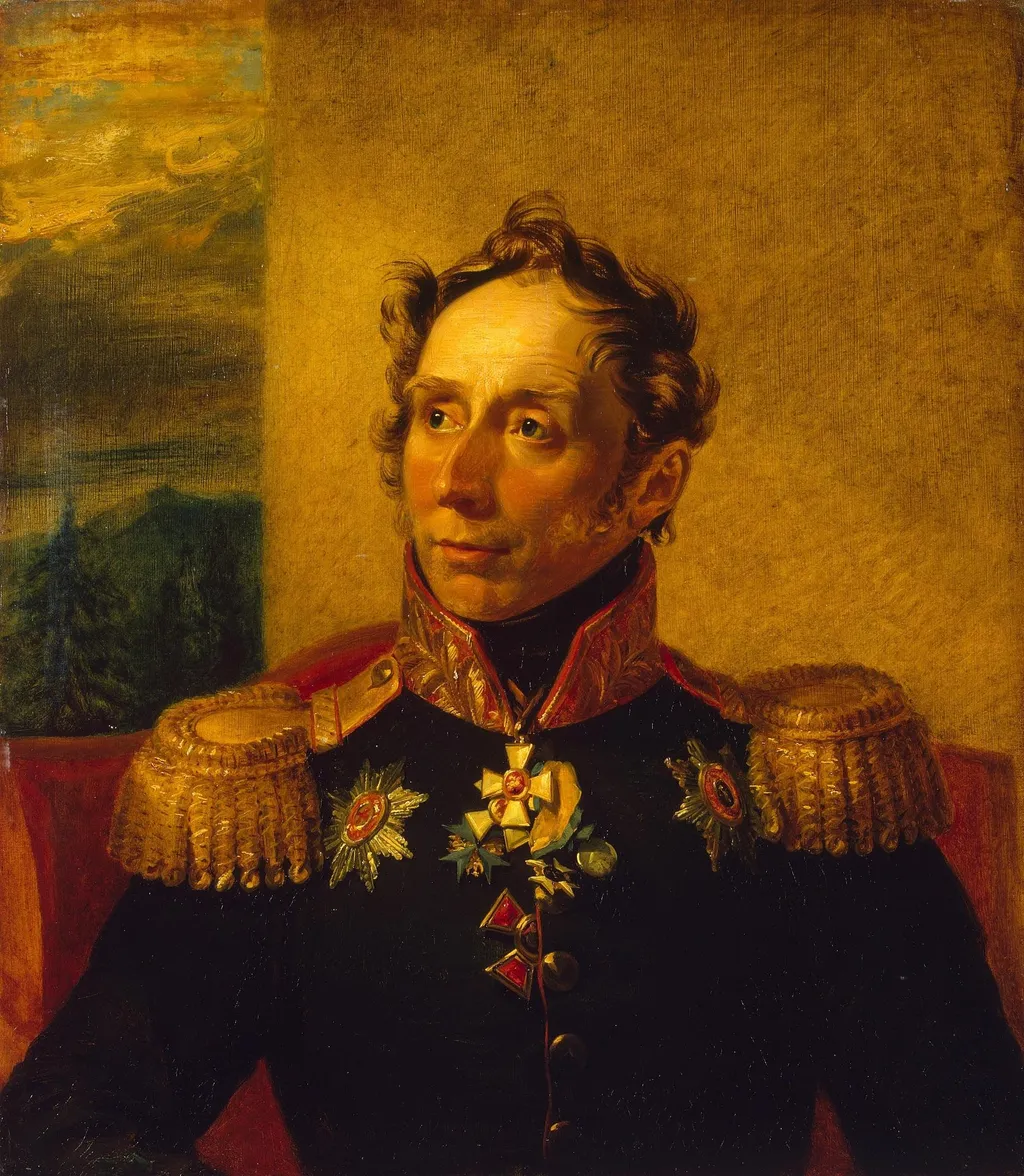
Portrait of Robert Ye. Renny (1767-1832) is an oil painting by George Dawe. It dates from 1822 and is held in the collection of the Hermitage Museum.
About this work
Overview
George Dawe, an English portrait painter active in the early nineteenth century, created an oil portrait of Robert Ye. Renny in 1822. The canvas, now part of the State Hermitage Museum’s holdings, depicts Renny in formal military attire, rendered with a smooth, polished finish that emphasizes the subject’s dignified bearing.
Subject & Meaning
Robert Ye. Renny, a figure of the early 1800s, is shown wearing a dark red uniform trimmed in gold, a stiff, ornamented collar, and an array of medals that signal high rank or distinguished service. His expression is sober, suggesting a portrayal intended to convey authority and respect.
Technique & Style
Dawe employs a refined brushwork that renders the skin and fabric with a glossy, almost lacquered quality. The uniform’s texture and the gleam of the medals are achieved through careful layering, while the plain warm‑yellow background isolates the sitter, focusing attention on his attire and facial features.
History & Provenance
After moving to Saint Petersburg in 1819, Dawe quickly established a reputation for portraiture, notably producing a series of 329 portraits of Russian generals from the Napoleonic Wars. The portrait of Renny entered the Hermitage collection at an unspecified later date, where it remains on view.
Context
Dawe’s work reflects the early nineteenth‑century Russian interest in commemorating military leaders through formal portraiture. His English background and training, combined with his immersion in the Saint Petersburg artistic milieu, allowed him to blend Western portrait conventions with the Russian imperial taste for grand, honorific depictions.
Own this work as a print
Artist & collection
Artist
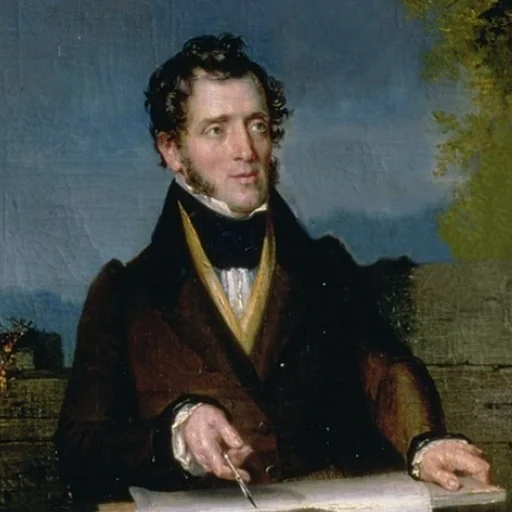
George Dawe (6 February 1781 – 15 October 1829) was an English portraitist who painted 329 portraits of Russian generals active during Napoleon's invasion of Russia for the Military Gallery of the Winter Palace.

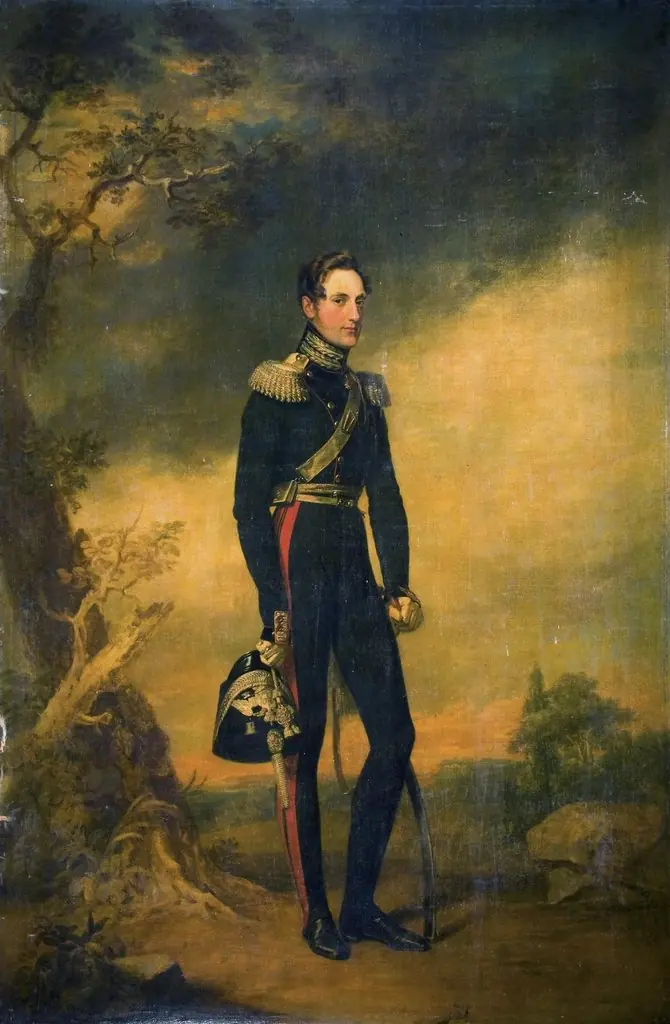 Portrait of Grand Duke Nikolai Pavlovich
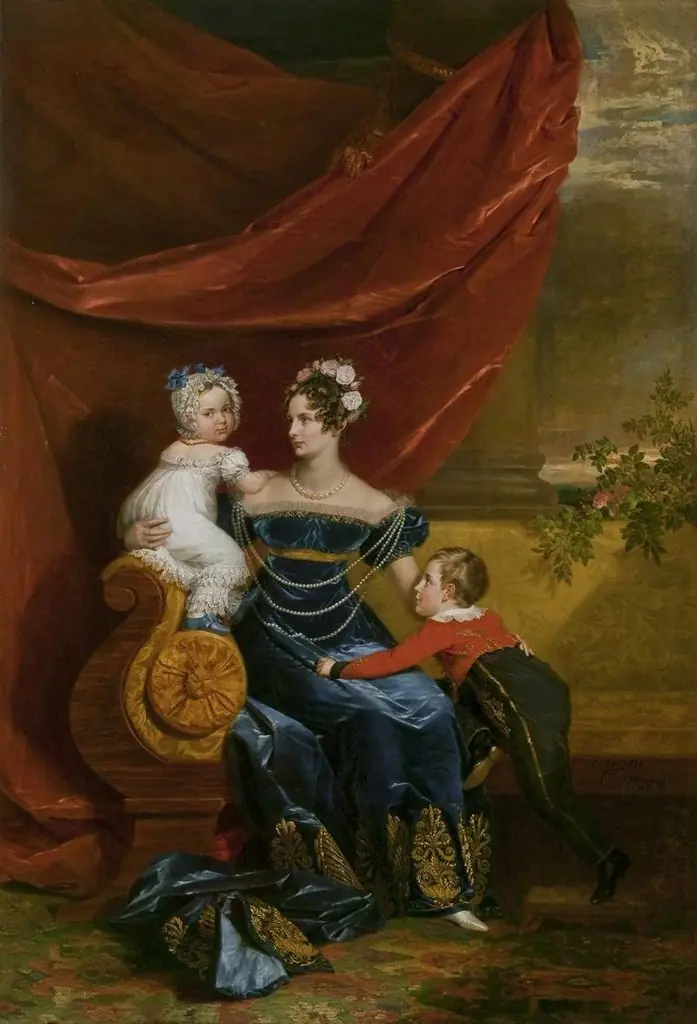 Portrait of Grand Duchess Alexandra Fiodorovna with Children
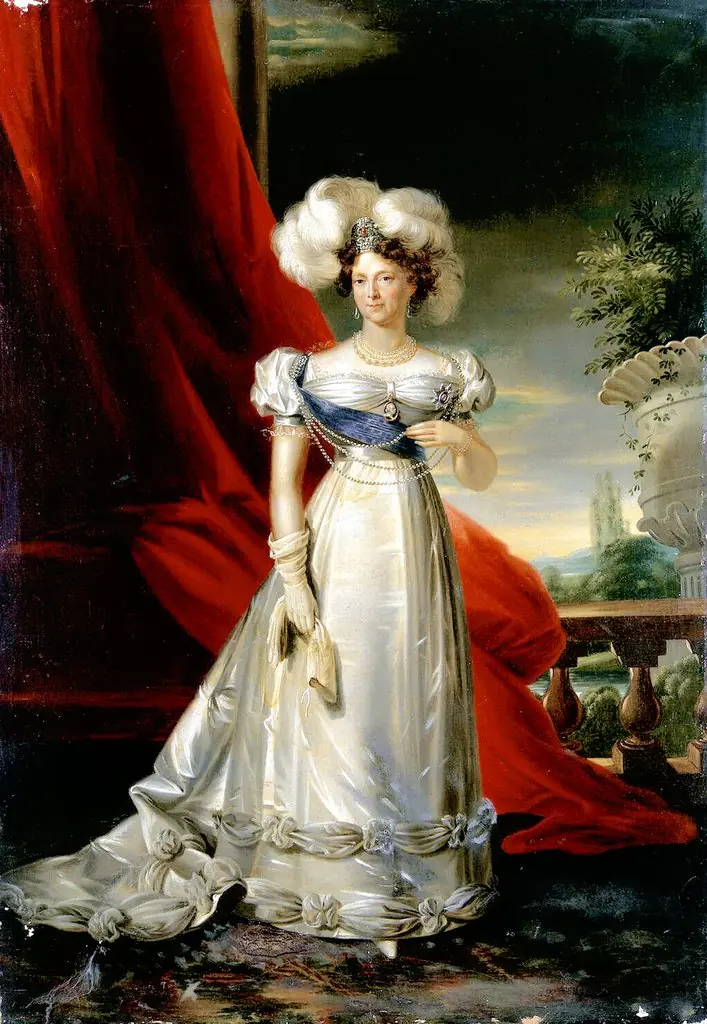 Portrait of the Empress Dowager Maria Feodorovna
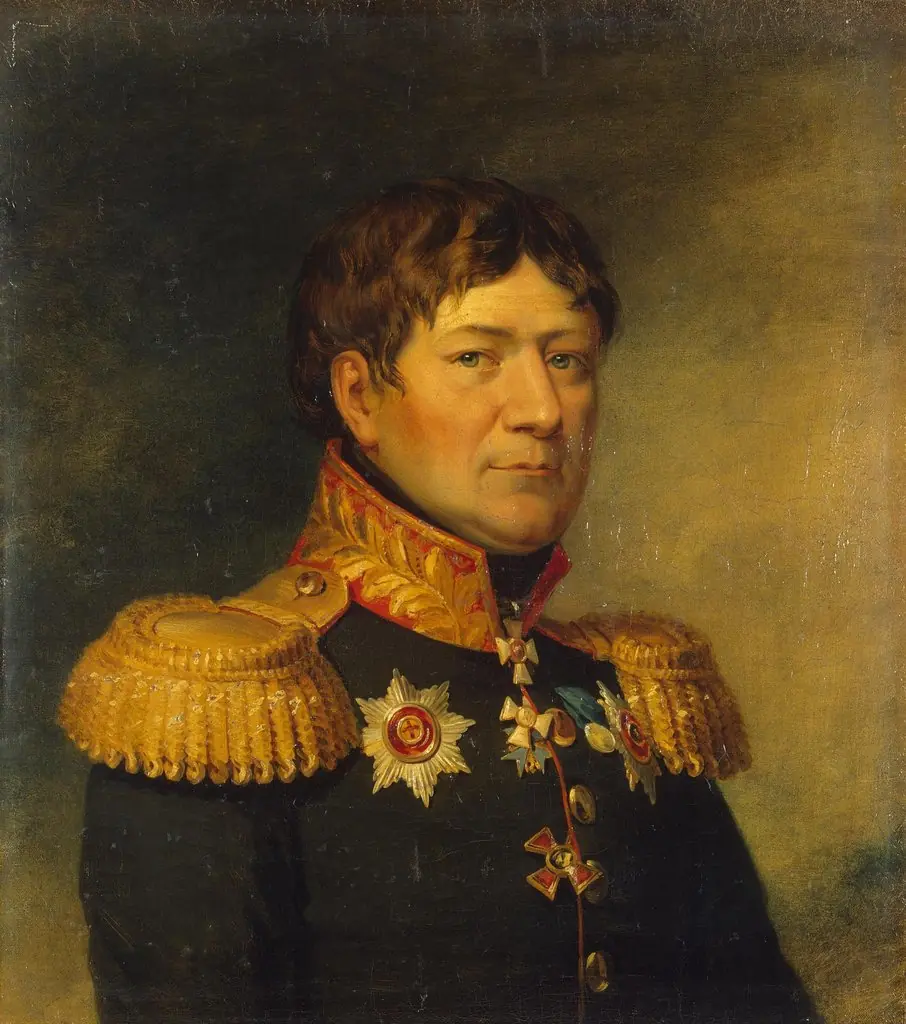 Portrait of Yegor M. Pillar (1767-1830)
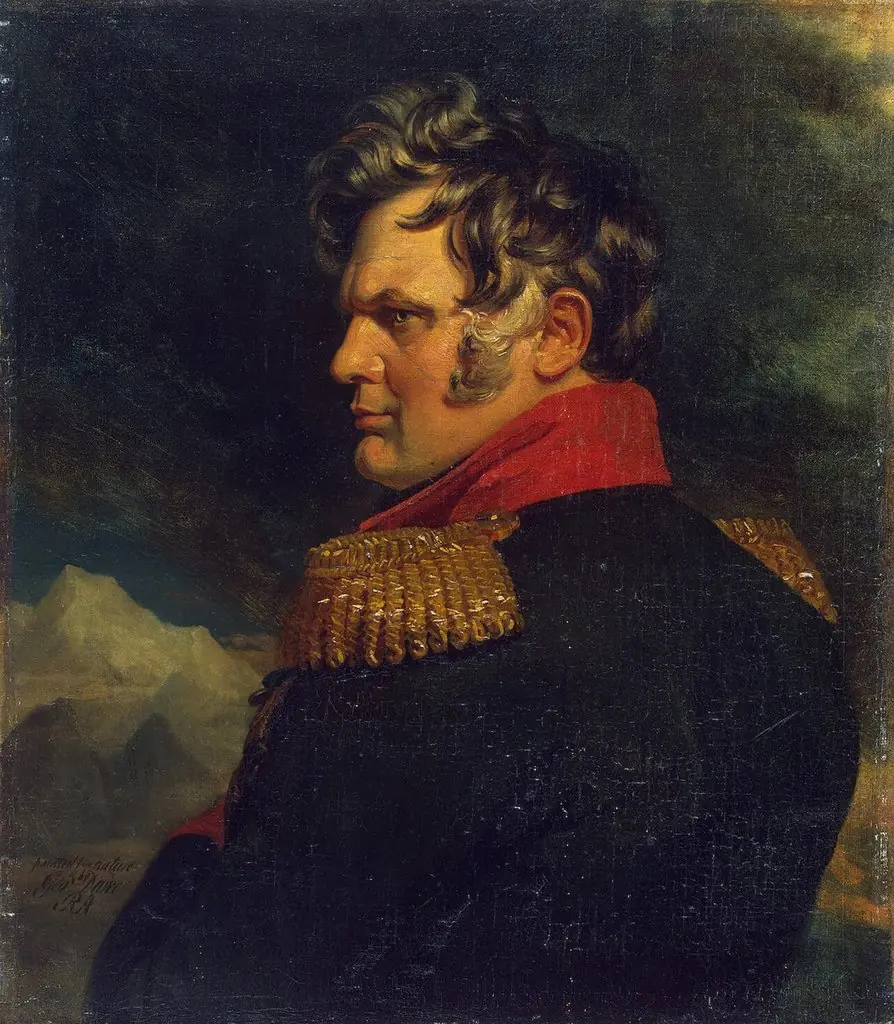 Portrait of Alexei P. Yermolov (1772/77-1861)
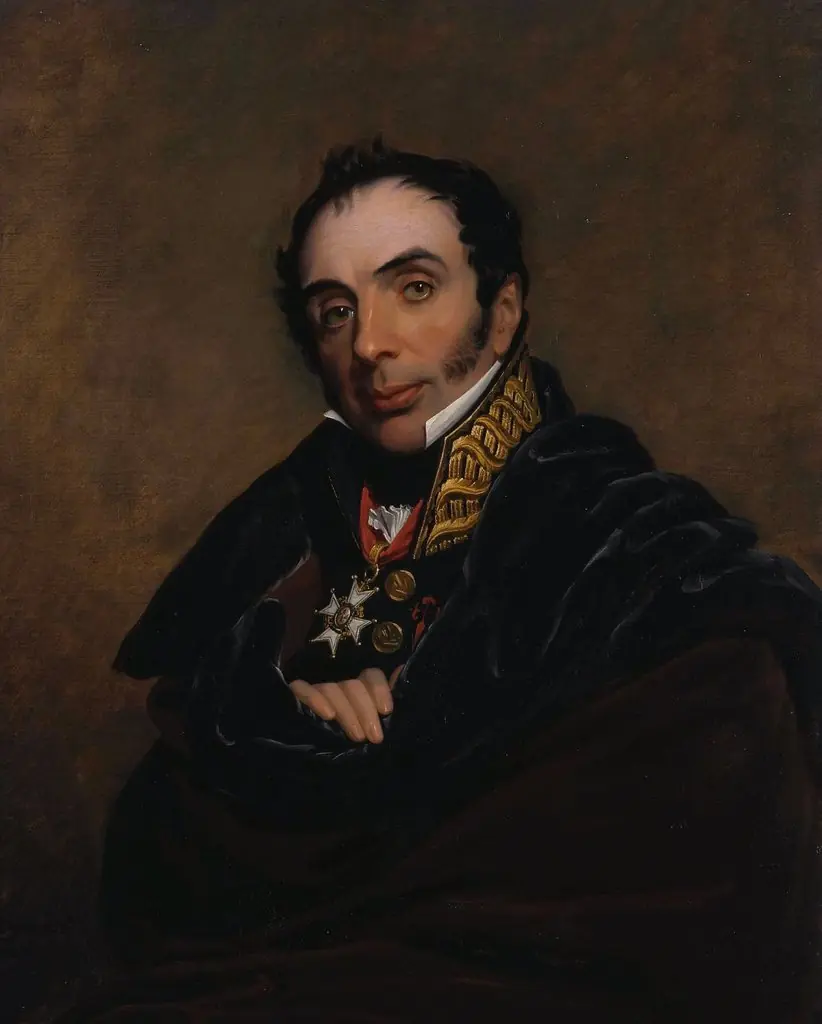 Portrait of Miguel Ricardo de Alava
 Portrait of Ivan D. Panchulidzev (1759-1815) (1st)
 Portrait of Karl V. Budberg (1774-1829)
 Portrait of Mikhail A. Miloradovich (1771-1825)
 Portrait of Nikolai F. Yemelyanov (1768-1829)
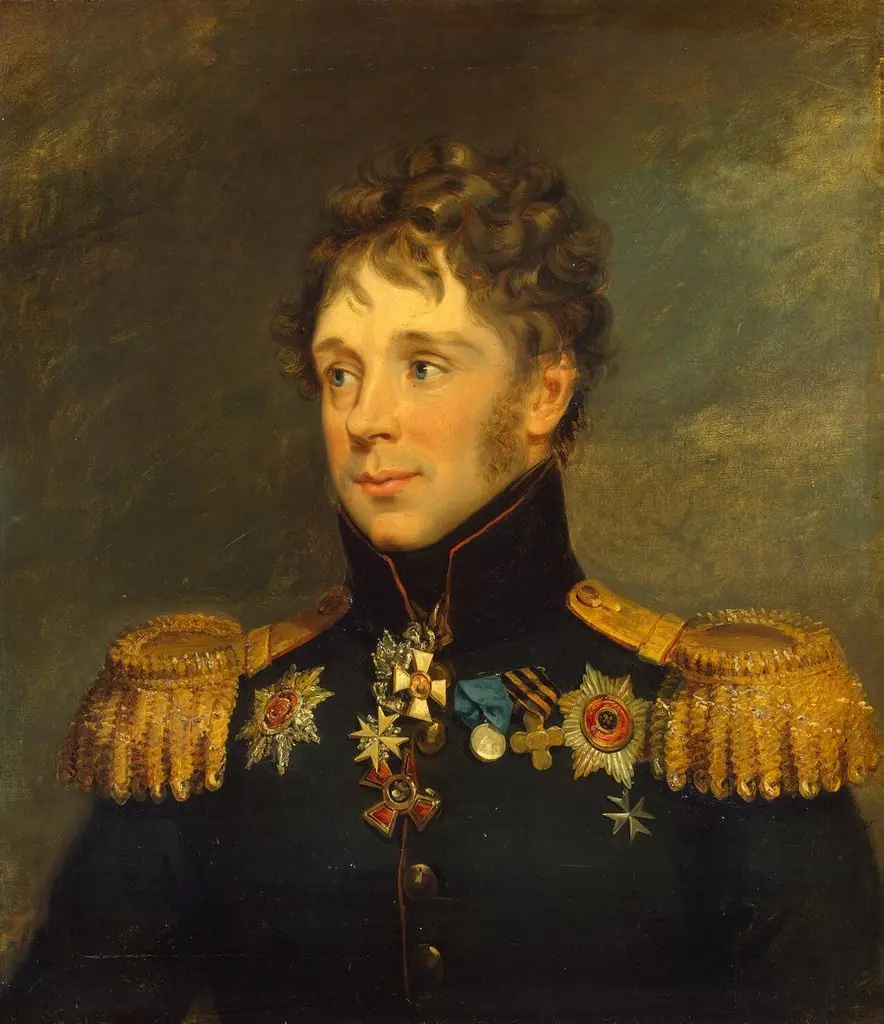 Portrait of Dmitry P. Rezvy (1762-1823)
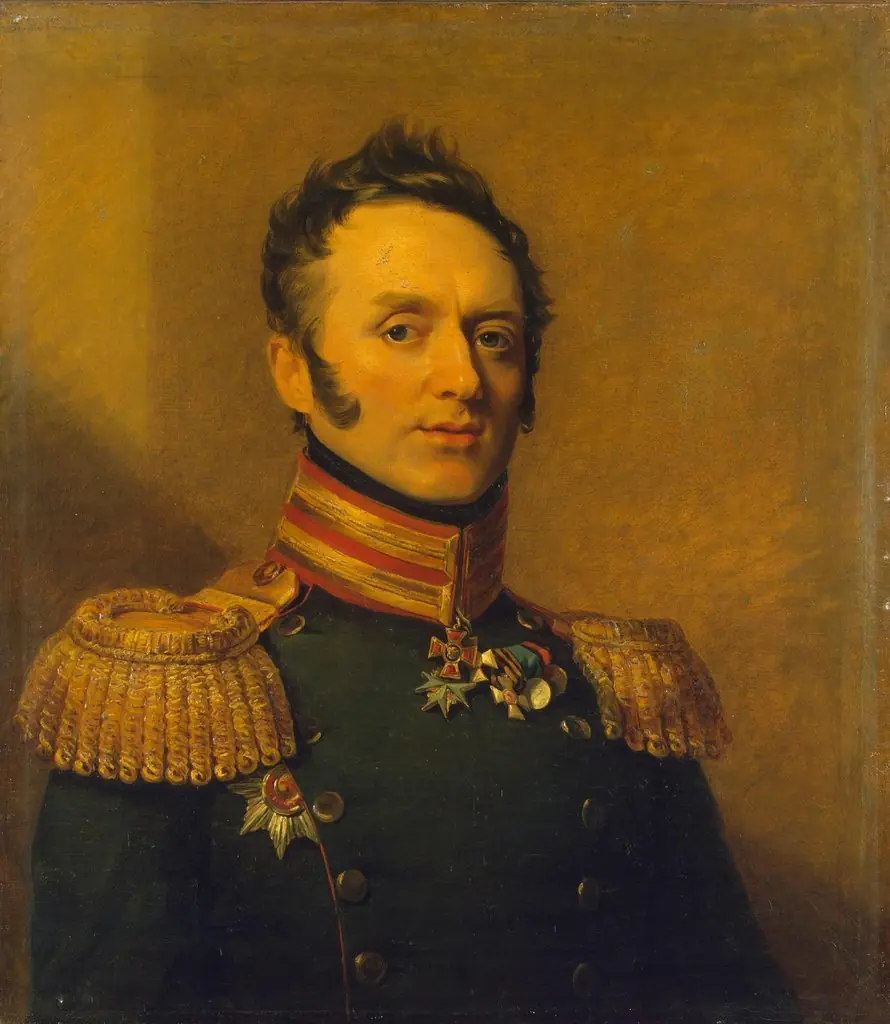 Portrait of Ivan F. Udom (1769-1821) (1st)
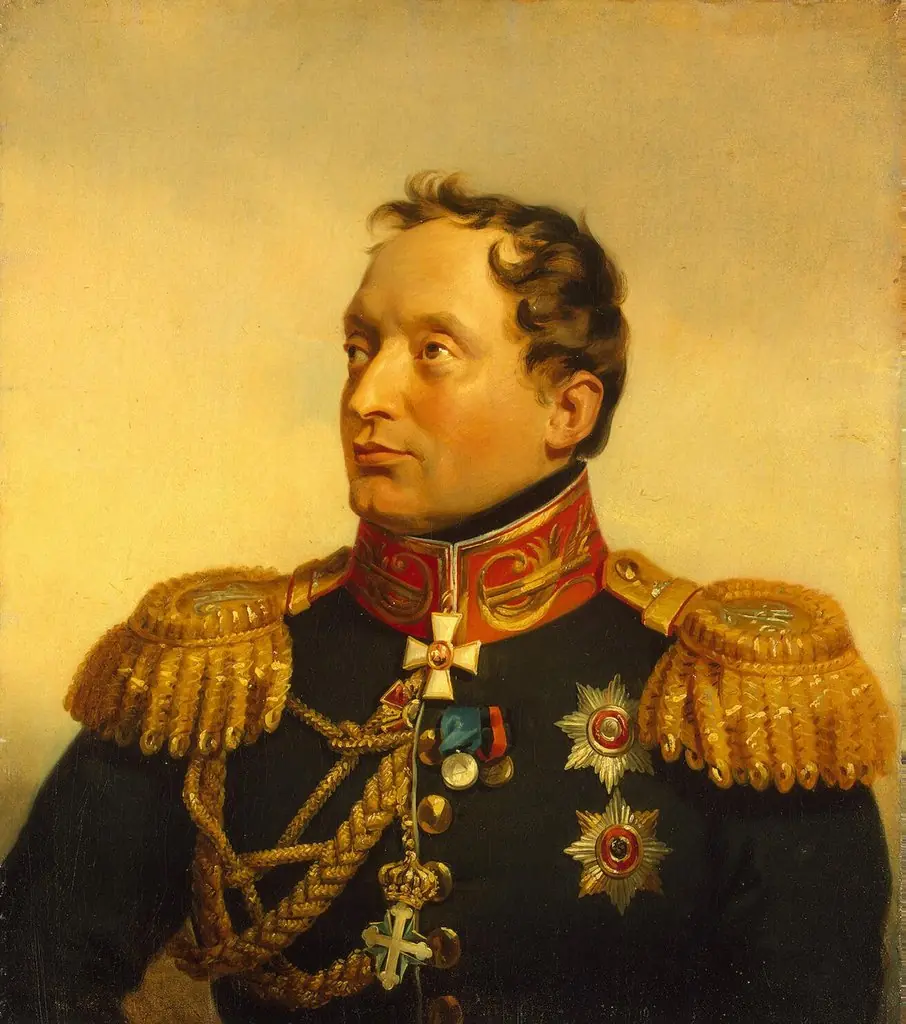 Portrait of Filippo (Filipp Osipovich) Paulucci (1779-1849)
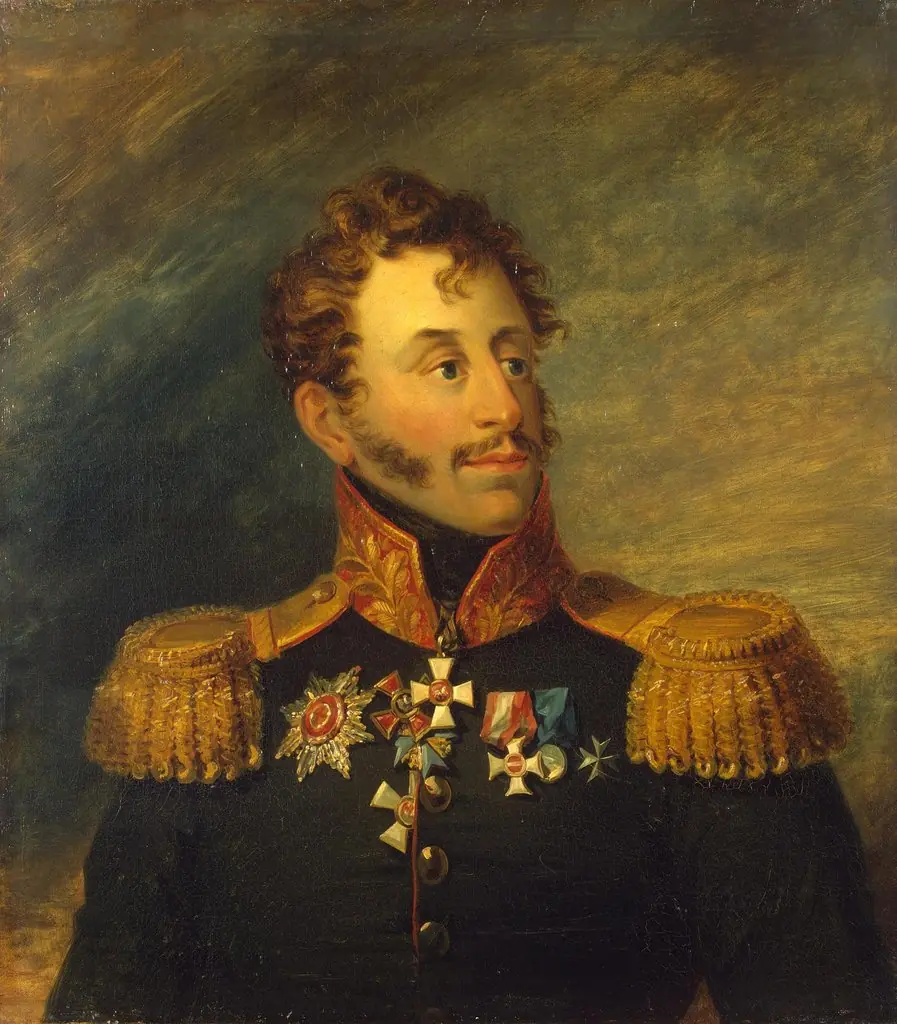 Portrait of Karl B. von Knorring (1774-1817) (3rd)
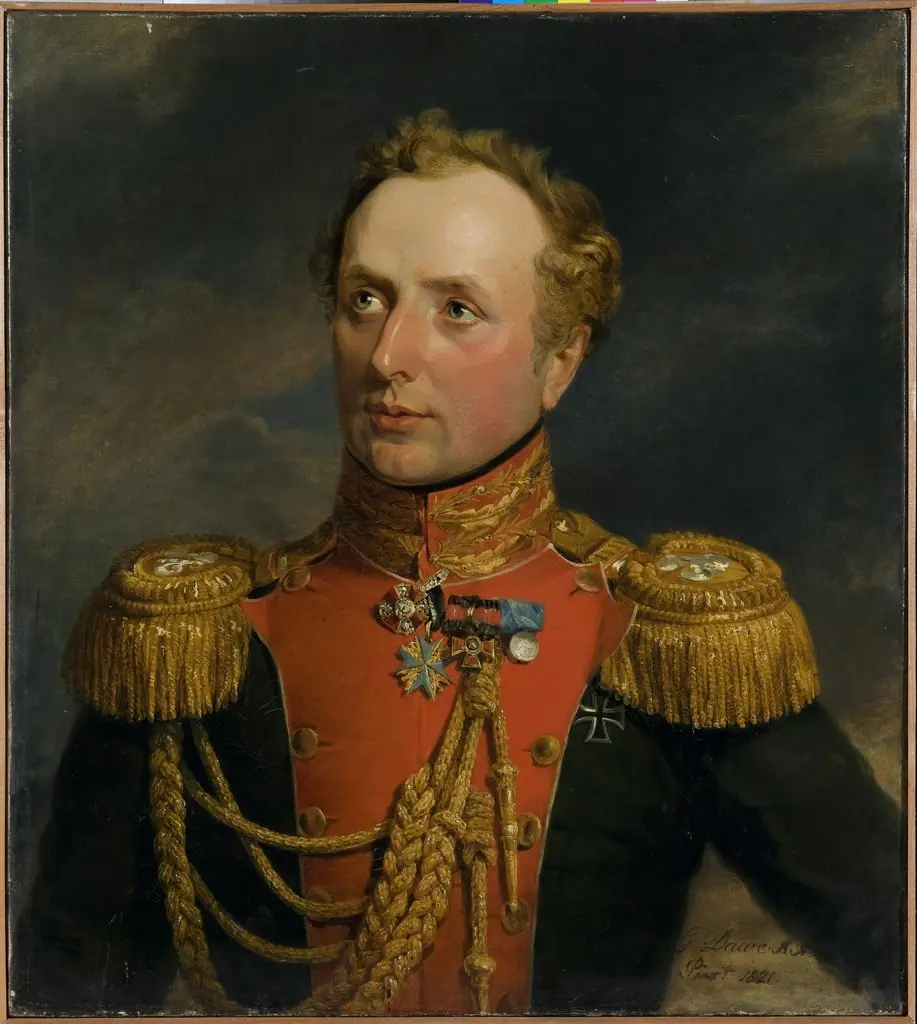 Karl von Pirch
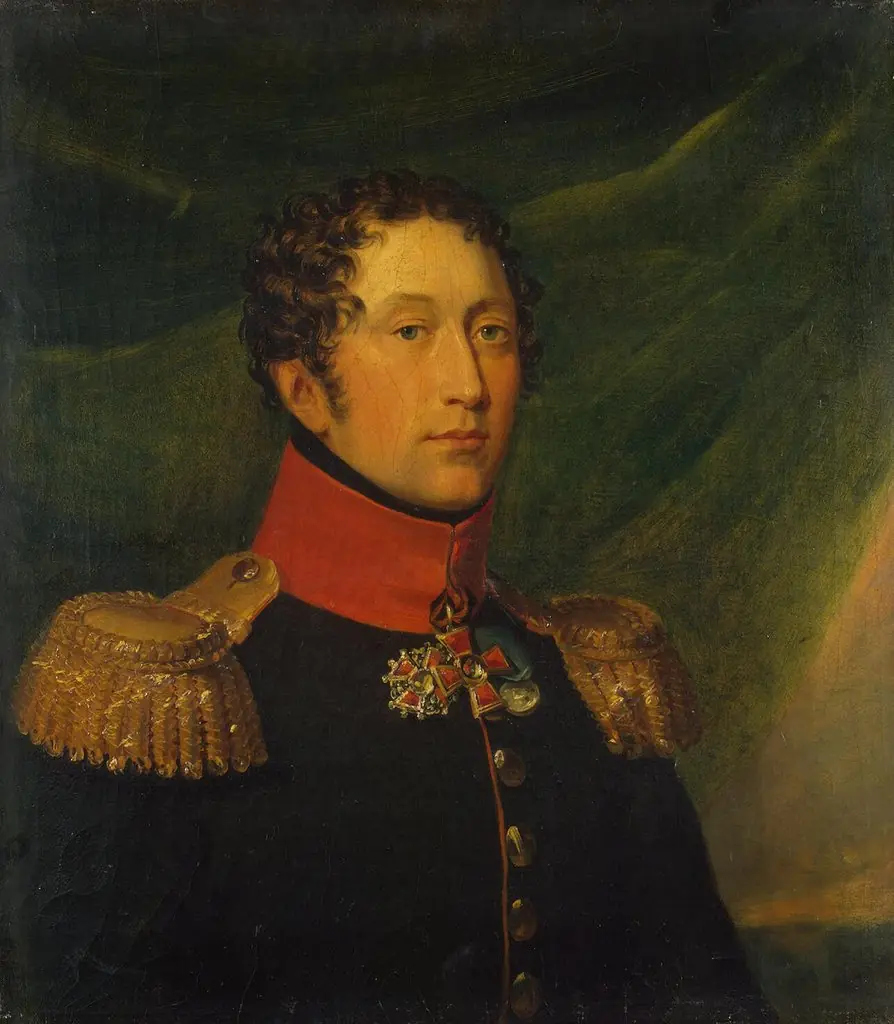 Portrait of Alexey S. Kologrivov (1776-1818)
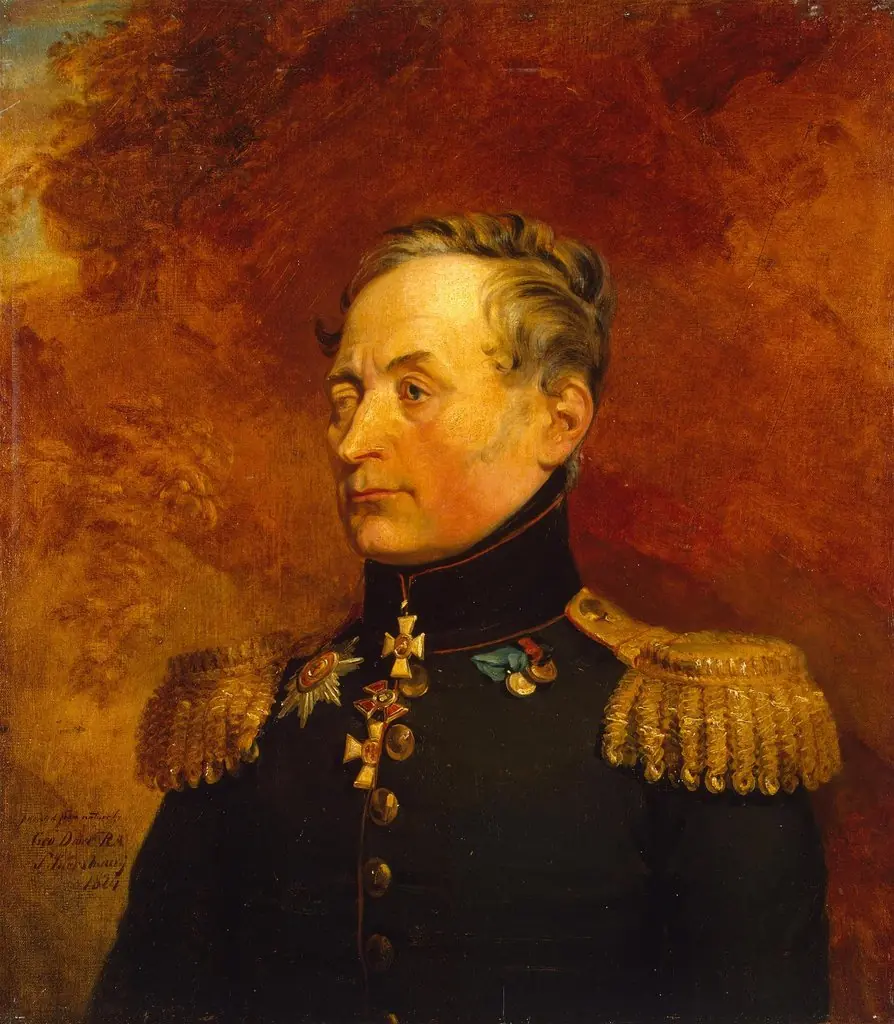 Portrait of Pavel I. Merlin (1769-1841/42)